

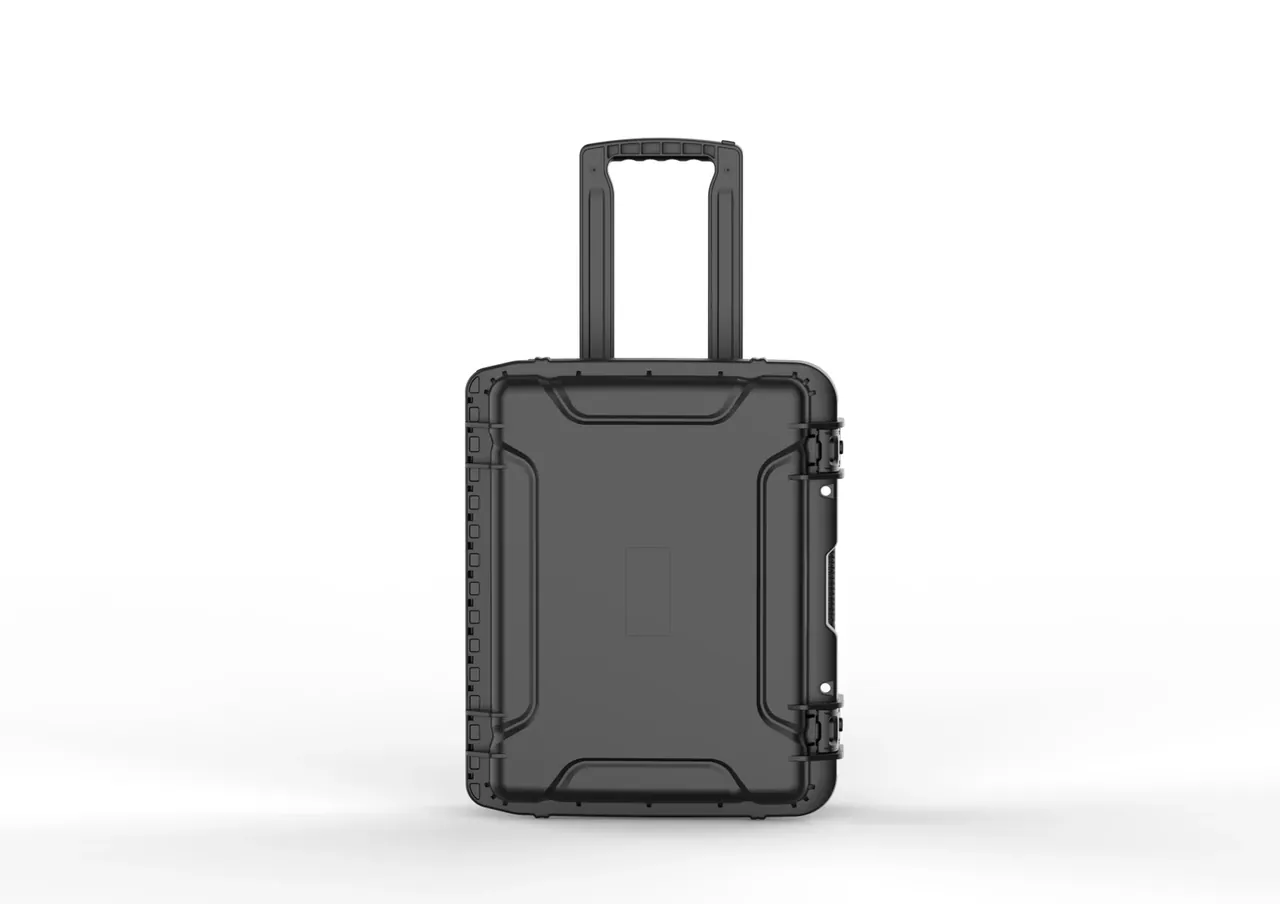
Quick answer: Trolley case wheels are chosen by floor, not by unit price: 85 Shore A cast PU for concrete and gravel, PA6 with 30% glass for terrazzo and epoxy in terminals, 70 Shore A TPR for carpet and interiors. At 25 kg and a 40 mm wheel the push force reads 25 N, 18 N and 22 N, and 50 km wears 0.8, 0.3 and 1.6 mm off the diameter.
Table of contents
- Four Numbers That Decide the Wheel
- PU on Concrete: 0.8 mm Lost in 50 km
- TPR: Quiet, Soft, 17 N on Carpet
- Nylon: 18 N and 8 dB in a Terminal
- Diameter and Bearings: 40 mm vs 60 mm
- Three Builds by Floor
- FAQ
1. Four Numbers That Decide the Wheel
Hardness comes first, but Shore A and Shore D do not compare. Cast PU sits at 85 Shore A, TPR at 70 Shore A, nylon at 78 Shore D; reading an A figure against a D figure produces the wrong conclusion that nylon is the softest.
Rebound is second: 45% for PU, 30% for TPR, 8% for nylon. Lively wheels bounce a threshold back, dead ones swallow it.
Abrasion is third, measured to DIN 53516: 60 mm³ for PU, 120 for TPR, 25 for nylon. That converts into life — on the same floor, nylon loses 0.3 mm of diameter a year, TPR loses 1.6 mm.
Push force is fourth. At 25 kg total, a 40 mm wheel and 0.7 friction on concrete, steady rolling needs 25 N on PU, 22 N on TPR and 18 N on nylon.
| Material | Hardness | Rebound | Abrasion | Load per wheel | Noise | Unit price |
|---|---|---|---|---|---|---|
| Cast PU | 85 Shore A | 45% | 60 mm³ | 40 kg | 66 dB | 12 |
| TPR | 70 Shore A | 30% | 120 mm³ | 25 kg | 64 dB | 7 |
| PA6 + 30% glass | 78 Shore D | 8% | 25 mm³ | 60 kg | 72 dB | 15 |
2. PU on Concrete: 0.8 mm Lost in 50 km
Concrete and gravel are PU territory. An 85 Shore A cast wheel grips at a 0.7 friction coefficient, does not skate under braking, and unlike a hard wheel it leaves no black marks on the slab.
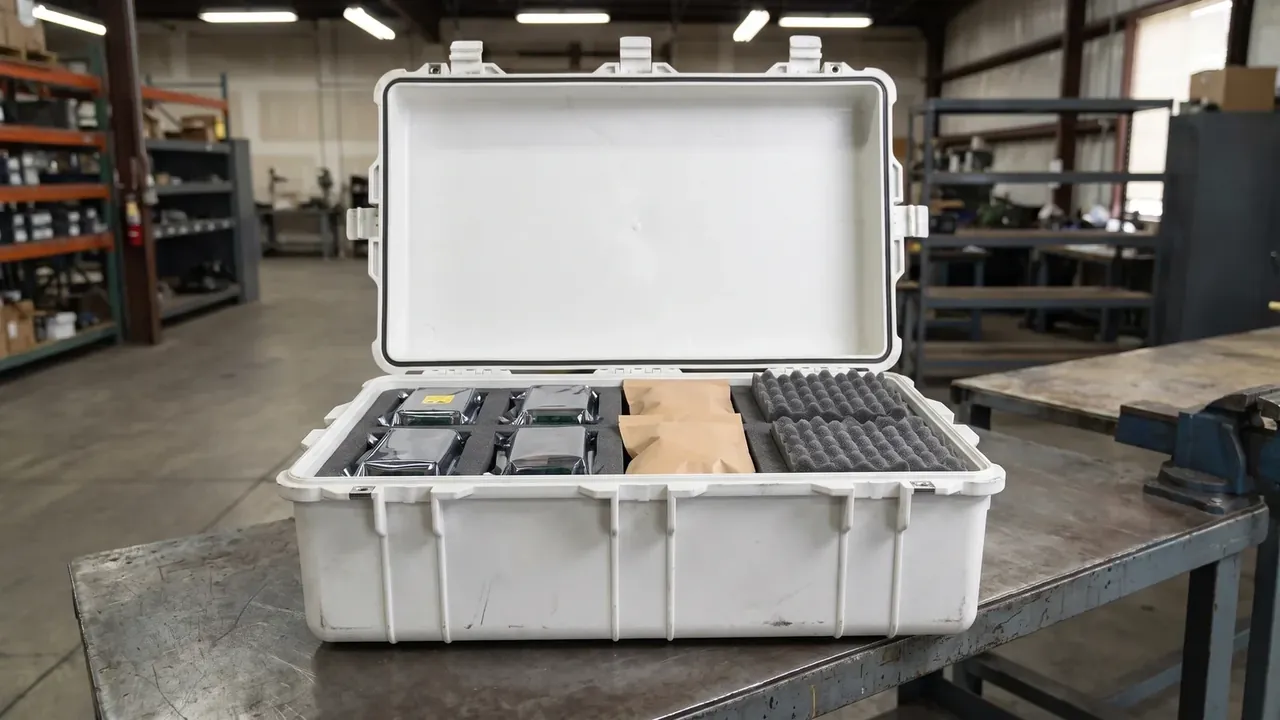
Wear is counted in distance. At 40 mm diameter and 20 kg per wheel, 50 km takes 0.8 mm off the diameter; by 200 km the wheel is down to 36 mm, rolling resistance is 18% higher, and it is due for replacement.
The real weakness is hydrolysis, not abrasion. Thirty days at 80 °C and 95% RH drops tensile strength 18% and the surface turns tacky; two wet seasons in an unventilated store room reproduce it. Pale PU also yellows to ΔE 6 after 2000 hours of xenon, worse than the 3.2 the shell shows.
So PU suits sites and gravel, where the ground is coarse and each pull is short; for damp storage a polyether PU is worth 2 more per wheel.
3. TPR: Quiet, Soft, 17 N on Carpet
TPR is the softest of the three at 70 Shore A with 30% rebound, and on hotel carpet it is close to silent. Carpet runs a 0.35 friction coefficient, so a 25 kg load needs 17 N, five less than concrete.
Quiet has a price. TPR wears at 120 mm³, twice PU, losing 1.6 mm over 50 km, and carries only 25 kg per wheel, so keep case plus load near 60 kg.
Cold is the other limit. At -10 °C TPR stiffens from 70 to 85 Shore A and push force rises 30%; the wheel feels like wood, so winter outdoor handling on TPR only works over short distances.
Static flattening adds 4 N to every start, because 25 kg presses the contact patch 1.5 mm flat.
4. Nylon: 18 N and 8 dB in a Terminal
Terminal floors are terrazzo or self-levelling epoxy: flat, clean, 0.5 friction, rewarding rolling resistance over grip. PA6 with 30% glass rolls at 0.008, needing 18 N at 25 kg, so a 400 m walk costs 7.2 kJ instead of 10 kJ on PU.
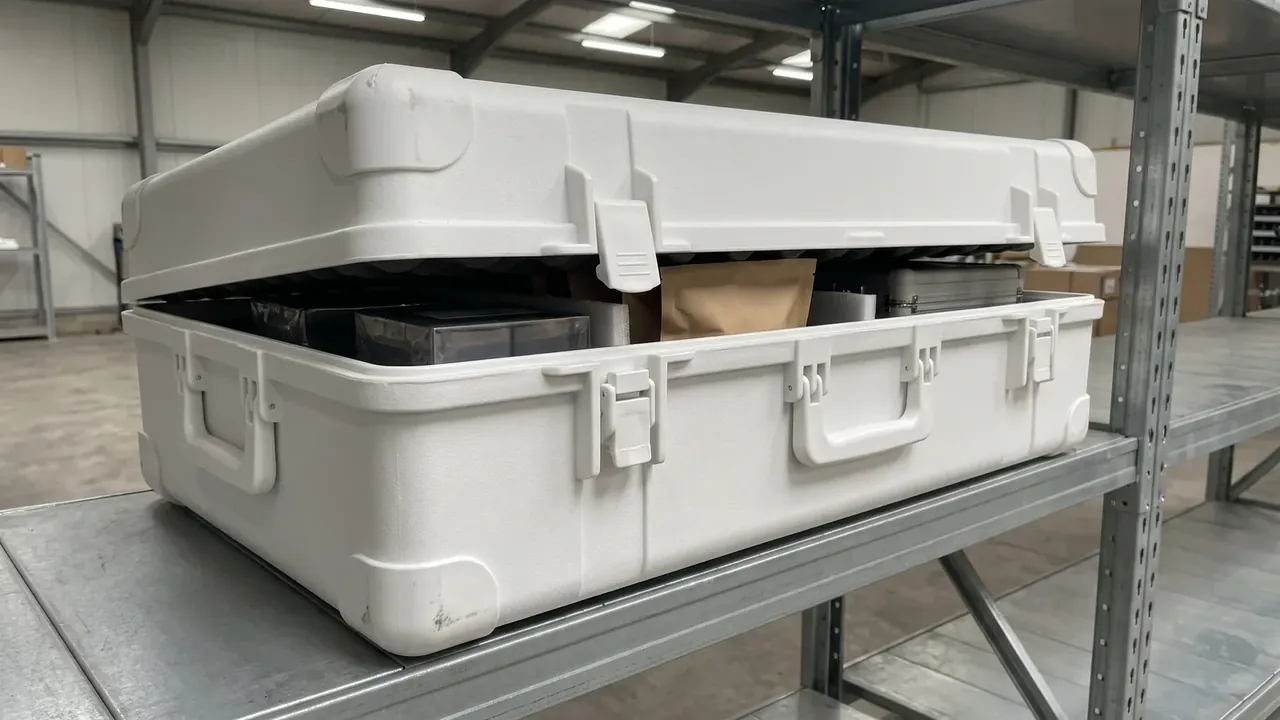
Noise and marking are the trade. A nylon wheel runs 72 dB on hard flooring, 8 dB above TPR, and at 78 Shore D it leaves dark scuffs on epoxy when it pivots, which is where most property complaints come from.
Wear is the best of the three: 25 mm³, 0.3 mm over 50 km, 60 kg per wheel and no deformation under load. Nylon stays intact at -40 °C but hardens further, and a 15 mm threshold sends the shock straight into the shell, loading the latch seat 40% harder than a PU wheel would.
At 15 per wheel it costs 3 more than PU: terminals and long flat runs justify it, gravel does not.
5. Diameter and Bearings: 40 mm vs 60 mm
Diameter is easier to overlook than material. A 40 mm wheel clears an 8 mm gap, 50 mm clears 12 mm, 60 mm clears 15 mm, and at the same 25 kg the push force falls from 25 N to 18 N — a 28% gain, larger than swapping material.
| Diameter | Obstacle | Push force at 25 kg | Weight per wheel | Load band |
|---|---|---|---|---|
| 40 mm | 8 mm | 25 N | 95 g | under 15 kg |
| 50 mm | 12 mm | 21 N | 130 g | 15–30 kg |
| 60 mm | 15 mm | 18 N | 180 g | over 30 kg |
Bearings are the second hidden item: a 6201 double ball bearing reads 30% lower push force than a nylon bushing and lasts from 8 km to 20 km, for 3.5 more per wheel.
The housing matches the material: a hard nylon wheel wants four M6 bolts at 3.5 N·m and a 6 mm wall, a soft PU wheel 4.5 mm. A 380 mm track turns easily without tipping.
6. Three Builds by Floor
Put the numbers together and three builds cover most projects:
- Site and service roads: PU 60 mm, 6201 bearings, 6 mm steel housing, 40 kg per wheel, diameter checked every 50 km
- Terminal and showroom: nylon 50 mm, 6201 bearings, 0.5 mm edge chamfer to cut scuffing on epoxy
- Hotel and interior: TPR 50 mm, nylon bushing, 25 kg per wheel, case plus load under 60 kg
Spares run three wheel sets per fifty cases, and a swap takes five minutes on four M6 bolts. Acceptance: wear ≤1.0 mm at 50 km, push force ≤28 N, noise ≤70 dB.
Conclusion
Trolley case wheels follow the floor: 85 Shore A PU on concrete, 78 Shore D nylon in terminals, 70 Shore A TPR on carpet. A 60 mm wheel cuts push force from 25 N to 18 N for less than a change of material.
This article discusses only the specification and design intent on the container (case) side, and does not cover any handling, loading or use of the contents.
Related Reading
- Choosing a wheeled protective case
- Maintaining a wheeled protective case
- Hard-shell trolley case specifications
- Where tool cases on wheels are used
Related Products
- 8 Series — Gun Cases; Military Equipment Cases; Camera Equipment Cases; Drone Cases; Watch Cases; Knife Cases; First Aid Cases; Electronics Equipment Cases
- WL8-2812 PP Gun Case — model WL8-2812
- All protective cases and toolboxes: 7 series, 158 models