

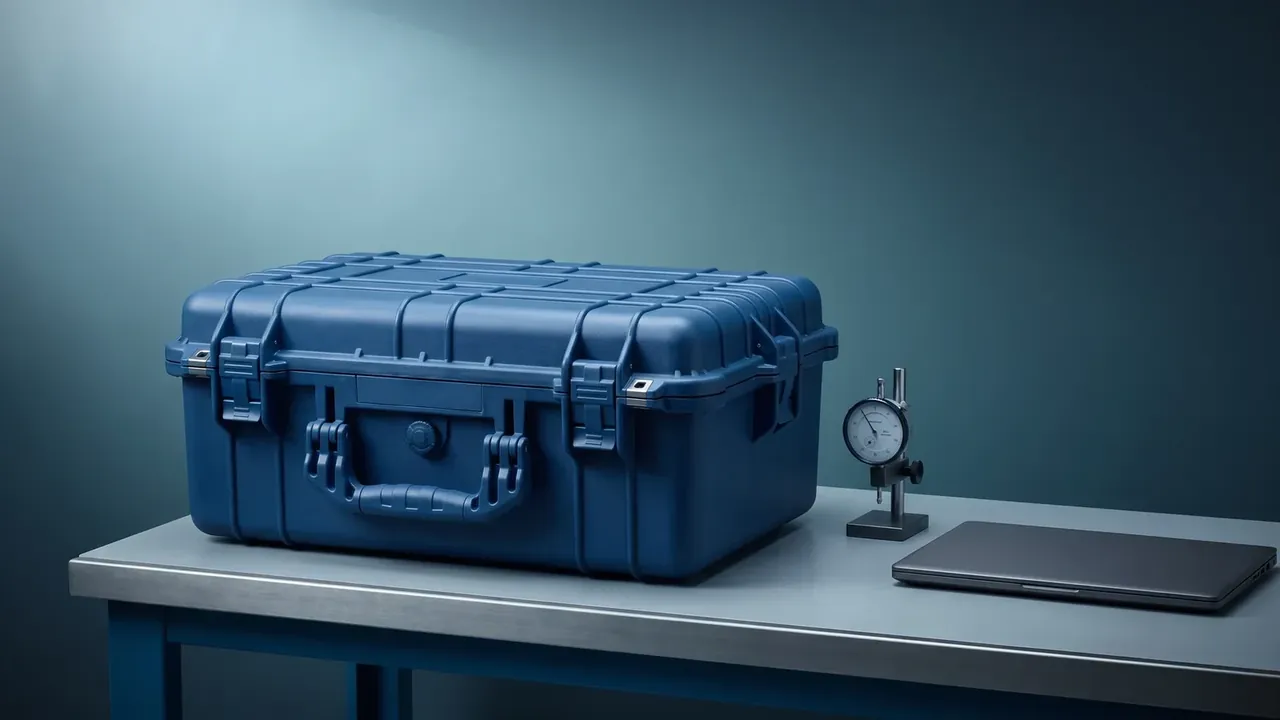
Quick answer: A plastic toolbox on wheels rolls cleanly when diameter, tread hardness and the static-to-dynamic split match the route. Two tables map three tiers to four floor types, with ISO 868 and IEC 60529 tied to readings.
Table of contents
- Three routes and their caster spec
- Wheel diameter tiers and the ground each handles
- PU PP and TPR hardness bands
- Static and dynamic load plus brakes and swivels
- Telescopic handle stages and the staircase limit
- FAQ
1. Three routes and their caster spec
An assembly-line shuttle, a move between repair bays and a haul across an outdoor yard ask three different things of one set of casters. Change the wheels and push effort can halve. For a plastic toolbox on wheels, the fitting sheet converts route into diameter, tread and load rating.
| Wheel diameter | Usual tread | Route for 60 kg dynamic load | Site check |
|---|---|---|---|
| 75 mm | PP or TPR | Bay-to-bay on epoxy, under 40 m | A joint over 20 mm stops it |
| 100 mm | PU | Concrete shop floor with a sill | A 15 mm sill rolls through |
| 125 mm | PU capped | Outdoor yard and gravel, over 200 m | Centre of gravity 10 mm higher |
Each diameter step buys tolerance rather than speed: a 75 mm caster is quickest on epoxy, but a 20 mm joint means a hand lift.
2. Wheel diameter tiers and the ground each handles
Ground sets the floor of the range and load the ceiling. On plant floors the answer is 100 mm, and the reason is the threshold.
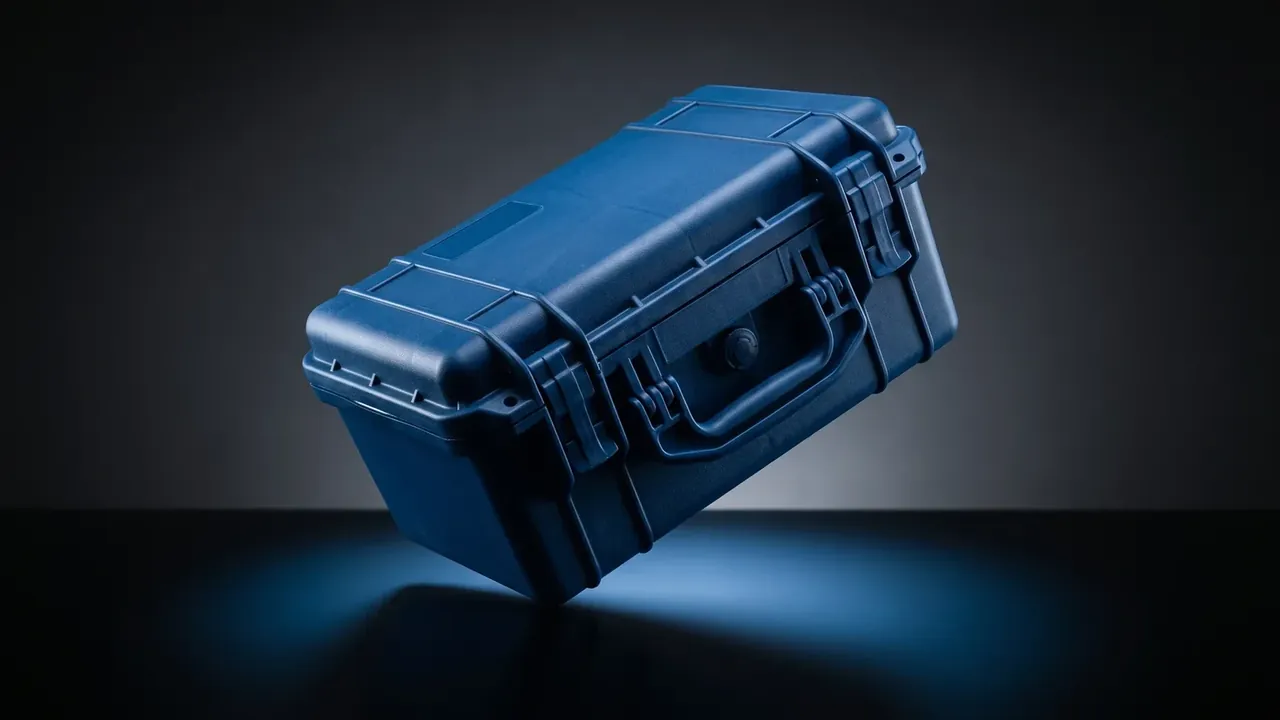
Measure the narrowest gap, then the tallest step, then the longest run. One third of the gap is the lower bound for diameter, and 15 mm is the step most plants settle on: a 100 mm caster with a 90 Shore A tread clears it.
Concrete carries expansion joints and grit, epoxy marks under sharp edges, grating gaps run to 30 mm, and yard gravel sits near 10 mm. Epoxy asks least of a caster and grating the most. A plastic toolbox on wheels crossing a grating must come in on the diagonal, or the wheel drops through. Gravel adds about forty per cent to rolling resistance. On wet concrete PU grip falls roughly thirty per cent, so the case is slowed rather than shoved. Tread wear starts as rim fraying, and a frayed wheel slips long before the tread is flat.
3. PU PP and TPR hardness bands
Tread behaviour splits between hardness and rebound. Hardness reads on the Shore A scale under ISO 868, and one wheel measures three to five points apart across temperatures.
- PU: 85 to 92 Shore A, abrasion resistant, low rolling resistance, thirty per cent less grip when wet.
- PP: near 95 Shore A, hard, cheap, noisy, light loads on flat flooring only.
- TPR: about 85 Shore A, soft, quiet, grippy, wears fast, suited to indoor corridors.
- Below 80 Shore A a tread flats under standing load; above 95 it feeds vibration into the case.
Cold storage pushes treads harder. At minus 10 °C TPR stiffens five points and rattles, while PU loses rebound and slips at joints.
4. Static and dynamic load plus brakes and swivels
Static and dynamic ratings are two numbers; mixing them under-specifies a caster. Static load means no permanent set after 24 hours standing; dynamic load is the cycling load while rolling, usually half the static figure.
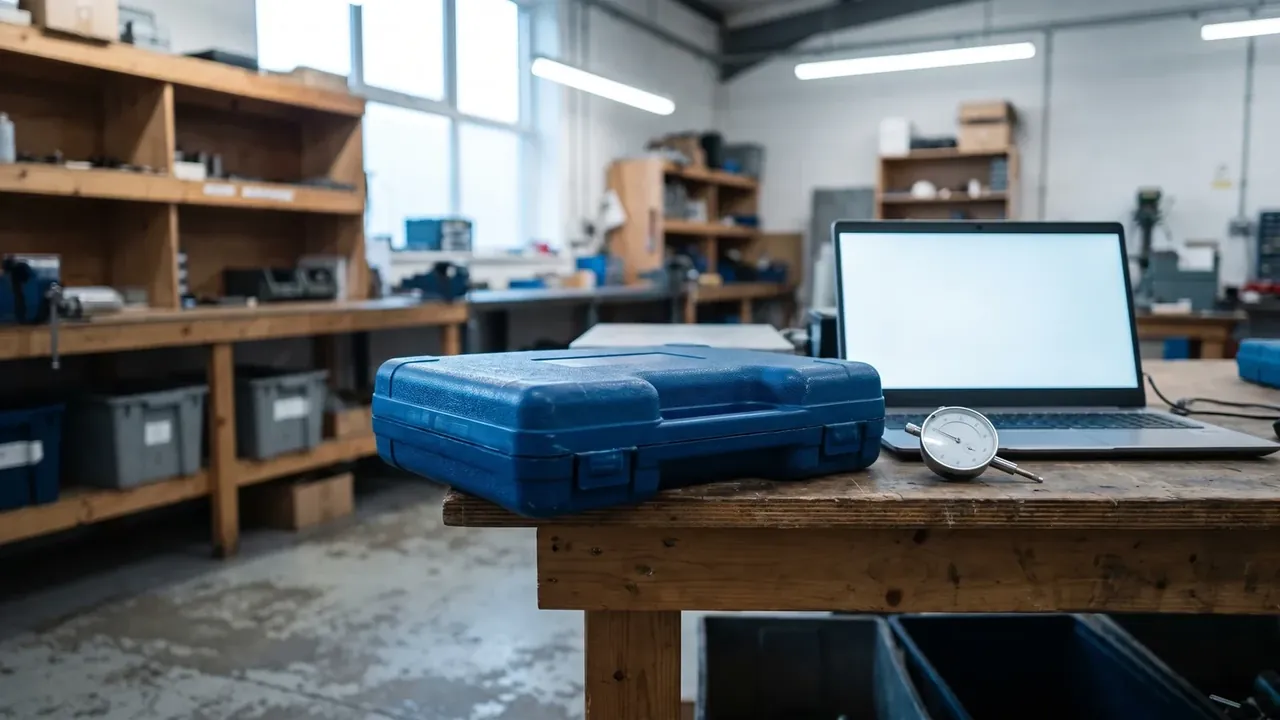
Add four caster ratings and multiply by 0.6 for uneven sharing, and that is the usable total. A plastic toolbox on wheels rated 120 kg static and 60 kg dynamic is near its limit at 70 kg, because weight shifts forward as it rolls.
| Item | Value to check | What it means |
|---|---|---|
| Static load | 120 kg for 24 h | Rim takes no set beyond 1 mm |
| Dynamic load | 60 kg rolling | One wheel survives 10,000 cycles |
| Brake | Twin wheel brake | Holds on an 8° ramp |
Swivel layout sets aisle width: four swivels need 1.5 times the case length to turn, two fixed plus two swivel 1.2. A tread brake on a swivel also blocks rotation. Parked on a ramp, a plastic toolbox on wheels holds when both brakes go down.
5. Telescopic handle stages and the staircase limit
More stages do not make a better handle. Three cover users from 1550 to 1800 mm: 700 mm retracted, 850 mm mid, 1000 mm extended.
- Stages: keep clearance within 0.3 mm, since rattle comes from play, not tube gauge.
- Tubes: 22 mm outer, 19 mm inner aluminium, wall from 1.2 mm.
- Sealing: IP54 under IEC 60529 resists splashes; wash-down needs IP65.
- Vibration: bolt retention per MIL-STD-810H Method 514.8, with locking washers.
- Salt spray: axles and brake plates run 96 hours of neutral salt spray.
Stairs are the usual misuse. One 150 mm step puts a side load into the caster plate, and ten in a row crack the joint.
Conclusion
Sizing casters means measuring the route into three numbers: the narrowest gap sets the diameter floor, the longest run sets the tread, and the loaded weight sets the static-to-dynamic margin. Get those right and 75 mm feels quick on epoxy; get them wrong and 125 mm still stops at the threshold. Against the floor you actually have, the plastic toolbox on wheels rolls as promised.
This article discusses only the container (case body) side of specifications and design intent, and does not cover any handling, loading or use of the contents.
Related Reading
- Transit case fittings for the loading dock
- Equipment case choices when the case ships with the machine
- Medical case transport inside a hospital wing
- Instrument case protection on outdoor yards
Related Products
- 8 Series — Gun Cases; Military Equipment Cases; Camera Equipment Cases; Drone Cases; Watch Cases; Knife Cases; First Aid Cases; Electronics Equipment Cases
- WL8-2812 PP Gun Case — model WL8-2812
- All protective cases and toolboxes: 7 series, 158 models