

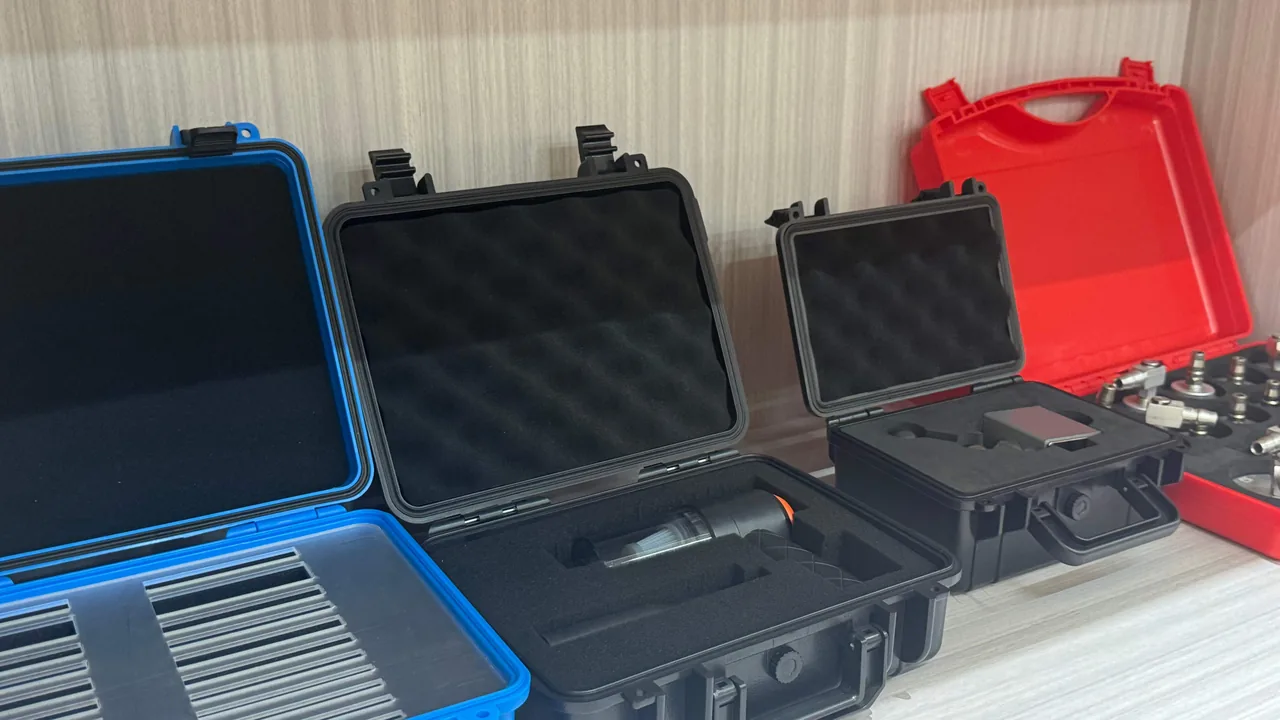
Overhaul and spare-parts management in chemical plants depend heavily on reactor key parts arriving intact. Agitator shafts, impellers, mechanical seals, magnetic-drive components, glass-lined and PTFE-lined parts are items where either surface precision decides sealing performance or a damaged lining means scrapping the whole assembly. Shipping them mixed with ordinary hardware in a wooden crate, only to find chipped seal faces, spalled glass lining and scored shaft diameters at opening, is a direct cause of many deferred maintenance plans. This article explains, from the real service conditions of chemical plants, how a reactor-parts case should be built at shell, liner, compartment and seal level to bring transport and interim-storage risk down to an acceptable level.
JUNZHIJIA takes a firm position on this category: the case must treat every precision face as though it must touch nothing, and every multi-part spare set must be managed by compartment and label so that nothing is mixed or misloaded. Protection is a specification of surfaces, materials and procedures, not a thicker wall. That position turns a vague request for "shockproof foam" into measurable acceptance clauses that bind both supplier and buyer.
Table of Contents
- 1. Corrosion and Vapour Environment in Chemical Plants
- 2. Form and Position Protection for Agitator Shafts and Impellers
- 3. Taboos of Mechanical Seal Faces
- 4. Zero Tolerance for Magnetic Drive and Glass Lining
- 5. Liner Material Compatibility with Chemical Families
- 6. Static and Flammable Solvent Scenarios
- 7. VCI Vapour Corrosion Inhibition and Desiccant
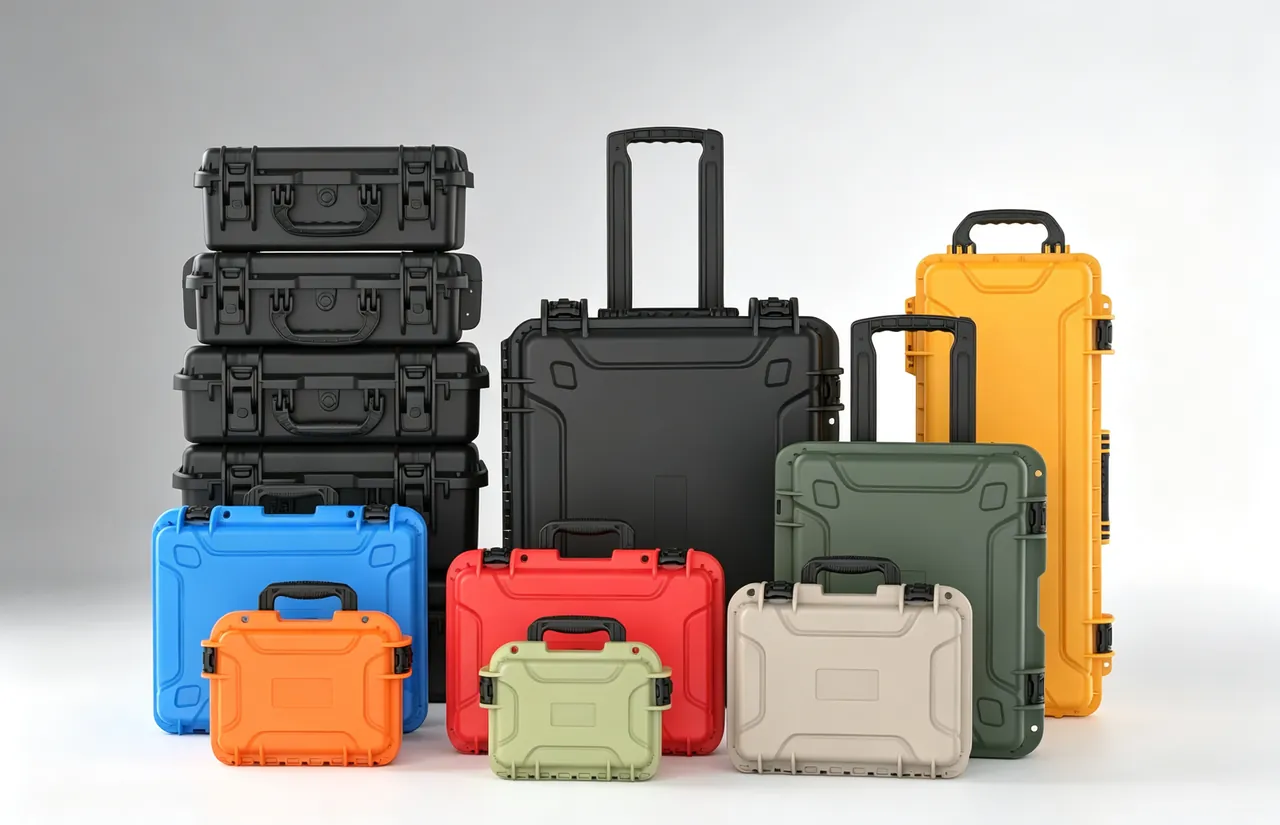
- 8. Support and Deflection Limits for Long Shafts
- 9. Compartment Location and Part Traceability
- 10. Stacking, Lifting and Fork Handling
- 11. Washability and Outdoor Storage
- 12. Custom Liner, Tooling and OEM/ODM Delivery
- Frequently Asked Questions FAQ
- Conclusion and Related Reading
1. Corrosion and Vapour Environment in Chemical Plants
Reactor surroundings carry solvent vapour, acid mist and alkali mist all year round, and even during shutdown, pipe-rack residues and trench pooling keep evaporating. A case that uses a plain cold-rolled steel shell can rust through from its edges within days of outdoor staging in the plant area. The more hidden risk is the liner: low-grade PVC foam slowly swells, turns sticky and bleeds plasticiser in aromatic, ketone and ester vapour, contaminating the very seal face it touches.
| Environment factor | Effect on case | Recommended response | Verification |
|---|---|---|---|
| --- | --- | --- | --- |
| Solvent vapour | Liner swell, seal-face contamination | Inert closed-cell liner | Material soak test |
| Acid and alkali mist | Shell edge corrosion | 304 stainless or sprayed aluminium | Salt spray rating |
| Day-night temperature swing | Condensation on inner wall | Moisture barrier, desiccant | Humidity card reading |
| Trench pooling residue | Localised vapour source | Lift case off floor, drain slope | Visual at staging |
| Outdoor staging weeks | Progressive hidden damp | Continuous seal, monthly check | Re-pressure-test seal |
The shell should therefore be 304 stainless steel or plastic-sprayed aluminium, and the liner limited to materials inert to most organic solvents, such as closed-cell EVA, IXPE, PE and certain silicone grades. For parts contacting strongly oxidising media, liner compatibility with residual oxidiser must be confirmed separately rather than assumed. A practical discipline is to specify the liner by the media list the part has actually contacted, not by a generic foam name. For long-term strategic spares, a quarterly inspection ledger is also advisable: record gasket state, desiccant remaining and humidity-card reading each quarter so the case becomes a managed in-stock asset rather than a one-time wrapper, and any anomaly is caught before the part is needed on a critical maintenance path.
2. Form and Position Protection for Agitator Shafts and Impellers
An agitator shaft is a slender rotating part; shaft deflection and local knocks both change dynamic balance, raising vibration and shortening seal life after installation. The case protects a long shaft by supporting, not wrapping: V or half-round cradles matched to the shaft diameter hold the shaft clear of the wall, with adjustable stops limiting axial movement at both ends. Impellers get profiled pockets matching the blade shape, tips inward, hub fixed, to stop blade edges pressing each other. Detachable impellers should be stored in a separate compartment from the shaft, reducing compartment volume and preventing blade edges from scoring the shaft during transit. Threads and keyways at the shaft ends should be sleeved or wrapped in lint-free cloth to avoid thread damage that prevents screwing home.
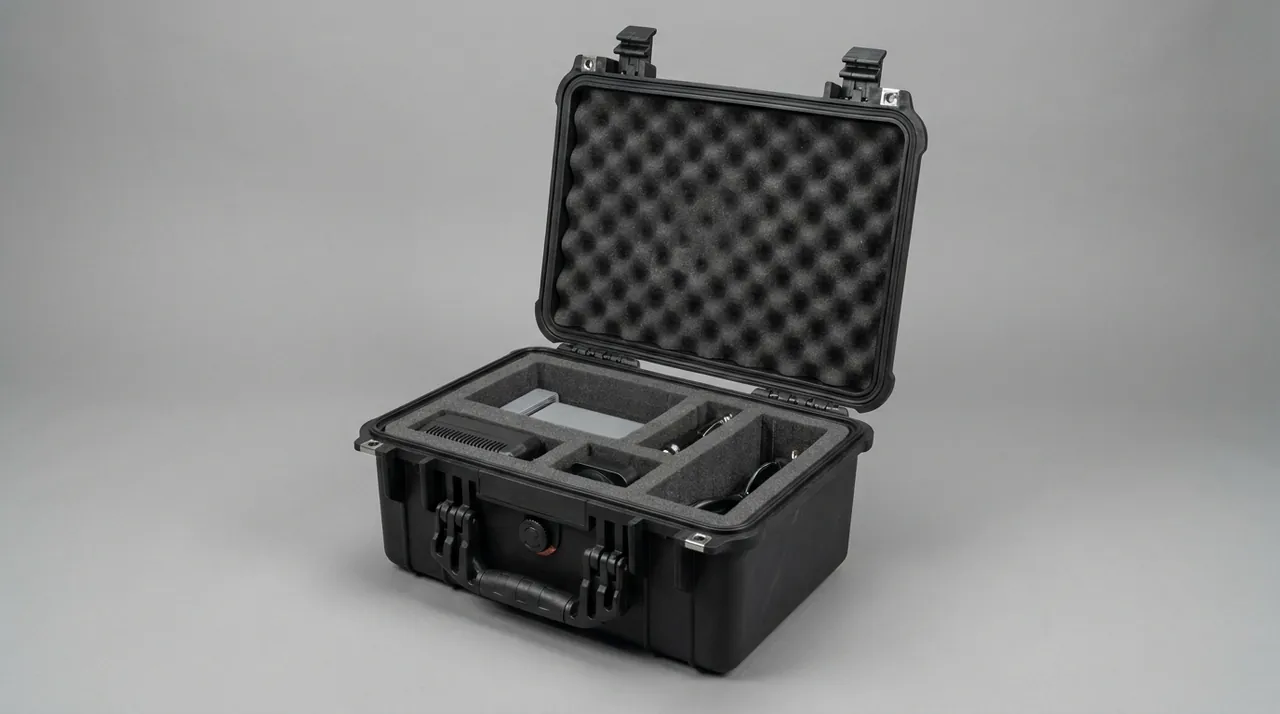
A second risk in transit is the repeated action of dynamic load. Road vibration can walk an under-located impeller a few millimetres over hours, and the blade edge then rubs the pocket wall, leaving a barely visible burr that becomes a stress concentration at speed. The profiled pocket must therefore grip without so much interference that pick-up scratches the surface. For an extra-long shaft, a shake test after packing — no relative-movement sound between shaft and wall — is the quick field check, and a faint sound means more cradles, not thicker foam.
3. Taboos of Mechanical Seal Faces
The mechanical seal is the part most afraid of contact. Its faces are lapped to optical flatness, and any scratch becomes a leak path that is essentially impossible to repair on site. The only rule for seal parts is to let the face touch nothing. A hard guard covers the rotating and stationary faces with a 1 to 2 mm air gap, closed-cell foam provides anti-vibration fill outside the guard, and the spring should sit free or lightly pre-loaded, never crushed at packing. Springs, O-rings and bellows go in a separate small box; an O-ring must not rest long-term against an oily or solvent surface or it swells. The first item at opening is a transmission-light check of the face for scratches and pitting.
The O-ring and bellows material is often overlooked. Two fluorocarbon grades differ sharply in resistance to amines and strong oxidisers; two EPDM grades differ by sulphur versus peroxide cure. The packing list should name the seal material and the media it suits, not merely "fluorocarbon O-ring". At opening, beyond the face check, confirm the O-ring is not flattened, twisted or swollen and the bellows is not crushed. Any anomaly should be recorded and reported to the supplier rather than forced into service.
4. Zero Tolerance for Magnetic Drive and Glass Lining
Magnetic-drive parts have no mechanical penetration and transmit torque through an isolation shell that is thin-walled and deformation-sensitive; glass-lined and PTFE-lined parts rely on a brittle layer to isolate media and fear any impact. Both need higher cushioning coefficients and stiffer support. The isolation shell gets a three-point fixed cradle with ample buffer around it, and the wall must never press the shell during a drop. Glass-lined parts are wrapped entirely in high-rebound closed-cell foam with thickened corners and a soft inner fabric layer against micro-scratches from relative movement. PTFE lining resists impact but fears sharp penetration, so it should never share a compartment with a metal edge. For these parts the pass criterion is not "no visible damage" but passing the maker's leak and spark tests on arrival, which is also why the seal material selection matters as much as the shell.
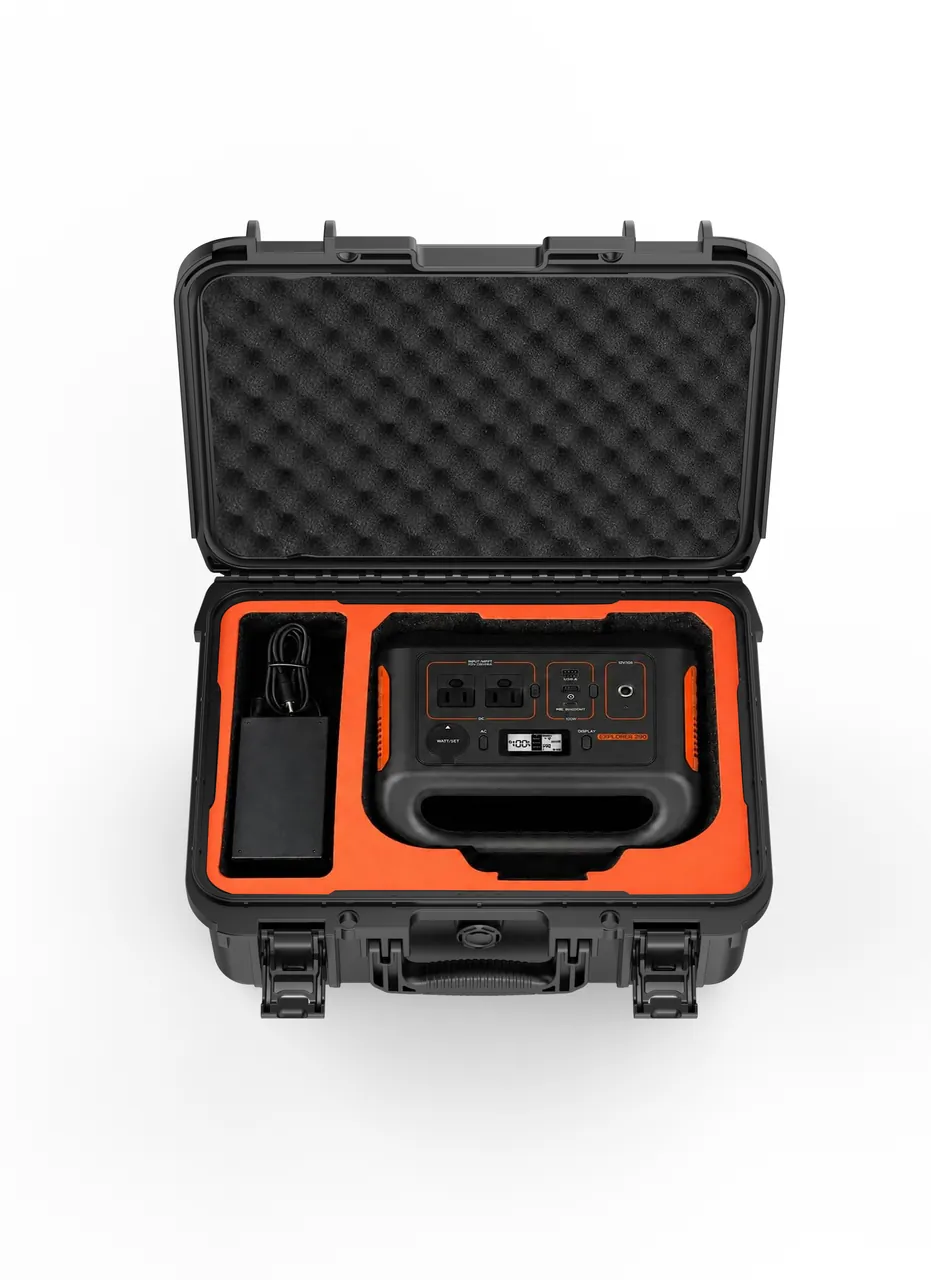
A visible "no roll, this side up" mark inside the case is also advised for these parts, because the isolation shell and glass layer see point loads, not distributed support, under a wrong roll, and local stress far exceeds design. The mark joins the compartment plate and QR as part of an in-case information system so any handler understands the handling requirement without opening the case, reducing the chance of a wrong move.
5. Liner Material Compatibility with Chemical Families
Different chemical media demand different inert materials. For aliphatic and aromatic hydrocarbons and most alcohols, closed-cell EVA, IXPE and PE are usually safe; for strong acids and alkalis, PE and certain fluoroelastomers are safer; for ketones, esters and chlorinated solvents, prefer PE and measure swell rather than assume. Silicone suits temperature cycling but fears sharp cuts, so it is a soft pad for seal faces rather than a broad support. When ordering, list the media the part has contacted, together with the liner, and let the supplier confirm, instead of writing "shockproof foam". JUNZHIJIA, on such orders, asks for the media composition and concentration range first and then gives liner and seal recommendations, avoiding batch liner rework from material error.
| Media family | Recommended liner | Avoid | Note |
|---|---|---|---|
| --- | --- | --- | --- |
| Aliphatic, aromatic hydrocarbons | Closed-cell EVA, IXPE, PE | Plain PVC foam | Aromatics swell PVC markedly |
| Ketones, esters, chlorinated | PE, measure swell | EVA, adhesive foam | Prefer small soak test |
| Strong acid, alkali | PE, certain FKM | Ordinary polyurethane | Concentration sets margin |
| Strong oxidiser | Confirm separately | Most elastomers | Do not generalise |
| Alcohols, water-based | EVA, IXPE, PE | None | Routine safe |
The point of the table is to replace the vague wording "shockproof foam" with a traceable material conclusion that names the liner and the media it resists, so a later contamination incident has a clear responsibility trail rather than a generic foam description.
6. Static and Flammable Solvent Scenarios
When a part carries flammable solvent residue, or the work area is a classified zone, static management in the case cannot be skipped. A liner of static-prone foam can accumulate charge by friction and discharge on opening. The remedy is a conductive cloth or conductive foam on the inner wall, with a ground path through the metal latch; trays holding residue parts must drain static, and ordinary plastic bags must not wrap them directly. For clearly flammable transfers, also confirm the hardware carries no spark source and the exterior bears no easily detached metal unrelated to the zone. This is not an explosion-proof certification but a reduction of static accumulation and spark risk to an engineering-acceptable level, and the boundary must be written into the travelling documents, as discussed for case seal materials used near solvents.
The discipline also covers the opening sequence. The case should be earthed before opening in a classified area, and the residue part should be transferred to a grounded tray rather than set on a plastic surface. None of this is a substitute for site procedures, but the case that supports the procedure lowers the chance that a routine unpacking becomes an ignition event.
7. VCI Vapour Corrosion Inhibition and Desiccant
Reactor spares are mostly 316L, duplex steel and Hastelloy, whose bare metal rusts readily in humid sea freight. The case uses two defences: vapour corrosion inhibition and desiccant. VCI paper or film emits inhibitor molecules that cover complex metal shapes foam cannot fully reach; desiccant, usually silica gel, holds internal relative humidity in a safe band and prevents condensation. Both are dosed by net cavity volume: desiccant by grams of silica gel per cubic metre, VCI by protected surface or volume, with a humidity indicator card so the receiver judges failure at a glance. A reminder: VCI is incompatible with some non-ferrous metals and plating, so part material must be confirmed within the VCI scope before use. The salt spray corrosion test result is a ranking between schemes, never a field-life projection, and gives no certification.
The humidity card is the eye of the whole scheme: a three-colour card with 5, 10 and 15 percent relative humidity thresholds lets the receiver judge moisture without instruments. It should sit at the first sightline inside the lid, not under the main part where it cannot be seen. On a colour change beyond threshold, replace desiccant, re-measure humidity and check gasket compression; never just swap the card and ignore the cause.
8. Support and Deflection Limits for Long Shafts
A long shaft fears two things in a case: lateral sliding that lets the shaft hit the wall, and over-wide support spacing that causes permanent deflection. The support span should keep deflection below the material allowable, usually read from tables by shaft diameter and length; for an extra-long agitator shaft, two or three equal-height V cradles with wrap angle not less than 120 degrees and lint-free contact cloth are used. The ends beyond the cradles are blocked by limit stops with buffer between stop and shaft. If a single case is length-limited, lay the shaft horizontally with a mid support rather than cantilever it. After packing, gently shake the case; no relative-movement sound between shaft and wall should be heard, a quick field acceptance check.
Cradle stiffness also matters. A low-density foam cradle creeps under shaft weight over days, dropping support height and wrap angle so the shaft regains sliding room. V cradles should therefore use high-density EVA or a composite with an internal rigid skeleton, with lint-free cloth on the contact face protecting the shaft and adding friction. For a very slender shaft, never bend or cantilever it; use a second case or a mid support. The shake test and a cradle-creep recheck belong in the travelling card as executable items.
9. Compartment Location and Part Traceability
Reactor parts often arrive as one set, multiple pieces, same type different specification, where mixing invites misload. The case should compartmentalise: one profiled slot per part, with a laser-etched or riveted stainless plate by the slot carrying part number, material and equipment tag. Small items such as seals, O-rings and fasteners get a separate numbered box rather than rolling in the main slot. For spares needing overhaul traceability, a QR or barcode zone on the outside scans out part number, batch and inspection record. This matters for long-cycle operation: one major overhaul may change seals on several reactors at once, and a case that cannot quickly distinguish them raises the misload probability sharply, so compartment and label are a necessary acceptance item, not a bonus.
The QR should do more than carry a number. Encode part number, batch, inspection record and equipment tag so a scan returns structured data and avoids handwritten transcription errors on site. For same-type different-specification spares, the QR should also flag "do not mix", letting the handler distinguish at a glance. The code zone should be weather-laminated and positioned for easy scanning outside the case, and it becomes part of the acceptance record rather than decoration.
10. Stacking, Lifting and Fork Handling
Reactor spares are heavy and off-centre, and mishandling crushes the internal buffer directly. The shell should carry lifting rings and fork slots, with the centre-of-gravity mark in a prominent position so lifting points and forks align with the centre. Stacking tiers are calculated from the shell allowable stacking load, with edge ribs raising side-pressure resistance; for very heavy seal assemblies a load-spreading base board under the case is advised. Plant aisles are narrow and corners tight, so case width should stay within the clear aisle, and where needed the case splits into two separable boxes. All protruding hardware should be recessed or sleeved to avoid snagging pipes during handling, a point reinforced by the pressure equalisation valve design used on sealed cases.
Load distribution inside the case also matters: heavy items sit low and centred, and the buffer layer between them and the wall is sized for the load, not just for shock. A centre-of-gravity mark that is permanent and legible lets the crew pick the right lift point every time, which is safer than guessing from the case shape.
11. Washability and Outdoor Storage
During overhaul, parts often stage outdoors in the plant area, so the case must survive spray, dust and day-night temperature swings. Joints are continuously sealed, latches and hinges waterproofed, and IP65 suffices for spray and dust without chasing immersion-grade IP67. The lid opening has a drain slope to stop water pooling and seeping in. A liner that has contacted solvent vapour should air out in a ventilated place before closed storage. For long-stored cases, a monthly check of gasket compression and humidity card is advised; on a colour change, replace desiccant and re-measure internal humidity. Washability also lowers maintenance cost: continuous sealing and waterproofed hinges prevent hidden damp that silently corrodes seal and hardware over weeks.
Before the rainy season, a full water-tight recheck is worthwhile: confirm the drain slope is clear, the gasket has no permanent set, and the hinges are still protected. These small maintenance actions cost far less than scrapping a spare to rust or moisture, and they keep the case a managed in-stock asset rather than a one-time wrapper.
12. Custom Liner, Tooling and OEM/ODM Delivery
Profile liners for reactor parts usually need tooling. The flow starts from measured 3D data of the part to build a baseline and a risk input list (which faces cannot be touched, allowable tolerance), then liner material and density, then profile and compartment drawings, then a sample trialled on the real part to confirm smooth pick-up and zero displacement, then a small batch. Tooling cost and minimum order must be stated at quotation: higher profile precision and special material raise unit cost, but when the part value far exceeds the liner cost, tooling pays. The confirmation sheet should also cover tolerance and interchangeability: the locating precision has a numeric range, and same-drawing liners must be interchangeable.
OEM or ODM delivery also fixes brand mark, document language and packaging traceability in the contract appendix, and the travelling card should show opening sequence, pick-up direction, mating-count slot and humidity-card position so the site needs no training. JUNZHIJIA issues a confirmation sheet covering media list, part precision and transport mode before tooling, avoiding whole-batch liner rework from wrong material selection, and the custom liner and compartment layout are manufactured by Kexin New Materials (Guangdong) Co., Ltd.
Frequently Asked Questions FAQ
Q: Can a reactor mechanical seal travel in the same case as ordinary hardware?
A: No. The seal face is lapped to optical flatness, and any scratch becomes a running leak path that is essentially impossible to repair on site. The case must cover the face with a hard guard and an air gap, with closed-cell foam damping around it, and O-rings and springs boxed separately. Mixed with ordinary hardware, the probability of the face being knocked by a wrench or bolt at opening approaches certainty, and it is one of the most common causes of deferred maintenance. The correct practice is a separate compartment for seal parts, individual packing, and a transmission-light face check as the first item on arrival. Nothing about a seal tolerates casual co-packing, and the cost of a guard and a small box is trivial against the cost of a scrapped seal, so the rule is absolute rather than a preference. Field data from plant overhauls shows the failure mode is rarely a dramatic crush; it is the quiet face scratch found only after the part is installed and leaks, by which point the transport phase is no longer under observation and the cause is hard to assign, which is exactly why the separate compartment and the opening check exist.
Q: What does a glass-lined or PTFE-lined part fear most in transport?
A: Impact and sharp penetration. The glass layer isolates media by a brittle enamel, and local spalling reduces the whole vessel's corrosion resistance, often growing from a micro-crack invisible to the eye; PTFE lining resists impact but fears a sharp corner through it. The case should wrap the part entirely in high-rebound closed-cell foam with thickened corners and a soft inner fabric layer against micro-scratches from relative movement, and never share a compartment with any metal edge. Arrival acceptance should keep the maker's leak and spark test as the pass basis rather than appearance alone. A part that looks intact can still have a hairline enamel flaw that only a spark test reveals, so the test result, not the visual, is the acceptance record, and a visual-only release is how lining damage reaches the field unnoticed. The spark test matters precisely because the flaw it finds is invisible; a visual pass can clear a part with a hairline enamel crack that later propagates under thermal cycling, and only the test stands between that crack and a field failure.
Q: How should a long agitator shaft be fixed in the case so it does not bend?
A: The core is enough support density to keep deflection below allowable, and to stop lateral sliding. Read cradle count from tables by diameter and length; usually two or three equal-height V cradles with wrap angle not less than 120 degrees and lint-free contact cloth. Ends beyond cradles are blocked by limit stops with buffer between stop and shaft. After packing, gently shake the case: no relative-movement sound between shaft and wall should be heard. If a single case is length-limited, lay the shaft horizontally and add a mid support; never cantilever it inside the case. The shake test is a field check anyone can perform, and a faint sliding sound means more cradles are needed, not thicker foam, because foam alone cannot restore a lost support angle once the shaft has room to move. This is also why a cantilevered shaft in a too-short case is unacceptable: the unsupported span accumulates deflection that no amount of end foam can recover, and the deflection becomes a permanent set the installation crew discovers only when the shaft will not seat into its housing.
Q: Can the liner of a chemical spare case use ordinary PVC foam?
A: It is not advised. The plant area carries solvent, acid and alkali vapour, and low-grade PVC foam swells, turns sticky and bleeds plasticiser in aromatic, ketone and ester vapour, contaminating the seal face. Limit the liner to closed-cell EVA, IXPE, PE and certain silicones that are inert to most organic solvents; for parts contacting strongly oxidising media, confirm compatibility separately. When ordering, hand the supplier the media list the part has contacted together with the liner, which is far more reliable than writing "shockproof foam". Material error is the most common reason an entire liner batch must be reworked, and rework cost dwarfs the small saving of cheap foam, so the material specification is where the order should spend its attention. The saving from cheap foam is a few percent of liner cost and is routinely dwarfed by a single rework of an entire liner batch, so the material line in the order protects more value than the unit price of the case itself.
Q: What should be noted when packing parts with flammable solvent residue?
A: The focus is static and spark management, not explosion-proof certification. A static-prone foam liner may discharge on opening, so the inner wall should carry conductive cloth or foam with a ground path through the metal latch, and trays holding residue parts must drain static rather than be wrapped in ordinary plastic bags. Hardware should carry no spark source, and the exterior should bear no easily detached metal. These boundaries must be written into the travelling documents, stating clearly that this is a measure reducing static to an acceptable level and is not an explosion-proof certification. Treating it as certification would be both false and dangerous, and the site procedure, not the case, remains the controlling authority for flammable zones. The case only supports that procedure by making earthing and grounded transfer physically easy; a case that fights the procedure will be bypassed, which is why the design must follow the zone rules rather than assert a certification it does not hold.
Q: Can VCI vapour inhibition and desiccant be reduced to one?
A: You can choose one, but each has its place. VCI emits inhibitor molecules that cover complex metal shapes foam cannot reach, suiting parts the foam cannot fully contact; desiccant holds humidity in a safe band and prevents condensation, suiting humid sea freight. Both are dosed by net cavity volume, with a humidity card to judge failure. Note that VCI is incompatible with some non-ferrous metals and plating, so material must be confirmed within scope before use. For high-value reactor spares, using both is the safer choice, and a temperature and humidity logger in the case provides objective data if a dispute arises over whether the part rusted in transit or in storage. The logger turns that dispute into evidence: the curve shows whether the cavity stayed dry, which decides whether the fault was packing or storage, and the record settles a claim that would otherwise run for months. As a practical rule, dose VCI for complex shapes that foam leaves exposed and desiccant for damp routes, and combine them when a spare must survive both a long sea leg and a humid warehouse, because the two mechanisms protect against different failure paths rather than duplicating one.
Q: How does a reactor spare case avoid misload between identical parts?
A: By compartment and plate. One profiled slot per part, with a riveted stainless plate by the slot carrying part number, material and equipment tag; seals, O-rings and fasteners get a separate numbered box. A QR or barcode zone outside scans out part number, batch and inspection record, so stores can confirm identity without opening the case and the bay can match a part to a reactor in seconds. One major overhaul often changes seals on several reactors at once, and a case that cannot quickly distinguish them raises the misload probability sharply, so compartment identification is a necessary acceptance item rather than a nice-to-have. The QR also matters because handwritten part numbers on site are a known source of error that compartment plus scan removes, and a misload caught only after installation is far more costly than the plate and code that prevented it. The risk is highest when two same-shape impellers of different metallurgy sit side by side and only the plate tells them apart, so the identification must travel with the part through every handover, not just at packing.
Q: Is an intact case exterior enough to accept a delivery?
A: No. An intact exterior only shows the box was not crushed in transit; it says nothing about the part. Acceptance must follow the fixed list item by item: transmission-light face scratch check, spark test on glass-lined parts, O-ring not flattened, humidity card not changed colour, part number matching the plate, and travelling documents complete. Acceptance criteria should be quantified, for example face scratch width, internal relative humidity and part displacement each with an upper limit, written into the purchase specification to bind the supplier and protect the buyer. A vague "looks fine" leaves a responsibility vacuum the moment a part fails in service, so the quantified criteria, not the appearance, are what the receiver signs for. For same-type different-specification spares the QR should also flag "do not mix" so the handler distinguishes at a glance, which prevents the silent misload that would otherwise surface only after reassembly and cost far more to correct than the plate and code that prevented it.
Conclusion and Related Reading
The point of a reactor-parts case is to let no precision face touch anything and to manage multi-part spares by compartment and plate. Hand the media list and part precision to the maker for confirmation, and accept against quantified criteria on arrival.
Related Reading