

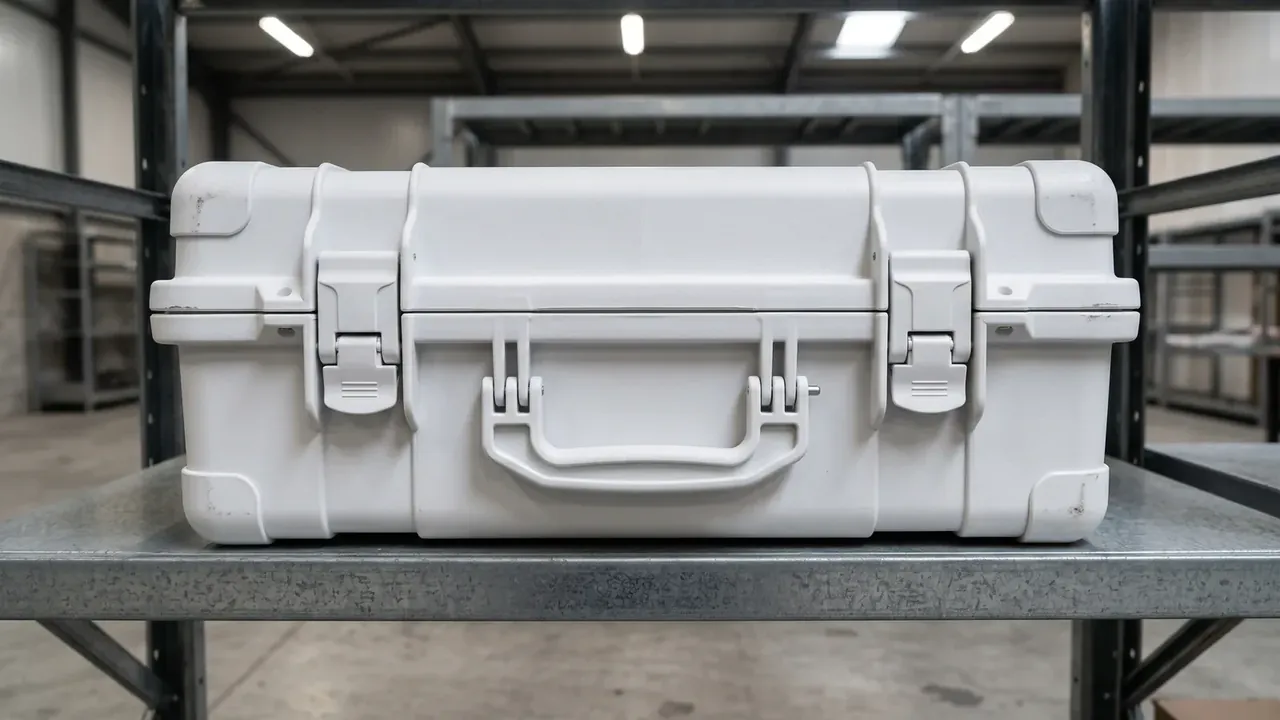
Quick answer: A cinema 8K camera protective flight case alternative is judged by weight and airline rules, not by shell thickness alone.
Table of contents
- Where 8K Body Shipping Gets Stuck in the Rules
- Choosing a Case for the 23 kg or 32 kg Line
- Balancing Case Weight and Payload
- Why Temperature and Humidity Records Travel Along
- Where a Flight Case Ends and a Moulded Case Begins
- FAQ
1. Where 8K Body Shipping Gets Stuck in the Rules
An 8K body weighs 3.5–6.5 kg, which sounds manageable until lens, battery, recorder, cage and baseplate join it. A working kit of 25–45 kg is ordinary. Once that figure passes the counter limit, shell strength stops mattering, because the agent reads a scale.
Three rule sets close in on a cinema 8K camera protective flight case alternative at once. The free allowance is counted by piece or by total weight; the manual handling ceiling on one item sits at 32 kg for most carriers; and size caps the three sides at 158 cm on piece-concept routes, 203 cm on weight-concept ones.
A cinema 8K camera protective flight case alternative therefore subtracts in two places and adds in two others: less shell weight and less external volume, more insert precision and more latch redundancy. Subtract the wrong one and the kit travels as freight.
2. Choosing a Case for the 23 kg or 32 kg Line
23 kg is the usual economy allowance per piece; 32 kg the single-item ceiling under the weight concept and the common business or first class figure. Read the ticket before the catalogue.
Inside the 23 kg line, the method is cutting shell weight. A cinema 8K camera protective flight case alternative for that line runs 6–7 kg empty, uses 20–30 mm moulded EVA and holds shape by compartments, carrying about 15 kg with a workable margin.
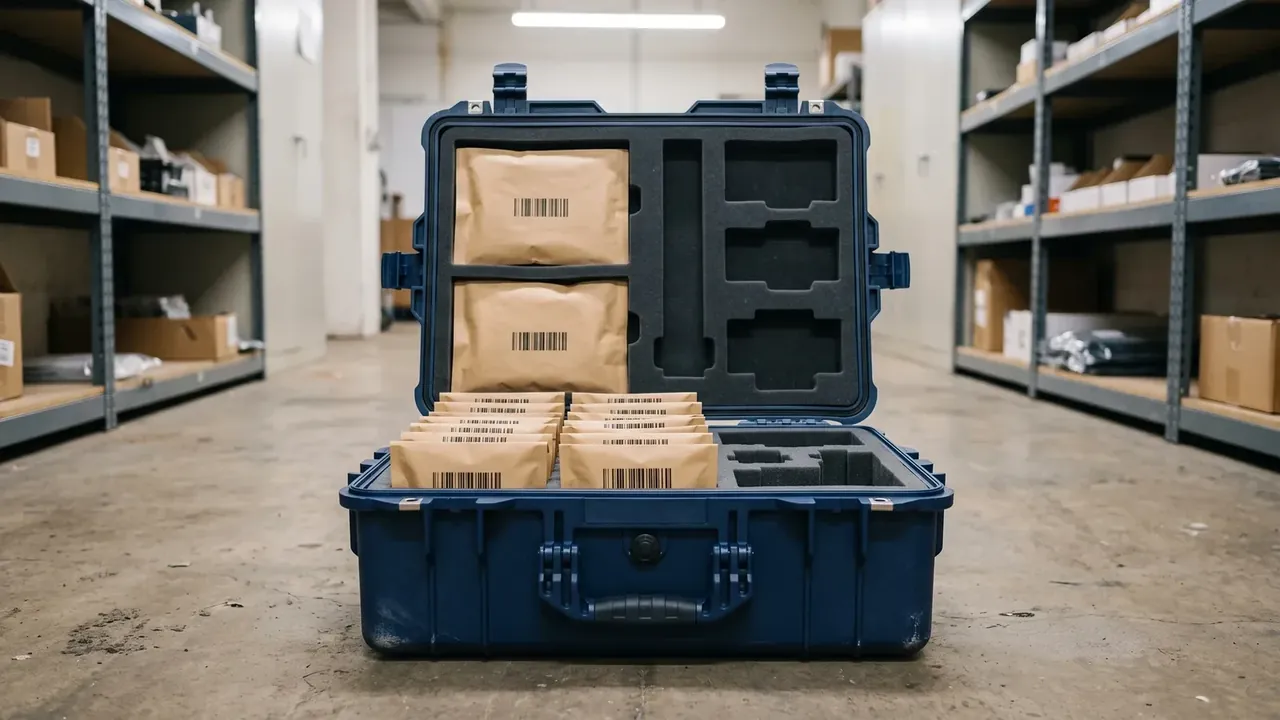
The 32 kg line allows more: an 8–12 kg shell, thicker walls, four latches, two ribs under the base. Thickening the same mould adds 1.5–2 kg and buys a lid that does not flatten under two cases above it.
| Cabin or route | Limit | What it forces on the case |
|---|---|---|
| Economy, piece concept | 23 kg per piece | empty weight 6–7 kg, simple insert |
| Business or first | 32 kg per piece | 8–12 kg shell, four latches |
| Weight-concept routes | 32 kg hard ceiling | surplus goes into a second piece |
| Full freight | no baggage rule | over 32 kg allowed, freight packing |
For a cinema 8K camera protective flight case alternative the rejection line is specific: a kit that exceeds the free checked allowance by 2 kg fails the plan. Two kilos is the drift a scale produces after a jacket and a pair of shoes join the load.
Volume runs beside weight: at 158 cm for three sides, a 600 × 400 × 300 mm cavity reaches 165 cm once wheels and handle count.
3. Balancing Case Weight and Payload
Shell weight can be traded; distribution cannot, though past a point the walls soften and the lid presses into the insert.
Rotomoulded PE runs 3–6 mm at the wall, moulded PP 2.5–4 mm. At equal external size a rotomoulded shell is typically 2–3 kg heavier, and that mass sits in the corners and base where hits land. For a cinema 8K camera protective flight case alternative flying over 30 times a year, the weight is worth paying.
Distribution inside the cinema 8K camera protective flight case alternative is the other half. A 3.5–6.5 kg body plus a lens puts the centre of mass at one end, so the case hangs crooked. The insert places the heaviest block under the handle or above the axle, keeping that centre near the pivot.
A very light empty case pays elsewhere: sorting belts throw it at corners and a stack flattens its lid, so the answer is a ribbed lid pattern, not thicker walls. Wheels follow the same logic, worth moulded mounts inside 32 kg and nothing under 23 kg.
4. Why Temperature and Humidity Records Travel Along
A checked case meets two extremes. In sun on the apron the inside passes 50 °C; in the hold at altitude the outside drops below −20 °C. A −20 to 60 °C working range covers the shell, since beyond it PE goes brittle, the gasket hardens and lid compression falls away.
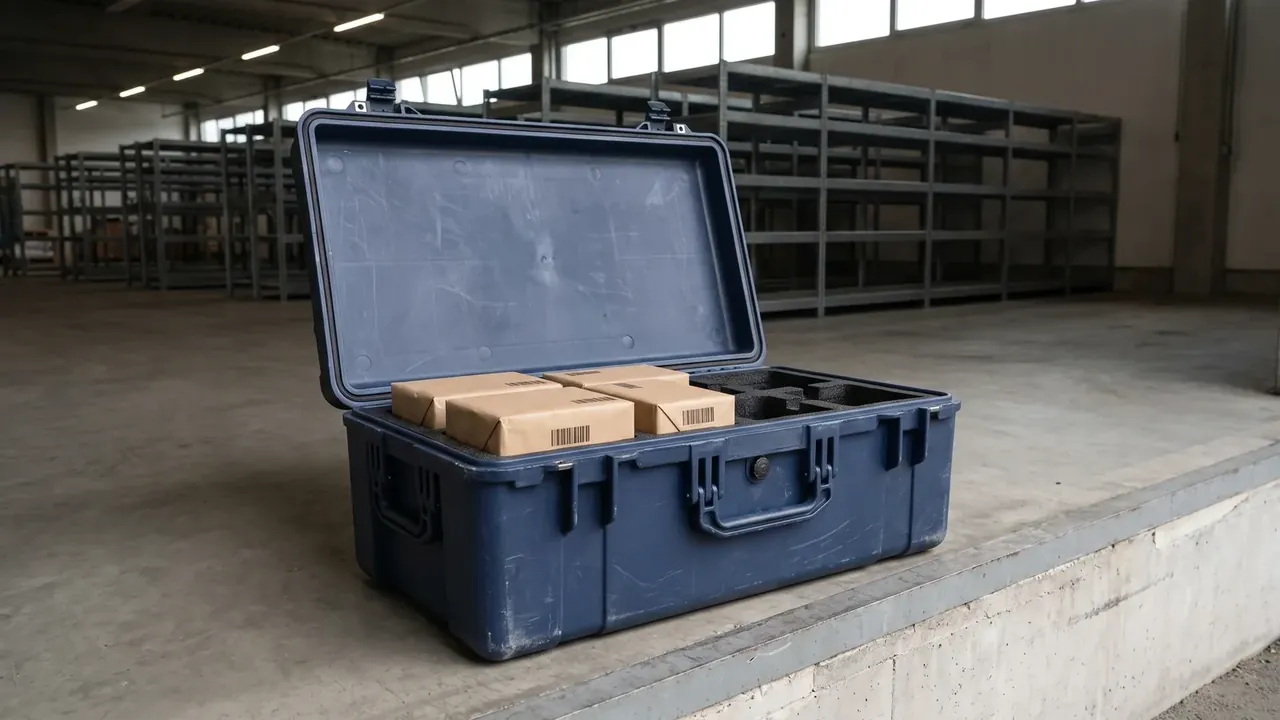
Humidity is the harder half. Gear is normally stored at or under 60% RH, and above that line coatings and boards grow mould. Even at IP67 the moisture sealed inside a cinema 8K camera protective flight case alternative cannot leave, which is why a logger earns its slot.
The logger sits mid-height, clear of metal and of the counterweights, its probe in open air, in a 60 × 40 mm bay; the battery travels with the crew under lithium rules.
Past 30 shipments a year the record becomes an accounting tool. When a shell arrives cracked, the temperature curve and impact timestamp support the claim, and a photograph cannot separate transit damage from damage at wrap.
5. Where a Flight Case Ends and a Moulded Case Begins
Replacement is not downgrade; it puts a shell on the line it can hold. A cinema 8K camera protective flight case alternative may be rotomoulded, injection moulded or aluminium, and the three differ in empty weight and boundary.
Rotomoulded runs 6–9 kg with no seams at corners or base, which suits the 32 kg line. Injection moulded runs 3–5 kg with tighter dimensions, a fit for 23 kg on road work. Aluminium runs 8–12 kg, stiff and lockable, but a dented wall never returns.
| Case type | Empty weight | Replacement boundary |
|---|---|---|
| Rotomoulded PE | 6–9 kg | inside 32 kg, over 30 flights a year |
| Injection moulded PP | 3–5 kg | inside 23 kg, mostly road |
| Aluminium flight case | 8–12 kg | lockable and stiff, over 32 kg by freight |
| Reinforced moulded case | 5–7 kg | one-off or low-frequency shipping |
Drop figures depend on the route. Brand acceptance often uses a 1.2 m corner drop on the empty case, while ISTA 3A scales height by pack weight, testing a 20–30 kg pack near 460 mm. One shell can pass one route and fail the other.
The last boundary is insurance wording: most gear policies demand packing that meets carrier rules, so a case refused at check-in takes the cover with it.
Related Reading
- What the foam layer inside a flight case really absorbs
- The order in which to choose a camera equipment case
- Cartons and hard cases split the work in e-commerce
- Picking a dustproof trolley for camcorders and lenses
JUNZHIJIA
Related Products
- 8 Series — Gun Cases; Military Equipment Cases; Camera Equipment Cases; Drone Cases; Watch Cases; Knife Cases; First Aid Cases; Electronics Equipment Cases
- WL8-2812 PP Gun Case — model WL8-2812
- All protective cases and toolboxes: 7 series, 158 models