

Quick answer: Build the claim evidence chain on a clock: note damage at 0 h, report within 24 h, submit photos at 48 h, inspect at day 7 and claim by day 30.
Table of contents
- The clock decides who has to explain
- From 0 to 48 hours: the three moves that count
- Seven evidence types and the shot each one needs
- Pixels, nine frames and a 90-second clip
- Day 7, day 30 and the three repairs
- FAQ
1. The clock decides who has to explain
A shipment of 260 cases on 4 pallets arrives with 6 whitened corners on the outer face of pallet 3. The receiver writes "damage, to be checked" on the delivery note, opens the pallet two hours later and confirms 6 damaged units. At day 30 the claim is rejected: no quantity, no position, nothing reported.
A claim evidence chain is won or lost in the first 24 hours. The timeline decides which side has to produce something first, and the side holding a checkable record stops explaining.
2. From 0 to 48 hours: the three moves that count
Sign at 0 h, report in writing at 24 h, submit the first pack at 48 h, inspect at day 7, claim by day 30. The first three fall inside two days, where most shippers lose the case.
| Time point | Action | Evidence | Owner |
|---|---|---|---|
| 0 h | note damage quantity and orientation, pallet by pallet | annotated note, photographed | receiver, driver |
| 24 h | written notice, email counts | notice, acknowledgement | quality |
| 48 h | first evidence pack | six faces, video, batch number | quality, supplier |
| day 7 | third-party inspection, site or video | inspection opinion | surveyor |
| day 30 | claim filed | claim letter, pack index | purchasing, legal |
The 0 h entry is most often wasted. A usable line reads: pallet 3, outer face, 6 whitened corners, C017 to C022, film pierced at layer 2. Quantity, position and orientation, or the note proves nothing. Leave the pallet intact, since a disturbed pattern removes the reference for every later frame.
The 24 h notice goes to supplier and carrier together, or the other one returns the file as never told. The 48 h pack can be thin, but must carry the batch number and six faces; those two decide whether a case reaches a production batch.
3. Seven evidence types and the shot each one needs
Seven links cover the chain: annotated delivery note, six faces before opening, a continuous video of 90 s or more, the batch number, liner condition, three views of the damage, and third-party inspection.
| Evidence type | Action | Pass mark | Usual defect |
|---|---|---|---|
| Delivery note | check at the tailgate, then write | quantity, position, orientation | "to be checked" |
| Six faces | shoot before the film comes off | one frame per face, corner visible | filmed after opening |
| Continuous video | pan from vehicle to damage | 90 s, one take | clips joined |
| Batch number | dial, carton label, pallet label together | all three legible | carton label only |
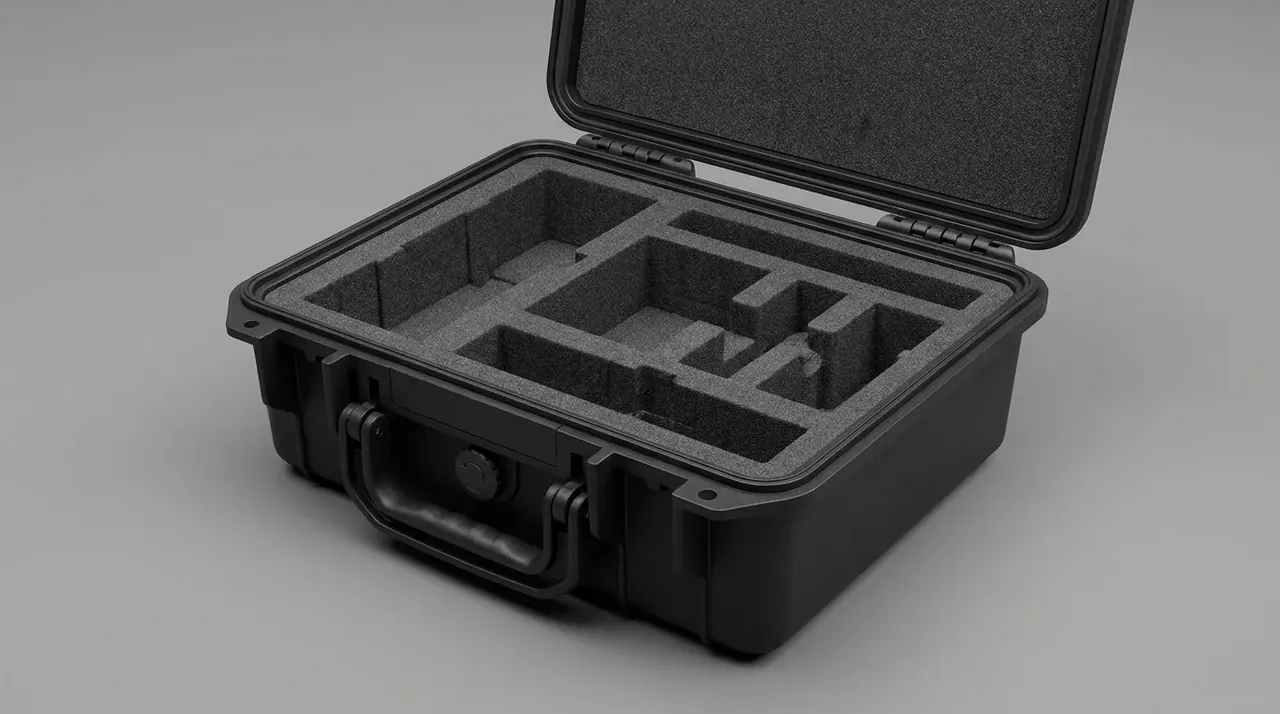
| Liner condition | foam before parts come out | dents, displacement | shot after unpacking |
| Three views | front, side, 45 degrees | rule at the edge, full crack | close-up only |
| Third-party inspection | site or video within 7 days | cause stated | requested late |
The batch number is the link people skip. One frame with the in-mould date dial, the carton label and the pallet label carries moulding day, packing lot and shipping lot, so a case walks back to moulding. Photograph the carton label alone and the trail stops at packing.
Liner frames must come before anything is lifted out. Dents, shifted cavities and crushed cells show where force entered; once parts are out, the foam springs back and the record is gone.
4. Pixels, nine frames and a 90-second clip
The claim evidence rules belong in the work instruction. Each frame at 12 megapixels or more, long edge 4000 pixels, no compression, at least 9 frames per claimed case covering six faces, liner, three views and batch number.
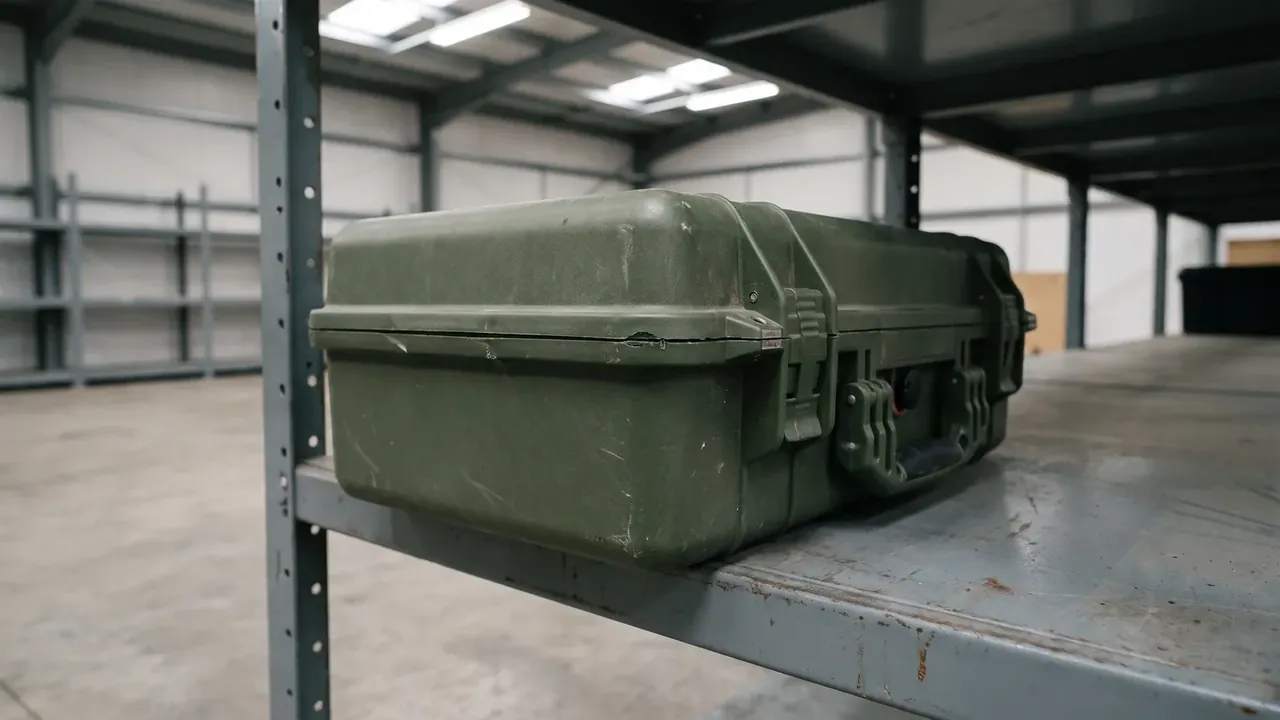
Originals matter: compression eats the pixels along a crack edge. One pass through a chat app cuts a 2000-pixel edge to 1000, smears a hairline crack into a grey band and strips the capture time from the EXIF data, the only proof a frame came from site. Upload originals to a folder, send thumbnails in chat.
Video runs 90 s minimum, one take, no cuts: wide on the vehicle, slow push to the damage, back to wide. Any cut reads as a skipped frame. Keep pallet, film and damaged case for 7 days, tagged and apart; re-inspection comes on day 7, and without the pallet the load direction is gone.
5. Day 7, day 30 and the three repairs
Day 7 is the window for the third-party visit, counted from the first pack. A video inspection fits inside 2 days if both sides agree.
Name the claim evidence pack in 5 parts: date, bill of lading, case number, defect code, sequence, for example 20260312-BL2041-C017-D03-05. Four defect codes cover common cases: D01 crack, D02 deformation, D03 seal failure, D04 surface damage.
The 30 days need a 7-day cadence: confirm receipt on day 7, chase inspection on day 14, close gaps on day 21, file on day 28.
Three repairs exist: compare with an intact case from the batch, re-check the factory retention sample, or commission a third-party re-test. All three restore the cause argument, none restores the clock.
Refusals cluster around 4 reasons: deadline passed, originals missing or compressed, pallet and film discarded, or damage where the load could not have acted. The first three are process failures; the fourth is settled at 0 h.
Conclusion
A claim evidence chain is a clock with seven attachments, not a folder of photographs. Fix the five time points, then let the seven types fill those slots. Nine originals per case, a 90-second unedited clip, 5-part naming, 3 repairs and 4 grounds for refusal keep a claim from turning into an argument. The chain proves itself the day someone questions it.
This article covers case-side specifications only and does not address any handling, loading or use of the contents.
Related Reading
- How liability is divided in a damaged-case claim
- Insurance and proof of loss in transit damage
- Writing quality clauses into a case contract
- How AQL sampling works at acceptance
- Choosing Incoterms and a freight option
Related Products
- 8 Series — Gun Cases; Military Equipment Cases; Camera Equipment Cases; Drone Cases; Watch Cases; Knife Cases; First Aid Cases; Electronics Equipment Cases
- WL8-2812 PP Gun Case — model WL8-2812
- All protective cases and toolboxes: 7 series, 158 models