

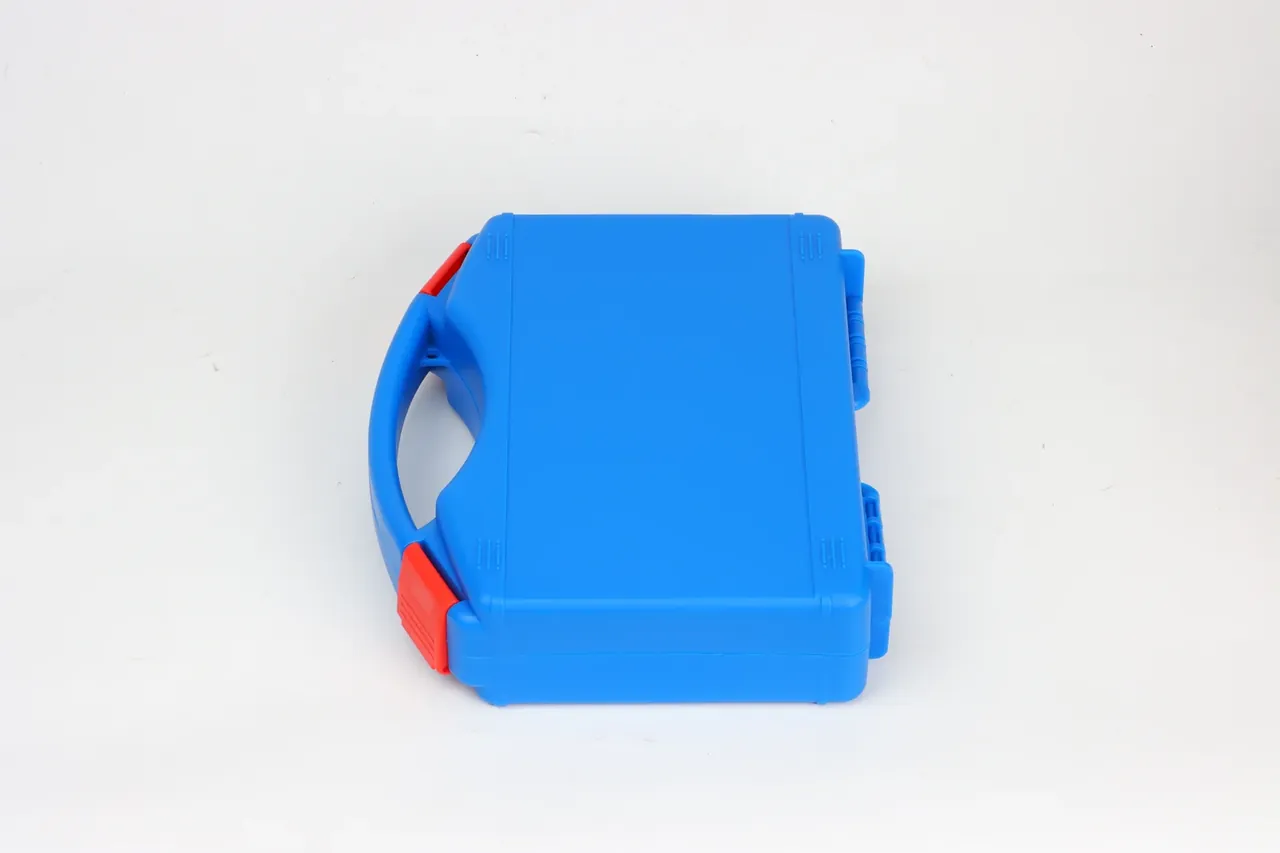
Quick answer: A colored protective case earns its place when three conditions stack up: recognition past 3 m, a swing beyond minus 25 °C or midday sun, and several people sharing one model. Meet two and switch.
Table of contents
- How a colored protective case splits six site roles
- Cold stores: still opening at minus 25 degrees
- Night lifts and offshore decks: color as positioning
- Rescue and training grounds: numbering, stacking, speed
- Three assembly details that go wrong
- FAQ
1. How a colored protective case splits six site roles
One model becomes two tools once shade and liner change; the last column explains most rework.
| Site | Shade | Build | Usual mistake |
|---|---|---|---|
| Cold store dock | Light grey | Twin silicone seal, 30 mm PE | Frost buries the label |
| Port night lift | Orange, 50 mm tape | Four steel corner caps | Tape on a curve reads dark |
| Fire rescue | Orange-red, 40 mm number | Clear lid, dividers | Number hidden when stacked |
| Field training | Olive or sand | Egg-crate foam, tear-outs | Foam collapses after two drops |
| Line patrol | Yellow, black stripe | Anti-static liner | Too thick for climbing |
| Film gear | Black or grey | Two-layer sponge, dividers | Lost in a dark room |
Five of six mistakes ignore shade: tape laid over a curve goes dark, a side number survives only on the top case, light foam collapses first.
Color does one job: it lets someone three metres away tell whose case this is.
2. Cold stores: still opening at minus 25 degrees
A cold store is the hardest test for a colored protective case: four hours at minus 25 °C makes an ordinary polypropylene latch brittle, and a 12 mm paddle is hard to find with a 5 mm glove.
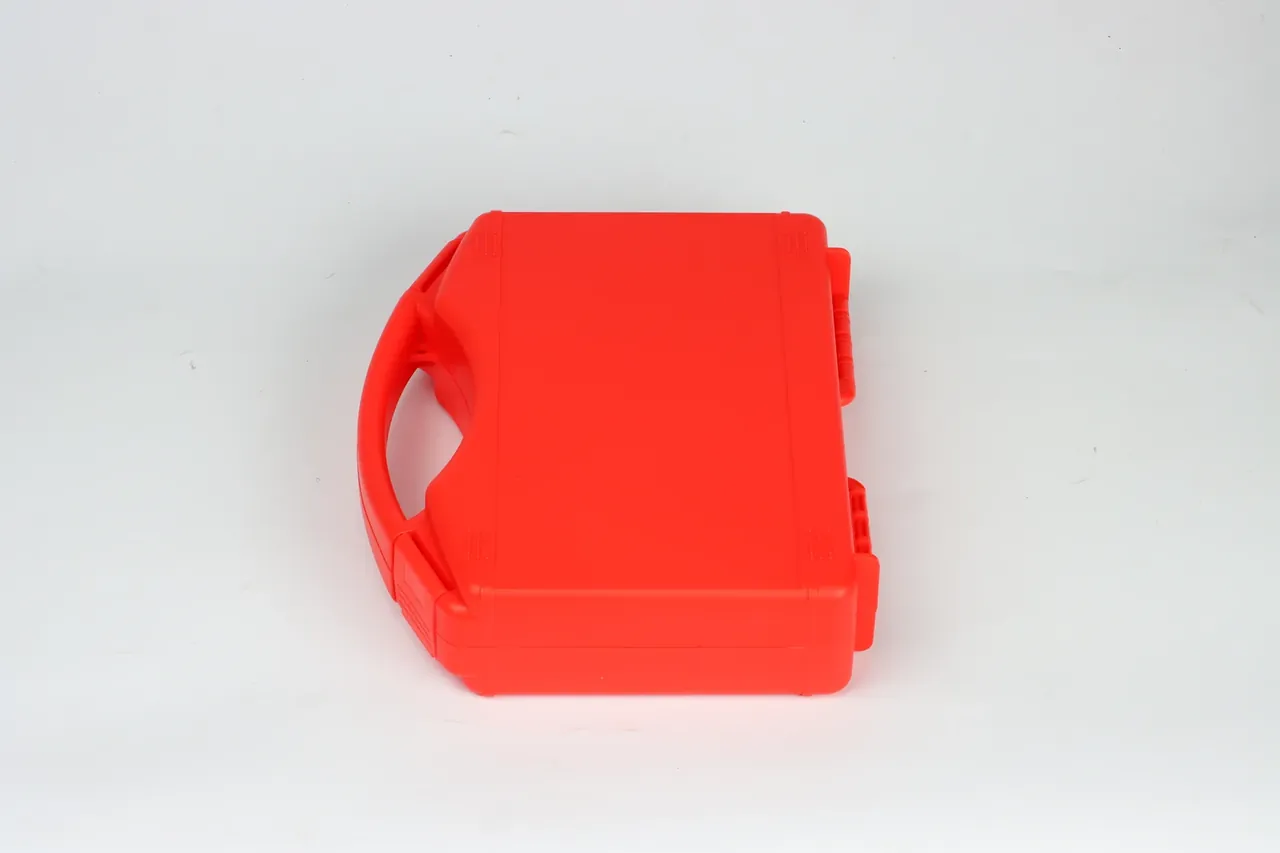
Three requirements matter, all about feel:
- Paddle width of 25 mm, so a gloved fingertip presses flat.
- A low-temperature grade, elastic at minus 30 °C; no hammer test data, no order.
- A twin silicone seal, since single rubber stiffens at minus 25 °C.
Shade is undervalued: a light grey case frosts slowly and clears fast, so the label stays readable; a dark one moved to an 18 °C sorting area comes out white and needs two wipes. At 400 openings a shift that is 25 minutes lost.
3. Night lifts and offshore decks: color as positioning
Port lighting is a point source, so the direction a colored protective case reflects decides whether anyone sees it.
- Orange or yellow bodies, clearly lighter than concrete.
- Reflective tape on flat faces only, 50 mm wide, closed around.
- One shade per group; mixed stacks make counters count twice.
- Offshore: no red rust after 96 hours of salt spray.
Carbon steel hinges rust within three months on deck and streak an orange body brown. A 304 pin with a nylon bush costs under 8 yuan more and doubles life.
4. Rescue and training grounds: numbering, stacking, speed
Rescue asks the opposite: not impact resistance but opening speed. Three cases must be emptied in 40 seconds.
| Parameter | Rescue | Training stack | Note |
|---|---|---|---|
| Loaded weight | 8.6 kg | 12.4 kg | Above 15 kg, two people |
| Stack height | 2 high | 4 high | Bottom case carries 50 kg |
| Number height | 40 mm | 25 mm | Readable at 3 m |
| Lid | Front opening | Top opening | Front suits walls |
| Pallet | Not used | 1200 × 1000 mm | Eight per layer |
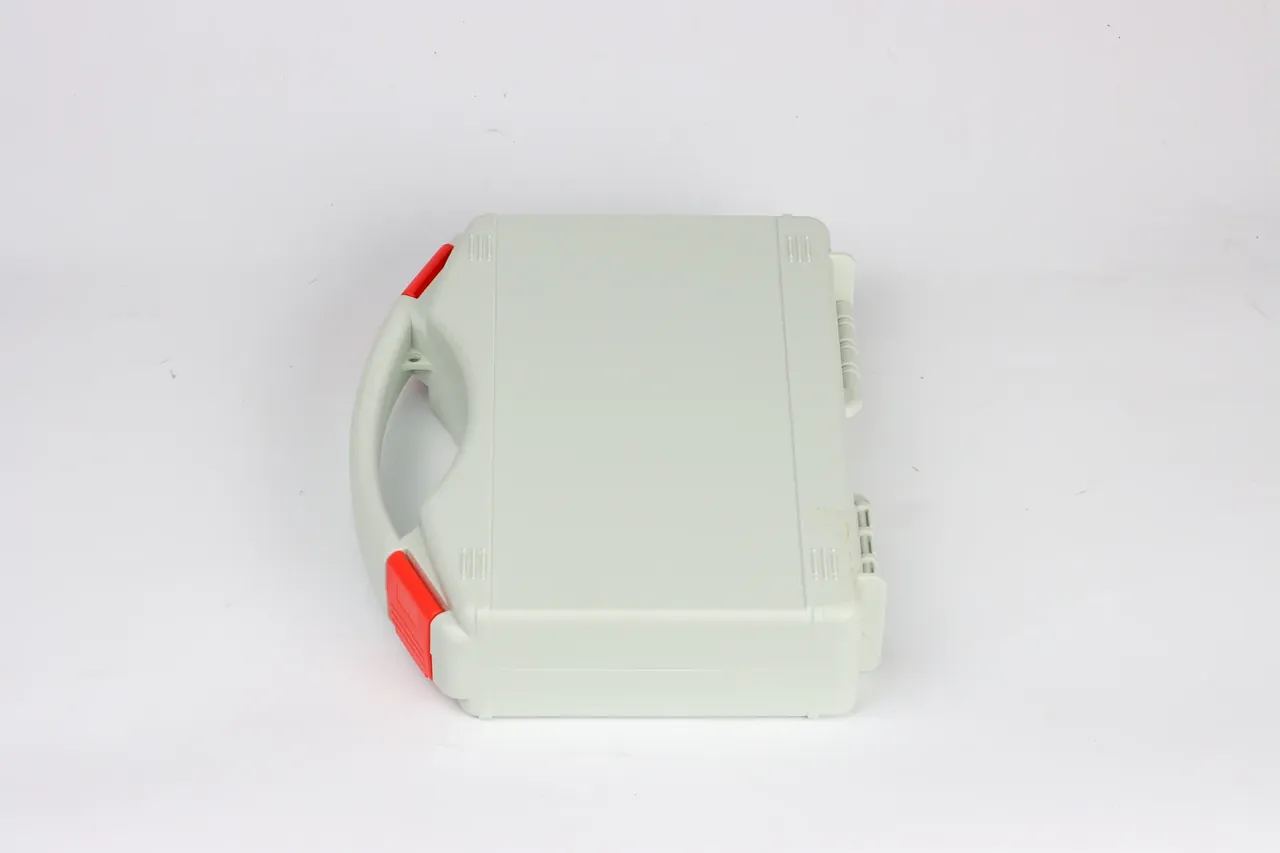
Stacking gets skipped. At four high the bottom lid carries 50 kg for months, sags 2 mm and lets rain in. Corner ribs pass that load into the side walls; a thicker lid does not. Ask for bench data on a four-high stack.
Numbering follows: on the lid only the top case reads, on the upper third of the side two or three stay legible.
5. Three assembly details that go wrong
The first is latch orientation. Upward and downward opening feel a step apart, and a downward latch presses the glove so force never reaches the paddle.
The second is liner fit. Foam 2 mm oversize sits snug; 5 mm over and the lid will not close.
The third is label position: above the latch it goes white in three months, opposite the handle it lasts two years.
Conclusion
Start a colored protective case choice from the site: recognition distance, temperature swing and headcount decide shade, liner and latch. Cold stores read the low-temperature grade, ports read tape and salt spray, rescue reads lid geometry.
This article discusses only the container (case body) side of specifications and design intent, and does not cover any handling, loading or use of the contents.
Related Reading
- How a colored protective case is built
- Color difference standards for colored cases
- Site configuration for OEM case projects
- Transport and stacking for large cases
Related Products
- 8 Series — Gun Cases; Military Equipment Cases; Camera Equipment Cases; Drone Cases; Watch Cases; Knife Cases; First Aid Cases; Electronics Equipment Cases
- WL8-2812 PP Gun Case — model WL8-2812
- All protective cases and toolboxes: 7 series, 158 models