

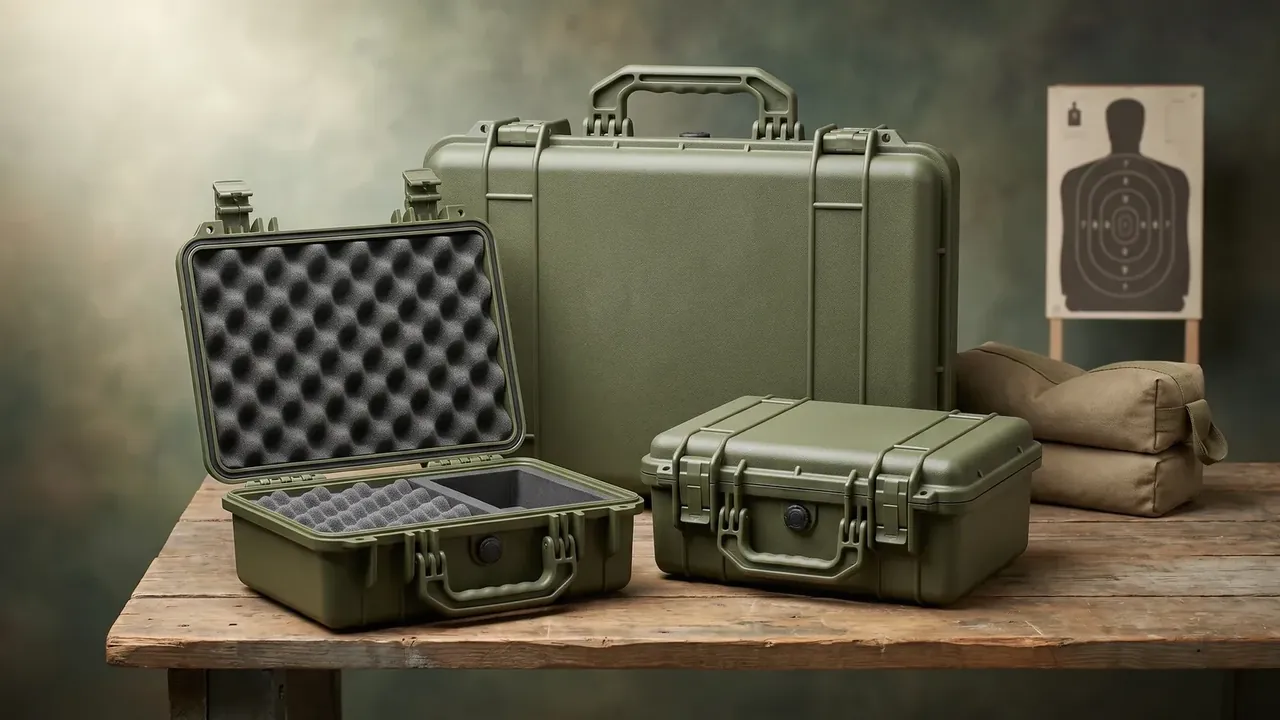
Quick answer: A buyer usually has one sample, a thickness gauge and a feeler gauge. Standards only help once they become bench actions: tap three spots to hear delamination, read wall thickness on a plain panel, run a 0.6 mm feeler around the lid joint. Those three steps settle most container, ammunition, fiber decisions before a quotation is signed.
Table of contents
- Where the bench criteria come from
- Walls: three taps and one reading
- Latches and seals: four numbers decide
- Hardware and inserts: the weak end
- Turning the checks into a comparison sheet
- FAQ
1. Where the bench criteria come from
A purchasing table rarely holds more than a sample, a gauge and a set of feelers. A clause earns its place through its instruction about where to measure, not through the certificate it unlocks. A container, ammunition, fiber wall is a laminate, so floor, side and corner do not share one strength, and measurement points matter more than limits.
MIL-STD 810H covers environment and mechanical load; IEC 60529 answers one question, whether water gets in. Together they match the two gates between press and store room.
| Reference | Clause tests | Bench action | Result accepted |
|---|---|---|---|
| MIL-STD 810H 501.7 | Distortion at 71 °C | Two hours in a summer trailer | Lid flat, coat unblistered |
| MIL-STD 810H 516.8 | Panel after a 1.2 m drop | Empty case dropped from waist height | No dull thud, no whitening |
| MIL-STD 810H 509.6 | Metal parts, 96 hours salt fog | Ask for the latch report | No red rust on stainless |
| IEC 60529 IPX7 | Sealing at 1 m for 30 minutes | Close, immerse, open, look | Dry wall, dry gasket |
Only the right-hand column belongs to the buyer; tolerances already sit in the supplier report.
2. Walls: three taps and one reading
Tapping is the cheapest delamination probe available. Strike the floor centre, the middle of a side and each corner with a knuckle. A short, bright note means fibre and resin are still bonded; a dull note with a long tail usually means the plies have parted. Tap an empty case, because contents absorb the sound and the judgement drifts.
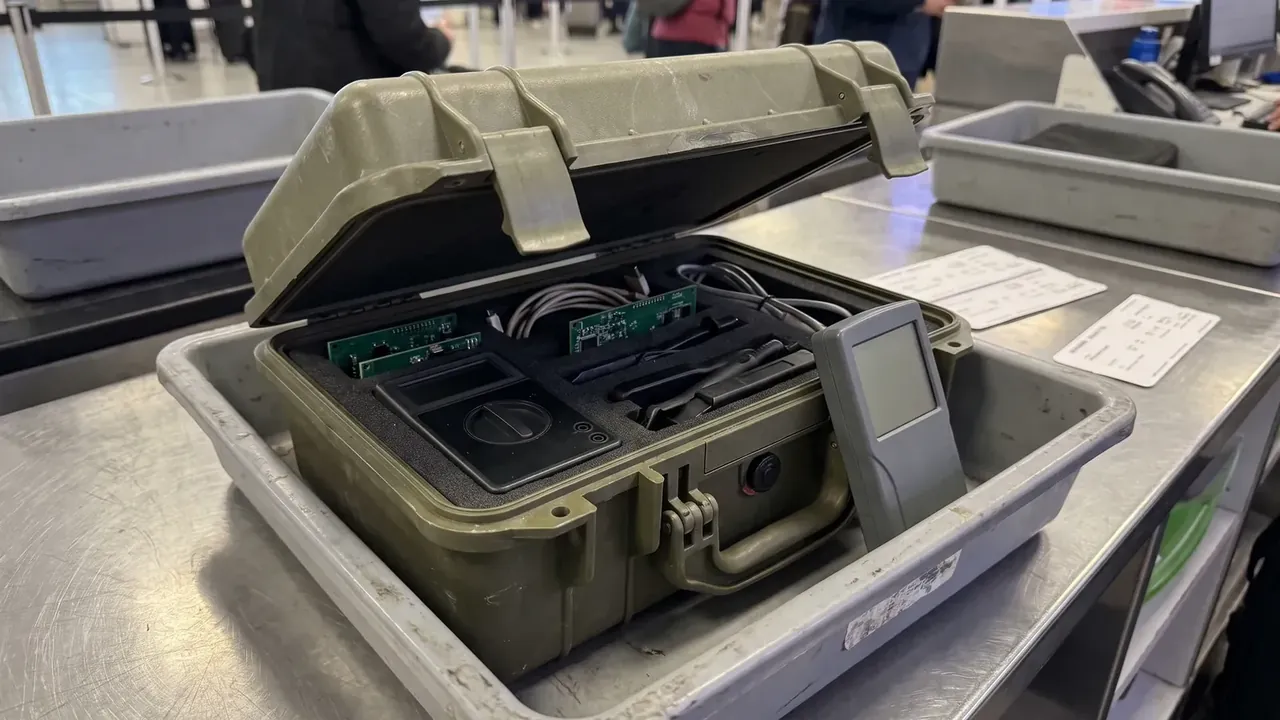
Read thickness on a plain panel. On an unribbed flat the wall of a container, ammunition, fiber lands between 3.0 and 4.0 mm. Move the probe to a corner and the number jumps past 6 mm, because extra plies were laid there. A spread wider than 0.5 mm across one panel points to uneven layup, which is what cracks first in a drop. While the gauge is out, check the holes: white fibre at a bolt hole means the edge was drilled unsealed, and moisture wicks along the filaments.
3. Latches and seals: four numbers decide
Most latches here are draw latches, and four numbers settle a container, ammunition, fiber sample without stripping it.
- Holding force of at least 600 N: pull the open end with a spring scale, or a loaded lid creeps open.
- Opening force between 60 and 90 N: lighter and the latch releases itself, heavier and a gloved hand cannot work it.
- Lid flatness within 0.6 mm: a 0.6 mm feeler must not enter anywhere along the joint.
- Gasket compression of 25 to 35 percent: with a torch inside, no light escapes the rim.
4. Hardware and inserts: the weak end
The shell of a container, ammunition, fiber often outlives its hardware. Hinge pins, latch keepers and handle bosses are metal or glass-filled plastic, and every load between them and the laminate passes through an insert.
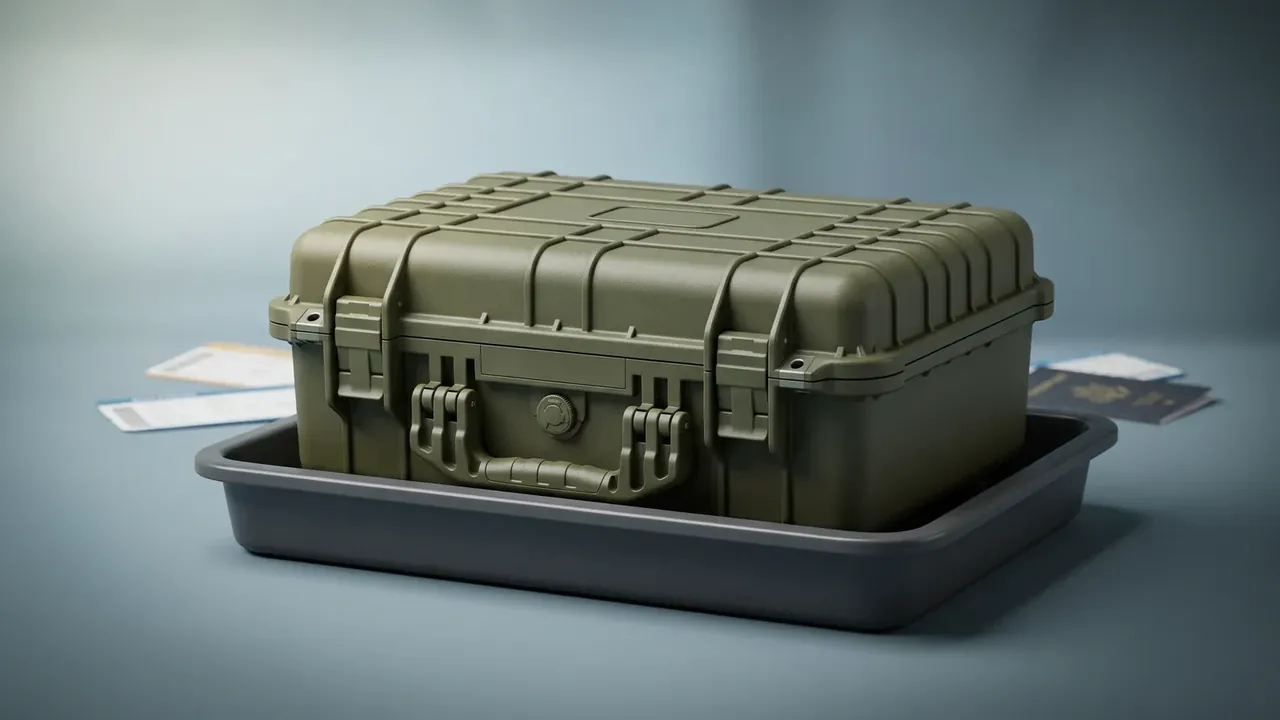
Inspect an insert three ways. Fine radial cracks around the rim are the warning before pull-out. A proud face gets crushed under stacking, a sunken one collects water. Torque tells the third: 4 N·m is enough, and past that the resin crushes before the fibre carries anything. Then ask whether the insert was moulded in or fitted afterwards. A moulded insert cures with the layup and keeps a resin-rich interface; a retro-fitted one relies on tapping and lives a shorter life in the same shell.
5. Turning the checks into a comparison sheet
With three suppliers on one table, write the readings on one line, or memory decides for you.
| Check | Pass line | Typical failure | Time |
|---|---|---|---|
| Feeler at the joint | 0.6 mm will not enter | Enters at a corner, gap stays shut | 30 s |
| Tap test | Short, bright note | Dull tail, worst at corners | 2 min |
| Wall reading | 3.0–4.0 mm, spread ≤0.5 | Scattered points, thin spot 2.8 mm | 5 min |
| Latch holding force | 600 N or more | Scale slips at 400 N | 3 min |
Order matters as much as the numbers. Run the feeler first, because a distorted joint disqualifies a sample. Tap second, since delamination makes a good thickness reading meaningless. Read thickness third and pull the latch last.
Conclusion
Clauses will not choose a supplier, but they move a decision from looks solid to comparable numbers. A feeler gauge, a probe, a spring scale and one ear will rank three container, ammunition, fiber samples in an afternoon. What deserves memorising is the measurement point, because a corner and a plain panel on the same container, ammunition, fiber were never meant to read alike.
This article discusses only the container (case body) side of specifications and design intent, and does not cover any handling, loading or use of the contents.
Related Reading
- Four wall layers and the moulding routes behind them
- Fibre cases against metal cases
- Specification system and capacity calculation
- Choosing a case for coastal storage
Related Products
- 8 Series — Gun Cases; Military Equipment Cases; Camera Equipment Cases; Drone Cases; Watch Cases; Knife Cases; First Aid Cases; Electronics Equipment Cases
- WL8-2812 PP Gun Case — model WL8-2812
- All protective cases and toolboxes: 7 series, 158 models