

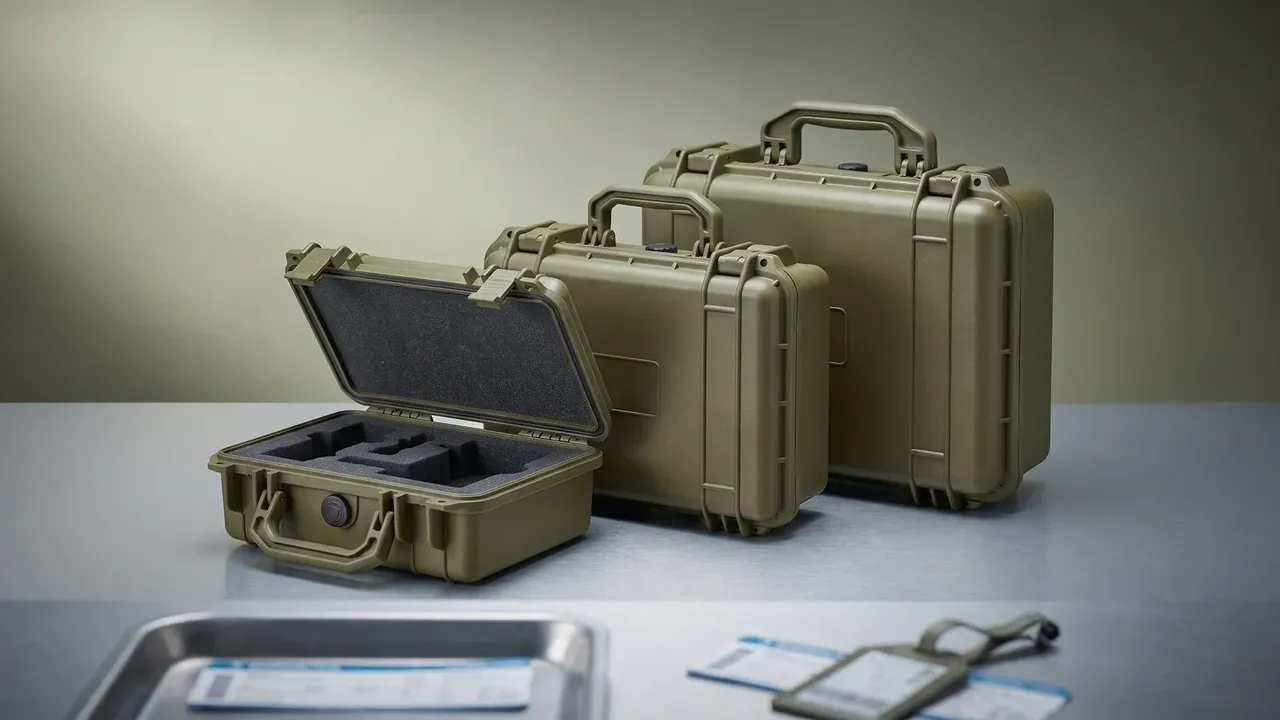
Quick answer: A container, ammunition, fiber is dimensioned from the cavity outward. Fix the internal size and foam allowance, split the wall into base, side and lid load paths, then check the result against stacking pressure and drop height. A 1.2 m cavity landing on an 8 mm base is arithmetic, not a rule of thumb.
Table of contents
- Cavity first, then everything else
- Three load paths, three wall thicknesses
- Stacking: three tiers down to the base
- Seal groove and latch count move together
- Six readings on the first article
- FAQ
1. Cavity first, then everything else
The internal size anchors every later number. Purchase orders quote the equipment outline, so the drawing has to convert it: outline, plus foam on both faces, plus 15 mm of finger clearance. Run the chain backwards and the foam can only be squeezed thinner, and cushioning disappears.
The three cavities below are common; outlines use a 6 mm wall and 30 mm of foam per side.
| Internal size mm | Outside size mm | Empty weight kg | Foam per side mm |
|---|---|---|---|
| 800×300×120 | 838×338×152 | 6.8 | 20 |
| 1050×380×150 | 1088×418×182 | 9.6 | 25 |
| 1200×420×180 | 1240×462×214 | 11.5 | 30 |
The outline always grows 8 mm more than the cavity, because the seal groove takes a 3.5 mm step and two finish coats take 0.5 mm each. For every 100 mm added to the cavity, the outline should gain 108 mm. A gap above 2 mm means one link has already been compressed.
Diagonals are the second hard limit: a 2 mm difference will not seat a cut foam block.
2. Three load paths, three wall thicknesses
A container, ammunition, fiber never has one wall thickness. It has three answers for three paths. The base carries stacking pressure and fork tine line loads at 8 mm. The side resists lateral impact and strap pressure at 5.5 mm. The lid hits the ground first, so it takes 6 mm with the corner radius opened to R12.
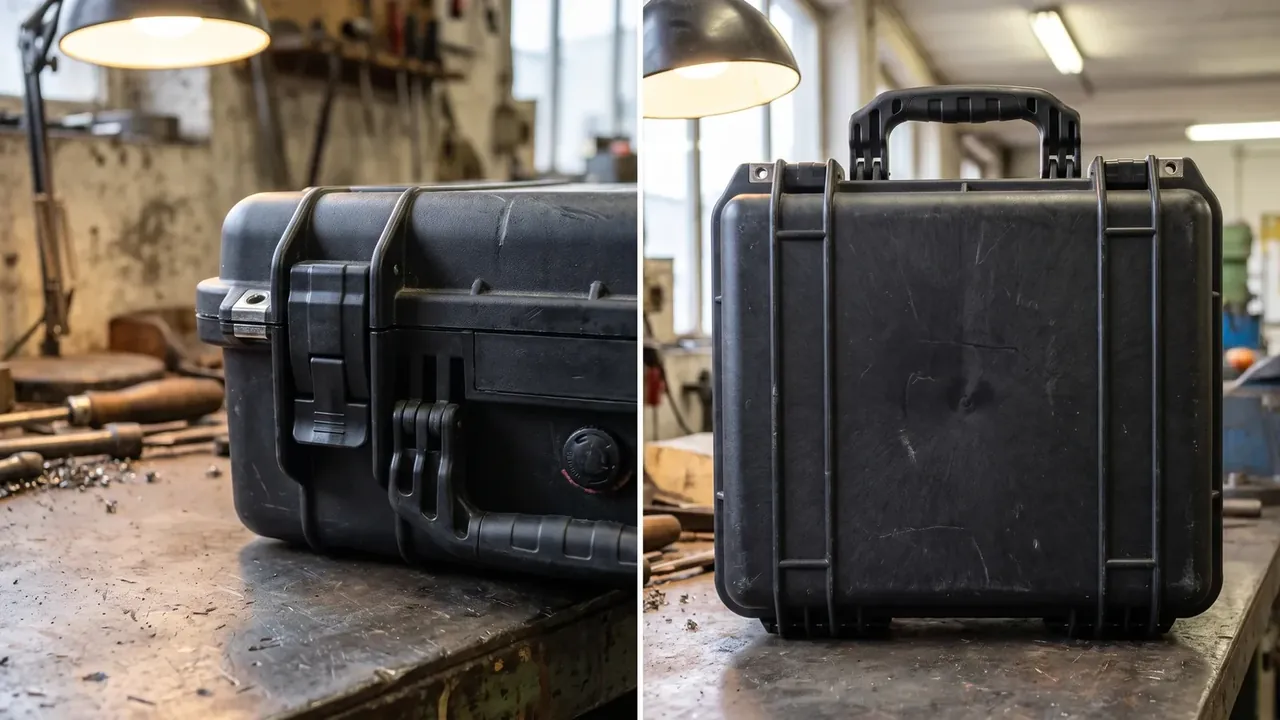
Three thicknesses mean changing the layup by zone. Make the whole case 8 mm and the same cavity pushes empty weight from 11.5 kg to 13.8 kg, loading the handle and latches with the difference. Plies alternate at 0, 90 and plus or minus 45 degrees, 0.28 mm each: 28 in the base, 19 in the sides, 21 in the lid. Four angled plies at every corner hold back delamination around hardware holes. Thickness tolerance stays at plus or minus 0.8 mm, and anything outside sends the mould back for a clearance check.
Thin is not efficient. Under 4.5 mm, one tightened strap leaves a white mark that cracks a season later.
3. Stacking: three tiers down to the base
Stacking is the most underrated item on the sheet. A loaded case weighs 42 kg, so three tiers put 84 kg on the bottom unit for months at a time.
| Tiers | Load on base kg | Base pressure kPa | Creep in 30 days mm |
|---|---|---|---|
| 2 | 42 | 2.4 | 0.6 |
| 3 | 84 | 4.7 | 1.1 |
| 4 | 126 | 7.1 | 1.9 |
Divide by the 0.178 m² footprint and apply 2.5, and the long-term allowance lands at 11.8 kPa. Past that line a plywood spacer spreads the load; a base thickened to 10 mm adds mass without adding contact area.
4. Seal groove and latch count move together
Seal and latch are two ends of one dimension. The groove is 3.5 mm deep and takes a 5 mm silicone cord, compressed to 28% when the lid closes. Under 20% the joint leaks; over 35% the latch will not close.
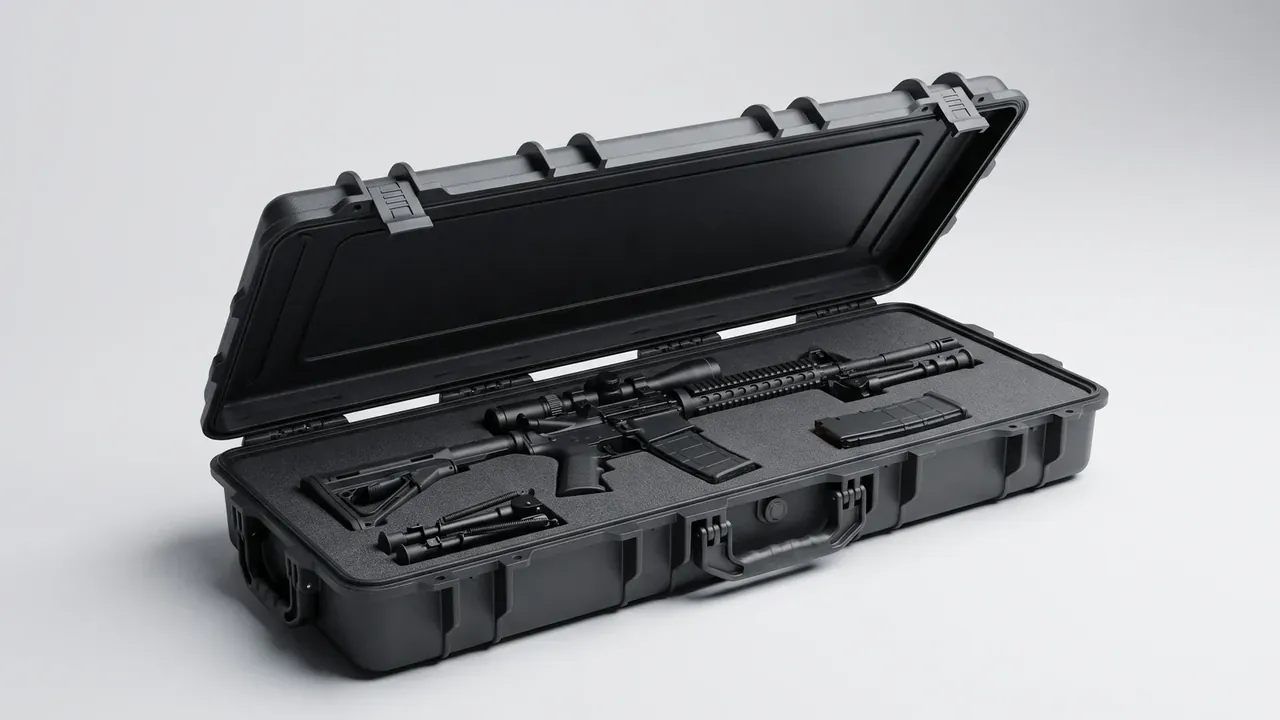
One latch per 450 mm of rim gives four on a 3.3 m perimeter: 180 N each, 720 N total, against a cord demand near 218 N per metre. Remove one latch and the middle of the long side lifts 0.4 mm.
A valve opening at 0.2 bar equalises a 40 °C differential in about 8 seconds, so the cord is not sucked inside out when the lid comes up. Cycle life runs to 5000 openings with no more than four points of compression loss.
5. Six readings on the first article
A drawing states nominal values; a first article proves the line can hold them.
- Wall thickness: two points each on base, side and lid, with a 0.6 mm spread across the six.
- Cavity diagonals: difference no greater than 2 mm.
- Seal compression: 25% to 30% on a cut section after closing.
- Latch retention: at least 180 N each, no more than 25 N between the four.
- Drop: 1.2 m fully loaded, one fall per face, no rim gap, no latch release.
- Salt spray: 480 hours with no exposed substrate and no fibre bloom.
Only the drop and the salt spray need samples sent out.
Conclusion
Dimensioning a container, ammunition, fiber runs one way: cavity, then foam and groove, then three wall thicknesses, then stacking pressure and drop height. Every link carries a tolerance, which is why a first article is measured item by item rather than accepted on a certificate. Lock the 1.2 m cavity, the 8 mm base and the four latches, and the rest of the sheet follows.
This article discusses only the container (case body) side of specifications and design intent, and does not cover any handling, loading or use of the contents.
Related Reading
- How the four wall layers of a fiber case are stacked
- Fiber cases against injection moulded and metal cases
- Internal cavity grades and matching outlines
- How three case materials differ in specification
Related Products
- 8 Series — Gun Cases; Military Equipment Cases; Camera Equipment Cases; Drone Cases; Watch Cases; Knife Cases; First Aid Cases; Electronics Equipment Cases
- WL8-2812 PP Gun Case — model WL8-2812
- All protective cases and toolboxes: 7 series, 158 models