

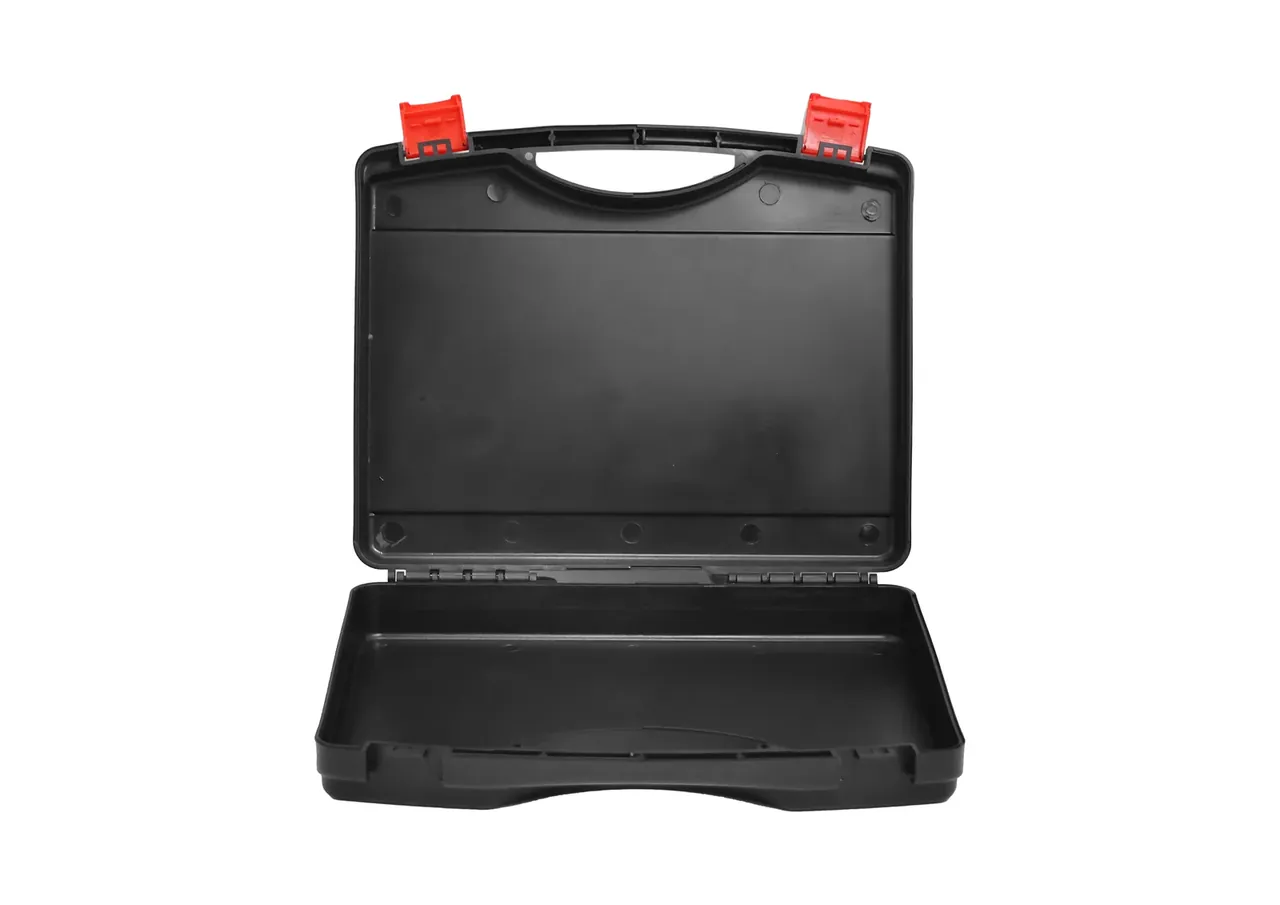
Quick answer: Cooler box vs protective case is settled by wall build, not price. A 30 L cooler keeps 22 L of cavity behind 40 mm of polyurethane and holds 4 °C to 8 °C for 9 hours at 25 °C; a 3 mm protective case with the same ice runs 1.2 hours but survives a 1.2 m corner drop.
Table of contents
- Wall Thickness: Where 8 L of a 30 L Box Goes
- Hold Time: Two Ice Packs at 25 °C
- Drops and Load: Two Endings at 1.2 m
- Sealing: One Drains, One Blocks
- Three Conditions for One Box Doing Both
- Lining a Case: What 15 mm Buys Back
- FAQ
1. Wall Thickness: Where 8 L of a 30 L Box Goes
A cooler wall is a sandwich of 1.5 mm PP either side of 40 mm polyurethane at 0.022 W/(m·K); a case is a single polyethylene wall of 3 or 4 mm at 0.40 W/(m·K). The 18-fold gap is paid in volume: a nominal 30 L cooler measures 22 L inside, a case of the same size 29 L.
| Item | Cooler, 40 mm PU | Case, 3 mm PE | Case, 4 mm PE |
|---|---|---|---|
| Nominal / cavity | 30 L / 22 L | 30 L / 29 L | 30 L / 28 L |
| Wall | 40 mm | 3.0 mm | 4.0 mm |
| Conductivity, W/(m·K) | 0.022 | 0.40 | 0.40 |
| Tare | 4.6 kg | 2.8 kg | 3.9 kg |
| Usable volume | 73% | 97% | 93% |
| Static load at 20 mm lid sag | 30 kg | 80 kg | 110 kg |
Tare is the line buyers skip: 4.6 kg plus 15 kg of load is 19.6 kg, against 17.8 kg for the 2.8 kg case.
2. Hold Time: Two Ice Packs at 25 °C
One protocol: 25 °C and 60% RH, cavity from 4 °C, lid opened 30 s every 2 hours, clock stopped at 8 °C. Two 1.5 kg packs run 9.0 hours in a 30 L cooler, 6.2 hours at 35 °C.
| Setup | 4 °C to 8 °C at 25 °C | Same at 35 °C | Top-to-bottom spread |
|---|---|---|---|
| 30 L cooler, 40 mm PU | 9.0 h | 6.2 h | 1.5 K |
| 22 L cavity, 20 mm PU | 5.5 h | 3.8 h | 2.4 K |
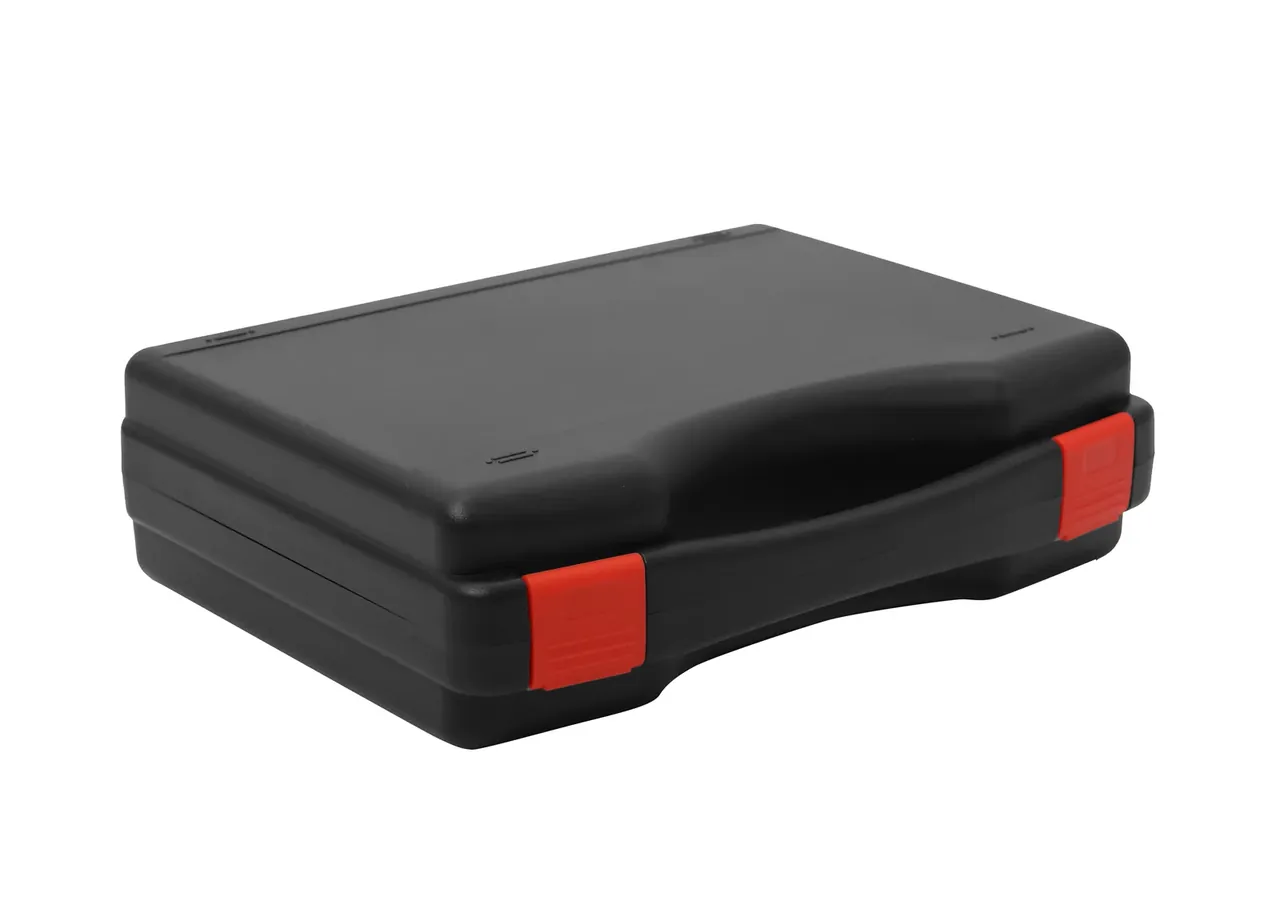
| 30 L case, 3 mm, same ice | 1.2 h | 0.8 h | 6.0 K |
| 30 L case with 15 mm XPE | 4.0 h | 2.7 h | 3.1 K |
Three kilos of ice absorbs about 1000 kJ on melting: 9 hours of budget in the cooler, 1.2 in the case, and the ice did not change — the leak area did. The 6.0 K spread misleads too: a lid probe reads 5 K above the base.
3. Drops and Load: Two Endings at 1.2 m
A 1.2 m corner drop with 8 kg of ballast, once per face, is the routine test. The cooler's 1.5 mm shell cracks 25 mm and exposes the foam; at 10% water uptake conductivity climbs to 0.026 W/(m·K) and hold time falls 15%.
The case dents 2 mm at the same corner, no crack, 1.4 kPa of decay still inside IP67. In a case the wall carries load; in a cooler the shell only guards foam.
Lid load splits earlier: the cooler sags from 30 kg and shows a 2 mm rim gap by 60 kg, the 4 mm case only bends at 80 kg. Stacked three high, the bottom unit carries 30 kg.
4. Sealing: One Drains, One Blocks
A cooler seals against cold loss, not water: an 8 mm EPDM strip, two latches pressing 3 mm for 25% compression, and a 12 mm drain plug, because 3 kg of meltwater has to leave.
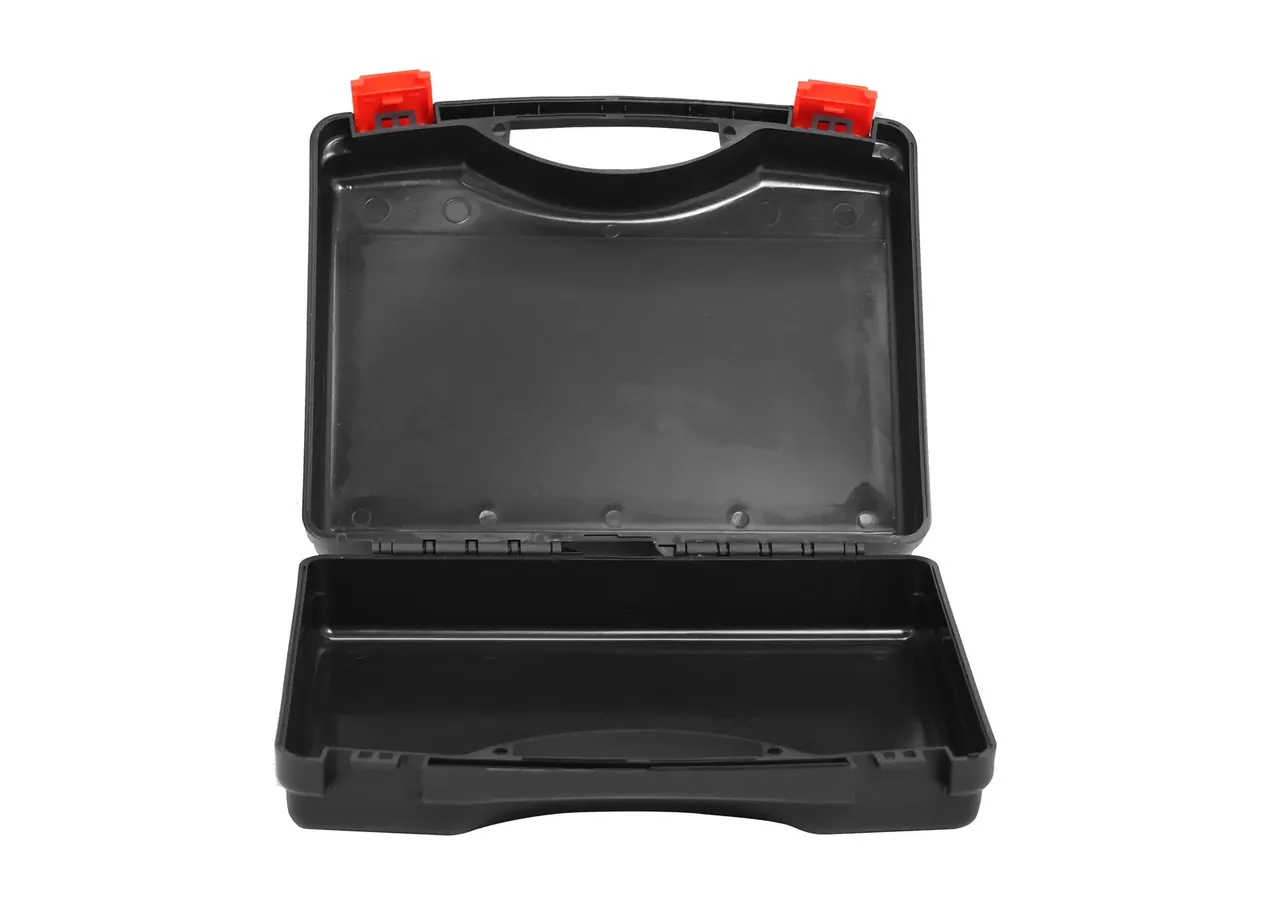
A case seals against water: a double-lip groove compressing a 4 mm solid cord to 30%, plus a 0.2 bar relief valve. Verification differs too, one reads cold air, the other pressure decay.
Condensation needs its own line: each opening admits about 6 L of air at 25 °C and 60% RH, carrying 0.08 g onto the 4 °C wall. Five a day is 0.4 g, 146 g a year.
5. Three Conditions for One Box Doing Both
One box can serve both roles while these hold:
- Cavity at or under 18 L, so insulation does not eat a third of the space
- One hold of 6 hours or less, ambient at or under 30 °C, at most 3 openings
- No drop above 1.2 m and no side crush; loaded once, left alone
- Someone accepts draining, wiping and 30 min of airing after each run
- The load tolerates condensation inside
Break one and the boxes should stay in their lanes. The usual mistake is reading only the first: an 18 L cooler fits a case footprint, but its 30 kg lid rating gaps after two tiers.
6. Lining a Case: What 15 mm Buys Back
Two routes, both on a protective case. Gluing 15 mm XPE (0.038 W/(m·K)) to five faces drops the cavity from 29 L to 24 L and the run from 1.2 to 4.0 hours, for 180 CNY; polyurethane at 20 mm on foil reaches 5.5 hours with 21 L left.
| Build | Cavity | 4 °C to 8 °C | Material | Labour |
|---|---|---|---|---|
| Bare case | 29 L | 1.2 h | 0 | 0 |
| 15 mm XPE, five faces | 24 L | 4.0 h | 180 CNY | 40 min |
| 20 mm PU on foil | 21 L | 5.5 h | 320 CNY | 70 min |
| 30 mm PU on foil | 18 L | 7.2 h | 480 CNY | 110 min |
Leave 3 mm of compression at the rim, or latch force climbs from 60 N to 110 N. The finished U-value is about 0.9 W/(m²·K) against 0.55: lining buys hours, not structure.
Conclusion
Cooler box vs protective case compresses to three numbers: 22 L against 29 L of cavity, 9.0 against 1.2 hours, 30 kg against 80 kg of lid load. Long holds cost volume, impact resistance costs thermal performance, and the cheapest middle ground is a case with 15 mm XPE at 4.0 hours.
This article discusses only the container (case body) side of specifications and design intent, and does not cover any handling, loading or use of the contents.
Related Reading
- Medical cold chain box: insulation and data logging
- Thermal cycling -40 °C to 70 °C: what it does to the gasket
- Opening a case at -20 °C when the gasket hardens
- Case raw materials compared: PP, ABS and HDPE
Related Products
- 8 Series — Gun Cases; Military Equipment Cases; Camera Equipment Cases; Drone Cases; Watch Cases; Knife Cases; First Aid Cases; Electronics Equipment Cases
- WL8-2812 PP Gun Case — model WL8-2812
- All protective cases and toolboxes: 7 series, 158 models