

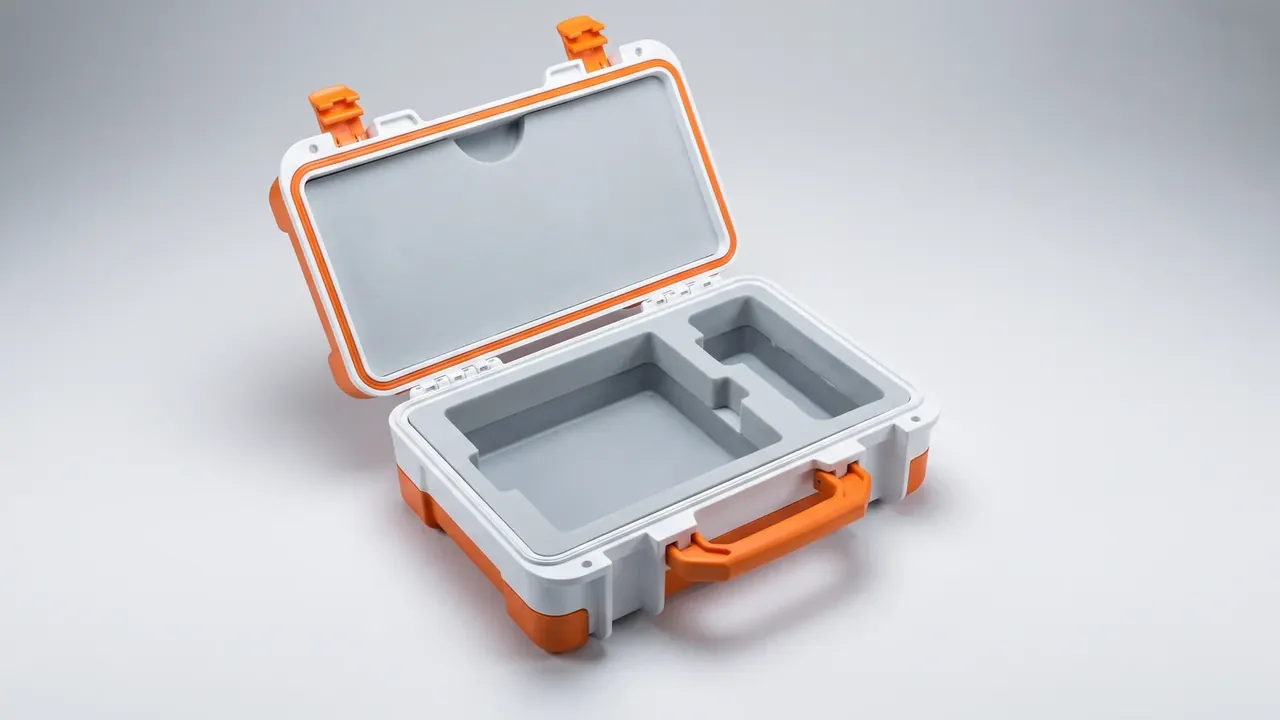
Quick answer: A custom internal partition plastic box is fixed by four coupled numbers: cavity clearance, cell size, partition thickness and per-cell load. Subtract partition thickness from the cavity to get cell width, then size the wall by cell width — 1.8 mm to 120 mm, 2.2 mm to 180 mm, 2.6 mm above.
Table of contents
- How a Custom Internal Partition Plastic Box Spec Is Layered
- Cavity Size and Cell Geometry Maths
- Partition Wall Thickness and Rib Layout
- Per-Cell Load and Stacking Limits
- Hinge, Handle and Machine Tonnage Matching
- FAQ
1. How a Custom Internal Partition Plastic Box Spec Is Layered
A custom internal partition plastic box is never defined by one dimension table: the envelope decides pallet fit, the grid decides whether contents drop in, and wall thickness decides whether it holds shape.
Work backwards from the pallet: 600 x 400 x 230 mm on a 1200 x 1000 mm pallet, or 530 x 360 x 200 mm on a 350 mm shelf, with 8 mm feet keeping load on the lid. Cavity and cell stay separate lines, since a cell is one wall thickness narrower.
| Layer | Fixes | Typical value |
|---|---|---|
| Envelope | Length, width, height | 600 x 400 x 230 mm |
| Cavity | Clearance, draft | 2 mm per side |
| Grid | Cells, count | 4, 6 or 9 |
| Wall | Side, base, partition | 2.5 / 3.0 / 2.2 mm |
2. Cavity Size and Cell Geometry Maths
Cell width is subtracted, not divided. A 542 mm cavity split four ways by 2.0 mm partitions gives (542 - 3 x 2.0) / 4, or 134 mm per cell.
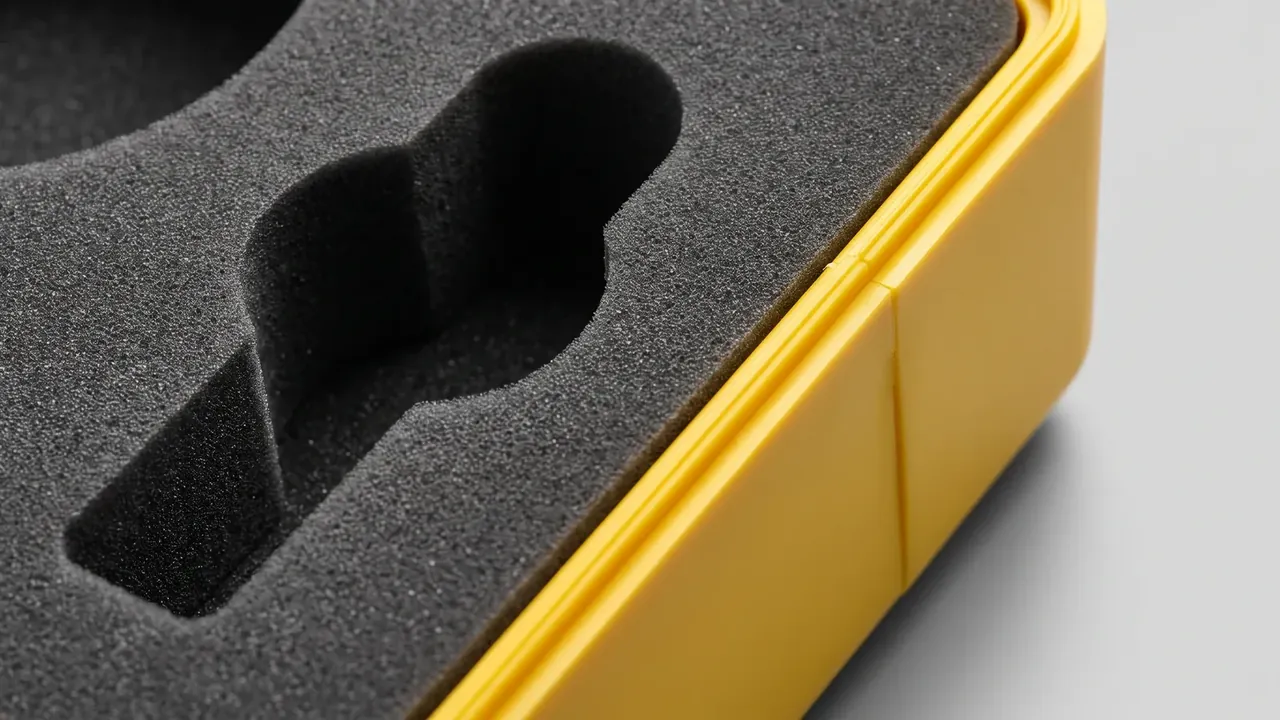
Shrinkage runs 1.5 to 2.0 percent for PP and 0.4 to 0.6 for ABS; at 0.7 percent a 600 mm length needs 4 mm of allowance. Cells must agree within 1.0 mm on diagonal, and 1 degree of draft adds 3.5 mm over a 200 mm depth.
3. Partition Wall Thickness and Rib Layout
A moulded-in partition forms in the same shot at 1.8 to 2.6 mm; a drop-in board is slotted at 2.5 to 3.0 mm in a slot 0.3 mm wider. Which one a custom internal partition plastic box uses depends on cell width, not price.
Ribs add stiffness: 1.0 mm thick, 5 mm tall, 45 mm pitch, root fillets at R1.5 or more. Cells deeper than 60 mm need angled pins at 3 to 5 degrees; past 120 mm with cells under 40 mm, only a slider works.
| Partition | Thickness | Max cell width | Load |
|---|---|---|---|
| Moulded thin | 1.8 mm | 120 mm | 3 kg |
| Moulded standard | 2.2 mm | 180 mm | 4 kg |
| Moulded heavy | 2.6 mm | 240 mm | 6 kg |
| Drop-in board | 2.5 to 3.0 mm | 300 mm | 6 kg |
4. Per-Cell Load and Stacking Limits
Per-cell load comes from partition thickness at 2.2 kg per mm: a 2.2 mm partition works out at 4.8 kg, published as 4 kg to allow for ageing. The figure is static, not an impact rating.
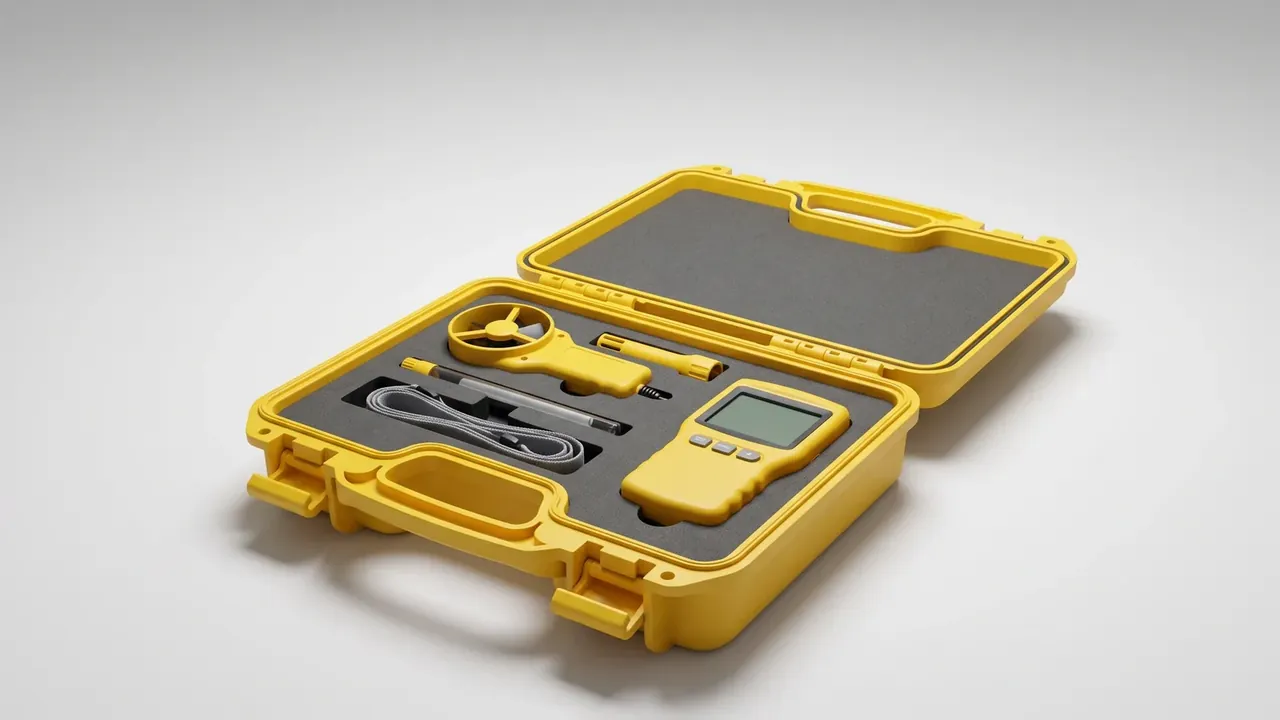
Whole-box capacity is not cell load times count. Partitions carry weight and the base passes stacking force upward, so the figure is cell load times count times 0.8: six cells at 4 kg rate 19.2 kg. Stack testing runs one tier above the intended height — 72 hours at 38 degrees Celsius, base deflection under 2 mm.
5. Hinge, Handle and Machine Tonnage Matching
Above 12 kg loaded, a custom internal partition plastic box needs a twin-axis hinge with a metal pin; plastic wears oval in three months. Opening force sits at 25 to 45 N.
Tonnage follows projected area at 0.45 tonnes per square centimetre: a 600 x 400 mm lid projects 2400 square centimetres, so it needs 1080 tonnes. A 2.5 mm wall cools for 32 seconds in a 68 second cycle.
| Envelope | Press | Cycle |
|---|---|---|
| 400 x 300 mm | 550 t | 48 s |
| 530 x 360 mm | 850 t | 58 s |
| 600 x 400 mm | 1000 t | 68 s |
Conclusion
Specifying a custom internal partition plastic box is subtraction: envelope minus wall gives cavity, cavity minus partition gives cell, cell times a factor gives load. Put all four on one drawing and two sample rounds settle it, so a custom internal partition plastic box keeps size, wall and load in agreement.
This article discusses only the container (case body) side of specifications and design intent, and does not cover any handling, loading or use of the contents.
Related Reading
- How internal dividers are fixed and slotted
- Matching foam inserts to partition cells
- Press tonnage against mould size
- Choosing between divider types
Related Products
- 8 Series — Gun Cases; Military Equipment Cases; Camera Equipment Cases; Drone Cases; Watch Cases; Knife Cases; First Aid Cases; Electronics Equipment Cases
- WL8-2812 PP Gun Case — model WL8-2812
- All protective cases and toolboxes: 7 series, 158 models