

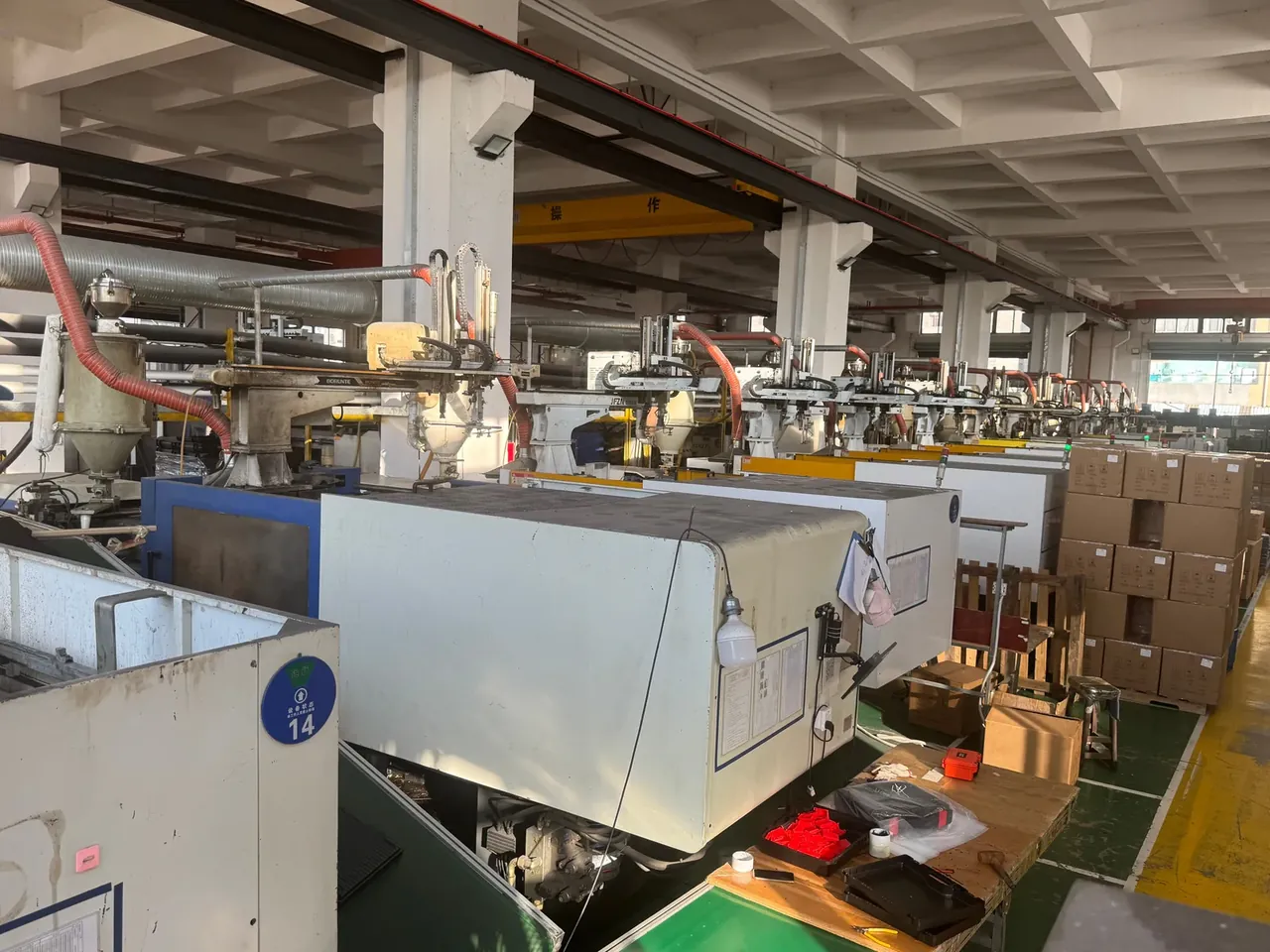
Quick answer: A custom precision electronic instrument protective box is designed from three numbers: cavity size and partitions, gasket groove depth, and latch holding force. Instruments fail on movement and static long before water, so foam fit is held to 1.5 mm and IP65 is usually enough.
Table of contents
- Structure Layers and Sealing Seat
- From Drawing to Shell
- Cavity Partitions and EVA Fit
- Assembly Line and Final Build
- Inspection and Environmental Tests
- Prototyping, Quotation and Lead Time
- FAQ
Structure Layers and Sealing Seat
The box reads in three layers: shell for load, seal seat for water, foam for position. Shells are ABS or PC/ABS at 3.0 to 4.5 mm, half the wall of a military case, because a custom precision electronic instrument protective box carries load through foam rather than stacking. A 420×320×180 mm body stays under 3.2 kg.
| Layer | Part | Size | Function |
|---|---|---|---|
| Shell | Lid and base | 3.5 mm wall, R8 corners | Compression, drop |
| Seal seat | Lid groove | 5.5 mm wide, 3.8 mm deep | Single lip, Shore A50 |
| Position | EVA | 20 mm, 6 pockets | Limits movement |
| Latch | Front | 2 off, 150 N | Compresses gasket |
Seal compression runs lower than on a military case: a 3.8 mm groove against a 5.0 mm gasket gives 24 percent, held by two latches at 150 N each. Past 30 percent the ABS rim creeps and a 0.4 mm gap opens mid-span.
The cavity cannot be derived from the outside. Shell to wall clearance is 8 to 12 mm, against 25 mm on a military case, because front-panel connectors must not sit under foam; leave more and movement passes 2 mm, shearing solder joints.
From Drawing to Shell
Sequence decides how often the job is redone: fix cavity, then shell, then panel cut-outs. A custom precision electronic instrument protective box is toleranced at plus or minus 0.5 mm outside and 0.3 mm inside, and those two numbers are not interchangeable.
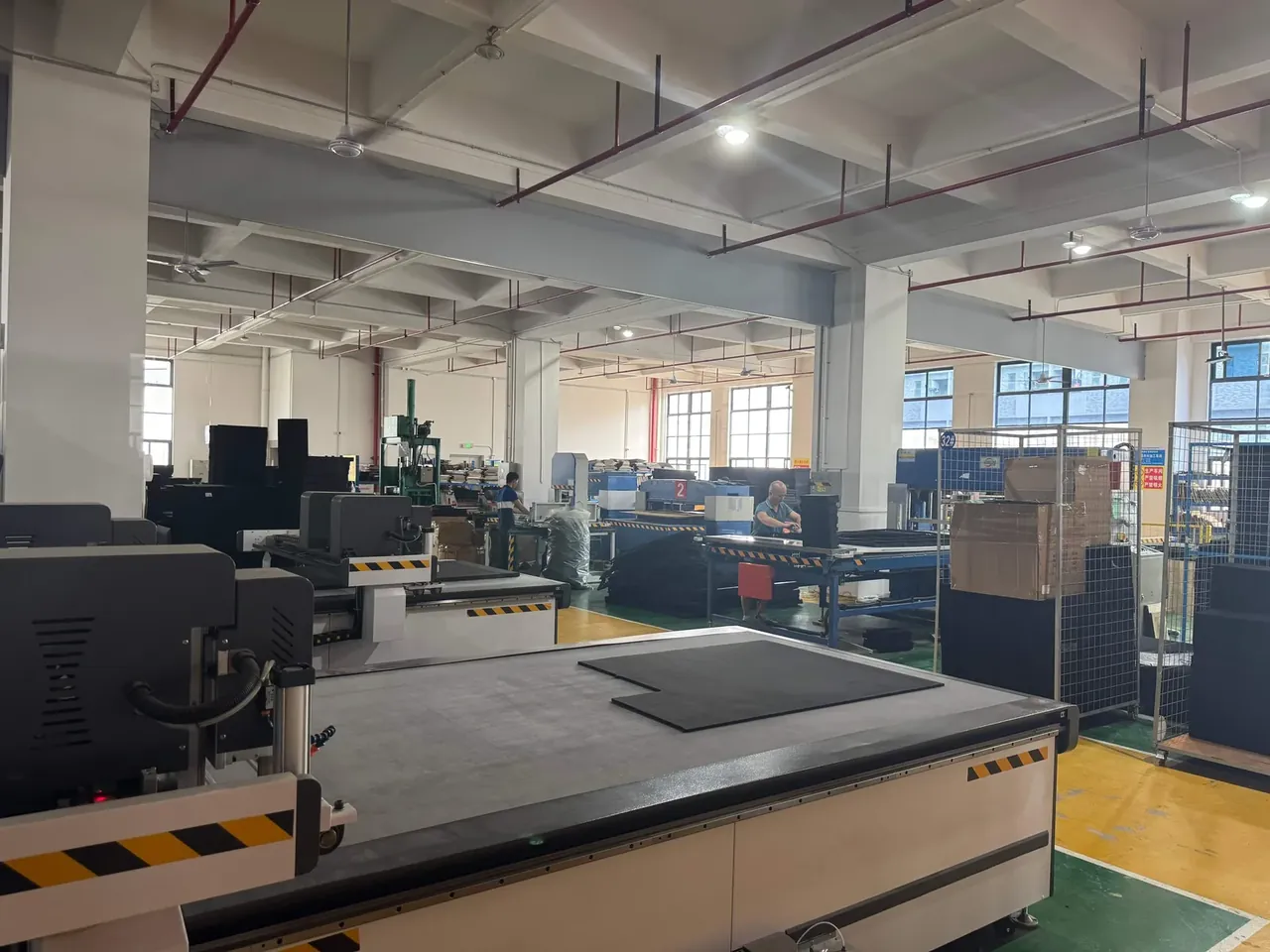
Tooling for a custom precision electronic instrument protective box is laid out at 0.5 percent shrinkage in 718H steel with three trial shots. Six features are measured: cavity length, width, depth, rim flatness, latch hole pitch, hinge coaxiality. Flatness beyond 0.3 mm means the gasket is unevenly loaded and leaks mid-way along the long side.
Panel work follows moulding. CNC holds 0.2 mm, and a hole closer than 6 mm to the wall removes 30 percent of the bending section, so a drop crack starts there.
Cavity Partitions and EVA Fit
Partitions are the outline plus 1.5 mm per side, 5 mm extra depth and 6 mm walls. A wall under 4 mm leans after ten cycles, movement grows from 0.8 mm to 3 mm, and the custom precision electronic instrument protective box stops locating anything.
| Liner | Density | Thickness | Fit | Best for |
|---|---|---|---|---|
| EVA pockets | 38 kg/m3 | 30 mm | 1.5 mm | Small runs |
| EVA bonded | 45 kg/m3 | 20 mm | 1.0 mm | Single model |
| XPE composite | 35 kg/m3 | 25 mm | 2.0 mm | Static-sensitive |
| Foam and dividers | 25 kg/m3 | 40 mm | 3.0 mm | Heavy parts |
Surface resistance on a custom precision electronic instrument protective box lands between 10^6 and 10^9 ohm; below that it conducts, above 10^12 it insulates. Testing uses 500 V across 50 mm electrodes.
Liner and shell are approved together: at 38 kg/m3 EVA absorbs 1.7 times the energy of 25 kg/m3 foam, so a liner swap alone lifts peak from 52 g to 78 g.
Assembly Line and Final Build
Assembly runs five steps in fixed order: gasket, hinges, latches, liner, panel. Any other order leaves a set at the gasket lip, where the leak test finds air. Each station stamps the unit before it moves on.
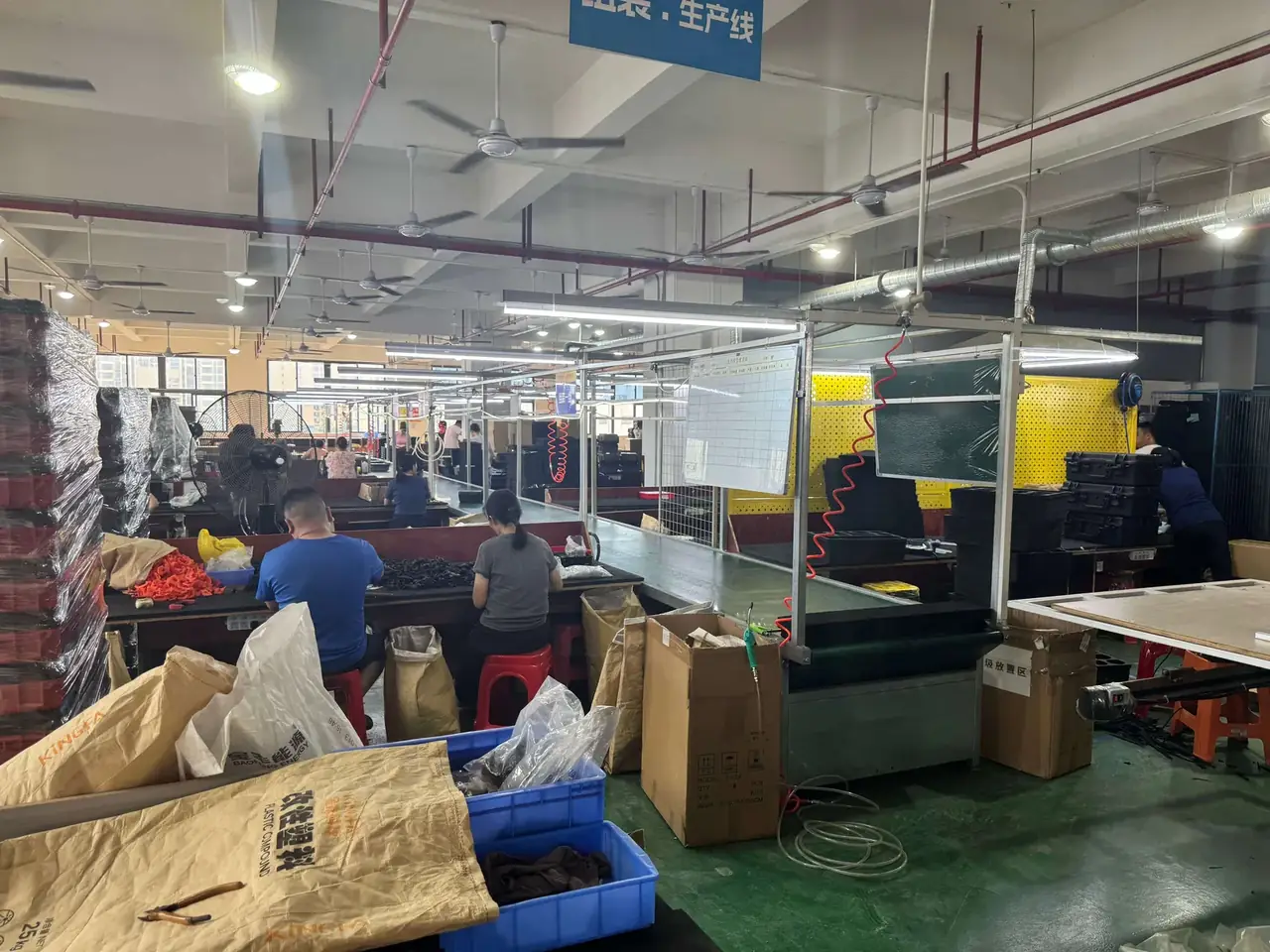
Latches on a custom precision electronic instrument protective box are rated at 150 N each, 300 N combined, 2.5 times gasket rebound, with opening force at 40 to 70 N. Hinges run 3000 cycles on a 2.5 mm pin with a 6 mm boss.
The handle is checked at 30 kg static, 2.5 times a 12 kg load. Two M6 bosses take a bracket at 6 N·m; past 8 N·m the insert spins.
Inspection and Environmental Tests
Every custom precision electronic instrument protective box gets a pressure test: 15 kPa, hold 60 seconds, accept 0.8 kPa drop. Nine of ten failures sit at the gasket corners, where the profile stretches past 8 percent.
| Test | Condition | Pass | Sampling |
|---|---|---|---|
| Pressure | 15 kPa, 60 s | 0.8 kPa drop or less | Every unit |
| Drop | 0.9 m, six faces | 60 g or less | 2 per batch |
| Vibration | 5–200 Hz, 1.0 g, 20 min per axis | No fastener movement | 1 per batch |
| Humidity | 40 degC, 93% RH, 48 h | No condensation | 1 per quarter |
| Static | 500 V, 50 mm gap | 10^6 to 10^9 ohm | 3 per batch |
Drop height on a custom precision electronic instrument protective box is 0.9 m, because instruments fall between bench and shelf; courier shipping returns it to 1.2 m.
Humidity is read on condensation. After 48 hours at 40 degC and 93% RH a water film means the box breathes too fast.
Prototyping, Quotation and Lead Time
Prototyping has two levels: a 3D printed shell in 3 days for outline and holes, or a CNC sample in 7 days that proves latch feel and foam fit. Above 20,000 RMB per instrument, go to CNC.
| Stage | Duration | Deliverable |
|---|---|---|
| Drawing review | 2 days | Cavity and cut-out drawings |
| Prototype | 3–7 days | One sample box |
| Tooling | 20–25 days | Mould and first shot |
| Trial | 4 days | 20 moulded parts |
| Pilot | 10 days | 300 units with report |
At 1000 units, a 420×320×180 mm box needs about 18,000 RMB of tooling, 62 RMB of moulding and 23 RMB of liner and assembly, near 85 RMB all in.
Minimum order is 300 units, 25 to 30 days from drawing approval. A cavity change adds 6 days for a new foam die; a colour change only swaps masterbatch.
Conclusion
The hard part of a custom precision electronic instrument protective box is the tolerance chain: 1 mm in the cavity forces new partitions, 0.3 mm at the seal seat sends a tenth of production to rework.
This article covers only the specification and design meaning of the case (body) side, and does not deal with any handling, loading or use of the contents.
Related Reading
- Specifying a case with compartments
- Choosing 5, 10 or 15 mm case foam
- Anti-static linings and how to verify them
- How cut-outs affect sealing
Related Products
- 8 Series — Gun Cases; Military Equipment Cases; Camera Equipment Cases; Drone Cases; Watch Cases; Knife Cases; First Aid Cases; Electronics Equipment Cases
- WL8-2812 PP Gun Case — model WL8-2812
- All protective cases and toolboxes: 7 series, 158 models