

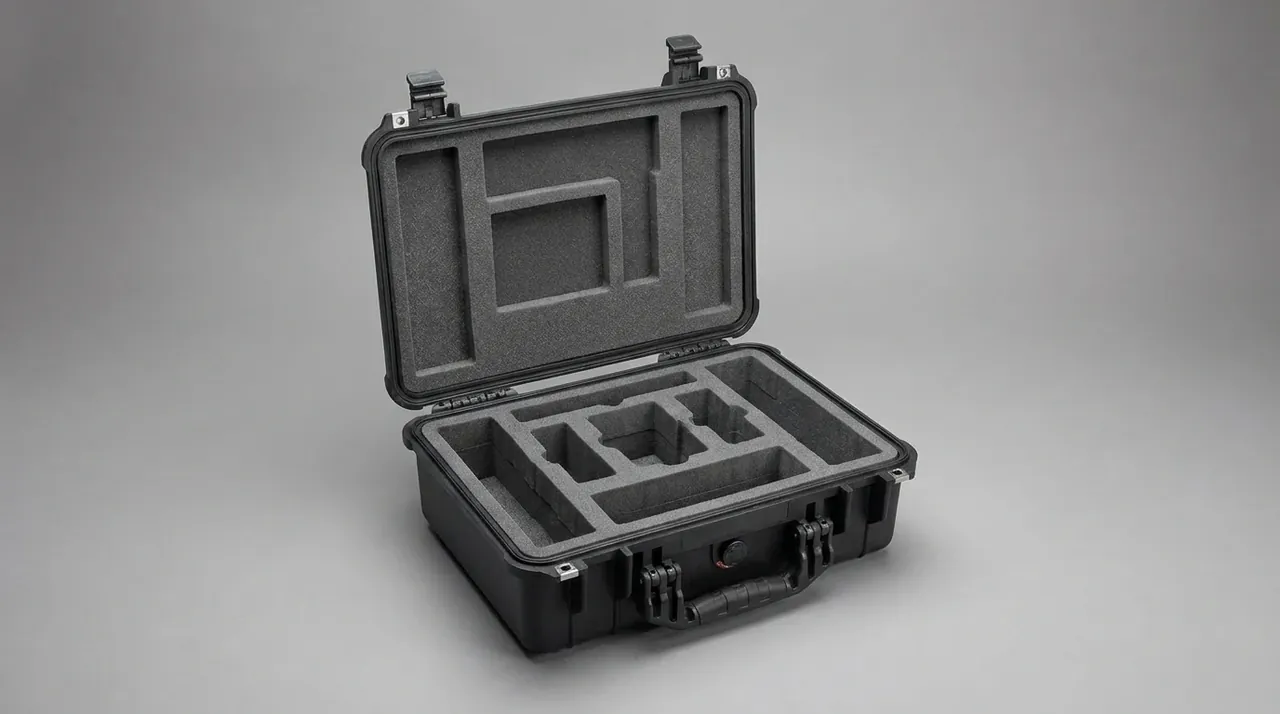
Quick answer: Divider load is set by span before board thickness: on 4 mm PP, a 300 mm span carries 8 kg and a 200 mm span carries 18 kg at 1.8 mm deflection.
Table of contents
- Span comes before thickness
- 300 mm and 200 mm: 8 kg to 18 kg
- Support type: floor, one side, suspended
- Safety factor 2: where the ratings come from
- 6 mm at 400 mm: 100 mm bought for 2 mm
- FAQ
1. Span comes before thickness
One 4 mm PP board carries 8 kg over a 300 mm span with 1.8 mm deflection at the centre. Shorten the span to 200 mm and the same board carries 18 kg.
Span enters the deflection formula to the fourth power, thickness to the third. A 50 percent longer span multiplies deflection by 5.1; going from 4 mm to 6 mm cuts it to a third, so the order matters.
The working limit is 2 mm. Past it the lower edge lifts away from the rib on the case floor, the 0.3 mm clearance per side is used up, and the board goes from surface to line contact. The 2 mm line is a fit limit, not a strength limit.
| Thickness mm | Span mm | Support type | Deflection at rating mm | Divider load rating kg |
|---|---|---|---|---|
| 4 | 200 | Slots both ends | 1.4 | 18 |
| 4 | 300 | Slots both ends | 1.8 | 8 |
| 4 | 300 | One side supported | 2.6 | 12 |
| 4 | 300 | Standing on floor | 1.2 | 30 |
| 6 | 400 | Slots both ends | 2.2 | 15 |
2. 300 mm and 200 mm: 8 kg to 18 kg
Scale 8 kg at 300 mm by the cube of the span ratio and 200 mm should give 27 kg. Measured usable is 18 kg.
Those nine kilos are not in the board, they are in the slot mouth: a 4 mm board in a 5 mm slot leaves 4 mm of wall, and 18 kg runs down two 200 mm lines of it.
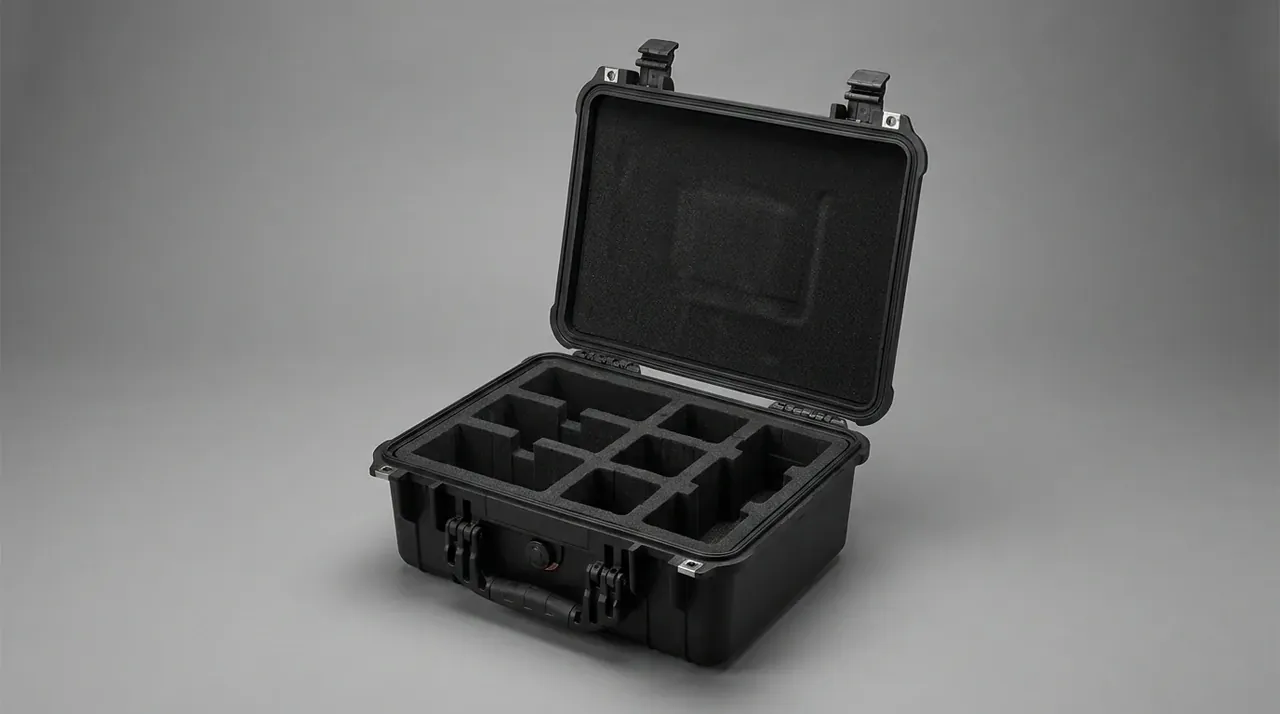
So the weak point moves with span. Above 300 mm, rate on deflection; below 200 mm, rate on slot crushing.
| Span mm | 4 mm board usable kg | 6 mm board usable kg | Failure mode first |
|---|---|---|---|
| 200 | 18 | 24 | Slot edge crushing |
| 300 | 8 | 16 | Deflection past 2 mm |
| 400 | 5 | 15 | Deflection past 2 mm |
| 500 | 3 | 9 | Lateral buckling |
A case often carries both spans: one long divider down the middle, short ones along the sides. Quote the longest and verify the slot mouth on the shortest.
3. Support type: floor, one side, suspended
A floor-standing divider rests its lower edge on the case floor, so load travels along the board and 30 kg produces only 1.2 mm. A suspended divider enters a 5 mm slot at each end and the same board carries 8 kg. One-side support sits between them at 12 kg.
The 5 mm slot depth is the premise of that set of numbers. Shallower than 4 mm, the end behaves as a simple support. At 8 mm the end is clamped and centre deflection drops by a third.
| Support type | Boundary condition | Divider load rating kg | Deflection at rating mm |
|---|---|---|---|
| Standing on floor | Lower edge on floor, upper edge in slot | 30 | 1.2 |
| One side supported | One end in slot, one end on rib | 12 | 2.6 |
| Slots both ends | 5 mm engagement per end | 8 | 1.8 |
Change the support once and divider load moves by 3.75 times, far cheaper than changing thickness. The cost lands in assembly: a locating rib in the floor, or a boss on the wall.
4. Safety factor 2: where the ratings come from
The 30, 12 and 8 kg figures already carry a safety factor of 2, against measured failure loads of 60, 24 and 16 kg.
A factor of 2 rather than 1.5 follows from the failure mode. Slot edge crushing is progressive, so after the edge yields the board still carries part of the load, and batch scatter stays inside plus or minus 15 percent. A factor of 2 covers that scatter and creep, and would not suit a brittle board, which PP is not.
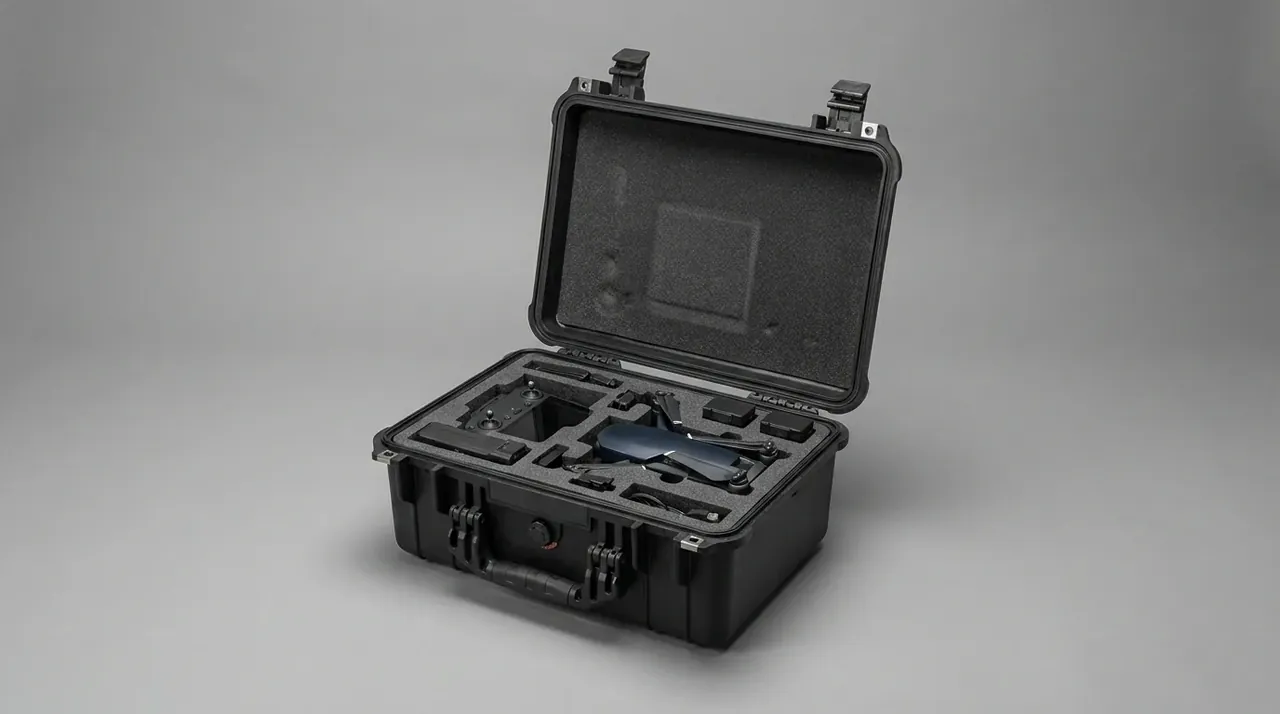
Three things must be confirmed first: whether the span runs slot floor to slot floor or slot mouth to slot mouth, one slot depth apart; whether the load is distributed or concentrated; whether the case is ever carried past 30 degrees of tilt.
Concentrated load is harsher. Spread 8 kg over a 300 mm span and the centre deflects 1.8 mm; press the same 8 kg onto a 40 mm wide patch and it reaches 2.4 mm, past the 2 mm line.
5. 6 mm at 400 mm: 100 mm bought for 2 mm
A 6 mm board over a 400 mm span deflects 2.2 mm under 15 kg. Scaled by the fourth power from the 4 mm at 300 mm case, the prediction would be 3.2 mm, so the measurement comes in lower. The difference is slot depth: the slot grows from 5 mm to 8 mm, the end shifts toward clamped, and centre deflection drops by a third.
Thickness has a price. Each divider eats 2 mm more width, and six of them take 12 mm out of the internal width, straight out of the compartments.
On short spans the extra thickness stops paying. Below 200 mm the gap between 4 mm and 6 mm shows up at the slot: a thicker board needs a wider slot, the slot wall thins, and crushing arrives earlier. In the table, 6 mm at 200 mm moves from 18 kg to 24 kg while the slot wall loses 2 mm.
The order is: measure the span, fix the support type, then choose thickness.
Conclusion
The answer to divider load is not in the thickness column, it is in span and support type. The same 4 mm board carries 8 kg suspended over 300 mm, 18 kg over 200 mm, and 30 kg standing on the floor. Set the working limit at 2 mm deflection, halve the measured failure load for the rating, then check the slot mouth.
Related Reading
- How far apart to set divider spacing
- Divider thickness, slots and location in three numbers
- Dividers or foam: which lining to choose
Related Products
- 8 Series — Gun Cases; Military Equipment Cases; Camera Equipment Cases; Drone Cases; Watch Cases; Knife Cases; First Aid Cases; Electronics Equipment Cases
- WL8-2812 PP Gun Case — model WL8-2812
- All protective cases and toolboxes: 7 series, 158 models