

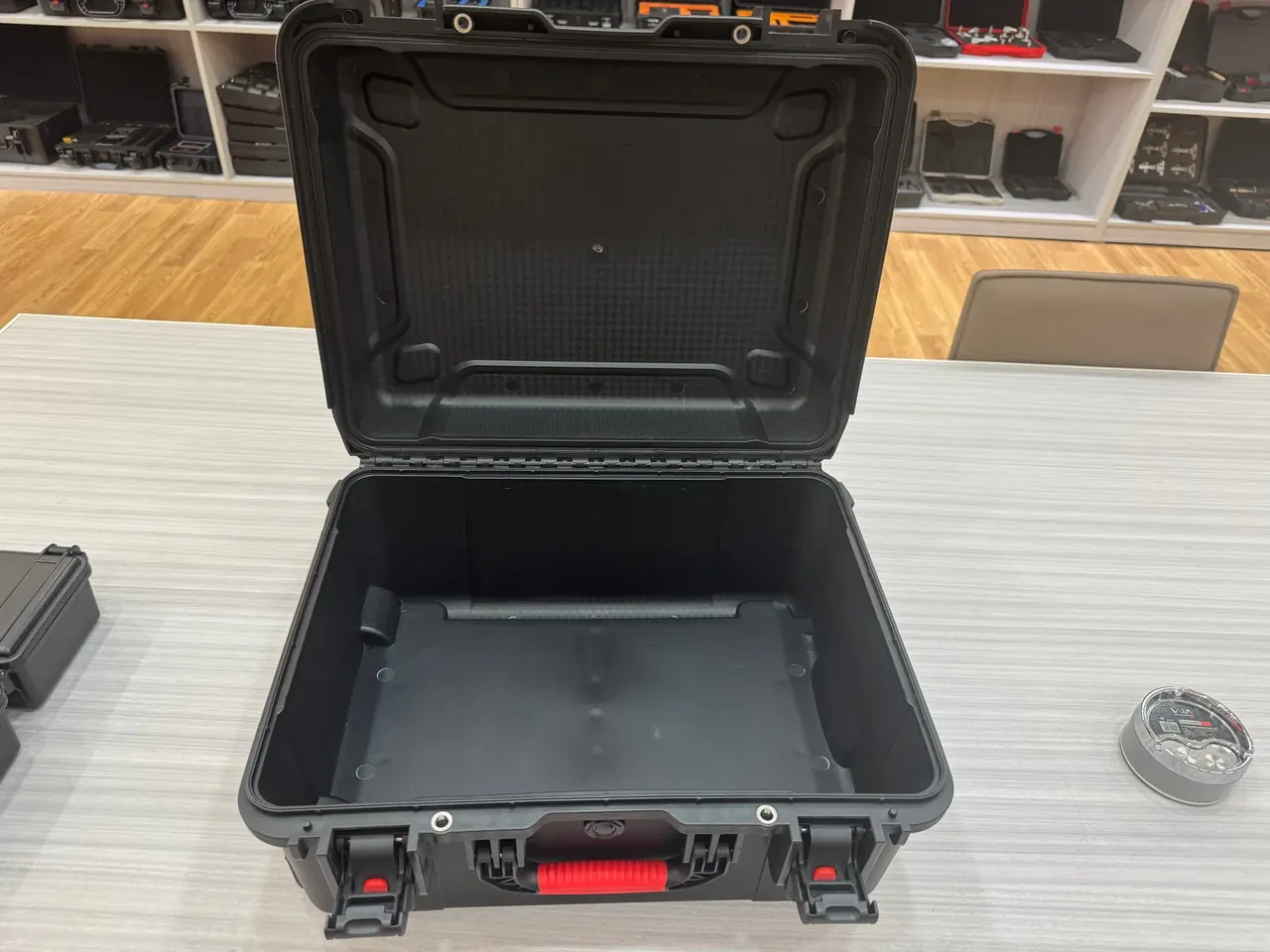
Quick answer: Case divider spacing has only two baselines, the largest item or the one packed most often, and the second wins in most tool kits. Size by the largest piece and a common part rattles 3 to 8 mm per side.
Table of contents
- Two Baselines for Case Divider Spacing
- Slot Pitch and the Clearance Formula
- Clearance Allowance: 1.5 to 3 mm per Side
- The Weighted Compromise for Mixed Loads
- What Moving a Divider Actually Costs
- Three Dimensions to Put on the Drawing
- FAQ
1. Two Baselines for Case Divider Spacing
Case divider spacing has two defensible baselines: the largest item, or the item loaded most often. The first lets every piece drop straight in. A compromise is not a third baseline, only a weighted result of the two.
The arithmetic fits in one line: clearance = pitch × slots − plate thickness. At a 25 mm pitch with 4 mm plates, three slots give 71 mm, four give 96 mm, nine give 221 mm.
Sizing to the common item takes a year of load counts, and those counts usually cluster in 1 or 2 width bands.
2. Slot Pitch and the Clearance Formula
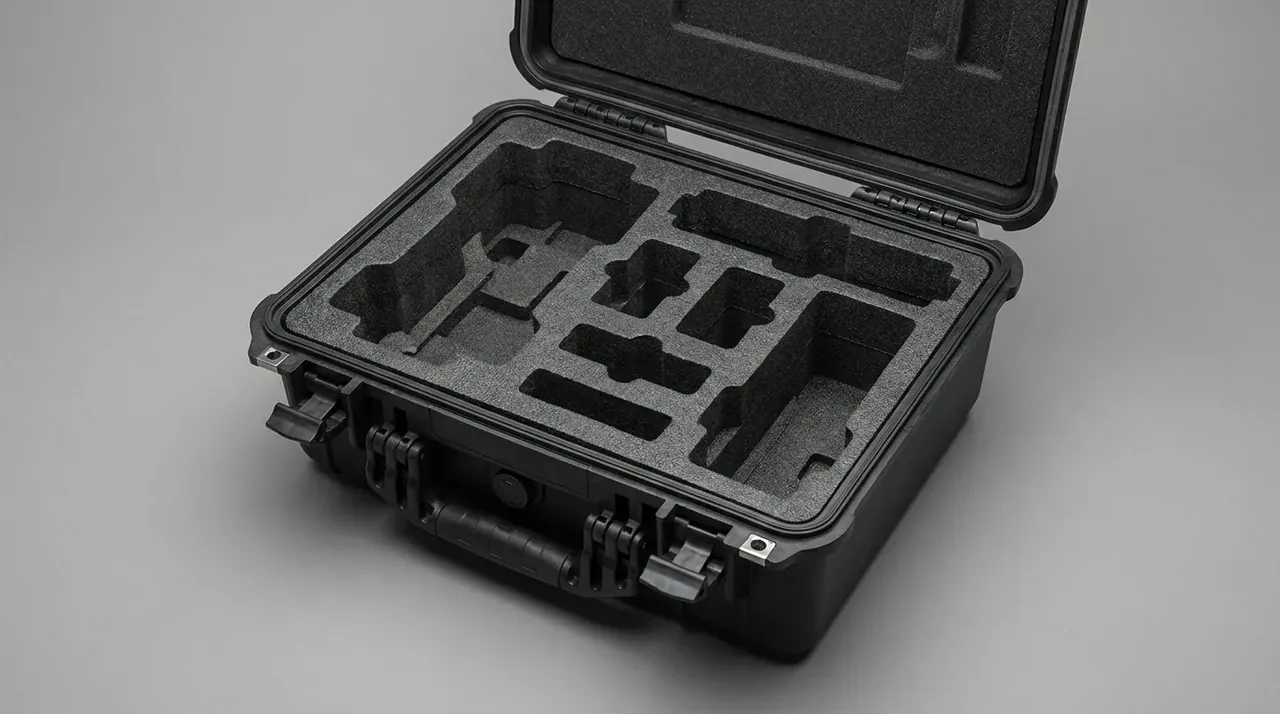
Pitch is fixed when the shell is moulded. 20 mm, 25 mm and 30 mm cover most tooling, with a 4.2 mm slot for a 4 mm plate. Finer pitch means more compartments and 0.3 to 0.5 kg of extra empty weight.
| Slot pitch (mm) | 3-slot clearance (mm) | 4-slot clearance (mm) | Item width covered (mm) |
|---|---|---|---|
| 20 | 56 | 76 | 60 to 72 |
| 25 | 71 | 96 | 75 to 92 |
| 30 | 86 | 116 | 95 to 112 |
An 88 mm device lands in four slots at 25 mm with 4 mm per side. At 20 mm it needs five slots to reach 96 mm, one more plate and one more handling step.
Coarse pitch wastes small parts: two slots at 30 mm give 56 mm, so a 25 mm connector floats in 15 mm and rolls.
When the load sits between 60 and 90 mm wide, a 25 mm pitch hits most often: two clearance bands absorb 80% of part types.
3. Clearance Allowance: 1.5 to 3 mm per Side
Per-side clearance of 1.5 to 3 mm suits rigid parts. Below 1.5 mm the part must be pushed in and a finger cannot lift it out. Above 3 mm the travel in transit polishes the coating off.
Allowance grows with part length. Anything over 300 mm gets 4 mm per side, because a shell deflects 1 to 2 mm on impact and long ends reach the plate first.
Soft items follow another table. Cabled probes and sleeved gauges get 5 to 8 mm per side, since the material settles 10% to 15% once the lid closes.
Every figure is per side. A 3 mm total note against 3 mm per side produces cases a factor of two apart, and reworking plates costs 5 to 7 days.
4. The Weighted Compromise for Mixed Loads
Mixed loads have no single answer but a calculable compromise: weight by load count. At an 80% share the target lands 20 mm from the common compartment.
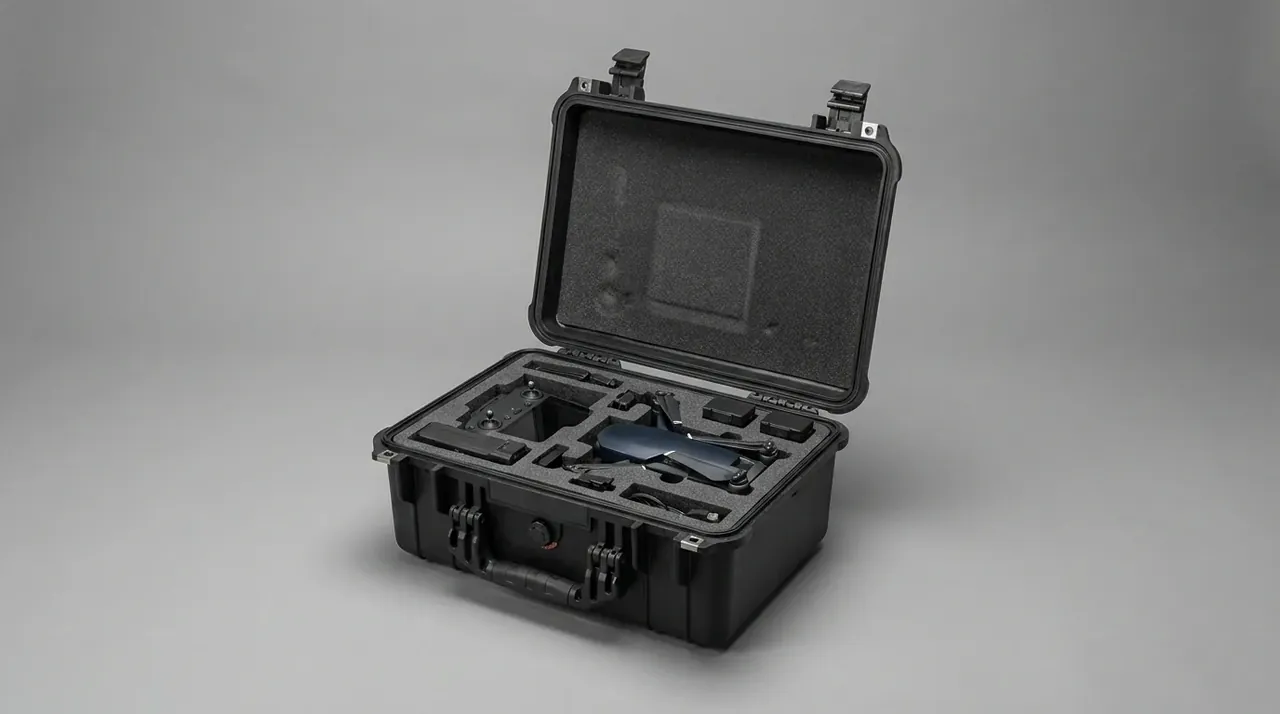
A dual-band layout runs easier. Main bays follow the common item, and one bay merged from three slots stays open for the large piece once two plates come out, idling at 20% to 30% of the volume.
Merging has a boundary. The merged clearance needs 4 mm extra because tolerances on two plates stack, and a plate replaced one slot off shifts the whole row.
5. What Moving a Divider Actually Costs
Pulling a plate is not free. Retrieving the part, lifting the plate, reseating and checking takes 40 to 90 seconds, so once a day over 250 working days costs 2.8 to 6.3 hours.
| Change frequency | Recommended baseline | Common item | Annual handling (hours) |
|---|---|---|---|
| Under once a week | Common item | Stays put | 0.4 to 1.0 |
| 1 to 2 times a week | Dual band | Fixed bays, merged bay for large pieces | 0.6 to 2.6 |
| Once a day | Largest item | Merged or shimmed | 2.8 to 6.3 |
| 3 or more times a day | Largest item, second case | Own case | 8.3 to 18.8 |
At three changes a day the handling approaches half a shift, and no saving in case divider spacing volume pays that back.
On money, two extra plates cost 8 to 12 each; new tooling starts at 8000, or 27 per set across 300 sets and 4 across 2000.
6. Three Dimensions to Put on the Drawing
Three notes keep spacing from drifting at the sample stage: pitch with slot width, the datum wall, and the plate tolerance. Miss one and the first sample is measured by hand.
Tolerance the pitch at 25 ±0.2 mm and the slot at 4.2 +0.1 mm. A slot 0.2 mm wider than the plate leaves room for thermal growth; past 0.4 mm the plate rocks.
Datum on the left inner wall, first plate centre 12.5 mm from it, half a pitch. Where the ends differ, name the datum end or the bays come out 2 mm apart.
Call the plate at 4 ±0.15 mm. Thicker and it will not enter the slot; thinner and it rocks, moving the real case divider spacing at every bay.
Conclusion
Read the change frequency first, then the width distribution of the load, and only then argue about how the compartments look. Under one change a week, size to the common item and the bays stay tight. One or two changes a week call for a dual-band layout. Daily changes justify sizing to the largest item. Bring those two numbers and the case divider spacing you agree on survives production.
The rule compresses into one sentence: take the pitch from the modal band of part widths, take the slot count by rounding the largest part up, and when the two conflict, give way on the pitch, never on the count. Changing a pitch means new tooling; changing a count means pulling plates.
This article discusses container-side specifications and design implications only, and does not cover any handling, loading or use of the contents.
Related Reading
- How internal dividers work
- Removable divider assembly
- Divider dimensions and slots
- Custom multi-compartment cases
- Choosing a case with dividers
Related Products
- 8 Series — Gun Cases; Military Equipment Cases; Camera Equipment Cases; Drone Cases; Watch Cases; Knife Cases; First Aid Cases; Electronics Equipment Cases
- WL8-2812 PP Gun Case — model WL8-2812
- All protective cases and toolboxes: 7 series, 158 models