

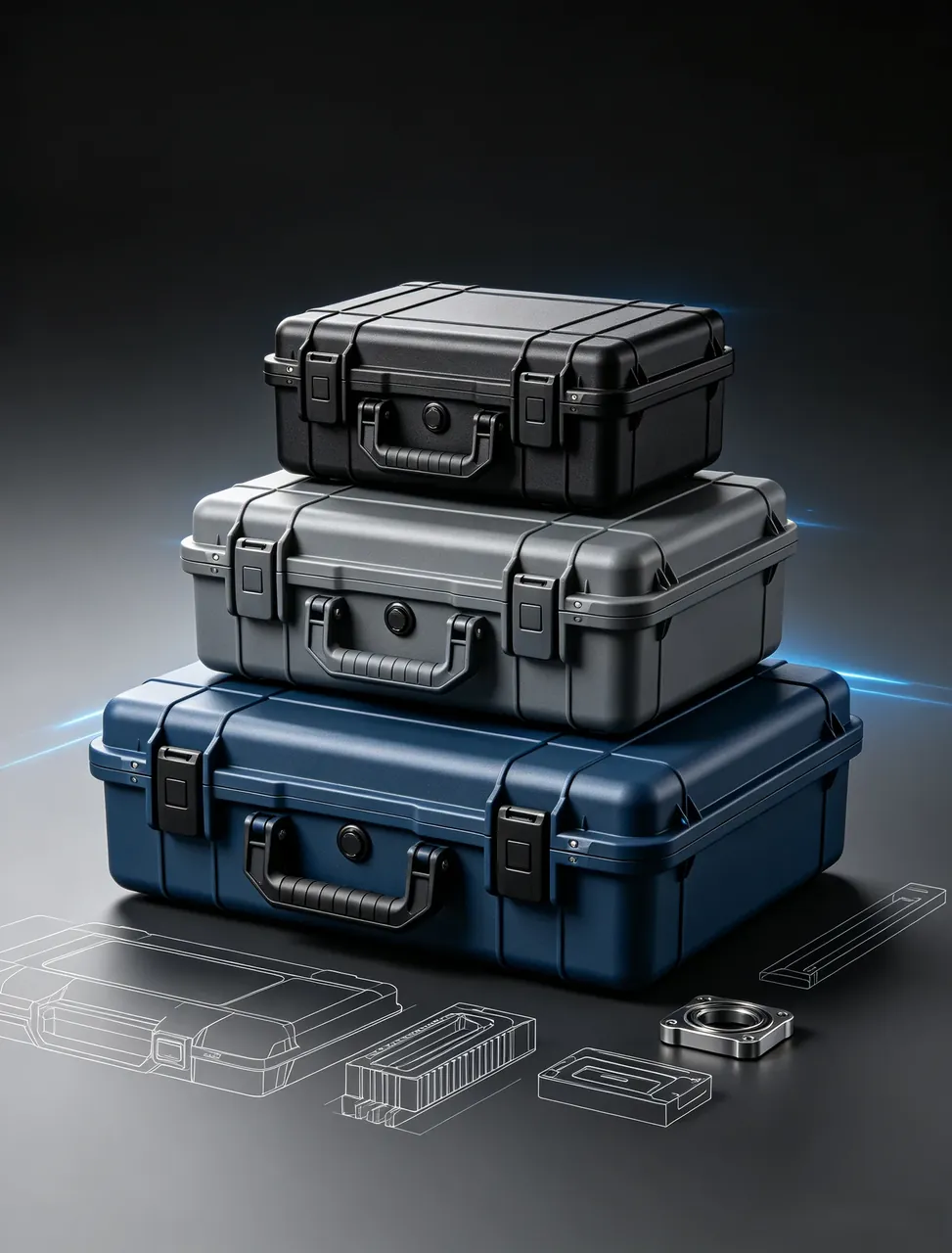
Quick answer: A dnv offshore case takes its class from where it mounts: C3 under deck at 480 h salt spray, C4 on open deck at 720 h, C5-M in splash at 1440 h.
Table of contents
- The Mounting Point Sets the Class
- What 480, 720 and 1440 Hours Buy
- Fasteners and the Dissimilar-Metal Trap
- Deck Exposure Against the Splash Zone
- Reading the 12-Month Inspection
- FAQ
1. The Mounting Point Sets the Class
A 900 mm case bound for a 12 MW platform is judged at goods-in on three figures: where it hangs, how many hours of salt spray it survived, and how much dry film sits on it. Answer those and the class, the price and the inspection interval all follow.
Buyers invert the order: heavy wall first, coating second, class last. A 1440 h shell where 480 h suffices carries roughly 30% more cost and no extra life.
ISO 12944-2 names the bands C3, C4 and C5-M; C5-M is the 1998 label, mapped to C5 in the 2017 edition, which adds CX. Offshore projects tie each band to a spray duration and an inspection interval, so the band becomes a purchase specification.
| Corrosivity class | Typical mounting point | Salt spray | Dry film (typical) | Inspection |
|---|---|---|---|---|
| C3 | Under-deck shelter, internal walkway | 480 h | 160–200 μm | 12 months |
| C4 | Open deck centre, superstructure flank | 720 h | 200–240 μm | 12 months |
| C5-M | Deck edge, within spray reach | 1440 h | 240–320 μm | 12 months plus 6-month walk-by |
2. What 480, 720 and 1440 Hours Buy
The three durations do not describe three paint formulations. They describe three allowances for damage: white rust over up to 5% of area at 480 h, scribe creep inside 2 mm either side at 720 h, no red rust at fasteners or corner fittings at 1440 h.
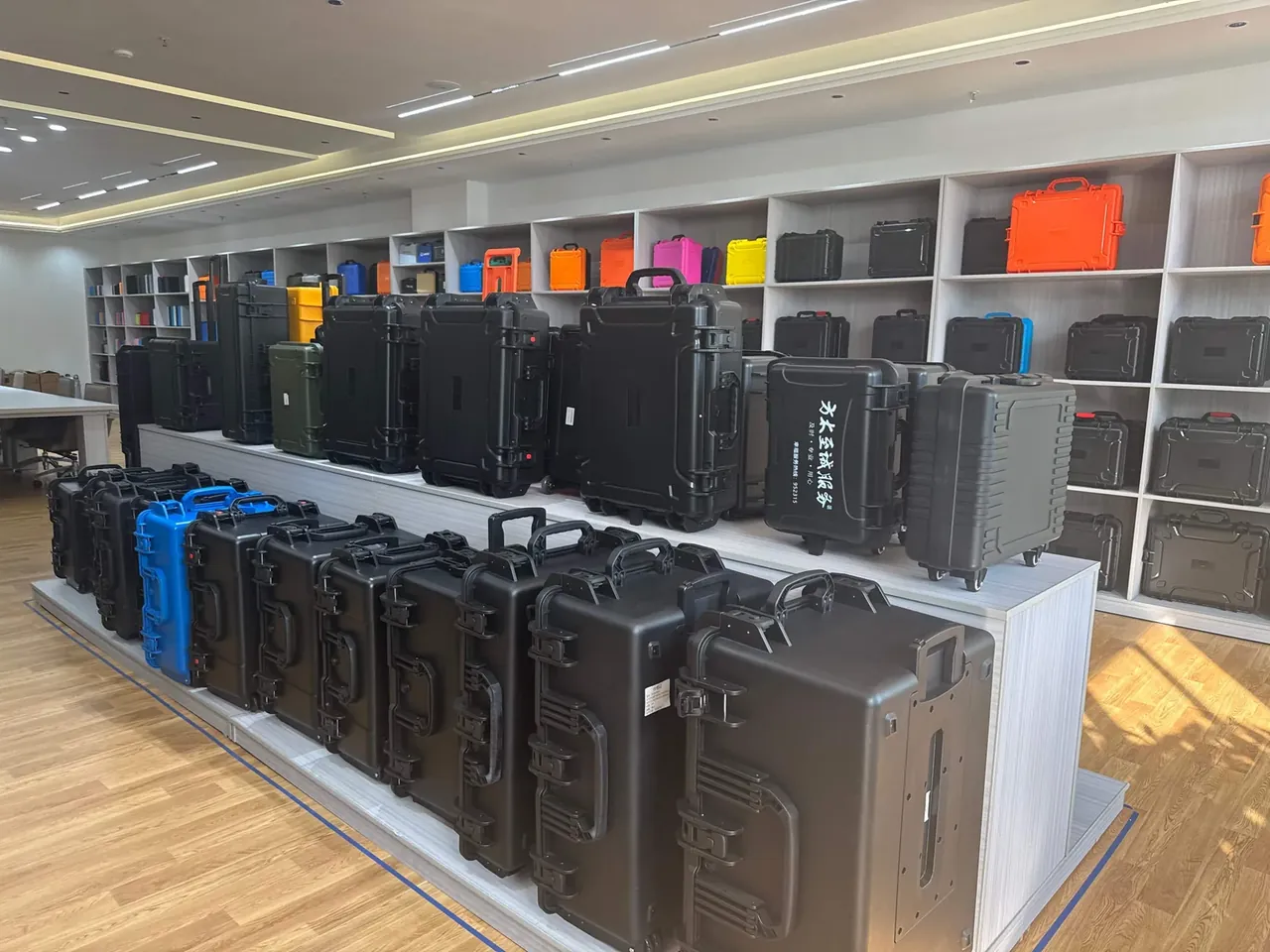
Film build follows the tier: 240–320 μm in 3 coats with a 4 h flash-off, the range workshops apply. Past 320 μm adhesion falls away and impact lifts the coat in sheets. Thickness is read at five points per face, lowest not below 80% of nominal.
Preparation sets the ceiling: Sa2.5 blasting with a 40–70 μm profile makes 1440 h repeatable, while residual salt above 20 mg/m² blisters a premium system at 600 h.
Tensile retention is measured separately, often confused with coating quality. A shell held at 35 ℃ in 5% sodium chloride for 1440 h, rested 24 h and pulled, must keep at least 85% of initial strength. A drop there means moisture has reached the filler. Cost does not scale with hours: 480 h to 720 h adds roughly 15%, 720 h to 1440 h adds roughly 35%.
3. Fasteners and the Dissimilar-Metal Trap
Corrosion rarely starts on a wall panel. It starts at a latch, hinge or screw thread. A4-70 stainless is the working default: molybdenum resists chloride, and the grade stays ductile at -25 ℃.
Stainless against aluminium is the trap. A screw threaded into an aluminium trim strip forms a galvanic cell the first time seawater lands, and the aluminium sacrifices itself. A 0.5 mm insulating washer under the head breaks the circuit, and it belongs on the case drawing.
Torque belongs on the drawing too. M6 screws at 8 N·m: lower and they work loose, higher and the thread galls, letting salt into the root. At least 10% are witnessed, and on a 1440 h order four screws come out at acceptance. One red thread rejects the batch.
4. Deck Exposure Against the Splash Zone
The gap between open deck and splash zone is not hours but wetting frequency. A splash-zone case takes over 20 wave hits a day, the salt film never rinses off, and ageing runs at roughly 1.5 times the open-deck rate.
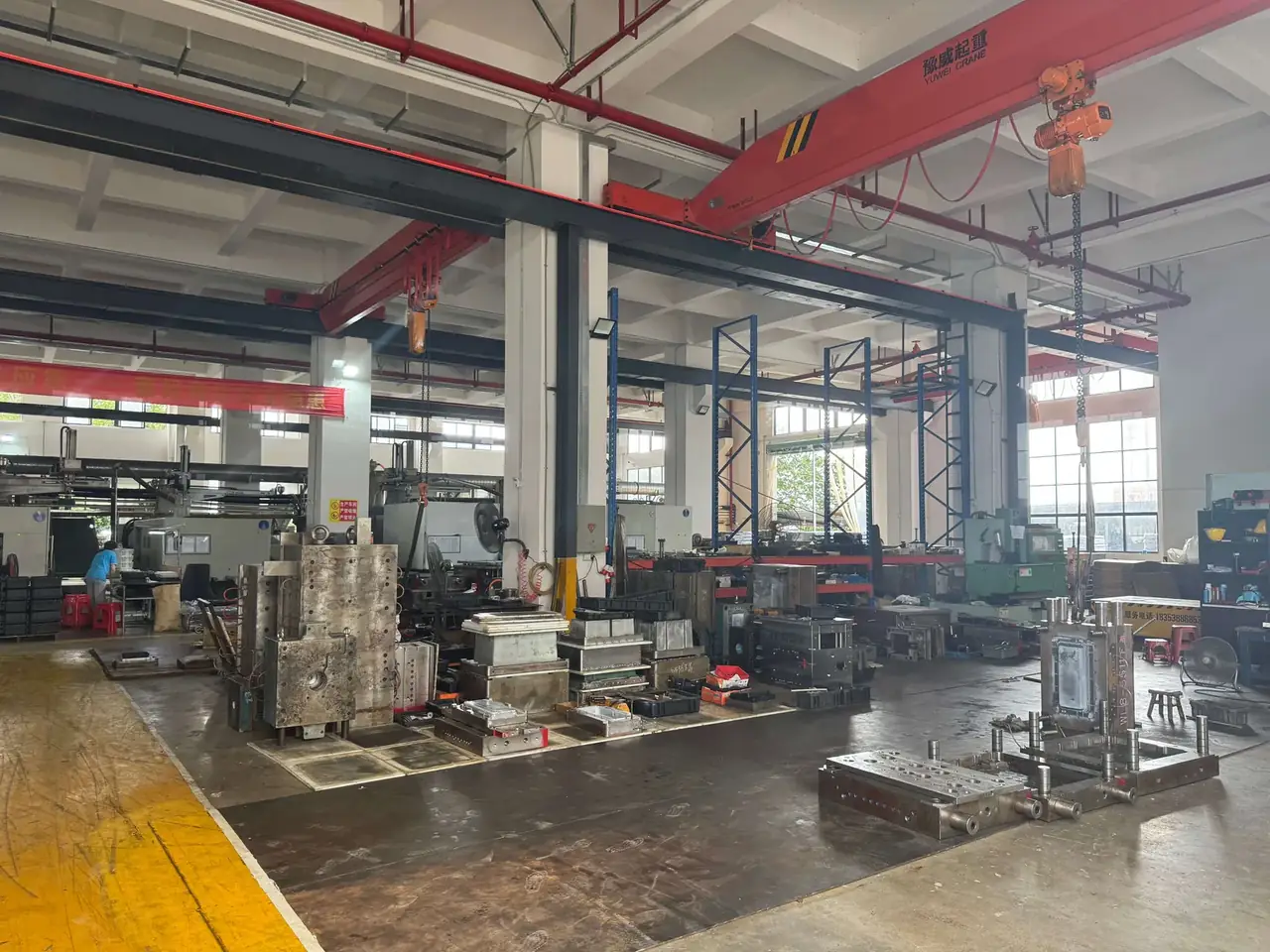
Lashing uses four points, with a 3 mm rubber pad so point load does not grind the corner through. Keep the case at or under 120 kg; above that the preload is recalculated and the pattern grows to six. In the splash zone it also stands 150 mm off the steel on 100 mm blocks, or water blisters the base in 48 h.
UV ageing runs 1000 h with colour shift held to ΔE ≤3, since the stencilled tag number is read by contrast. Low-temperature impact is a falling weight after 4 h at -25 ℃, with no corner crack permitted.
| Environmental factor | Test condition | Threshold | Applies to |
|---|---|---|---|
| Neutral salt spray | 35 ℃, 5% NaCl, continuous | 480 / 720 / 1440 h | C3 / C4 / C5-M |
| UV ageing | 1000 h cycle with wet period | ΔE ≤3 | C4 and C5-M |
| Low-temperature impact | 4 h at -25 ℃, falling weight | No corner crack | C5-M |
| Tensile after spray | 1440 h mist, 24 h recovery | ≥85% retention | All classes |
5. Reading the 12-Month Inspection
Twelve months is where the measured loss sits: C3 and C4 shells lose under 10 μm of film a year, while C5-M shells chalk at the edges by month 12, hence the walk-by at month 6.
Six items are recorded: blistering, scribe creep, fastener rust, seal-face distortion, lashing wear and tag legibility. Anything past threshold enters repair within 30 days, before rust spreads and the repaired area quadruples.
| Failure mode | How it is read | Threshold | Action |
|---|---|---|---|
| Blistering | Visual plus cross-cut | ≤2 mm, ≤3 per m² | Abrade and recoat |
| Scribe creep | Width either side of scribe | ≤2 mm per side | Local repair |
| Fastener rust | Threads after removal | Zero at 1440 h | Replace batch |
Design life is 15 years; at year 10, below 120 μm of remaining film, replacement beats recoating. Material and coating records go to the class society with every case, so a replacement does not restart the paperwork.
Conclusion
Class selection for a dnv offshore case is a pricing of position: C3 at 480 h under deck, C4 at 720 h on open deck, C5-M at 1440 h in the splash zone. Get it wrong and film thickness, fastener grade and inspection interval inherit the error. The four lashing points, the 120 kg ceiling and the 12-month interval belong in the technical agreement.
This article covers case-side specifications only and does not address any handling, loading or use of the contents.
Related Reading
- How a neutral salt spray test is run
- Choosing salt spray hours by mounting position
- Colour shift limits in UV ageing
- Case selection for offshore wind components
Related Products
- 8 Series — Gun Cases; Military Equipment Cases; Camera Equipment Cases; Drone Cases; Watch Cases; Knife Cases; First Aid Cases; Electronics Equipment Cases
- WL8-2812 PP Gun Case — model WL8-2812
- All protective cases and toolboxes: 7 series, 158 models