

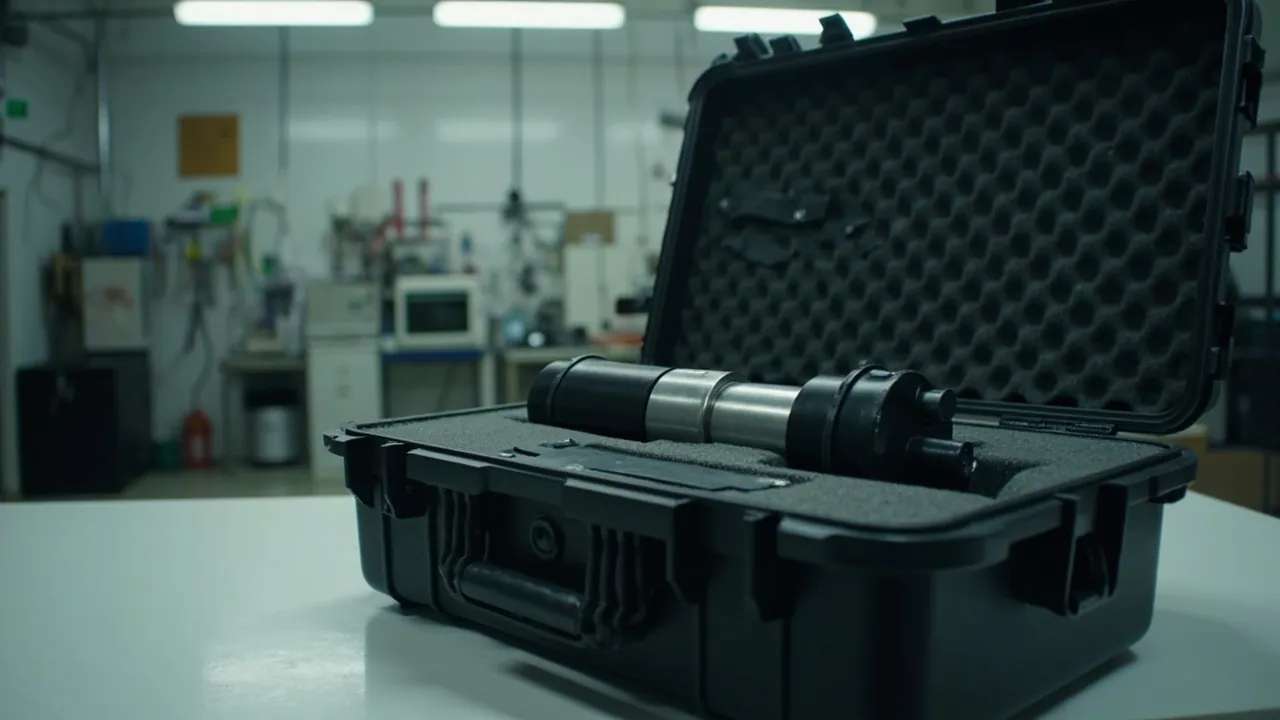
The hard part of an offshore wind parts case is not fitting the component inside but making the case and its contents jointly withstand four conditions that occur simultaneously and last for months: high salt spray, high humidity, strong ultraviolet radiation and long sea transit. Unlike onshore wind, tower accessories, nacelle components, blade fasteners and electrical modules travel from factory to final lift through inland transport, port storage, container or breakbulk sea freight, offshore transfer and platform staging, all the while exposed to chloride-bearing air for periods that can run from weeks to months. Three threads therefore drive selection: shell and hardware configured for corrosion resistance along the lines of ISO 9227 neutral salt spray testing; sealing rated against IEC 60529 and GB/T 4208, with IP67 capability as the usual marine baseline and IP68 capability for long-term open storage or deck staging; and inserts built with graded cushioning and modular compartmentation driven by component mass and fragility, with particular attention to high-strength fasteners, precision electrical modules and long accessory items. One boundary must also be stated clearly: a transit case performs no structural load-bearing function and does not replace a component's corrosion coating system or torque verification. It delivers a dry, clean, low-shock environment for sea transit and storage. The sections that follow cover the component family, environmental pressures, failure modes, IP rating selection, salt spray control, fastener-specific protection, electrical component protection, insert compartmentation, standards and testing, sea transport and lifting, a six-step selection process, and acceptance and maintenance.
The biggest challenge for offshore wind procurement and logistics teams is the combination of a long chain, many responsibility interfaces, and difficult arrival assessment. A tower flange bolt kit may pass through three or four logistics providers, two lifts and one storage period between dispatch and installation, arriving with intact outer packaging but with rust spots on the bolts and a humidity indicator card that has already changed colour. Problems like this are typically discovered just before the lift, and since offshore construction windows are governed by tide and wind speed, the cost of one rework far exceeds the cost of the packaging itself. The value of this article lies in translating offshore wind corrosion and transport requirements into clauses that can go directly into a purchase specification and technical agreement, and in clarifying which steps a supplier can take on. For offshore wind customers, JUNZHJIA supplies custom protective cases, EVA, EPE and PU insert and compartment design, seal parts configured by component model, and OEM and ODM support with volume supply, and can provide technical documentation covering shell material, UV-stabilised compound and hardware surface treatment so that transport packaging can be brought within the project quality management system.
Table of Contents
- What an offshore wind parts case has to protect: from tower accessories to nacelle components
- High salt spray, high humidity, strong ultraviolet: the three environmental pressures of offshore wind
- Component family and failure modes: fasteners, gearbox parts, electrical modules and blade accessories
- Choosing the IP rating: IP65, IP67, IP68 against IEC 60529 and GB/T 4208
- Salt spray control: ISO 9227 and the shell and hardware material trade-off
- High-strength fasteners and tower connection parts: rust and impact prevention
- Nacelle electrical components: moisture protection for converter modules, sensors and slip rings
- Inserts and compartmentation: heavy item support, bolt compartments and torque tool management
- Standards and testing: ISTA, GB/T 4857, ASTM D4169, MIL-STD-810H (not a military certification), UL94
- Sea transport and lifting: classification-society awareness and port crane operations
- A six-step selection process and wind farm spare kit configuration
- Incoming acceptance, maintenance and asset life management
- Frequently Asked Questions
- Conclusion & Related Reading
What an offshore wind parts case has to protect: from tower accessories to nacelle components
Offshore wind spares and components are highly dispersed in type. There are high-strength bolt kits weighing tens of kilograms and converter power modules with a very high unit value; thin-walled cable sheathing and seals as well as transmission parts containing precision gears and bearings. Sorting out the family first is what reveals the hazard and protection requirements.
| Component class | Typical items | Dominant failure mode | Key packaging requirement |
|---|---|---|---|
| --- | --- | --- | --- |
| Tower connection and fastening | High-strength bolts, nuts, washers, flange connections, grouting accessories | Thread and coating damage, salt spray corrosion, mixing of batches or grades | Compartments, rust prevention, clear batch identification |
| Tower internal accessories | Platform grating, ladder sections, door frame seals, luminaire brackets | Galvanised layer scratching, distortion, seal ageing | Interlayer separation, edge protection |
| Nacelle transmission parts | Gearbox parts, bearings, couplings, brake components | Bearing indentation and contamination, gear tooth impact, seal face scoring | Vibration control, cleanliness, dedicated compartments |
| Nacelle electrical parts | Converter power modules, control cabinet components, sensors, slip rings, encoders | Moisture ingress, ESD damage, connector deformation, condensation | Moisture control, static control, desiccant |
| Blade and pitch parts | Pitch bearing accessories, blade bolts, lightning counters, blade sensors | Thread damage, sensor moisture ingress, calibration drift | Moisture control, impact protection, individual wrapping |
| Electrical and cable accessories | Medium voltage cable terminations, cable protection parts, earthing components, connectors | Insulation moisture uptake, metal corrosion, joint contamination | Moisture control, individual wrapping, contamination control |
| Lubricants and consumables | Greases, sealants, coating materials, cleaners | Leakage, mixing of types, temperature degradation | Dedicated compartments, leak containment, clear labels |
| Bolt tooling and fixtures | Hydraulic wrenches, torque tools, tensioners, alignment fixtures | Accuracy drift, hose kinking, tool corrosion | Calibrated item protection, large bend radius, rust prevention |
The table reveals a pattern that differs markedly from onshore wind: the dominant failure drivers in an offshore wind parts case are rust, moisture and mixing, not breakage. Once a high-strength bolt shows rust spots, its friction coefficient and preload control are affected, and some projects scrap the batch outright. Once an electrical module takes up moisture, insulation resistance falls and the module can be destroyed the moment power is applied. Mixing bolts of different batches or strength grades is the hardest error to correct later. Compartmentation, identification and moisture control therefore carry the highest design weight.
High salt spray, high humidity, strong ultraviolet: the three environmental pressures of offshore wind
The transport and storage environment for offshore wind differs entirely from a short inland factory-to-site chain. Understanding how the pressures combine is what tells you where the corrosion budget should go.
- High salt spray. Chloride deposition rates in sea air are markedly higher than inland, and increase closer to the coast and with wind speed. Once chlorides settle on a metal surface they absorb moisture and form an electrolyte film that pits carbon and low-alloy steels and aluminium alloys and drives crevice corrosion. For galvanised parts, conversion-coated parts and stainless steel, salt spray is the deciding factor in acceptance. ISO 9227 neutral salt spray testing is the most common method for quantifying this capability, and offshore wind projects frequently use several hundred hours without base metal red rust as a reference threshold.
- High humidity and condensation. Relative humidity offshore is persistently high, and temperature differences between day and night, and between sea surface and enclosure, are significant. When a component moves from a temperature-controlled workshop or a refrigerated container into a warm, humid port environment, condensation forms readily on its surfaces. The danger is the continuous water film, which lowers insulation resistance and drives electrochemical corrosion of coatings, and which usually disappears before the case is opened, leaving nothing to trace.
- Strong ultraviolet and wet-dry cycling. Unobstructed solar radiation offshore is intense. Ultraviolet light makes plastic case surfaces chalk, fade and embrittle, and accelerates gasket ageing. Deck surface temperatures in summer can be well above air temperature, raising internal case temperatures and creating a cycle of hot humid days and condensing nights.
- Long duration and multiple transfers. Unlike inland transport measured in hours or days, offshore wind components can take weeks or months from dispatch to installation, with many loading and transfer steps. The accumulation window is longer, and any weak point in protection is amplified.
A practical rule of thumb: if the component stays inside a covered container throughout, corrosion effort can focus on moisture control. If open storage or deck staging occurs at any point, the focus must shift to salt spray, with more budget allocated to the shell and hardware.
Component family and failure modes: fasteners, gearbox parts, electrical modules and blade accessories
High-strength fasteners. This is the largest group by count in an offshore wind parts case, modest in unit price but severe in consequence. Once a thread or coating is damaged, the friction coefficient and the torque-preload relationship are directly affected; once visible rust spots appear, some projects require batch replacement rather than repair. Packaging requirements include compartmenting by batch and strength grade with no mixing, fitting thread protectors or caps, preventing direct contact between individual items, selecting insert materials free of sulphur and chlorine to avoid inducing corrosion, and supplying desiccant with a humidity indicator card.
Nacelle transmission parts. These include gearbox parts, bearings, couplings and brake components. Bearing transport damage is dominated by false brinelling and contamination: sustained vibration forms evenly spaced indentations in the raceway, while dust or metal particles entering the bearing score the raceway. Gear parts are at risk from tooth flank impact and damage to protective coatings. Packaging requirements are dedicated compartments, vibration-controlled support, a clean environment and separation of tooth flanks.
Nacelle electrical parts. Converter power modules, control cabinet components, sensors, slip rings and encoders share the characteristics of fearing moisture, static and condensation. Power modules contain bond wires and solder layers, and thermal cycling accumulates stress; sensors and encoders are static sensitive and some carry a calibrated state; slip ring contact surfaces produce contact resistance fluctuation once contaminated. Packaging requirements are antistatic insert material or antistatic bags, sufficient desiccant, a humidity indicator card, floating end faces and avoidance of severe thermal cycling.
Blade and pitch parts. Pitch bearing accessories, blade bolts, lightning counters and blade sensors. Thread protection requirements for pitch bearing accessories and blade bolts match those for high-strength fasteners, while blade sensors usually carry a calibrated state and need moisture and vibration protection. Blade-specific items are often irregular in shape, so inserts must be contoured to the actual outline.
Electrical and cable accessories. Medium voltage cable terminations, cable protection parts, earthing components and connectors. These are extremely sensitive to contamination and moisture, and once salt or oil adheres to an insulating surface, insulation performance falls sharply. Packaging requirements are individual wrapping, protective caps on end faces, dedicated compartments and no mixing with hard metal items.
Choosing the IP rating: IP65, IP67, IP68 against IEC 60529 and GB/T 4208
IEC 60529 and its national counterpart GB/T 4208 define the two-digit enclosure protection code. The selection logic for offshore wind is direct: set the rating by exposure duration and by whether the case is outdoors.
| IP rating | Dust | Water | Typical offshore wind use scenario |
|---|---|---|---|
| --- | --- | --- | --- |
| IP65 | Dust protected | Protection against water jets | Covered container transport, warehouse storage, workshop transfer |
| IP66 | Dust protected | Protection against powerful water jets | Covered port storage, short open-air loading |
| IP67 | Dust tight | Temporary immersion (typically 1 m for 30 min) | Open port storage, wet loading, offshore transfer |
| IP68 | Dust tight | Continuous immersion (depth and duration by agreement) | Long-term open storage, deck staging, risk of going overboard |
| IP69K | Dust tight | High-temperature high-pressure spray | Process areas requiring pressure washdown, rarely used for wind parts |
The usual configuration for offshore wind projects is: wherever open storage or offshore transfer occurs, a case with IP67 capability should be the baseline, moving to IP68 capability where a case sits long-term on a deck or in an open yard. Three points deserve attention. An IP rating only holds when the gasket is clean and intact, every latch is closed and the pressure equalisation device works. Long-term ultraviolet exposure requires a UV-stabilised shell compound and a gasket material with better weathering resistance. And higher ratings mean heavier cases, which must be matched to lifting and manual handling capability. For gasket ageing assessment under ultraviolet and thermal cycling, see seal material selection and ageing criteria for protective cases. For how IP ratings are verified, see sealing structure and testing points for IP67 protective cases. For the interaction of case mouth sealing, hinges and latches, see integrated design of hinges, latches and seals.
Salt spray control: ISO 9227 and the shell and hardware material trade-off
The service life of an offshore wind parts case is largely determined by the corrosion configuration of the shell and hardware, and this deserves to be written into the purchase specification.
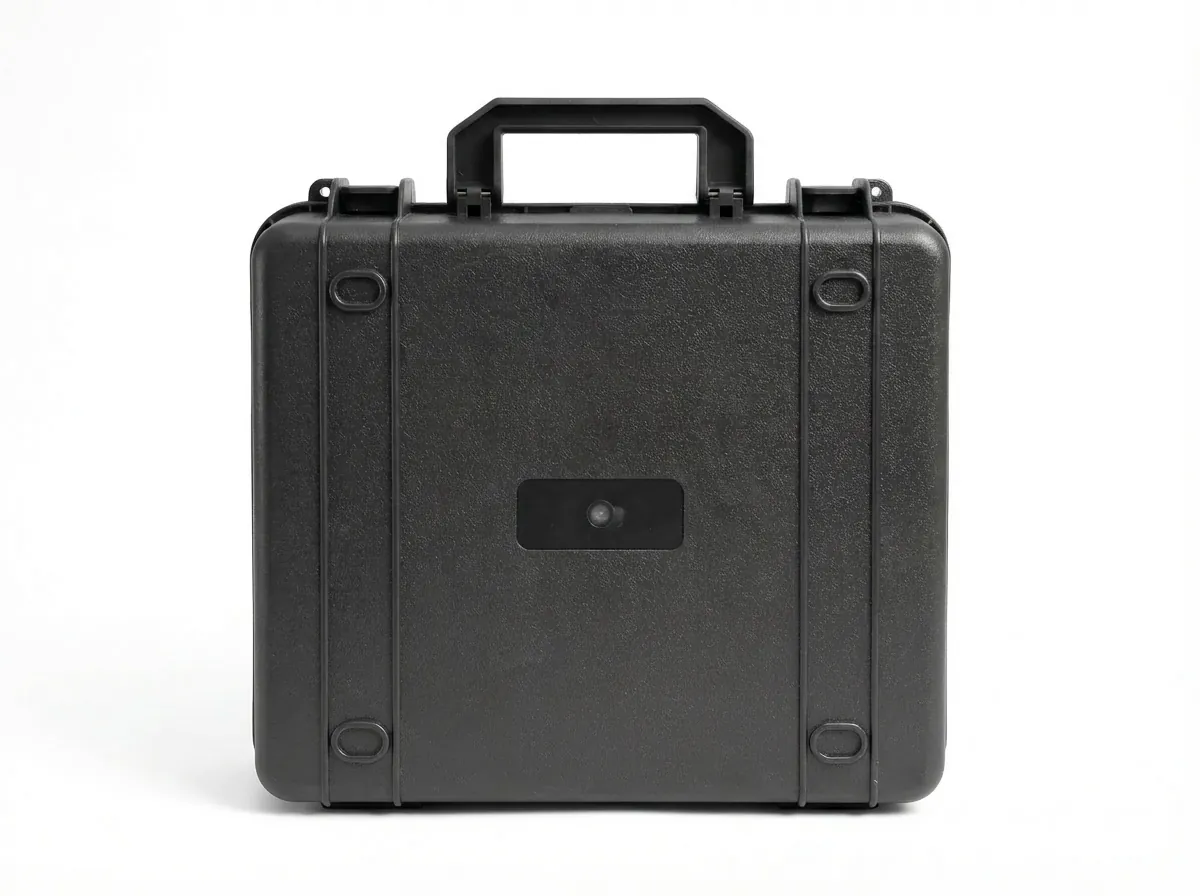
- Engineering plastic shells, typically copolymer polypropylene. Non-rusting, light and non-conductive, and the most common choice for offshore wind spare cases. Two points matter: a UV-stabilised compound is essential, otherwise prolonged sunlight causes chalking and embrittlement, and large cases depend on ribs and case mouth geometry for reinforcement so that stacking does not deform the case mouth and release the gasket.
- Aluminium alloy shells. Good stiffness and load capacity, suitable for heavy transmission parts. Aluminium must be anodised or painted for salt-laden environments, and fasteners should be standardised to stainless steel to avoid a sound case with seized screws.
- Stainless steel shells. The best corrosion performance at the highest weight and cost, reserved for small high-value components.
- Galvanic corrosion in hardware. Hinges, latches, telescopic handles and castors are frequently dissimilar metals, creating galvanic couples in a salt-laden environment and producing the classic failure of a latch that will not open. Standardising materials or adding insulating washers is recommended, and surface treatment should be stated explicitly in the purchase specification.
| Corrosion protection | Typical salt spray performance (experience reference) | Suitable locations | Cautions |
|---|---|---|---|
| --- | --- | --- | --- |
| Stainless steel (304 / 316 series) | Several hundred hours without red rust | Hinges, latches, bolts, telescopic handles | 316 series is preferable in high-chloride coastal service |
| Galvanising (hot dip) | Hundreds of hours depending on coating thickness | Structural parts, tower accessories, grating | Edges and cut faces require touch-up |
| Conversion coating for fasteners | Hundreds of hours with no hydrogen embrittlement risk | High-strength fasteners | Tied to friction coefficient and must match torque requirements |
| Anodising (aluminium) | Medium to high depending on film thickness and sealing process | Aluminium shells, frame parts | Film damage becomes a corrosion initiation site |
| Powder coating | Depends on film thickness and adhesion | Exposed structural parts, control cabinet enclosures | Edge coverage must be controlled in the process |
Corrosion capability is normally evaluated using ISO 9227 neutral salt spray testing. It is worth noting that the relationship between salt spray results and real marine environments must be interpreted carefully: chloride deposition and wet-dry cycling frequency in a chamber differ from actual offshore exposure, so testing should serve as a comparative and acceptance criterion rather than a life prediction. When supplying offshore wind customers, JUNZHJIA can provide technical documentation covering shell material grade, UV-stabilised compound notes, hardware surface treatment and structural notes, making it easier to bring transport packaging within the corrosion management system.
High-strength fasteners and tower connection parts: rust and impact prevention
Fasteners look like the simplest group but are in fact the most failure-prone on offshore wind projects, because their acceptance criteria tie directly to structural safety.
Three requirements that must be met
- No mixing. Bolts of different batches, strength grades or surface treatments must not be stored together. Once mixed, the torque-preload relationship on site cannot be guaranteed and a full batch return is often required. Packaging should deliver one batch per compartment with a label on the compartment, showing at minimum specification, strength grade, surface treatment, batch number and quantity.
- No thread damage. Once a thread profile is damaged, driving the nut creates extra resistance and torque control becomes inaccurate. Thread protectors or caps should be fitted, individual items separated with foam or dividers, and bulk stacking prohibited. Long bolts should be fixed vertically or at an angle so they do not press against each other.
- No corrosion. The thread and the head-to-shank transition are the corrosion-sensitive zones. Insert materials must be free of sulphur and chlorine, desiccant and a humidity indicator card should be included, and long sea transits benefit from vapour phase corrosion inhibitors such as inhibitor paper or film, removed promptly after opening. Material-level detail is covered in the case foam and insert material comparison.
Additional points for tower connection parts
- Flange connections and grouting accessories are large and irregular, so inserts must be contoured to the actual outline to prevent collision during lifting.
- Galvanised parts are at greater risk from coating scratching than from corrosion, and a scratch becomes a future corrosion initiation site. Interlayer separators and edge protection should be provided.
- Long accessory items such as ladder sections, grating and luminaire brackets distort easily when under-supported, so intermediate supports should be placed at intervals generally not exceeding one metre.
Nacelle electrical components: moisture protection for converter modules, sensors and slip rings
Nacelle electrical components carry the highest value density in an offshore wind project and are also among the easiest to destroy with poor packaging.
Converter power modules and control cabinet components. The objects to protect include internal bond wires, solder layers, busbars and insulation. Three key risks are moisture ingress lowering insulation resistance, condensation causing a short circuit at power-up, and static discharge damaging gate structures. Packaging practice includes antistatic insert material or antistatic bags, sufficient desiccant with a humidity indicator card, end faces and busbars left floating and unloaded, and no shared compartment with heavy metal items. Where long-term storage is planned, a scheduled desiccant replacement programme should be established. For static control practice, see design points for ESD shielding cases.
Sensors and encoders. Some sensors carry a calibrated state, and transport vibration and thermal cycling affect zero point and sensitivity, while encoders are sensitive to impact and contamination. Requirements are dedicated compartments, vibration-controlled support, floating lens or sensing faces, and a separate pocket for calibration certificates.
Slip rings and contact components. Slip ring contact surfaces produce contact resistance fluctuation once contaminated or damp, which then affects signal transmission quality. Requirements are individual wrapping, typically in an antistatic or moisture barrier bag before placement in the insert compartment, protective caps on end faces, and no shared compartment with oily or dusty items.
Cable and fibre accessories. Medium voltage cable terminations and fibre assemblies are extremely sensitive to bend radius, so no sharp edges may exist along the path; bend radius should be controlled against the supplier's minimum static radius, and connector faces should carry protective caps. The compartment logic for such items follows the removable divider system.
A field lesson worth repeating: the question most often asked about nacelle electrical components in the logistics chain is whether vibration protection is sufficient, yet the failures that actually scrap components are moisture and static. Spending budget on moisture and static control usually returns more than adding foam thickness.
Inserts and compartmentation: heavy item support, bolt compartments and torque tool management
Insert design is the core engineering step in an offshore wind parts case. It must deliver load bearing, cushioning, separation and inventory in one design.
Heavy item support design
- Loads from heavy transmission parts and fixtures should pass through rigid support columns or reinforced partitions directly into the reinforced case base rather than being transferred layer by layer through foam.
- Keep the centre of gravity low and centred, and mark its position on the insert where necessary to guide lifting and handling.
- Where cases will be stacked on deck, verify the compressive capacity of the lowest case and add internal support columns or a nesting stack design if required.
Bolt and fastener compartment design
- Compartment by specification, strength grade, surface treatment and batch, one class per compartment, to prevent mixing.
- Engrave specification, grade, batch and quantity on the insert for each compartment, complemented by a packing list pocket, so contents are confirmed at a glance.
- Separate individual items with divider strips and align thread ends in one direction so they can be checked and withdrawn quickly on site.
Torque tool and fixture management
- Hydraulic wrenches, torque wrenches and tensioners carry a calibrated state and must have their accuracy reference surfaces and hydraulic ports protected in transit.
- Coil hydraulic hoses at no less than the minimum bend radius, fit plugs at the ports, and never mix them with metal items.
- Provide a separate pocket for calibration items and certificates so they are not crushed with the tool body.
| Insert material | Characteristics | Suitable offshore wind components | Cautions |
|---|---|---|---|
| --- | --- | --- | --- |
| EVA (medium to high density) | Precisely machined, dimensionally stable, good rebound | Electrical modules, sensors, connectors, small fixtures | Higher cost, stiffens at low temperature |
| EPE (low density) | Light, long cushioning stroke, low cost | Grating, brackets, large light items | Rebound decays after repeated compression |
| PU foam | Firmness tunable by density, strong energy absorption | Gearbox parts, bearings, heavy transmission parts | Relatively higher moisture uptake, needs sealing or desiccant |
| Cross-linked PE foam | Tear resistant, good weather resistance | Returnable cases with frequent opening | Slightly harder to machine |
| Vapour phase corrosion inhibitor material | Releases an inhibiting atmosphere | High-strength fasteners, precision metal parts | Requires scheduled replacement, remove promptly after opening |
For foam and insert selection logic, see the custom foam insert design guide. On offshore wind spare case projects, JUNZHJIA typically works from the component list, batch management requirements and lifting method, produces the case size recommendation and insert compartment drawing, validates fit and ease of access in sampling, and then moves to volume production with seal parts configured by component model.
Standards and testing: ISTA, GB/T 4857, ASTM D4169, MIL-STD-810H (not a military certification), UL94
Packaging requirements for offshore wind projects usually appear in the technical agreement, and the standards cited determine how acceptance is carried out. Note in particular that MIL-STD-810H is used here purely as a reference for environmental test methodology and is not a military certification.
| Standard | Content | Application in offshore wind parts cases |
|---|---|---|
| --- | --- | --- |
| IEC 60529 / GB/T 4208 | Enclosure protection ratings (IP code) | Defines dust and water ratings and test methods |
| ISO 9227 | Corrosion tests in artificial atmospheres: salt spray tests | Salt spray evaluation of shell, hardware and coatings |
| ISTA series | Performance testing of transport packages | Full case drop, vibration and compression verification |
| GB/T 4857 series | Basic tests for transport packages | Common test and reporting basis for domestic projects |
| ASTM D4169 | Performance testing of shipping containers and systems | Distribution cycle simulation for North American and international customers |
| MIL-STD-810H | Environmental test methods (vibration, shock, temperature, humidity, salt fog and more) | Reference for test profile design (not a military certification) |
| UL94 | Flammability testing of plastics | Flame retardance class for foams and plastics where required |
| ISO 13628 series | Design and operation of subsea production systems | Reference for understanding design boundaries of subsea cable and accessory items |
The recommended combination is: type verification of the IP rating to IEC 60529, salt spray testing of the shell and hardware to ISO 9227, drop and vibration testing of the fully packed case to ISTA or GB/T 4857, additional temperature-humidity cycling and stacking compression verification for batches facing long sea transit, and UL94 classification of foam where flame retardance is required. For procedures, see the ISTA transport testing procedure, GB/T 4857 transport packaging testing and ASTM D4169 distribution cycle simulation. The general logic of environmental test profiles is covered in interpreting MIL-STD-810H environmental test compliance. For spare cases held in storage long-term, see case design for extreme temperature environments.
Sea transport and lifting: classification-society awareness and port crane operations
The real journey of an offshore wind parts case includes several high-hazard steps: inland road transport, port warehouse storage, container or breakbulk vessel loading, sea transit, discharge at the destination port, offshore transfer, staging on a platform or installation vessel deck, and final lifting. Each leg has a different dominant hazard and should be specified separately.
- Sea transit. The dominant hazards are sustained high humidity, salt spray and internal temperature cycling. Place sufficient desiccant and a humidity indicator card inside; avoid direct contact with the container wall where condensation droplets can fall on the case; add vapour phase corrosion inhibitor protection for cases containing precision metal parts; and observe the manufacturer's stacking limit strictly.
- Port storage. The dominant hazards are ultraviolet radiation, rain and salt spray. Use UV-stabilised shell compounds and corrosion-protected hardware, keep cases off the ground in the yard, and prevent the case base from standing in pooled water.
- Offshore transfer and lifting. The dominant hazards are rough handling and occasional drops. Cases should carry clear lifting, centre-of-gravity and orientation markings; heavy cases should have lifting points or a palletised base, with sling angle and load matched to lifting point strength; and wheeled cases should be secured or placed on a dedicated cradle during offshore transfer. For wheeled case suitability on rough quays, see wheel and trolley handle configuration.
- Deck staging. The dominant hazards are salt spray, ultraviolet radiation and wave splash. Keep cases off the deck and secured against sliding, and close latches promptly after each opening to limit internal moisture exchange.
Classification societies including DNV and ABS publish extensive rules and recommended practice on offshore transport, lifting and sea fastening, and project documents commonly cite their general principles to specify securing and stacking. It should be clear that a transit case is not itself a classification society certified item, but citing general principles on securing, stacking and lifting helps packaging documentation pass owner and general contractor review. For how this lands in practice and how suppliers should be screened, see how to choose a protective case OEM factory. For verifying coating and material claims, see identifying genuine versus substandard protective cases.

A six-step selection process and wind farm spare kit configuration
- Build the component list with batch management requirements. Record item name, envelope including protrusions, net mass, material and surface treatment, sensitive face locations, whether the item is static sensitive, whether it carries a calibrated state, and whether batch compartmenting is needed. The output should be a table, not prose.
- Define the transport route and exposure. Establish the road and sea split, whether open storage occurs, whether the case goes on deck, storage duration and whether it passes through high salt spray sea areas. Set the IP target, usually from IP67 upward offshore with IP68 capability for long-term open service, and decide whether a pressure equalisation valve is mandatory.
- Define the corrosion configuration and test requirements. Specify shell material and UV requirements, hardware material and surface treatment, coating salt spray requirements and whether vapour phase corrosion inhibitor protection is needed, and write these as acceptance clauses.
- Define the insert concept and load path. Use rigid supports and reinforced partitions for heavy items, relief around sensitive faces, compartmenting by batch, and thread protectors on threaded items.
- Define case type, volume and handling method. Choose hand-carry, wheeled trolley or vehicle-stacked format by unit mass, verify compressive capacity against the stacking requirement, decide latch type and lifting point layout, and provide positions for desiccant and a humidity indicator card in cases containing precision electrical parts.
- Define acceptance and documentation. Agree incoming inspection items covering appearance, dimensions, gasket condition, latch effort, insert fit, compartment and label accuracy and humidity indicator status, along with sampling level and acceptance rules, and require shell material and UV notes, hardware surface treatment notes and optional salt spray and transport test reports. For sampling scheme design see custom case acceptance and AQL sampling.
Incoming acceptance, maintenance and asset life management
Incoming acceptance checklist
- Shell free of cracks, distortion and dents; no chalking on coated or plastic surfaces intended for long outdoor service.
- Gasket complete, not twisted, free of trapped foreign matter; seal groove clean and free of particles.
- Latches fully engaged with consistent effort; hinges free of play, corrosion and noise.
- Pressure equalisation membrane clean with the protective cap in place.
- Insert compartments match the drawing and labels and batch identification are clear and correct.
- Desiccant and humidity indicator card present in the agreed quantity, with the indicator showing the expected state.
- Accompanying documents, including material notes, surface treatment notes, test reports and calibration certificates, complete.
Routine maintenance recommendations
- Clean the seal groove and case mouth after each use with mild detergent and a soft cloth; never use solvent-based or strongly alkaline cleaners. See correct cleaning and care for protective cases.
- Inspect the gasket every 6 to 12 months and replace immediately on hardening, cracking or permanent flattening; shorten to 3 to 6 months in marine environments or with frequent opening.
- During long storage, leave latches slightly open or ventilate periodically so the gasket is not permanently compressed, and replace desiccant and vapour phase inhibitor material on schedule rather than after failure.
- Inspect hardware annually for corrosion and smooth operation, focusing on hinge pins, latch springs and telescopic handle mechanisms.
- Maintain a case number to component to batch to transport record log so that high-strength fasteners and calibrated items remain fully traceable. On overall condition assessment and replacement timing, see protective case service life and replacement criteria.
Frequently Asked Questions
Q: How do packaging requirements differ between offshore wind and onshore wind?
A: The differences come down to three areas. The first is environmental intensity. Onshore wind transport chains are usually short and the environment is dominated by dust, rain and temperature variation. Offshore wind components travel from factory to installation through port storage, sea freight, offshore transfer and deck staging, all within a high salt spray, high humidity and high ultraviolet environment lasting weeks to months, making salt spray and ultraviolet the dominant hazards. The second is consequence of failure. Offshore construction windows are limited by tide and wind speed, so the vessel and labour cost of one rework far exceeds onshore, and once high-strength fasteners show rust spots some projects scrap the batch rather than accept repair. The third is the acceptance route. Offshore projects typically cite ISO 9227 salt spray testing, IEC 60529 protection ratings and ISTA-type transport testing in the technical agreement, and require the supplier to provide material and surface treatment documentation. Offshore wind parts cases therefore need a fuller configuration across shell material, UV-stabilised compound, hardware material and moisture control in the insert.
Q: Why are rust spots on high-strength bolts such a serious outcome?
A: Because bolt preload control depends on a stable friction coefficient, which depends directly on surface condition. High-strength bolts are tensioned to a specified torque or turn angle, and that conversion is based on a defined surface treatment and lubrication state. If the thread or the bearing face corrodes, surface roughness and friction coefficient move away from the design value, so the same torque can produce a different actual preload, which affects both the sealing performance of the flange connection and the reliability of the structural connection. That is why many offshore wind technical specifications are strict about fastener surface condition and would rather replace a whole batch than accept rework when visible rust appears. Packaging should therefore use insert materials free of sulphur and chlorine, include desiccant and a humidity indicator card, add vapour phase corrosion inhibitor protection for long sea transits, fit thread protectors to prevent impact damage, and compartment by batch to prevent mixing.
Q: What is most often overlooked when packaging converter power modules?
A: The most commonly overlooked items are moisture accumulation and static discharge, not vibration, which is most people's first concern. Power module failures are usually not breakage but reduced insulation resistance after moisture ingress, or a short circuit at power-up under condensing conditions. Static discharge can damage gate structures, and the damage may not appear as immediate failure but as parameter drift after a period in service. Packaging practice should include antistatic insert material or antistatic bags with grounding during handling, sufficient desiccant with a humidity indicator card so moisture exposure is immediately visible on opening, end faces and busbars left floating and unloaded with no shared compartment with heavy metal items, and avoidance of severe thermal cycling in transit to reduce condensation risk. For spares held in storage long-term, establish a desiccant replacement programme rather than packing the case and leaving it unattended. Packaging performance here should be judged by whether the case preserves a verified electrical condition, since the cost of retesting or replacing a power module far exceeds the cost of the packaging measures that prevent it.
Q: Why compartment the insert by batch and engrave labels?
A: Because fasteners and seals look alike, cannot be distinguished on site once mixed, and the consequences can be serious. Bolts of different strength grades, surface treatments or batches may have different friction coefficient and preload relationships; O-rings of different hardness correspond to different pressure ratings and media; washers of different specifications mixed together force site staff to measure each item individually, wasting substantial working time. Compartmenting by batch with specification, grade, batch and quantity engraved on the insert, together with a packing list pocket, allows contents to be confirmed at a glance and the right item to be taken with confidence, and it also allows a problem batch to be located quickly for return or traceability. These features do not look like protection, yet they address precisely the most expensive cost on an offshore project: rework and waiting. In practice the same logic applies to seals and small hardware, where a mixed box of O-rings forces the same individual measurement exercise on a moving deck, often in poor light and against the clock.
Q: What IP rating should an offshore wind parts case carry?
A: Set it by exposure rather than always specifying the maximum. If the case stays in a covered container or a roofed warehouse throughout, IP65 capability is sufficient. Wherever open storage, wet loading or offshore transfer occurs, IP67 capability should be the baseline, because temporary immersion and powerful spray genuinely occur in those situations. Only where a case will sit long-term in an open yard or on an installation vessel deck is IP68 capability worth considering, at the cost of heavier latches, a thicker sealing structure and less convenient opening. Two supporting requirements are not optional. The shell must use a UV-stabilised compound, otherwise prolonged sunlight causes the plastic to chalk and embrittle and the sealing surfaces to deform. And gasket material should be selected for better weathering resistance with a shortened inspection interval in marine service. A final practical point is that rating decisions should be documented per case type, since a wind farm spare kit usually mixes cases that never leave a warehouse with cases that live on deck, and applying one rating across the whole kit wastes weight and handling effort.
Q: Which components suit vapour phase corrosion inhibitor materials, and what should be considered when using them?
A: Vapour phase corrosion inhibitors release an inhibiting vapour that forms a protective atmosphere in an enclosed space, which makes them well suited to high-strength fasteners, precision metal parts, coated connection parts and items with complex geometry that cannot be individually greased. Four considerations apply. First, vapour phase protection relies on a reasonably enclosed volume, so it works better in a well-sealed case; where a pressure equalisation valve is fitted, the effect of that air exchange on inhibitor concentration should be assessed. Second, protected surfaces should be clean, free of rust, oil and fingerprints, otherwise the vapour cannot act effectively. Third, inhibitor materials have a finite service life, so long transits and long storage require scheduled replacement rather than a single application left indefinitely. Fourth, after opening, protected items should be removed promptly and residues dealt with so that subsequent assembly and coating adhesion are not affected. Whether to use vapour phase protection should be decided by the project based on component sensitivity and transport duration.
Q: Why fit a humidity indicator card in cases holding nacelle electrical components?
A: Because electrical components show no visible change after taking up moisture, and a humidity indicator card provides an objective assessment the moment the case is opened. Indicator cards contain humidity-sensitive chemical spots that change colour as relative humidity rises, with different spots corresponding to different thresholds. The installation date and initial state should be recorded, and on opening the card should be read before components are removed. If the indicated threshold is exceeded, internal relative humidity has been high for an extended period and the component should undergo insulation resistance testing or drying before installation rather than being fitted directly. This is especially important on offshore wind projects, where the interval between dispatch and installation can be weeks or months with several environmental changes in between, and appearance alone cannot support a judgement. Combined with scheduled desiccant replacement and a transport record log, the indicator card turns the vague question of whether moisture exposure occurred into documented, traceable technical data.
Q: What do DNV or ABS rules require of the transit case itself?
A: First, a clarification: a transit case is normally not a classification society certified item and there is no such thing as a classification society certificate for it. The rules and recommended practice published by DNV, ABS and others address offshore transport, lifting operations, sea fastening and stacking. In project practice these are cited in the transport plan to specify sling selection, lifting point strength, securing method, stacking height and storage conditions. For a case supplier, the task is to provide the information these requirements demand: designed capacity of lifting points, permitted stacking height, centre-of-gravity position, acceptable lifting methods, external dimensions and total mass. Writing these data into technical documentation allows the packaging plan to pass owner and general contractor review and prevents site teams from adopting inappropriate lifting methods because information was missing. A practical addition is to mark the lifting points and centre of gravity directly on the case, since the transport plan and the case itself are often separated by the time the lift actually happens.
Q: How should offshore wind spare cases be maintained when they live on an installation vessel or platform?
A: The distinctive feature of a vessel or platform environment is that salt spray, ultraviolet radiation, humidity and vibration occur simultaneously, so maintenance priorities differ from a land-based warehouse. Gasket inspection should be more frequent, every 3 to 6 months, with immediate replacement on hardening, cracking, permanent flattening or surface tackiness. Hinges, latches, telescopic handles and castors should be checked quarterly for corrosion and smooth operation, with marine-appropriate grease applied where needed. Cases should not be exposed to prolonged direct sunlight or placed directly on the deck where the base sits in pooled water, and securing should be re-checked periodically to prevent sliding in heavy weather. Latches should be closed again promptly after each withdrawal so internal humidity does not accumulate, and desiccant and vapour phase inhibitor materials should be replaced on the agreed schedule. A spare case should also carry an opening and inventory record, logging opening time, items withdrawn, remaining quantities and indicator card status, which matters especially for kits shared across wind farms.
Conclusion & Related Reading
The design logic of an offshore wind parts case reduces to three statements: environment determines configuration, batch determines compartmentation, and interfaces determine acceptance. Environment determines configuration in the sense that salt spray, humidity, ultraviolet and long sea transit together dictate shell material, UV-stabilised compound, hardware material and corrosion treatment. Batch determines compartmentation in the sense that visually similar items such as fasteners and seals must be compartmented by specification, grade and batch with engraved identification to eliminate mixing. Interfaces determine acceptance in the sense that IP ratings, salt spray testing, transport testing and material documentation must be written into the technical agreement so that acceptance has a defensible basis. In execution that means setting the IP rating against IEC 60529 and GB/T 4208, defining salt spray and corrosion requirements against ISO 9227, selecting transport tests against ISTA, GB/T 4857 and ASTM D4169 with MIL-STD-810H used only as an environmental test method reference and not as a military certification, and designing inserts and compartments around the characteristics of each component. JUNZHJIA supplies custom protective cases, EVA, EPE and PU insert and compartment design, seal parts configured by component model, and OEM and ODM support with volume supply for offshore wind customers, and can provide technical documentation covering shell material, UV-stabilised compound and hardware surface treatment as projects require.
Related Reading