

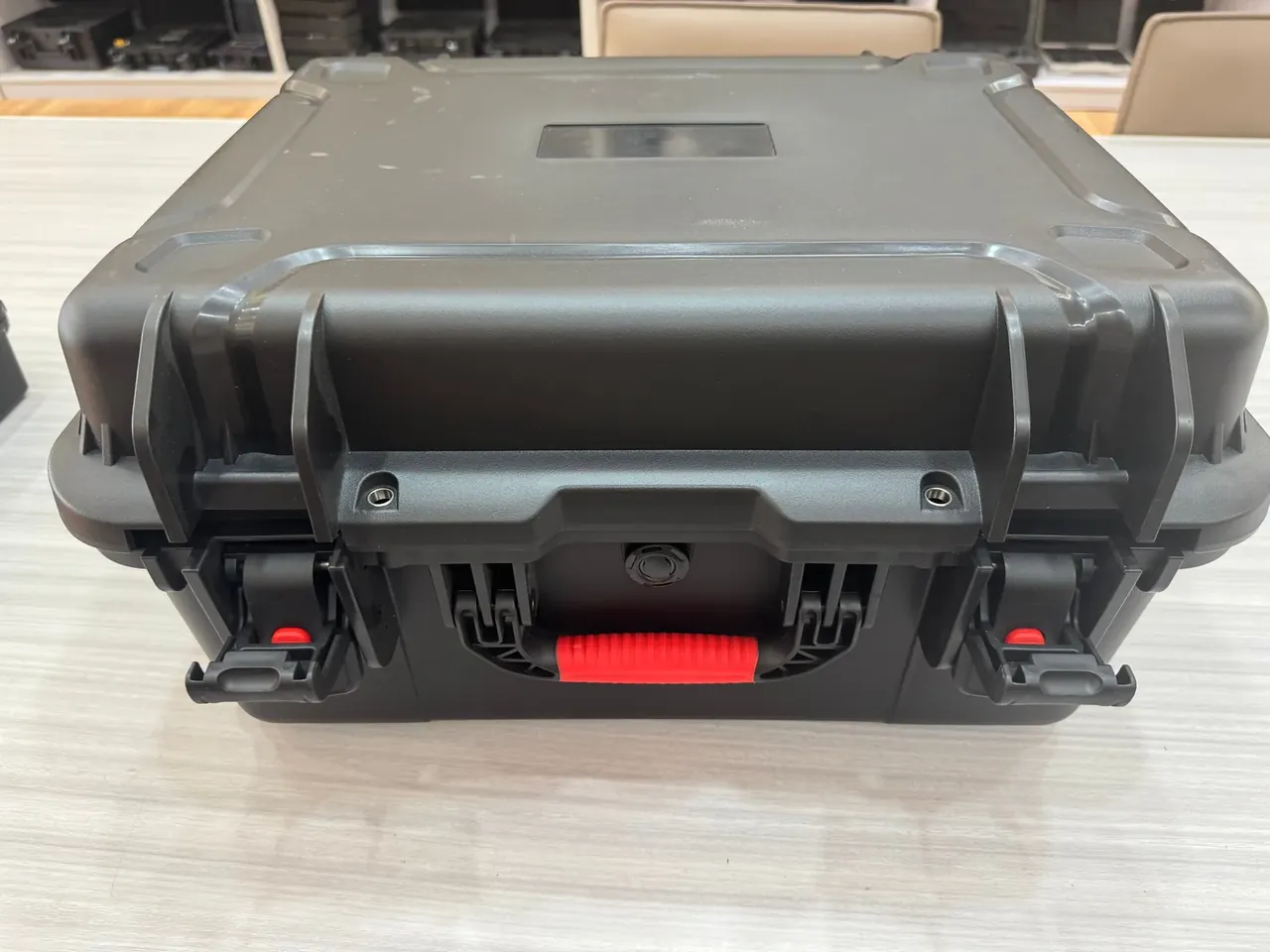
Quick answer: Drill bit & screws plastic organizer box sets a 2.2 mm divider wall and 32 mm cell clearance, holding divider shift under 0.6 mm after a 1.0 m drop.
Table of contents
- Divider wall thickness allocation in the Drill bit & screws plastic organizer box
- Single-cell clearance and small-part retention margin
- Measuring divider displacement after a drop
- Cross-cell migration judgement on a cycle rig
- Stress spreading at divider root fillets
- FAQ
1. Divider wall thickness allocation in the Drill bit & screws plastic organizer box
Outer size 420 x 310 x 150 mm and cavity 385 x 275 x 115 mm bound the material budget of the Drill bit & screws plastic organizer box. Wall is 2.8 mm, divider wall 2.2 mm, cells 10, empty shell 2.4 kg, rated load 5 kg. Dividers and shell are moulded in one shot from the same resin, so lid, base, and dividers shrink at one rate. JUNZHIJIA lists divider wall as its own figure because bending between cells rests on that 2.2 mm. Thinner walls bend under a drop, and thicker walls eat into cell clearance. The ten equal cells are set out below, and fixed dimensions give every displacement reading a baseline.
A 2.2 mm divider wall is the bending floor: treat the divider as a simply supported plate spanning 32 mm of cell clearance, and the 1.0 m drop sends shock along the base into the divider root.
| Cell spec | Divider wall | Clearance |
|---|---|---|
| Ten equal cells | 2.2 mm | 32 mm |
| Long end cell | 2.2 mm | 32 mm |
| Short end cell | 2.2 mm | 32 mm |
| Middle cells | 2.2 mm | 32 mm |
| Reject | <2.2 mm | <32 mm |
2. Single-cell clearance and small-part retention margin
Cell clearance of 32 mm and 10 cells are a pair: clearance sets how far a small part shifts in a cell, cell count sets the divider number, and together they fix the retention margin of the Drill bit & screws plastic organizer box. Clearance above 32 mm lets a part strike the divider; too little and ten dividers will not fit the 385 x 275 x 115 mm cavity.
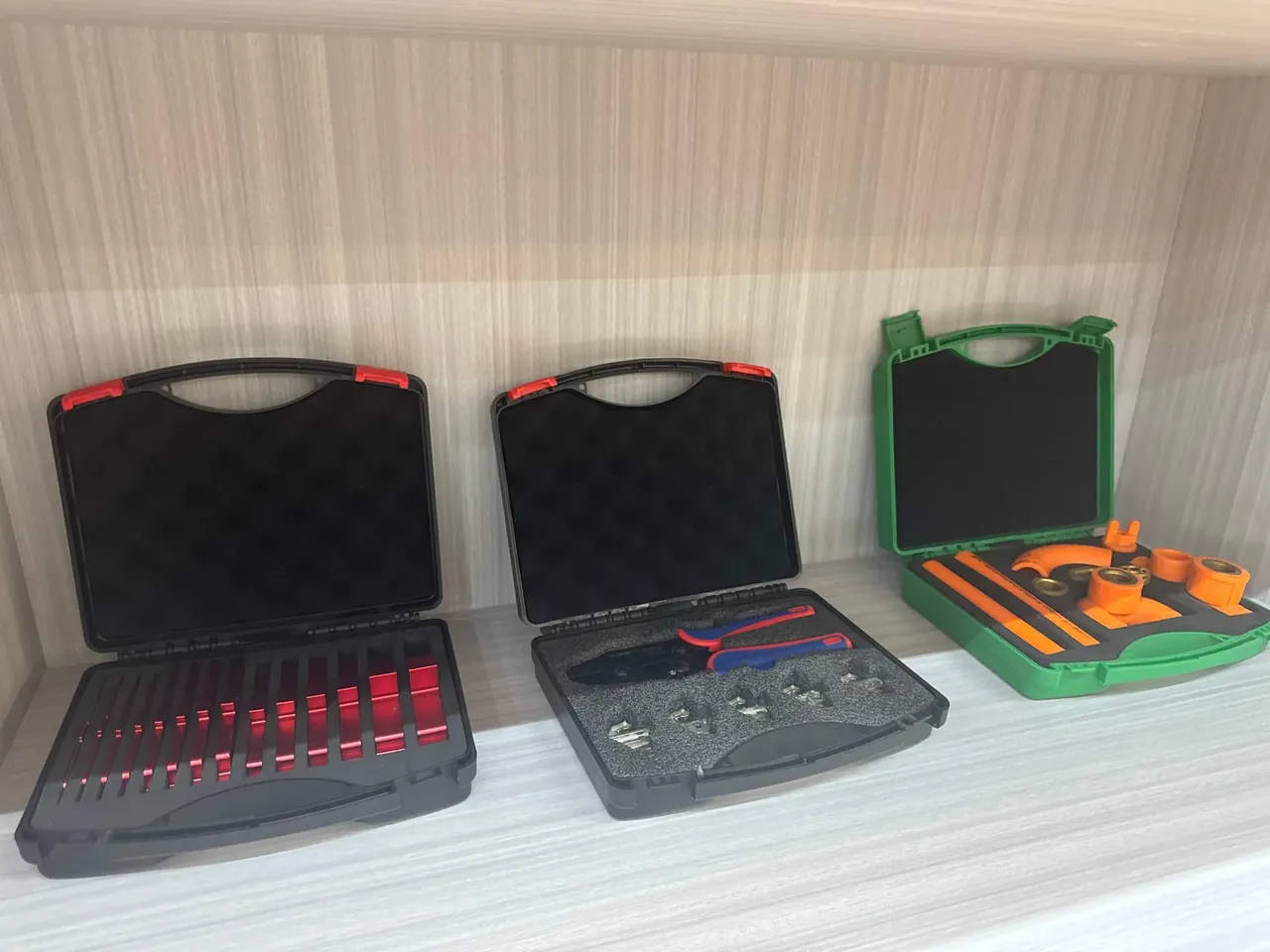
The retention criterion is that a part stays in its cell after a 1.0 m drop: measure the gap from divider top to lid inner rim, and a gap above 0.6 mm leaves room to climb over.
| Divider zone | Displacement | Verdict |
|---|---|---|
| Left root | 0.3 mm | Pass |
| Middle root | 0.4 mm | Pass |
| Right root | 0.5 mm | Pass |
| Divider top | 0.4 mm | Pass |
| Reject | >0.6 mm | Reject |
3. Measuring divider displacement after a drop
The drop is 1.0 m with the base falling free onto a flat steel plate, and the Drill bit & screws plastic organizer box rides the rig with its rated load. Before opening, measure divider displacement: take the base plane as zero and read the side shift at each divider root with a depth gauge, the criterion being displacement <=0.6 mm.
Two latches at 300 N each press the lid onto the mouth, and the handle is checked at 260 N static pull; neither load lands on a divider directly, yet both decide whether the lid still holds divider tops after a drop. JUNZHIJIA writes three readings on one card: latch force, handle force, and divider displacement.
4. Cross-cell migration judgement on a cycle rig
Cycle life is logged at 5000 openings on a rig, with the Drill bit & screws plastic organizer box stopped every 1000 cycles for a displacement recheck. Migration is judged not by whether a part moved but by a measurable gap at the divider top between adjacent cells; once a gap opens, a part can cross at the next opening.
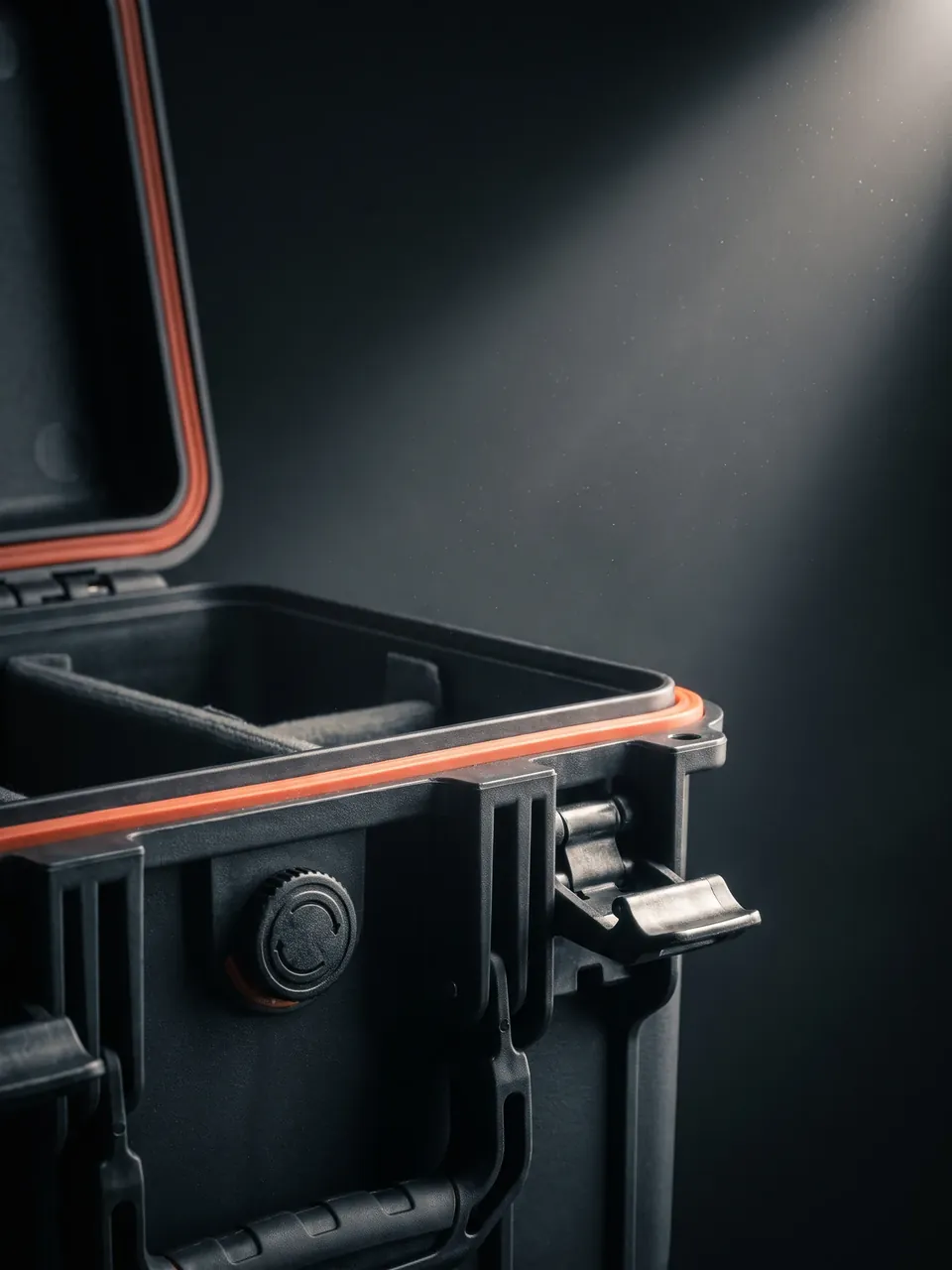
5000 cycles split into five readings, tracking displacement from an initial 0.2 mm to the last, and no migration is recorded if the final value stays <=0.6 mm with no new gap.
| Displacement | Cycles | Migration |
|---|---|---|
| Initial 0.2 mm | 0 | None |
| Recheck 0.3 mm | 1000 | None |
| Recheck 0.4 mm | 3000 | None |
| Recheck 0.5 mm | 5000 | None |
| Reject | >0.6 mm | Migration: reject |
5. Stress spreading at divider root fillets
Divider roots carry a fillet that spreads drop stress away from a sharp corner; the mouth seal is benchmarked to IP65 and operating temperature logged from -10 C to 55 C, so dividers stay neither brittle nor soft and displacement readings hold. JUNZHIJIA adds a reinforcing rib at the root, with fillet radius and the 2.2 mm wall given together so stress spreading does not thin the wall again.
Divider wall, cell clearance, post drop displacement, and cycle migration are four points on one chain: 2.2 mm governs bending, 32 mm governs retention, <=0.6 mm governs residual deformation, and 5000 cycles without migration governs late life. Each figure is measured alone yet read together; one line crossed and the Drill bit & screws plastic organizer box fails that lot.
The four criteria do not substitute for one another; a missing reading blocks sign off.
A retest of the same lot reuses the same rig and the same points.
Conclusion
The Drill bit & screws plastic organizer box puts retention and bending on four measurable readings: divider wall, cell clearance, post drop displacement, and cycle migration, not on a broad claim. 2.2 mm and 32 mm set the structure, while <=0.6 mm and 5000 cycles set rejection, four criteria independent yet restraining one another into a full judgement window for this lot. JUNZHIJIA keeps one shared card so every shell reading traces back. Buyers checking the Drill bit & screws plastic organizer box do better asking for these four readings than judging the cell layout.
Related Reading
- Specification items for custom cases with compartments
- Foam inserts versus dividers
- Divider layout versus foam layout
- Factory inspection of multi-layer compartment tool boxes
Related Products
- 8 Series — Gun Cases; Military Equipment Cases; Camera Equipment Cases; Drone Cases; Watch Cases; Knife Cases; First Aid Cases; Electronics Equipment Cases
- WL8-2812 PP Gun Case — model WL8-2812
- All protective cases and toolboxes: 7 series, 158 models