

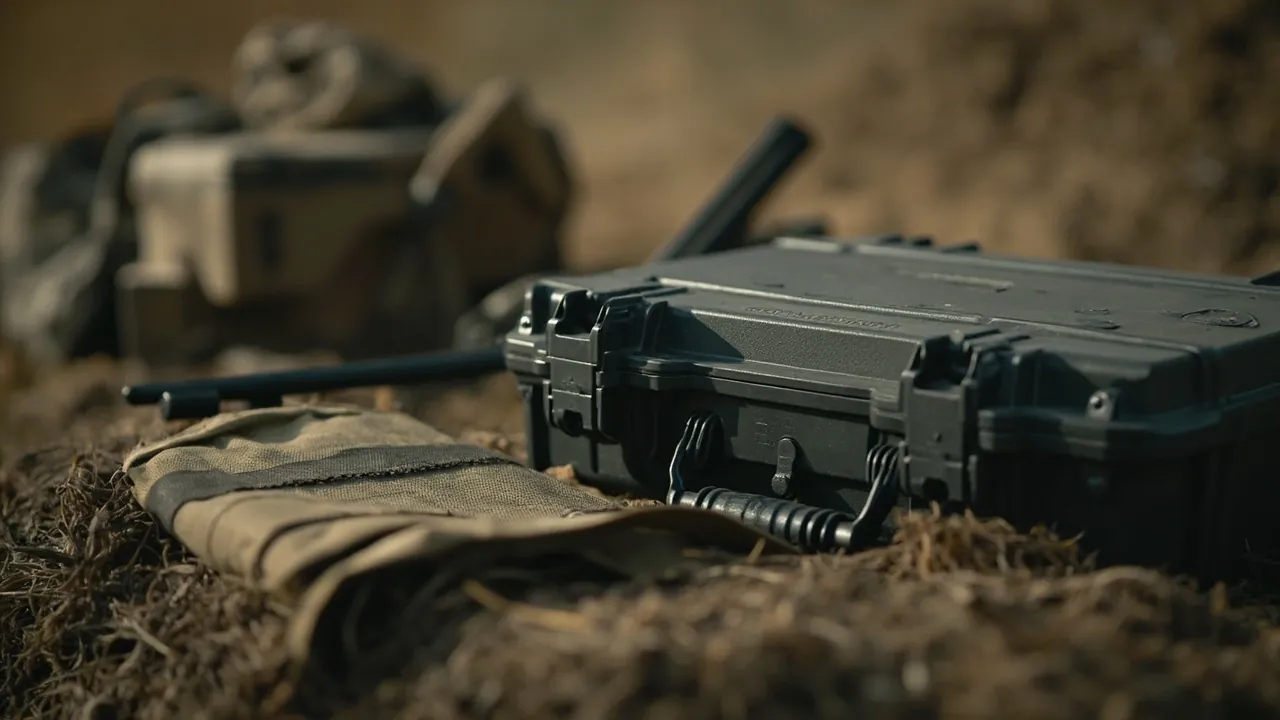
Industry drones are high value, large and frequently transferred, yet protection of the airframe and batteries is often underestimated. The conclusion up front: a qualified drone transport case must center on "airframe limitation, gimbal surface protection, arm fixation, quick access", and be paired with a dedicated drone battery case for lithium safety; different industries (plant-protection, inspection, police, fire, tethered, surveying) should apply differentiated lining and three-protection by operating environment. This article covers drone transport cases, drone battery cases, agriculture plant-protection drone cases, inspection drone cases, police drone cases, fire drone cases, tethered drone cases, surveying drone cases and their portable forms, providing parameters, standards and selection methods for procurement and implementation.
Industry drones, from development and delivery to field operation, flow between vehicles, vessels and cargo holds. A plant-protection or inspection drone contains airframe, arms, gimbal, battery and controller; if not fixed properly in transit, broken arms, loose gimbal or deformed propellers directly threaten the next flight safety. Therefore the drone transport case is not simple storage but a gateway of flight safety and asset protection. Whether an agriculture plant-protection drone case or a police drone case, it should be planned from standards, structure, lining and battery safety. Related accessory protection can refer to the coordination of drone accessory cases.
Table of Contents
- Protection Needs and Industry Differences of Drone Transport Cases
- Structural Design of Drone Transport Cases
- Drone Battery Cases and Battery Safety
- Protection of Agriculture Plant-Protection Drone Cases
- Protection of Inspection Drone Cases
- Protection of Police Drone Cases
- Protection of Fire Drone Cases
- Protection of Tethered Drone Cases
- Protection of Surveying Drone Cases
- Case Material (PP/ABS/PC)
- Three-Protection and Sealing (IP Grade)
- Cushioning Lining and Custom Cutting
- Transport and Air Check-in
- Drone Transport Boxes and Portable Forms
- FAQ
Protection Needs and Industry Differences of Drone Transport Cases
The pain points of industry drone cases: irregular airframe, arms foldable but rebound, precise gimbal shock-sensitive, battery hazard source needing isolation. Industry differences are clear: agriculture plant-protection drone cases must resist chemical residue and field mud; inspection drone cases must be light, quick-open, vehicle-fixed; police drone cases emphasize mobility and camouflage; fire drone cases resist temperature and soot; tethered drone cases often contain power and cable, large volume; surveying drone cases value gimbal and payload precision.
In standards, China commonly uses GB/T 4208 (corresponding to IEC 60529) for IP grade; field can reference MIL-STD-810H vibration, shock and temp-humidity procedures; transport references ISTA 3; non-metal flammability references UL94; mechanical impact uses IK grade. For airframes and battery cases with lithium, battery safety is a non-ignorable dimension. Related police/military case types can refer to the segmentation thinking of military protective case selection.
| Industry | Environment | Focus |
|---|---|---|
| --- | --- | --- |
| Plant-protection | Chemical, mud | Chem resist, clean |
| Inspection | Vehicle, wild | Light, quick, fix |
| Police | Mobile, hidden | Camouflage, mobile |
| Fire | High temp, soot | Temp, dirty resist |
| Tethered | Power, cable | Large, cable mgmt |
| Surveying | High precision | Gimbal payload |
In field deployments, the sealing and cushioning of Drone Transport Cases & Battery Cases come first: referencing IEC 60529 and GB/T 4208 for the IP rating, IP65 suits dust and splash protection while IP67 is preferred for wet or submerged environments to keep the contents free from moisture and grit.
In field deployments, the sealing and cushioning of Drone Transport Cases & Battery Cases come first: referencing IEC 60529 and GB/T 4208 for the IP rating, IP65 suits dust and splash protection while IP67 is preferred for wet or submerged environments to keep the contents free from moisture and grit.
At incoming inspection, Drone Transport Cases & Battery Cases should ship with third-party IP, IK and drop reports; check gasket continuity, even latch compression and liner fit item by item. Like Military Protective Case Selection: Rifle Cases, Ammo Transport Cases & Individual Equipment Cases, complete documentation eases warehousing and insurance claims.
Structural Design of Drone Transport Cases
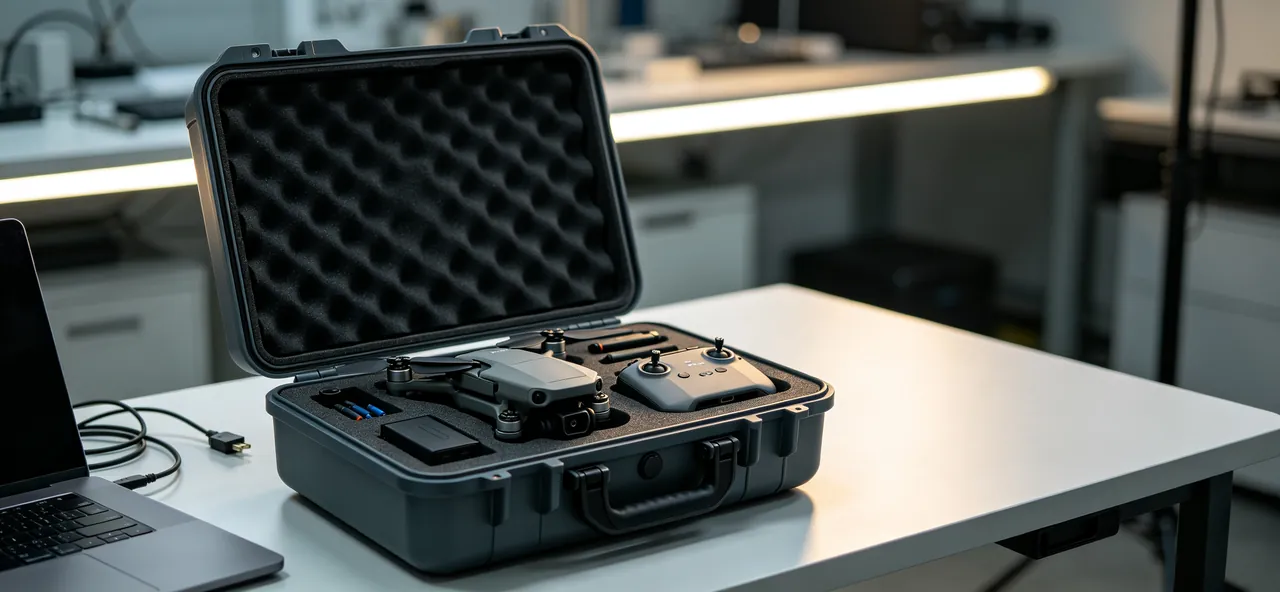
The core structure of a drone transport case: "airframe limitation + gimbal surface + arm fixation + quick access". The airframe is wrapped in large foam grooves limiting six-direction displacement; foldable arms locked by strap or shaped slot against rebound; the gimbal contains brushless motor and attitude sensing, lock gimbal and relax motor before transport, lining avoiding latch, lens sunk soft partition not pressured; controller, battery and accessories zoned or matched in same case.
The shell is best injection-molded one piece, corner thickening and stiffeners for life; large cases bottom with forklift holes and stacking pins for vehicle and pallet. Latch operable with gloves, hinge enduring a typical value of thousands of open-close cycles. Whether case type, paste airframe list and pre-flight checklist on lid, forming "inspect on open" habit.
For impact resistance, Drone Transport Cases & Battery Cases should be designed to an IK rating per IEC 62262, with thickened rounded corners and metal latches; transit drops are evaluated against MIL-STD-810H Method 516.8, and experience shows the shell can survive multiple 1.2 m drops without cracking.
At incoming inspection, Drone Transport Cases & Battery Cases should ship with third-party IP, IK and drop reports; check gasket continuity, even latch compression and liner fit item by item. Like Field Medical Cases & Combat First-Aid Kits: Protection and Temperature-Control Standards, complete documentation eases warehousing and insurance claims.
Drone Battery Cases and Battery Safety
Drone batteries are mostly high-rate lithium, fearing compression, short and high temperature; the drone battery case core is "independent compartment + insulation + limit + heat". Each battery independent slot with insulation divider and limit buckle to avoid colliding; multiple not stacked, off in transport, interface cap in place; case flammability meets UL94 related requirements and reserves heat duct.
The drone battery box is the portable version for pilots carrying spare batteries, emphasizing light and quick access, also insisting independent compartment insulated. Whether case or box, attach battery list and capacity label inside for power management. Logic consistent with mobile power outdoor cases: upright, insulated, fixed, away from heat. For self-drive and vessel, battery case can coordinate power with car power but must isolate fire and high-temp surfaces.
Vibration and transit reliability can be verified with the ISTA 3A/3E series of simulated shipping tests; for sensitive loads such as Drone Transport Cases & Battery Cases, custom-cut EVA foam that holds every item in place markedly reduces in-transit damage.
Protection of Agriculture Plant-Protection Drone Cases
Plant-protection drones work in field mud and chemical environment; agriculture plant-protection drone cases must resist chemical residue, be easy to clean, waterproof and dustproof. Lining uses washable EVA/PE, easy to wipe chemical; shell PP chemical and low-temp resistant, suitable for outdoor and pre-cold-chain storage. Case IP65-IP67 against splash and dust, with ventilation to avoid chemical vapor accumulation.
The plant-protection drone box is the portable version for solo pilots carrying small plant-protection drones and spare batteries. Whether case or box, arm and propeller fixation logic is consistent with airframe; chemical residue must be cleaned after camp before boxing to avoid corroding lining and ring. Related outdoor three-protection can refer to the general practice of outdoor gear cases.
Material choice for Drone Transport Cases & Battery Cases typically spans modified PP, ABS and PC: PP is light and shock-tolerant for frequent carrying, ABS offers good rigidity at moderate cost, and PC gives the highest impact strength at the expense of weight; flame rating can be specified to UL 94 V-1 or better for in-vehicle and cabin safety.
Protection of Inspection Drone Cases
Inspection drones (power, pipeline, bridge, forestry) transfer frequently and work by vehicle; inspection drone cases emphasize light, quick-open and vehicle fixation. Cases with wheels and strap holes, straps lock in vehicle avoiding slide on hard brake; airframe and battery zoned in same vehicle, battery case independent insulated. For long inspection, reference ISTA 3 transport verification.
The inspection drone box suits solo carrying small inspection drones, emphasizing hanging and quick access, fly at tower on arrival. Whether case or box, gimbal and payload surface cannot be omitted. Related power inspection gear can refer to power-line patrol cases transport protection, forming "drone + instrument" coordination.
Liners commonly use high-density EVA or PE foam, CNC-cut to the actual part or drawing so each item sits in its own pocket. JUNZHJIA supports custom liners and OEM/ODM with brand-color printing, matched seals and test documentation for batch acceptance.
Protection of Police Drone Cases
Police drones emphasize mobility, rapid deploy and some concealment; police drone cases optimize mobility on standard protection: wheeled push, stackable, low-key appearance; airframe with video-link and command terminal fixed as group in case, forming reconnaissance chain on site; for night tasks, case can have reflective or glow markers for positioning.
The police drone box suits individual officers carrying small reconnaissance drones, emphasizing light quick-open. Whether case or box, battery safety and EMC still must be guaranteed, video-link units care shielding against mutual interference. Related police/military can refer to the protection logic of military equipment boxes.
Temperature and humidity control is an often-overlooked aspect of Drone Transport Cases & Battery Cases transport: passive insulation can use phase-change cold packs or an insulated bladder, and extreme temperature bands follow MIL-STD-810H Methods 501/502, with experience indicating structural stability from -20 C to +60 C.
Protection of Fire Drone Cases
Fire drones face high temperature, soot and complex fire; fire drone cases must resist temperature, dirt and be easy to clean, with quick access in training and dispatch. Shell selects temp and UV resistant material, lining soot-resistant wipeable; case IP67 against splash and ash, latch enduring typical high-frequency open-close.
The fire drone box suits individual carrying small fire-recon drones, emphasizing light and high-temp storage. Whether case or box, after return clear ash and moisture, check seal and battery timely. For fire scenarios needing airdrop, refer to airdrop protection structure. Related rescue gear can combine the temp and corrosion resistance thinking of fire-fighting equipment cases.
For Drone Transport Cases & Battery Cases with electronic circuits, consider conductive gaskets and a metallized case for EMI shielding, assessed against the GB/T 17626 series for immunity so strong electromagnetic fields in the field do not disturb readings or comms.
Protection of Tethered Drone Cases
Tethered drones achieve long endurance through cable power, system containing airframe, tether cable, ground power and retract mechanism, large and multi-component. Tethered drone cases often appear as "split multi-case + assembly list": airframe case, power case, cable case configured in sections, unified module stacked transport; cable in dedicated reel slot preventing tangle.
The tethered drone box suits portable transfer of small tethered modules. Whether case or box, power units fixed independently insulated by battery safety logic, cable managed against bend. Related power and command can refer to the linked solution of emergency command comms cases.
At incoming inspection, Drone Transport Cases & Battery Cases should ship with third-party IP, IK and drop reports; check gasket continuity, even latch compression and liner fit item by item. Like Portable Diagnostic Equipment Cases: Handheld Ultrasound, Patient Monitor, Ventilator & Defibrillator, complete documentation eases warehousing and insurance claims.
Protection of Surveying Drone Cases
Surveying drones value gimbal and payload precision (visible, multispectral, lidar); surveying drone cases core is "gimbal payload surface + damping + fixing". Gimbal locked and motor relaxed before transport, lens and sensor window sunk soft partition not pressured; multispectral and lidar payloads independent slots pulled as whole for counting; electronic payloads need conductive lining and reliable grounding against ESD.
The surveying drone box suits solo carrying small surveying drones and payloads, emphasizing light and precision protection. Whether case or box, temp-humidity sensitive payloads with humidity card and desiccant. Related high precision can learn from the shock lining of precision instrument cases and vibration control of spacecraft payload test cases.
For site management, tag Drone Transport Cases & Battery Cases with an ID and a contents card, keep a master list with the supervisor, and reconcile against the card on departure and return; this mirrors the numbering system used by Fire-Fighting Equipment Cases & Rescue Forcible-Entry Kits and cuts loss rates.
Case Material (PP/ABS/PC)
Industry drone cases commonly use PP, ABS and PC, or ABS+PC alloy. PP is tough, chemical resistant, cheap, low-temp, suitable for plant-protection and general; ABS high rigidity and good look, suitable for police and inspection; PC strong and temp resistant, suitable for fire and demanding payload cases; alloy compromises. Shell injection-molded one piece, corner thickening and stiffeners for life.
For tethered and fire large cases, bottom with forklift holes and stacking pins, with wheels; for portable box forms, reduce weight under strength. Material grade should be marked in acceptance documents for traceability.
| Material | Advantage | Limitation | Typical Use |
|---|---|---|---|
| --- | --- | --- | --- |
| PP | Tough, chem, low-temp | Avg rigidity | Plant, general |
| ABS | High rigidity, look | Avg temp | Police, inspect |
| PC | Strong, temp | Costly | Fire, payload |
| ABS+PC | Compromise | Mid cost | General industry |
For Drone Transport Cases & Battery Cases that is airdropped or flown at altitude, balance weight and ballast, add redundant latches and, where needed, a pressure-equalization valve to counter altitude-induced suction; related thinking appears in Earthquake Emergency Kits & Flood-Control Emergency Cases.
Three-Protection and Sealing (IP Grade)
Three-protection means waterproof, dustproof and anti-corrosion (including chemical, salt spray). Seals are mostly nitrile or silicone rings embedded in flange under compression. To reach IP67, the ring uniformly compressed, no breakpoint, no debris. Seaside, fire and plant-protection environments should care about seal aging, replace periodically.
Waterproof does not mean immersion. IP67 means no ingress at 1 meter for 30 minutes; long immersion needs IP68. If equipment fears moisture, combine desiccant and humidity card for "seal + moisture absorption" double insurance. Related three-protection can also refer to the floating and sealing design of waterproof protective boxes.
To extend seal life, keep the silicone gasket of Drone Transport Cases & Battery Cases away from oil and prolonged UV, wipe it regularly and apply silicone grease; lubricate latch hinges and store the case slightly open to avoid crushing the gasket.
Cushioning Lining and Custom Cutting
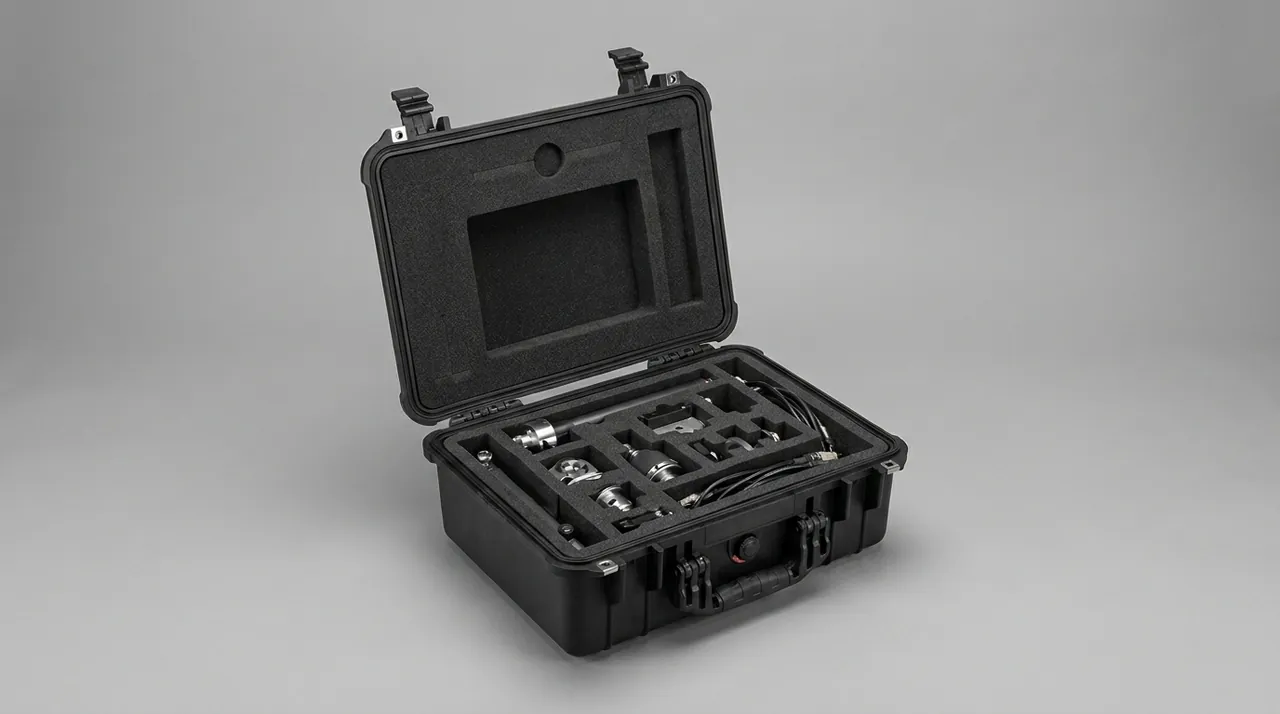
The cushioning lining decides whether airframe "shakes, compresses or collides". Common EVA, PE, PU, custom cutting CNC grooves by three-dimensional airframe shape, embedding airframe, arms and gimbal into foam. For drone transport cases and various industry cases, custom lining not only absorbs shock but also does "fixed management": each item one slot, missing known at a glance, improving field counting and dispatch efficiency.
JUNZHJIA can customize CNC-cut foam lining according to your airframe, arms, gimbal, battery and controller shapes, achieving precise wrapping of one slot per object, and support color, silk-screen and structural modification by industry (plant-protection/inspection/police/fire/tethered/surveying). Existing cases can also order lining and seal kits separately to upgrade protection.
Transport and Air Check-in
Air check-in limits airframe case size and weight, cargo hold has drop, stack and temp risks. Recommendations: single-case weight within two-people-lift or one-person-push; large cases with wheels and forklift holes; airframe and battery fully fixed to avoid sliding; lithium batteries insulated and fixed separately per air dangerous-goods rules with labels, strictly not mixed with airframe in same cabin illegally.
Cross-city work can reference ISTA 3 transport verification. Multi-case unified outer module for palletization, reducing loss risk. Valuable airframes recommend transport insurance, pre-flight inspection on arrival.
Drone Transport Boxes and Portable Forms
Solo pilots and teams more often use portable forms like drone transport boxes, drone battery boxes, plant-protection drone boxes, inspection drone boxes, police drone boxes, fire drone boxes, tethered drone boxes and surveying drone boxes: small, cabin-carryable or vehicle, emphasizing quick open and hanging. The advantage of portable boxes is flexibility; the disadvantage is limited capacity, requiring selection of "one drone one set", leaving spares to large cases.
Whether case or box, interior insists on airframe limitation, gimbal surface and battery independent compartment. Plant-protection drone boxes resist chemical and easy clean; inspection drone boxes emphasize vehicle quick access; police drone boxes low-key appearance; fire drone boxes temp and dirt resist; tethered drone boxes cable managed; surveying drone boxes protect payload precision. Bad weather can combine the waterproof form of outdoor gear cases.
For industry drone users and integrators, JUNZHJIA provides integrated capability from case selection, lining customization to seal kit matching. We can customize CNC-cut foam lining according to your airframe, arms, gimbal, battery and controller shapes, achieving one slot per object; support OEM/ODM color, silk-screen and structural modification by industry (plant-protection/inspection/police/fire/tethered/surveying); for export projects provide IP, flammability, EMC and transport related detection documents for inclusion in tenders and technical agreements. Existing cases can also order lining and seal kits separately to upgrade protection.
Documents recommended for industry drone cases: material grade (PP/ABS/PC), IP grade declaration or report, lining layout drawing, drop/vibration records (large cases), flammability grade when powered, ESD/EMC description for electronics, warranty and spares. The contract clarifies seal replacement cycle. For high-value airframe cases trial in small batches before mass, observing lining and seal stability under real transport.
Common mistakes: only look at capacity not fixation, arms rebound and break in transit; treat "fits" as "protects" with too large gap causing collision; ignore battery independent compartment, short risk; over-stack overweight hard to carry; not replace seals, seaside fire aged still used as IP67. The methods in this article avoid these systematically.
Beyond the immediate protection function, the drone transport case should be evaluated on total lifecycle cost. A cheaper case that fails a latch during a rapid deployment, or whose lining shifts after a few rough miles, ends up more expensive than a robust case maintained for years. When comparing quotes, ask for the expected seal replacement interval, the availability of spare lining kits, and whether the shell can be repaired after a crack. For operators, these factors often outweigh a small upfront saving and belong in the purchase scorecard.
Many teams run shared kits that rotate between vehicles and pilots. For these, the case must support quick visual audit: a labeled lining where every slot has a part number lets the returning pilot confirm completeness in minutes. Adding a small damage-log sleeve on the lid, where users note any dent or fault, builds a history that protects both the gear and the next pilot. JUNZHJIA can pre-print such logs and part-number labels as part of the OEM/ODM service, so the kit arrives audit-ready.
Safety and compliance documentation matters for industry drones because of high-rate lithium. A case supplied with an IP declaration, a lining layout drawing and a battery-safety summary strengthens both acceptance and peace of mind. Keep a digital copy with the kit. For cross-border work, the same documents answer questions about the contained aircraft and help prove compliant transport of batteries as required by air carriers.
Climate adaptation is often overlooked. Cold environments make plastics more brittle and seals stiffer; hot environments soften adhesives and can warp thin-wall boxes. If your operations span seasons, choose a material grade rated for the full temperature band and verify the seal remains compliant at both ends. Desiccant capacity should also be sized for the humid leg of the journey, not just the storage condition.
A single pilot benefits from one well-packed portable box they never have to think about; a fleet benefits from a system of matched cases that stack and share liners. Decide which model fits before buying, because retrofitting a fleet system from mismatched boxes is costly and error-prone. The modular approach pays off when a second aircraft or a relief crew requires the same kit to split and rejoin without confusion.
Foam lining wears and eventually sheds; choosing a lining material that can be re-cut from stock, rather than a molded part unique to one case, keeps spares cheap and reduces waste. JUNZHJIA's CNC-cut lining supports this, since a new liner can be produced from the original drawing at any time. Pair it with a recyclable shell program where available, and the kit's environmental footprint stays manageable over a long service life.
Protection is only as good as the person closing the lid. A short onboarding that shows how to seat the seal, how to tension straps and how to read the humidity card prevents most field failures. Include this in the kit's quick-start card. Crews that train new members on the case itself report far fewer transit incidents than crews that treat the case as obvious.
A practical pre-flight checklist: confirm the airframe is in its slot, confirm the seal is clean and compressed, confirm arms are locked and gimbal relaxed, confirm batteries are in their compartment and off, confirm the humidity card is green, and confirm the lid label matches the contents. Thirty seconds on this routine saves a grounded flight. The same checklist works whether the kit is a single portable box or a full vehicle load of cases.
For buyers comparing suppliers, request a reference build: a sample case packed with your actual aircraft, photographed open and closed, with the lining drawing attached. This single exercise reveals more about real protection than any specification sheet, because it shows whether the vendor understood the fragile surfaces, the weight distribution and the access order you actually use in the field. Treat the reference build as the contract baseline, and volume orders will match it.
Battery discipline deserves a standing rule. Never store a battery inside a case that also holds a spark source, and never transport a power bank next to loose metal that could bridge its terminals. The drone battery case design supports this rule through separate compartments, but the rule itself must be taught. Crews that post the rule inside the lid see far fewer near-misses than crews that assume everyone knows it.
Deployment rehearsal is the final validator. A case that looks correct on the bench may still slow a crew if the open sequence is awkward under stress. Rehearse the open-and-fly drill with the actual kit, time it, and feed the findings back into the lining layout. This loop is what turns a good case into a mission-ready case, and it costs nothing but a few repetitions.
Spare strategy should be planned at purchase, not after a failure. Identify the single most likely loss, usually a seal or a lining, and stock it before the first deployment. JUNZHJIA's CNC-cut lining means a replacement liner can be produced from the original drawing quickly, which keeps a damaged kit in service instead of waiting on a full case reorder.
Frequently Asked Questions
Q: What is the difference between drone transport cases and ordinary boxes? A: The core difference is whether "airframe limitation + gimbal surface + arm fixation + quick access" is achieved. Ordinary boxes just fit, in transit arms rebound and break, gimbal loose, propellers deform directly threatening flight safety. Drone transport cases use custom-cut lining to embed airframe, arms and gimbal limiting displacement, with sunk buffer for lens. In addition they must meet IP67 (GB/T 4208/IEC 60529), anti-vibration (MIL-STD-810H, ISTA), flammability (UL94 with lithium). Therefore selection should start from flight safety risk, not just capacity appearance.
Q: Why independent compartment for drone battery cases? A: Industry drone batteries are high-rate lithium, fearing compression, short and high temperature. Independent compartment with insulation divider and limit buckle prevents batteries colliding or compressing; multiple not stacked, off in transport, interface cap in place; case flammability meets UL94 related requirements and reserves heat dissipation. The drone battery box portable version also insists independent compartment insulated. Logic consistent with mobile power outdoor cases: upright, insulated, fixed, away from heat. Without compartment mixing, once short may ignite the whole case, extremely costly. Therefore independent compartment is the bottom-line design of battery cases.
Q: What special requirements for agriculture plant-protection drone cases? A: Plant-protection drones work in chemical and mud environment; agriculture plant-protection drone cases must resist chemical residue, be easy to clean, waterproof and dustproof. Lining uses washable EVA/PE easy to wipe chemical; shell PP chemical and low-temp resistant; IP65-IP67 against splash dust with ventilation to avoid chemical vapor accumulation. The plant-protection drone box portable version suits solo pilots with small drones and spares. Whether case or box, clean chemical after camp before boxing to avoid corroding lining and ring. Related outdoor three-protection can refer to outdoor gear cases.
Q: How does an inspection drone case fix in vehicle? A: Inspection drones transfer frequently by vehicle; inspection drone cases with wheels and strap holes, straps lock in vehicle avoiding slide on hard brake; airframe and battery zoned in same vehicle, battery case independent insulated. Long inspection references ISTA 3. The inspection drone box suits solo carrying small drones to fly at tower on arrival. Whether case or box, gimbal and payload surface cannot be omitted. Related power inspection can refer to power-line patrol cases for "drone + instrument" coordination. Key is limit, quick-open, fixable, improving dispatch efficiency.
Q: How does a police drone case balance mobility and protection? A: Police drones emphasize mobility, rapid deploy and concealment; police drone cases optimize mobility on standard protection: wheeled push, stackable, low-key appearance; airframe with video-link and command terminal fixed as group, forming reconnaissance chain on site; night can have reflective glow markers for positioning. The police drone box suits individual officers with small reconnaissance drones light quick-open. Whether case or box, battery safety and EMC still guaranteed, video-link units care shielding against mutual interference. Related police/military can refer to military equipment boxes logic.
Q: How high temperature must fire drone cases resist? A: This specification does not give a specific number; fire drone cases should be designed for "temp resist, dirt resist, easy clean": shell selects temp and UV resistant material, lining soot-resistant wipeable; IP67 against splash ash, latch enduring high-frequency open-close. The fire drone box suits individual carrying small fire-recon drones high-temp storage. Whether case or box, after return clear ash moisture, check seal and battery. For airdrop refer to airdrop protection structure. Specific temp index should be clarified in acceptance documents by task environment, not applying a single number.
Q: Why split multi-case for tethered drone cases? A: Tethered drones contain airframe, tether cable, ground power and retract mechanism, large and multi-component; tethered drone cases use "split multi-case + assembly list": airframe case, power case, cable case configured in sections unified module stacked; cable in dedicated reel slot preventing tangle. The tethered drone box suits portable transfer of small tethered modules. Whether case or box, power units fixed independently insulated by battery safety, cable managed against bend. Related power command can refer to emergency command comms cases linkage. Split design protects components and eases vehicle and personnel handling.
Q: How does a surveying drone case protect payload precision? A: Surveying drones value gimbal and payload precision (visible, multispectral, lidar); surveying drone cases core is "gimbal payload surface + damping + fixing". Gimbal locked and motor relaxed before transport, lens sensor window sunk soft partition not pressured; multispectral and lidar payloads independent slots pulled as whole for counting; electronic payloads need conductive lining reliable grounding against ESD. The surveying drone box suits solo carrying small drones and payloads light protection. Temp-humidity sensitive payloads with humidity card desiccant. Related high precision can learn from precision instrument cases and spacecraft payload test cases.
Q: How often to replace the seal? A: Rubber ring is consumable, check elasticity and cracks every six months, shorten to quarterly in seaside, fire, plant-protection high-frequency harsh environments. Once hardens, cracks or compression unrecoverable, replace even if appearance intact, otherwise IP67 fails. Replace same-spec nitrile or silicone ring, clean flange before install. Desiccant humidity card replaced synchronously. For cases needing wave-transparent and ventilation, seal should be partially checked. With maintenance, a drone transport case serves a typical value of multiple seasons without protection drop, ensuring every safe flight.
Conclusion and Related Reading
Drone transport case and battery case selection should center on "airframe limitation, gimbal surface, arm fixation, battery safety", combined with industry-differentiated lining, three-protection and custom cutting, to systematically protect plant-protection, inspection, police, fire, tethered and surveying drones. Doing protection before transit is far more cost-effective than flight-stop and repair after airframe damage.
Related Reading