

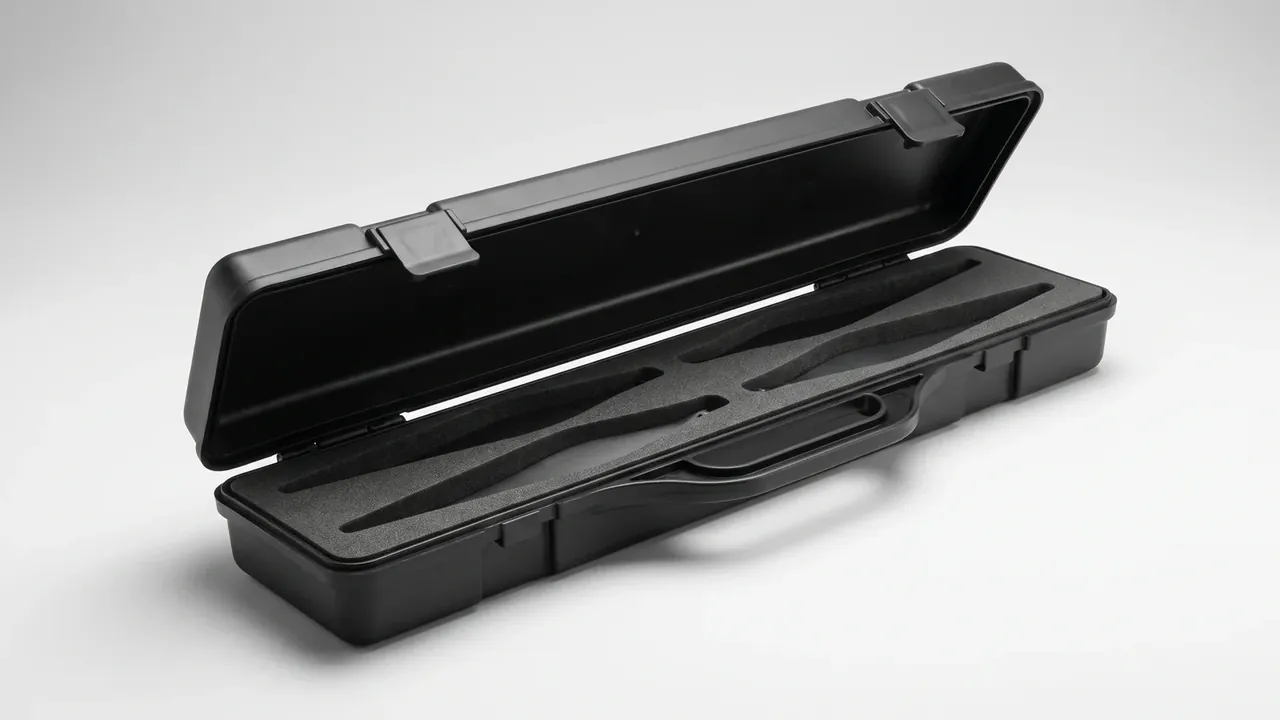
Quick answer: A drone case spec derives backwards from three numbers: the interior from the airframe envelope plus foam, the exterior from the interior plus wall, the load from full weight plus stack height.
Table of contents
- Three Numbers Set Every Drone Case Specification
- Dimension Chain: Deriving the Interior from the Airframe
- Wall Thickness and Clamp Force: Sizing the Machine
- Load Paths: Handle, Stacking and Corners
- Writing the Spec Sheet: Tolerances and Acceptance
- FAQ
1. Three Numbers Set Every Drone Case Specification
A drone case spec sheet built from the outside gets redrawn; fix the interior first.
For a 380 × 340 × 140 mm airframe envelope, 25 mm of foam per side and 3 mm of clearance, the interior lands at 560 × 410 × 215 mm, and walls plus ribs bring the exterior to 620 × 470 × 260 mm at 4.8 kg.
| Parameter | Value | Basis |
|---|---|---|
| Interior | 560 × 410 × 215 mm | Envelope plus foam and clearance |
| Exterior | 620 × 470 × 260 mm | Interior plus wall and ribs |
| Loaded weight | 22 kg | Case, airframe, batteries, spares |
Loaded weight is the number most often guessed; battery packs alone vary by 1.5 kg and drive the load rating.
2. Dimension Chain: Deriving the Interior from the Airframe
A dimension chain closes outward from the airframe. Take 380 mm, add 25 mm of foam and 3 mm of clearance per side, and the minimum interior is 436 mm; the drawing says 560 mm, and the extra 124 mm holds the gimbal and spare props.
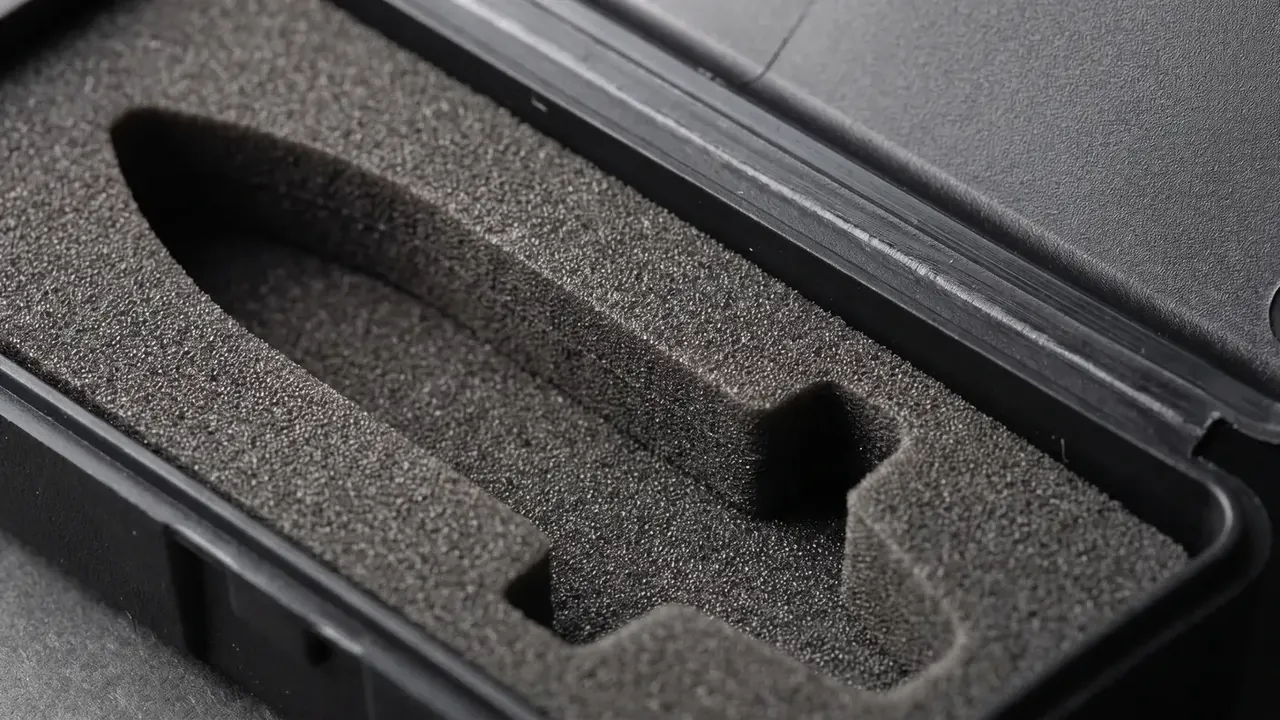
Extra clearance is not safety: each 10 mm adds about 6% to foam volume and 0.3 kg, so drawings hold the allowance at 8% to 12% of envelope size.
A 20 mm lid liner compressing 2 mm onto the airframe clamps it vertically, so clearance cannot become impact travel.
3. Wall Thickness and Clamp Force: Sizing the Machine
Structure sets wall thickness, the process checks it: sides 3.5 mm against squeeze, base 4.5 mm for stack load, lid 3.0 mm over the gasket, each with a 1.5 safety factor.
Clamp force sizes the press. A 620 × 470 mm outline projects 2,914 cm²; at 350 kg/cm² the case needs about 1,020 tonnes, so a 1,250-tonne machine with an 85 mm screw carries the margin. Too small a press flashes.
| Item | Value | Note |
|---|---|---|
| Projected area | 2,914 cm² | From the outline |
| Cavity pressure | 350 kg/cm² | Thin-wall PP with ribs |
| Clamp force | 1,020 tonnes | Area × pressure |
| Selected press | 1,250 tonnes | 20% margin |
Ribs above 60% of the wall sink the visible face; below 40% they buckle under stack load, so 3.5 mm sides pair with 1.8 mm ribs.
4. Load Paths: Handle, Stacking and Corners
Load runs up through the handle, down through the stack, diagonally through the corners. At 22 kg loaded, the handle is rated at twice static load, 44 kg for an hour without set, and a three-high stack puts 66 kg on the bottom case, tested at 100 kg for 24 hours with the lid deflecting under 2 mm.
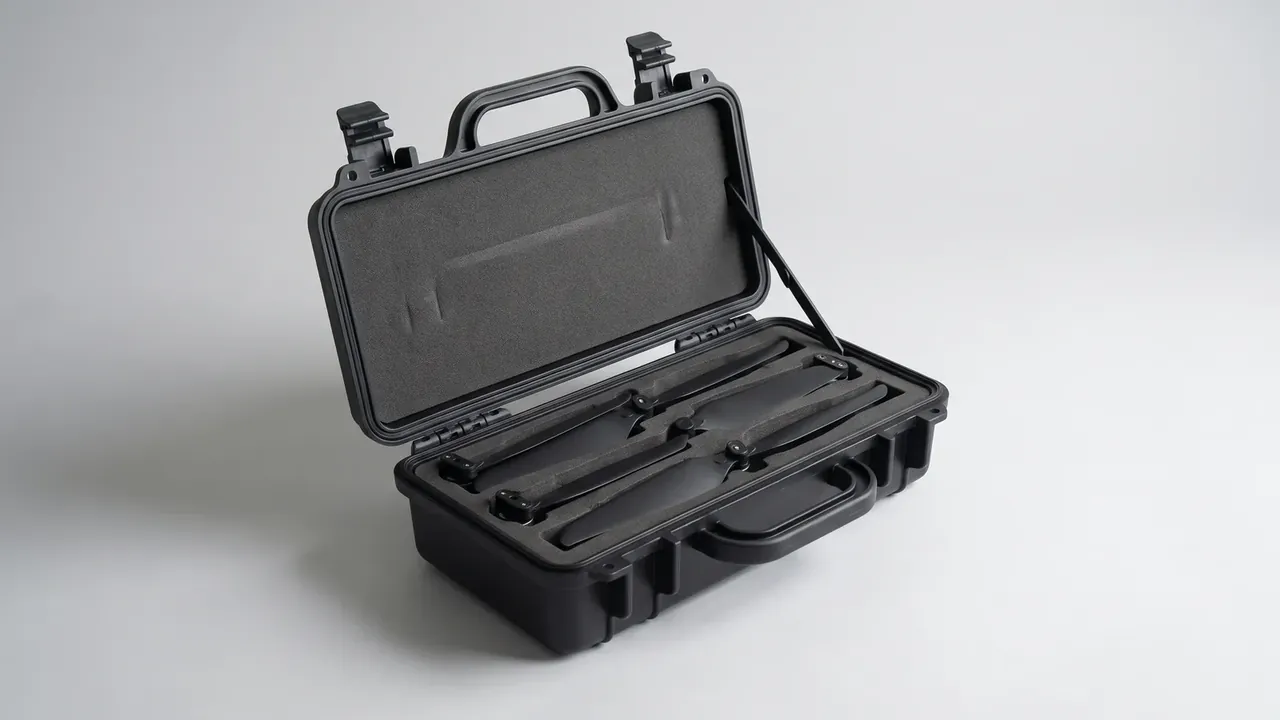
Corners are the usual omission: R30 thickens the wall past 6 mm and spreads stress, while R10 thins exactly where a stack cracks first.
Moulded handle mounts with four radial ribs remove six screw holes, and a 28 mm TPE overmould lowers palm pressure.
5. Writing the Spec Sheet: Tolerances and Acceptance
A spec sheet exists to be inspected: 620 × 470 × 260 mm without ±2.0 mm lets batches differ by 4 mm, and the foam no longer fits. Tolerances follow function: exterior for stacking, interior for foam, seam for sealing.
| Item | Requirement | Method |
|---|---|---|
| Exterior | 620 × 470 × 260 mm, ±2.0 mm | Caliper, three points |
| Interior | 560 × 410 × 215 mm, ±1.5 mm | Go/no-go gauge |
| Lid seam | 1.0 mm or less | Feeler gauge, perimeter |
Temperature counts too: PP at 1.5 × 10⁻⁴ per °C moves a 620 mm outline about 7 mm between -20 and 60 °C, so both tolerances cannot sit plus-side.
Conclusion
Drone case specifications are a chain, not a list: the interior fixes space, the exterior fixes volume and press size, load fixes wall and ribs, tolerance decides whether parts assemble. Written into one sheet, that chain gives quoting, tooling and inspection a common reference, so the drone case specification becomes buildable rather than a drawing.
This article discusses only the container (case body) side of specifications and design intent, and does not cover any handling, loading or use of the contents.
Related Reading
- Drone Case Selection Guide
- Protective Case Size Range: Picking by Interior
- Choosing Injection Machine Tonnage for Cases
- How to Write Shockproof Case Specifications
Related Products
- 8 Series — Gun Cases; Military Equipment Cases; Camera Equipment Cases; Drone Cases; Watch Cases; Knife Cases; First Aid Cases; Electronics Equipment Cases
- WL8-2812 PP Gun Case — model WL8-2812
- All protective cases and toolboxes: 7 series, 158 models