

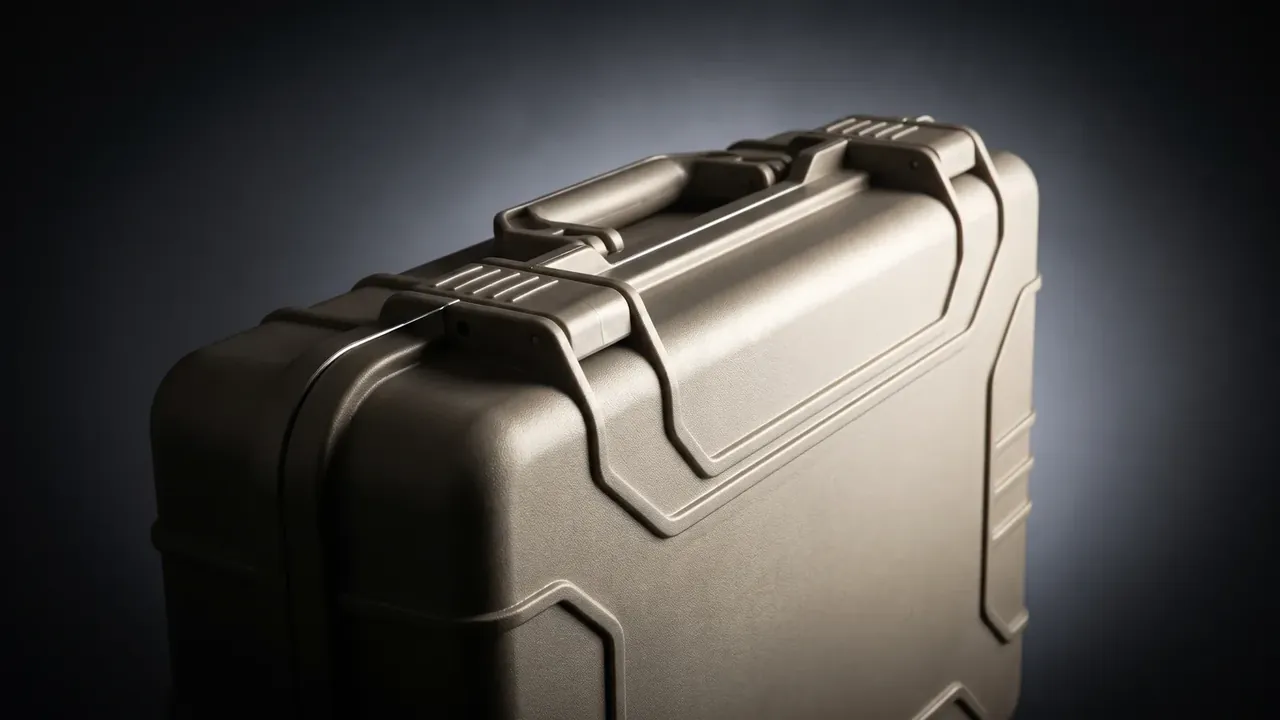
Quick answer:A Drone Controller Storage Case solves five problems at once: sticks, screen, antennas, dials and lugs, each pocket shaped by its load.
Table of contents
- Which Fails First: Sticks or Screen
- Why the Screen Pocket Needs Rigid Backing
- Antenna Slots Follow the Fold Angle
- Where Dials and Strap Lugs Go
- One-Handed Opening and Latch Position
- FAQ
1. Which Fails First: Sticks or Screen
The most expensive part of a controller is rarely the screen; it is the two sticks that cannot take a side load. A stick rises 18–25 mm above the panel, so its lever arm is twice that of the display. A 20 N push from the side shifts the potentiometer bushing a fraction of a millimetre, and the reading no longer returns to centre. In repair logs, drift ranks first and cracked glass second.
Inside a Drone Controller Storage Case, each stick gets its own round pocket, 8–12 mm deep, with the floor 2 mm below the stick tip and a 10 mm soft pad in the lid. Closed, the stick is touched, not crushed. Under 8 mm the lid lands on the cap; over 12 mm a finger cannot reach in.
A Drone Controller Storage Case can be judged without looking at its finish. Close the lid on a controller, press 30 N at the centre, then open and check sticks and glass. Clean return and no mark means pocket depth matches the lid pad. A stick half a graduation off centre points to a shallow pocket or a hard pad.
| Part | First damage seen | Pocket response | Reference |
|---|---|---|---|
| Sticks | Centre drift | Round pocket, soft lid pad | 8–12 mm deep |
| Screen | Chipped corner | Rigid backing, edge clearance | Flatness ≤0.3 mm |
| Antennas | Loose root hinge | Slot along the fold | Width +1–2 mm |
| Dials | Worn knurling | Half-wrapped slot | 4–6 mm deep |
| Strap lugs | Scuffed wall | PET sheet, then wrap | 0.5 mm sheet |
2. Why the Screen Pocket Needs Rigid Backing
Rigid backing means the layer behind the glass does not collapse. The EVA is cut through, a 3 mm PP or 2 mm PET plate sits under the screen, and 60–120 kg/m³ foam supports the plate with 1–2 mm clearance at each edge. Lid pressure spreads across the plate, so the glass sees an area load.
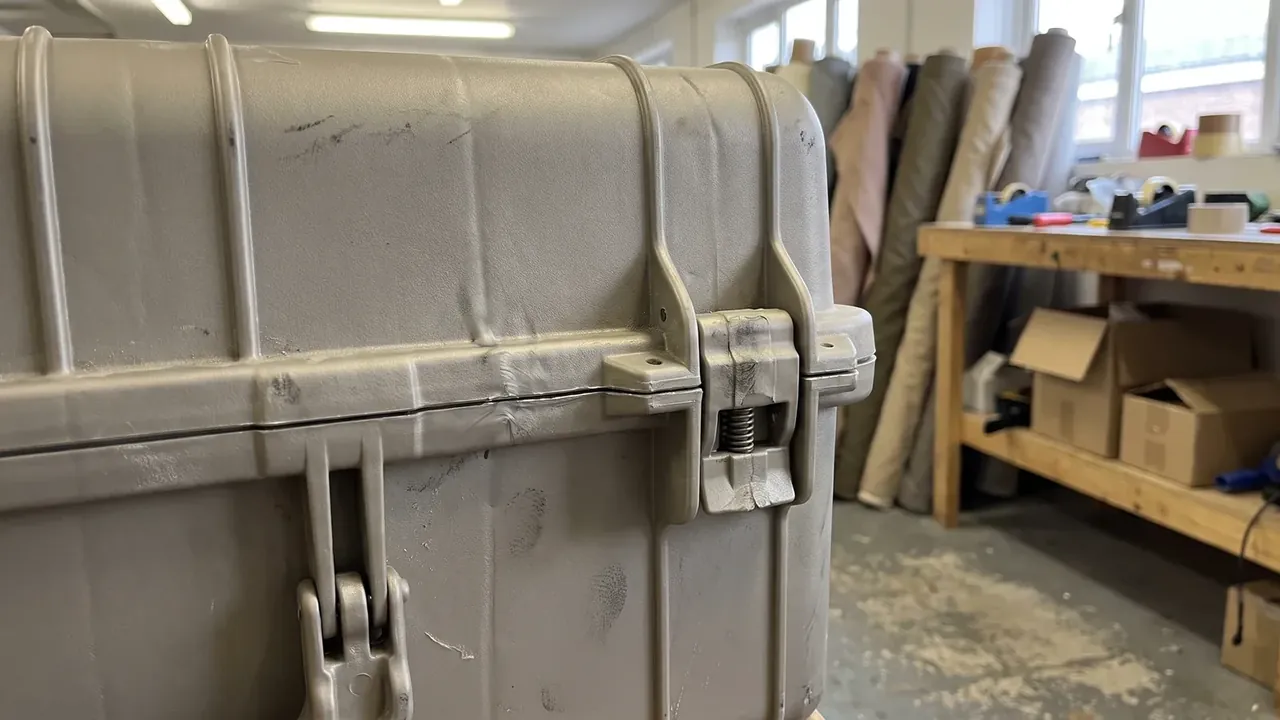
Soft facing feels better when the case stands still, but its compression is uncontrolled. A three-layer build of facing, cut layer and base absorbs impact at 25 percent compression; without a rigid plate, thumb pressure sinks the glass by more than 0.5 mm and clouding appears in the panel after a few seasons.
A Drone Controller Storage Case holds flatness at the screen to 0.3 mm or better. Die cutting at ±0.5 mm cannot get there, so the pocket is milled on a CNC after lamination, or the insert is faced in one pass. The step costs 3–5 days and keeps a 100 mm display flat for years.
| Screen build | Flatness | Press feel | Where it fits |
|---|---|---|---|
| Full EVA with hard plate | ≤0.3 mm | Firm | Large displays |
| Local hard insert | ≤0.4 mm | Hard centre, soft edge | Mid-size units |
| Two layers, no plate | 0.6 mm or worse | Soft, sinks | Short trips only |
3. Antenna Slots Follow the Fold Angle
A folded antenna rests at 90° against the back of the housing, or 180° flat along the body. A Drone Controller Storage Case follows whichever position the user stores the unit in, never the deployed position. A deployed-position slot leaves the folded antenna pressing the wall, and the root cracks within months.
Slot width is the antenna thickness plus 1–2 mm, and depth at least half the antenna width, with an R2 radius at the floor. The slot runs parallel to the long side so the antenna slides out along its own axis. The root is a hinge, so the slot mouth stops 3 mm short.
Detachable antennas get a separate small cavity, with only the connector recess left in the main slot. A Drone Controller Storage Case built this way grows 20–30 mm in length and takes the unit weight off the threaded connector.
4. Where Dials and Strap Lugs Go
Dials and strap lugs are the two features a Drone Controller Storage Case most often forgets. A dial is small and concentrates load, so a 4–6 mm slot wraps the knurling completely. Shallower than 4 mm, the rim presses into the lid pad and the knurling polishes smooth.
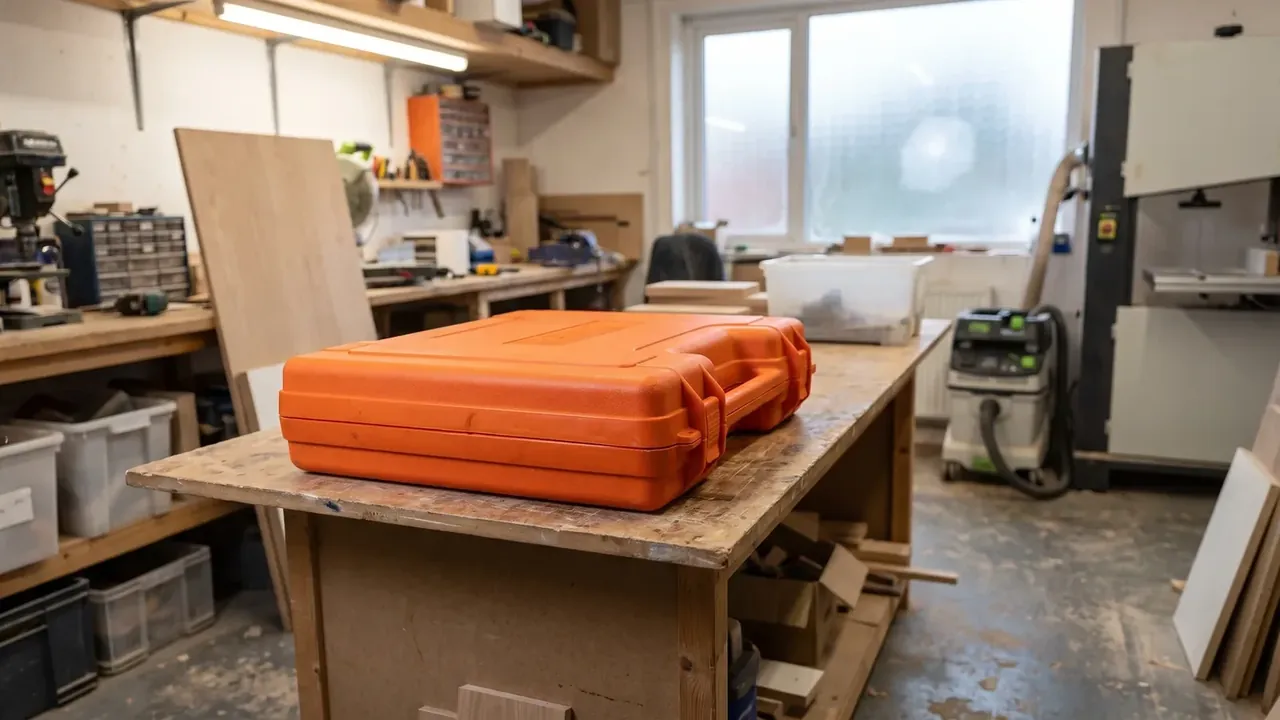
A strap lug is metal. Metal rubbing a moulded wall leaves a white scar; metal pressing into foam leaves a dent that grows each trip. A 0.5 mm PET sheet under the lug, foam wrapped around the body and only the webbing slot exposed, keeps both surfaces intact. Foam at the lug runs Shore A 30–40.
Lost parts outnumber broken ones. Dial caps, lug screws and antenna adapters are under 10 mm across, and once one falls into a corner it is gone. Give each a 40 mm cell with a chamfered mouth so a fingertip can hook it out.
| Small part | Retention | Typical failure | Where to look |
|---|---|---|---|
| Dial cap | Half slot, chamfered mouth | Polished, slips | Lower slot edge |
| Strap lug | PET sheet plus wrap | White scar on wall | Back of the lug |
5. One-Handed Opening and Latch Position
One-handed opening starts with latch placement. Each latch sits within a quarter of the case length from the end, and the gap between two latches stays under 300 mm, so a thumb on the rim and four fingers under the latch open the lid at 60–80 N. Retention of 200–400 N measures the opposite direction, the pull a closed latch resists.
Wall thickness between 2.0 and 3.5 mm shows up as rim stiffness. A thin wall bows more than 1 mm when a Drone Controller Storage Case is pulled open one-handed, the gasket compression changes with it. At 3.0 mm and above, with a rib along the rim, the bow stays under 0.3 mm.
Hinges are rated for 20,000 cycles, and the aluminium frame comes in 12, 20 and 30 mm profiles, the larger case taking the deeper frame. Four latches need two hands every time, awkward with gloves. Treat the interface parts as precision parts, and every pocket earns its place.
Related Reading
- How much of a case volume is actually usable
- How IP67 is proven on a drone case
- Carrying a loaded case without wrecking the handle
- From drawing to finished EVA lining
This article covers the case side of the specification only.
Related Products
- 8 Series — Gun Cases; Military Equipment Cases; Camera Equipment Cases; Drone Cases; Watch Cases; Knife Cases; First Aid Cases; Electronics Equipment Cases
- WL8-2812 PP Gun Case — model WL8-2812
- All protective cases and toolboxes: 7 series, 158 models