

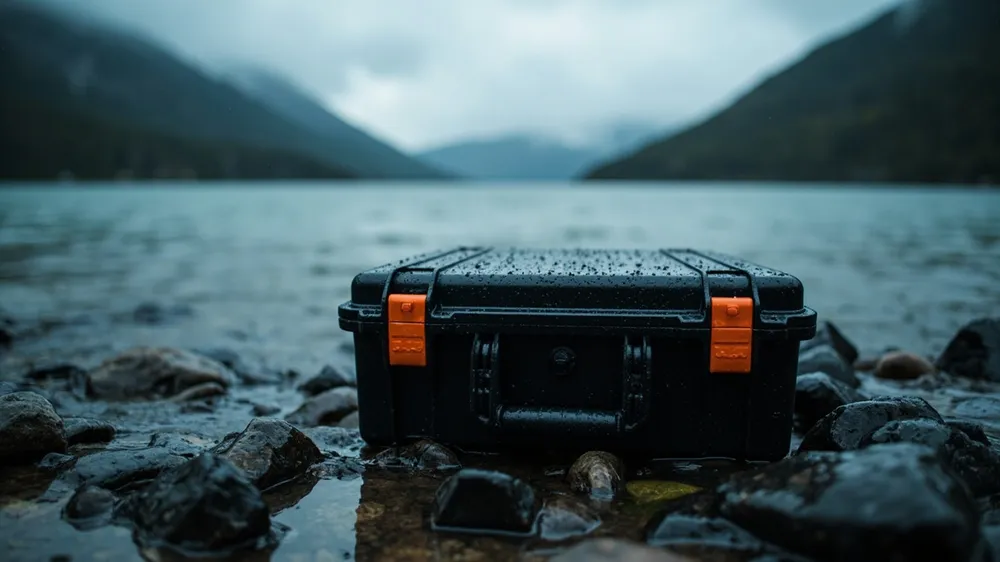
"IP67 waterproof" is printed on nearly every protective case, but few users truly understand the code. Many assume IP67 means the case can be submerged, surfed or used as a boat box — then find sand inside after a beach job, or moisture after rain, realising they misread the rating. This article breaks IP67 down: what each digit means, how the test is run, and where its limits lie in real drone use, so you neither over-trust nor wrongly reject a good case.
What the Two Digits Mean
IP stands for Ingress Protection; the two digits are independent. The first is dust protection, the second is water protection. So "IP67" = dust level 6 + water level 7, and they must be read separately, not just the water part.
Dust level 6 is the maximum: "dust-tight", no ingress. Water level 7 means "protected against temporary immersion". Note IP says nothing about drop, crush or temperature — only solids and liquids getting in.
What IP67 Water Testing Actually Does
Per IEC 60529, the IP67 water test is immersion in 1 metre of still water for 30 minutes, with the water-to-sample temperature gap under 5°C, and no harmful ingress inside. The keywords are "still water", "1 metre", "30 minutes".
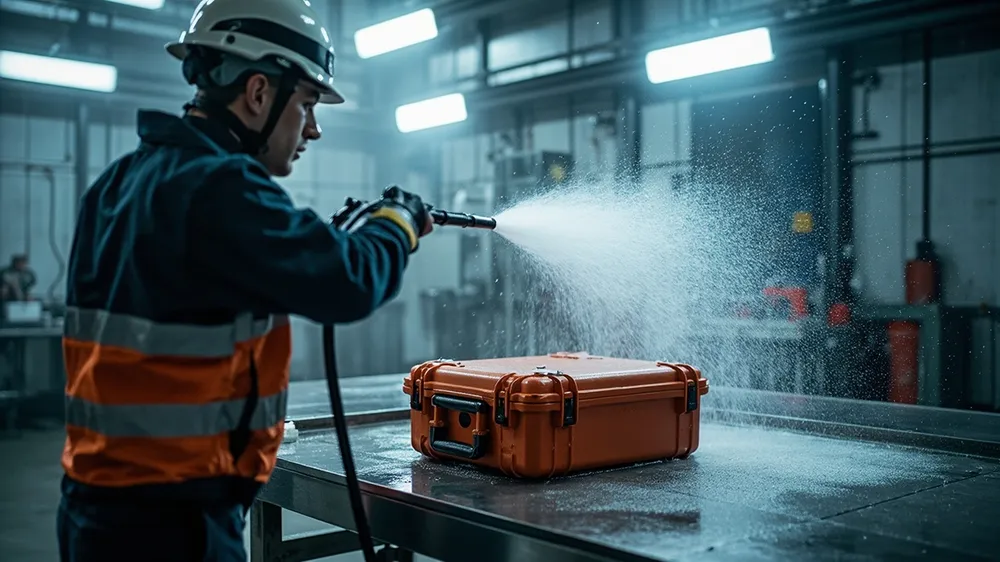
That validates sealing under static immersion, not high-pressure jets, not continuous washdown, not wave slap. A case that passes IP67 survives accidental drops in water, brief rain and deck puddles; it was not required to survive a pressure washer or long wave surge.
Why the Gasket Matters More Than the Code
The rating is what the factory measured, but what lets you reproduce it is the gasket and the clamping. No matter how high the claimed rating, a poor gasket material, a broken gasket line, or latches that do not clamp evenly will cut real sealing.
| Sealing factor | Done right | Done wrong |
|---|---|---|
| Gasket material | EPDM/silicone, ageing resistant | Cheap rubber, hardens/cracks |
| Gasket continuity | Continuous full loop | Broken at corners |
| Clamping | Multiple latches, even pressure | Single point, uneven |
| Shell flatness | Flat parting line, no warp | Warp leaves gaps |
"Shell flatness" is often missed. Moulding warp leaves one side uncompressed and water enters there — which is why tooling and moulding consistency directly decide whether sealing reproduces.
Is IP67 Enough for Drones?
| Use case | IP67 enough? | Note |
|---|---|---|
| Light rain, splash | Yes | Far beyond immersion test |
| Accidental drop (shallow) | Yes | 1m/30min covers it |
| Coastal salt spray, sand | Mostly, watch care | Dust max, rinse salt |
| Pressure washer | No | Needs IP69K or proof |
| Long surge / diving | No | Level 7 is short static only |
For most drone users, IP67 already covers the "bad weather on a flight" need. The real trap is treating "IP67" as "safe to dunk for fun".
Dust Is the Sneakier Enemy
Drones often fear sand more than water. Grit in gimbal gears, motor bearings and prop clips causes permanent wear. IP67's dust level 6 is "fully dust-tight", hugely valuable for desert, beach and site use.
But dust protection also depends on continuous, clamped gasket. Frequent opening wears or shifts the gasket, and dust fails before water. Coastal users should regularly check the gasket is seated and uncut.
Pressure Valve: The Hidden Helper
Altitude, cold and elevation changes build pressure difference across the shell; a plain sealed case becomes hard to open and can deform the gasket. A pressure-equalisation valve balances pressure through a waterproof membrane while blocking water and dust.
Useful for drone users: after a mountain flight, driving down, or shipping to altitude, the case would otherwise resist opening. A valved case opens easily and stays waterproof. See the valve guide.
Temperature and Condensation
Even with no leak, moving a case from cold to warm can cause internal condensation. Drone electronics fear not sealing failure but the condensate beads from over-sealing. Counter it with desiccant, avoiding violent temperature swings, and breathable design. See condensation control.
How to Verify a Case Is Really Waterproof
- Paper test: put white paper inside, close, rinse under a tap for 1 minute (not deep), open and check.
- Weigh test: weigh dry, weigh after spray, any gain is ingress.
- Dye test: smear food colouring at seams, rinse, check interior staining.
- Ask for report: request third-party IP67 test data with pressure and duration.
These are nearly free and filter out "claims IP67, skimps the seal" cases. Pair with incoming waterproof inspection.
Common Myths
One: "IP67 can dive" — no, static short only. Two: "every unit meets the claim" — rating is sampled, consistency is the factory's job. Three: "gasket needs no care" — ageing, shift, trapped debris all break it. Four: "waterproof equals moisture-proof" — condensation is different.
The most common miss is a grain of sand or hair trapped in the gasket groove. A two-second look before closing avoids one sand ingress.
Summary
IP67 is the "enough and expected" baseline for drone cases, not an "invincible" label. It validates 1m/30min static sealing, covering rain and accidental drops but not pressure washing or long dives. What lets your case reproduce the rating is gasket material, continuity and latch clamping, plus the factory's ability to keep the shell flat and stable. Read the code, verify the seal, maintain the gasket, and your drone stays safe in bad weather.
For rating standards see IP67 explained and IP69K vs IP67; for drop standards see MIL-STD-810H.