

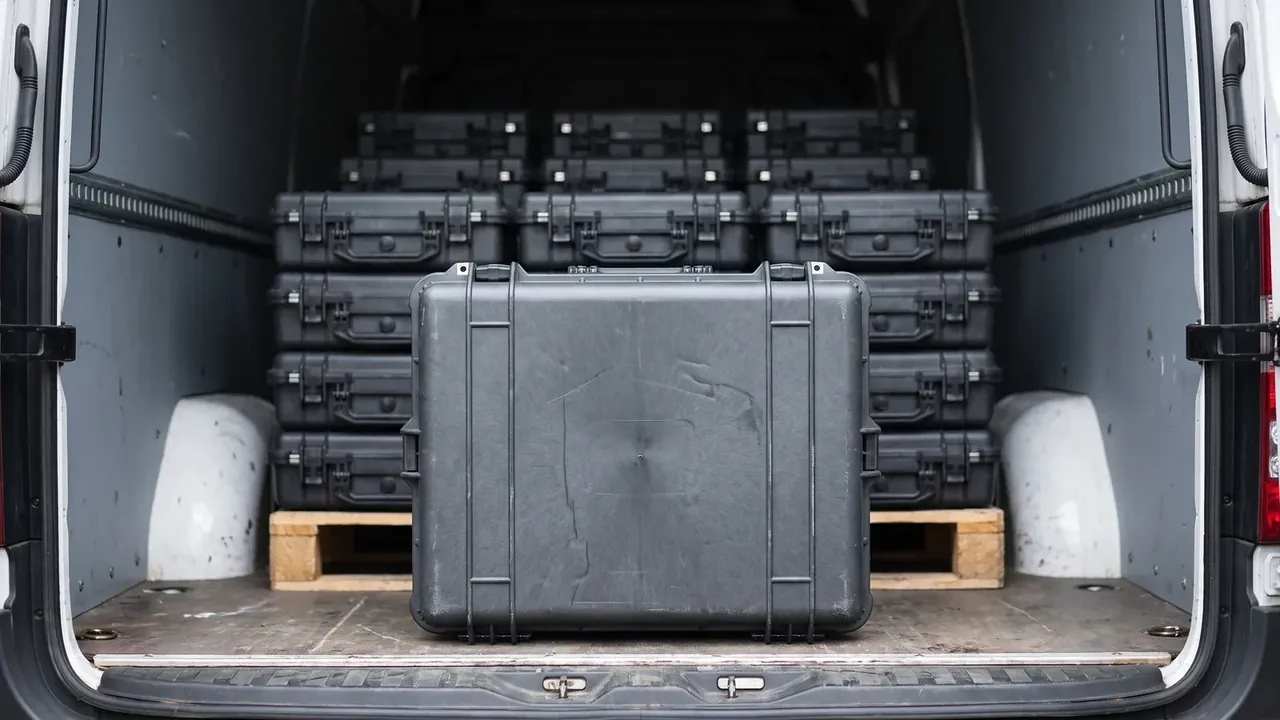
Quick answer:A drone maintenance tool case earns its keep by shortening the search: bits in columns, one slot for the torque wrench, 40 mm of iron clearance.
Table of contents
- Bits in a row or a column
- Why the torque wrench cannot share a slot
- How much heat clearance the iron needs
- Setting the number of spare-part cells
- Put-back by shape or by label
- FAQ
1. Bits in a row or a column
A repair box is judged by how seldom its owner searches. A loose M3 arm screw costs three moves: take a bit, take a wrench, put both back. A drone maintenance tool case that squeezes them into ten seconds does it with fixed positions, not volume.
The wrist decides the layout before the drawing does. In a drone maintenance tool case a 4 mm hex bit comes in 25 mm and 50 mm lengths and stands shank up for a thumb-and-forefinger pinch. Eight bits in a row force two pans of the wrist; six in a column need one. At 240 mm of internal width a row of eight fits with 8 mm notches; at 180 mm the row drops to six.
Cavity size fails more often than layout. A routed pocket keeps 1–2 mm per side, enough to hold a bit, little enough to pull it free. Die-cut tolerance is ±0.5 mm and a hex hole is cut at 4.2 mm across corners; press the same square pocket twice in EVA and it turns oval.
| Family | Fixing | Key dimension | Failure |
|---|---|---|---|
| Bits | Vertical hole, 8 mm shank exposed | 4.2 mm bore, 30 mm deep | Bore wears oval |
| Torque wrench | Hard head support, floating grip | ±0.5 mm overall | Reading drifts |
| Iron | Cradle plus side gap | 40 mm around the tip | Foam scorched |
| Spares | Adjustable dividers | 40×40×25 mm cell | Divider shifts |
One routing pass cannot serve four logics. The common build is three laminated layers: outline on top, depth in the middle, load at the bottom. With a drone maintenance tool case capped at 6 kg, foam density stays mid-range at 60–120 kg/m³; any denser and the box is overweight empty.
2. Why the torque wrench cannot share a slot
In a drone maintenance tool case the torque wrench is an instrument, not a tool. Its 0.4–1.2 N·m band covers 0.4 N·m for an M3 arm screw and 1.0 N·m for an M4 motor mount, and the spring tube is truest in the bottom third of that band.
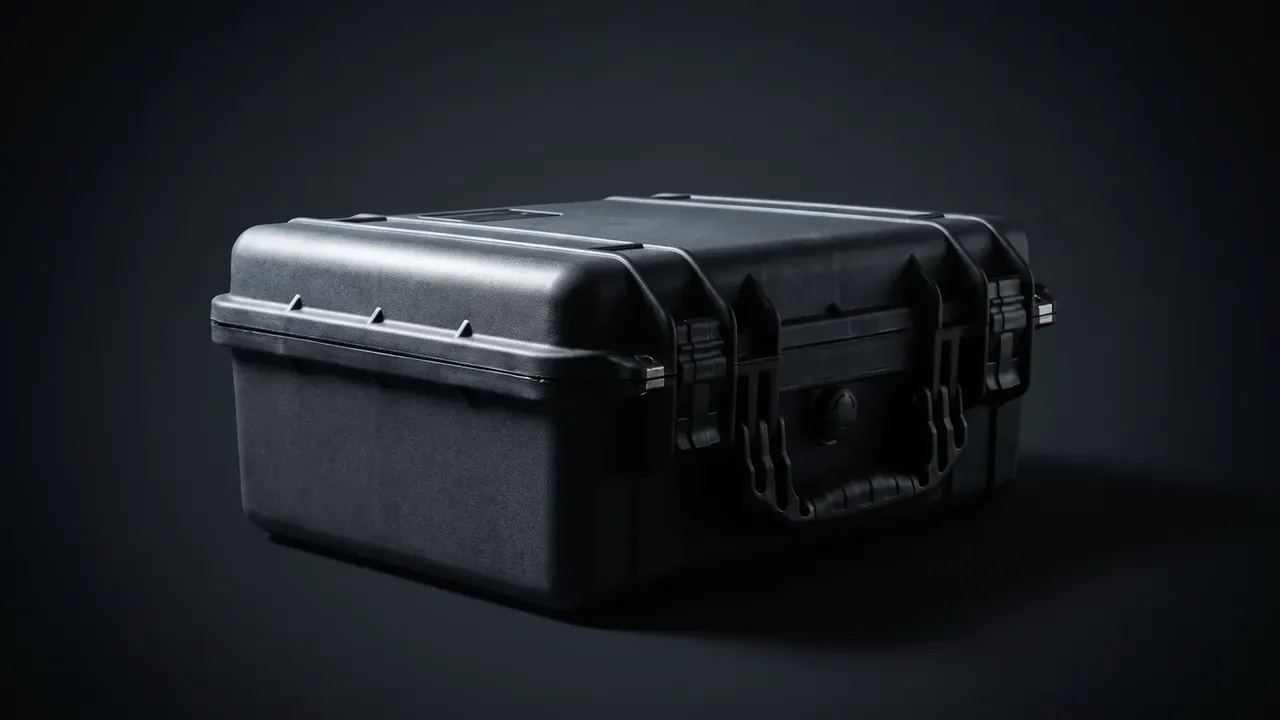
Sharing a slot with a screwdriver is a collision problem. A 200 g steel driver rides the van floor and lands again and again, each landing sending lateral shock up the tube. Five percent of drift is one preload step on an M3 screw.
The cavity is shaped in two zones: the head rests on EVA at 100–120 kg/m³, the grip keeps 10 mm of float, and the pocket runs 3 mm deeper than the wrench so a fingertip fits under it. Keep 100 mm of solid foam between the wrench and the battery.
| Storage | Length | Effect | Where |
|---|---|---|---|
| Shared with drivers | Saves 60 mm | Slow zero drift | Nowhere |
| Flat pocket | 300 mm | None measurable | Fixed bench |
| Hard head support | 320 mm | Holds factory reading | Van kit |
A wrench cycled weekly is recalibrated every 12 months; a dropped one goes the same day. No other cell in a drone maintenance tool case carries that kind of schedule.
3. How much heat clearance the iron needs
The iron bay is the one part of a drone maintenance tool case built around temperature. A controlled iron runs at 300–380 ℃, and after switch-off the tip needs 15 min before a hand can hold it, still 60–80 ℃ on the surface.
Clearance runs three ways: 40 mm from tip to the nearest foam, 20 mm each side, and a 1.5 mm aluminium tray that spreads heat. EVA softens near 70 ℃ and takes a set above 90 ℃.
Rosin vapour settles on bits inside a closed drone maintenance tool case and builds a tacky film that lets a bit slip in a screw head. Leave the lid open 5 min before latching, or the next shift opens the box to that smell.
4. Setting the number of spare-part cells
A drone maintenance tool case holds spares by category, not by quantity. A quarterly kit for one quadcopter needs M2 and M3 screws, props, motor, ESC, video cable, ties, heat shrink, solder, spare bits, damper balls, desiccant and fuses: 12 categories, so 12 cells.
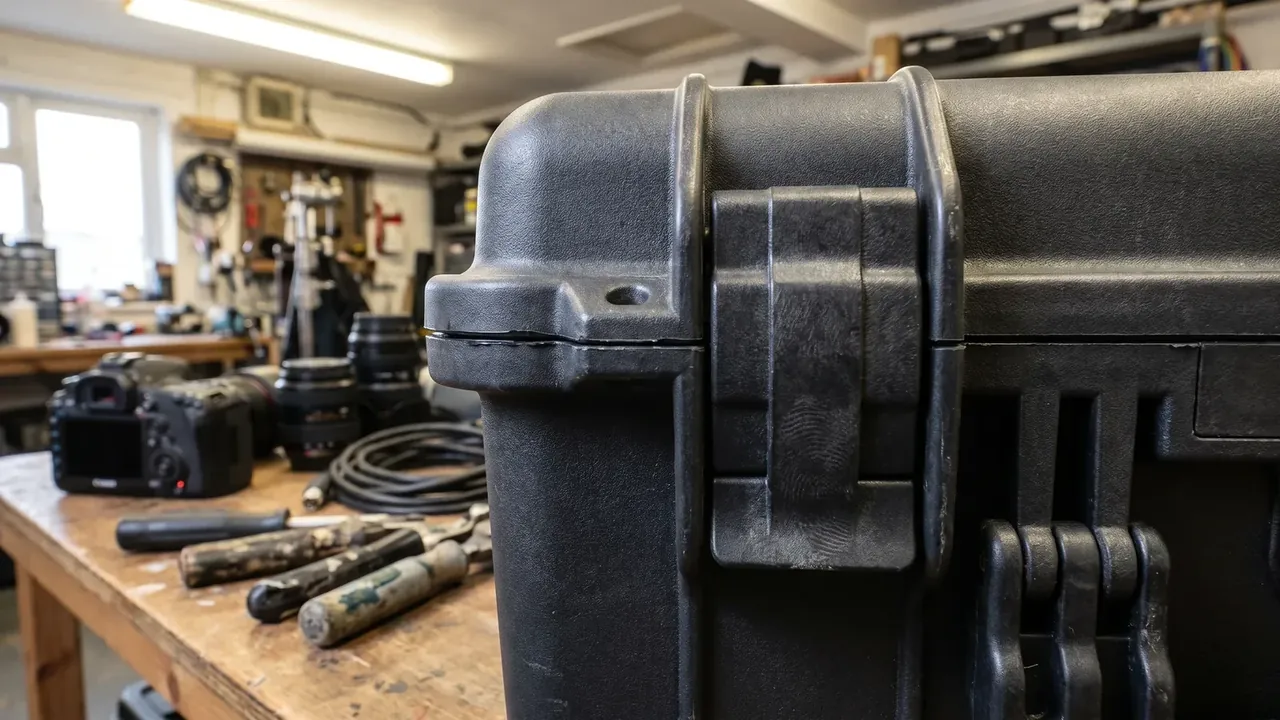
A 40×40×25 mm cell is the starting block. Twenty M3 screws fill a bag exactly; props take two cells of their own. Dividers 3 mm thick slide in the channel so the layout can be re-cut after a restock.
| Category | Cells | Size | Reorder at |
|---|---|---|---|
| M2 and M3 screws | 2 | 40×40×25 mm | 10 left |
| Props and clips | 2 | 80×40×25 mm | 2 left |
| Cable and shrink | 2 | 60×40×20 mm | 1 m |
| Solder and flux | 1 | 40×40×30 mm | Half spool |
| Motor and ESC | 2 | 60×60×40 mm | 1 each |
| Small parts | 3 | 40×40×20 mm | By count |
With the count fixed, stock-taking is one gesture: open, scan, and every empty cell is a missing part. Twelve cells audit in 30 s; twenty cells need three passes and run slower, which is why a drone maintenance tool case is sized by category.
5. Put-back by shape or by label
A drone maintenance tool case that never leaves the bench can live on labels. White on black, six characters, readable by anyone. In a van the label rubs, lifts at a corner, and leaves only the outline.
Shape is done with two-tone lamination: a black top over a red base, so an absent tool exposes red that reads from ten metres. It costs one extra laminating pass.
Labels still earn a place, further back. Torque value, size and batch go on the cell floor, hidden while the tool sits there, readable the moment it lifts.
Once every position in a drone maintenance tool case is cut to a shape, a missing tool shows at a glance. That is where the case stops and the hardware starts: hinges rated at 20,000 cycles, latches holding 200–400 N, walls at 2.0–3.5 mm.
Related Reading
- How aviation maintenance tool cases are specified
- Twenty thousand hinge cycles
- Hard case or carton for shipping
- Plastic case against wooden crate
Related Products
- 8 Series — Gun Cases; Military Equipment Cases; Camera Equipment Cases; Drone Cases; Watch Cases; Knife Cases; First Aid Cases; Electronics Equipment Cases
- WL8-2812 PP Gun Case — model WL8-2812
- All protective cases and toolboxes: 7 series, 158 models