

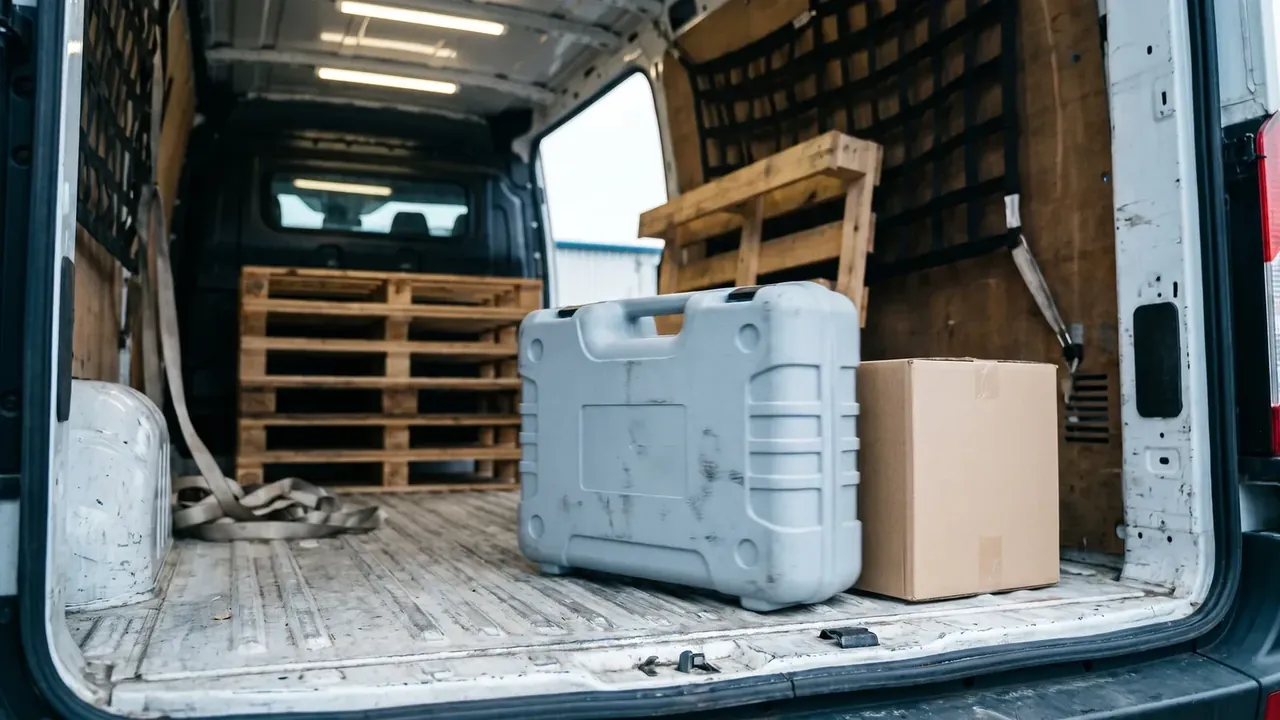
Quick answer:A drone payload equipment case holds gimbal and multispectral swaps to three minutes, keeping 0.2–0.5 mm locating pin clearance and 50 g balance error.
Table of contents
- How many parts move when a payload is swapped
- Why the locating pin gap is never zero
- The cost of one insert shared by three payloads
- How balance error eats flight time
- Label by payload name or by serial number
- FAQ
1. How many parts move when a payload is swapped
A payload swapped in thirty seconds still has to land where it left. Crews release the old unit, seat the new one, zero the gimbal and lock everything down. Only the first two steps touch hardware; the last two test whether the case left room for a hand.
Release moves the quick-release plate, the cable connector and the safety pin. A drone payload equipment case keeps a lid drop zone cut 1–2 mm larger than the biggest plate outline, so the plate lands there instead of on the ground.
Seating moves the locating pin and the locking collar. The pin aligns, the collar clamps, and splitting the two stops one hand fighting the other. What the case adds is height: a foam step lifting the payload to the mount, so both hands stay free for the pin hole. Three laminated layers hold that thickness; one sags, four sit proud. Zero and lock take no volume, only habit.
| Stage | Parts that move | What the case must offer | Allowance |
|---|---|---|---|
| Release | plate, connector, safety pin | a drop zone in the lid | 1–2 mm per side |
| Seat | locating pin, locking collar | a step level with the mount | 0.2–0.5 mm |
| Zero | gimbal datum, level reference | clearance under the gimbal axis | ±0.5 mm die cut |
| Lock | safety pin, case latch | latch force matched to the lid | 200–400 N |
2. Why the locating pin gap is never zero
A locating pin runs 0.2–0.5 mm per side, which reads like a machining concession until you count what moves underneath: thermal expansion between aluminium and stainless steel, plating thickness, wear from every insertion. A zero gap asks all three to hold still. A drone payload equipment case insert aligns nothing; it only presents the payload at mount height.
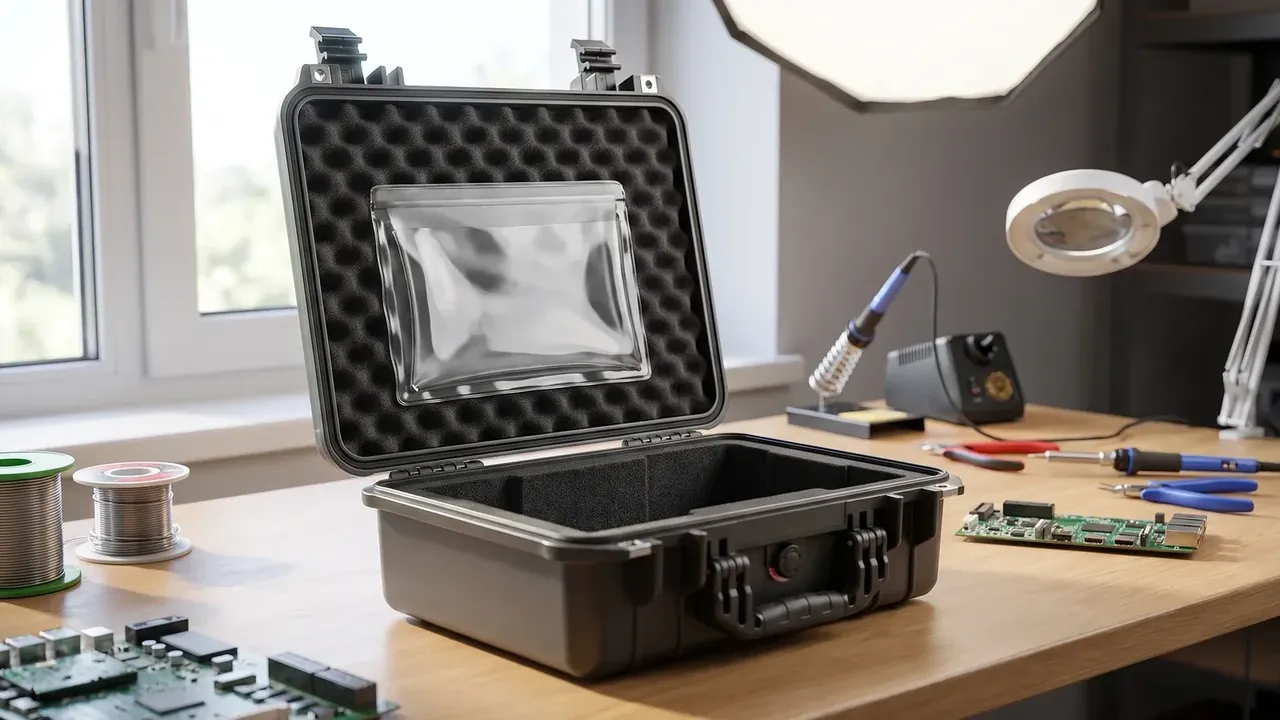
Zero clearance galls first: the payload goes in with a mallet and comes out with pliers, and a crew without a bench vise rocks it until a burr rolls over the hole mouth. The quieter failure is a side load, where forcing the pin home levers the payload and the zero point is gone before takeoff.
Too much gap fails in its own way. Past 0.5 mm the payload rocks enough to need a fresh zero before every flight. Pocket walls in a drone payload equipment case hold 1–2 mm per side, so the pin aligns while the foam carries side load.
| Symptom | Usual cause | Adjustment on the case side |
|---|---|---|
| Pin will not enter | burr at the hole mouth, foam pushing back | chamfer the pocket, raise the step |
| Pin enters but binds | less than 0.2 mm per side | recheck the hole at 0.2–0.5 mm |
| Payload rocks after seating | more than 1 mm per side | add a laminate layer to the wall |
| Zero drifts every flight | uneven seating face | rebuild the step on three layers |
The first rows are a fit problem, the last ones an insert problem.
3. The cost of one insert shared by three payloads
A gimbal, a multispectral head and a loudspeaker share almost no outline, so one shared layer can only follow the largest. The small unit then rattles in a pocket sized for the big one. Every dimension tracks the biggest payload, and that is the first cost.
Density has to be chosen per job. Structural inserts run 60–120 kg/m³ for shape and support, while a cushioning layer climbs to 150–250 kg/m³ to absorb a drop. One layer asked to be both wall and floor lands in the middle, the cheapest choice and the least able to do either job.
The second cost is time: sharing means adding spacers at every swap, and hunting one down costs 30 s of a three-minute budget.
| Payload | Outline | Fit against the insert | Recommended seating |
|---|---|---|---|
| Gimbal | cylindrical, three axes | wall must clear the rotation arc | upright, axis pocket hollow |
| Multispectral | square, lens down | flat floor, no load on the lens ring | flat, supported at four corners |
| Loudspeaker | long body, flared horn | horn needs its own recess | angled, mouth upward |
4. How balance error eats flight time
Fifty grams against a 1–3 kg payload is 1.7%–5%, small enough to look harmless and large enough to move the centre of gravity. Once it moves, the flight controller biases motor speed on one side to hold attitude, and that share of power makes no lift.
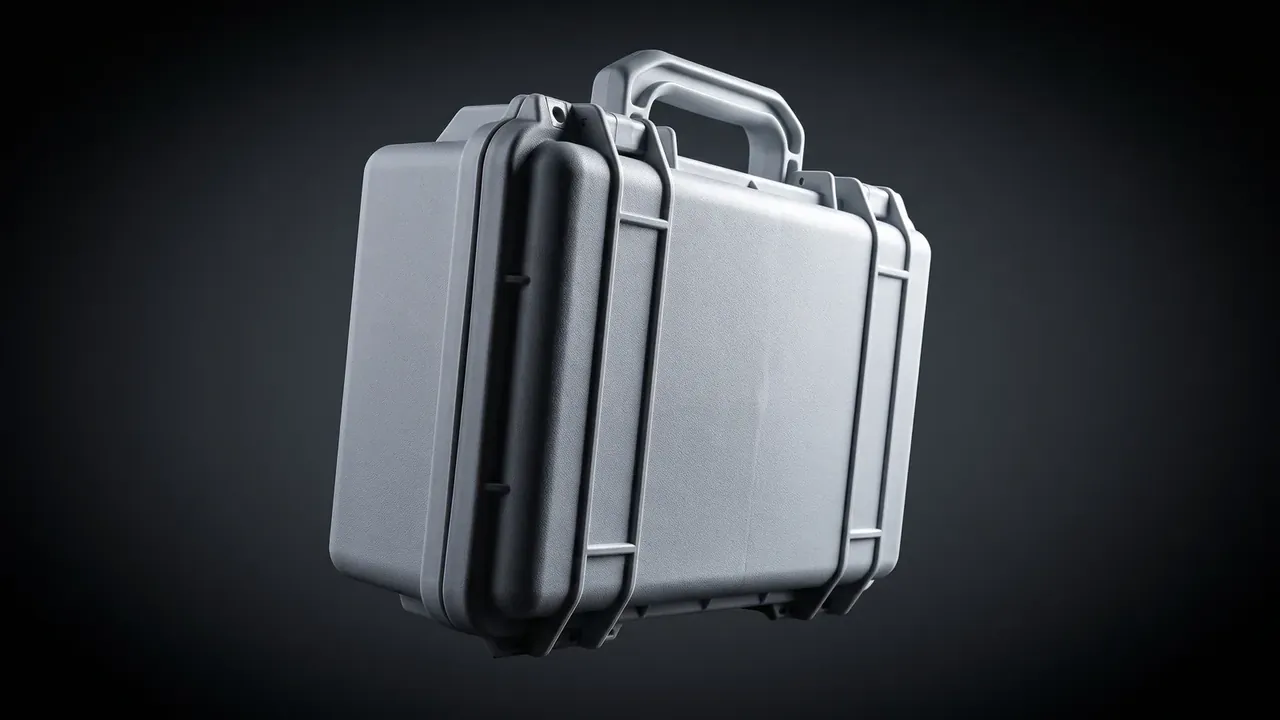
The gimbal hangs on vibration isolators, so a counterweight sitting off centre loads them unevenly and shows up as a slow sway in the footage. The sway is invisible during zeroing and obvious in the air. Fixing the counterweight inside a drone payload equipment case settles it before the aircraft lifts.
Counterweights become fixed positions inside a drone payload equipment case: one block per payload, numbered to match. Anything past 50 g gets a different block rather than lead tape, and weighing happens at packing time so the field only matches numbers.
5. Label by payload name or by serial number
Labels serve two actions: finding a part and reconciling a list. A name speeds the first and slows the second, because one payload collects two or three names in the field. A number speeds the second and forces a lookup for the first. Field light is rarely good, so character height beats word length.
The common pattern in a drone payload equipment case is number first, name second: a large silkscreened number on the pocket floor, a small name on the wall, where a seated payload cannot hide it. Numbers also line up with the four steps, since the cell that takes the released part and the cell that feeds the new one have to be obvious in one glance.
The price of a fast swap in a drone payload equipment case is not in the mechanism; it is in whether the insert gives each payload its own place. The label only writes that concession down.
Related Reading
- How much of a case volume is actually usable
- The test conditions behind an IP67 case rating
- EVA, PE and PU foam compared
- Plastic case or wooden crate
Related Products
- 8 Series — Gun Cases; Military Equipment Cases; Camera Equipment Cases; Drone Cases; Watch Cases; Knife Cases; First Aid Cases; Electronics Equipment Cases
- WL8-2812 PP Gun Case — model WL8-2812
- All protective cases and toolboxes: 7 series, 158 models