

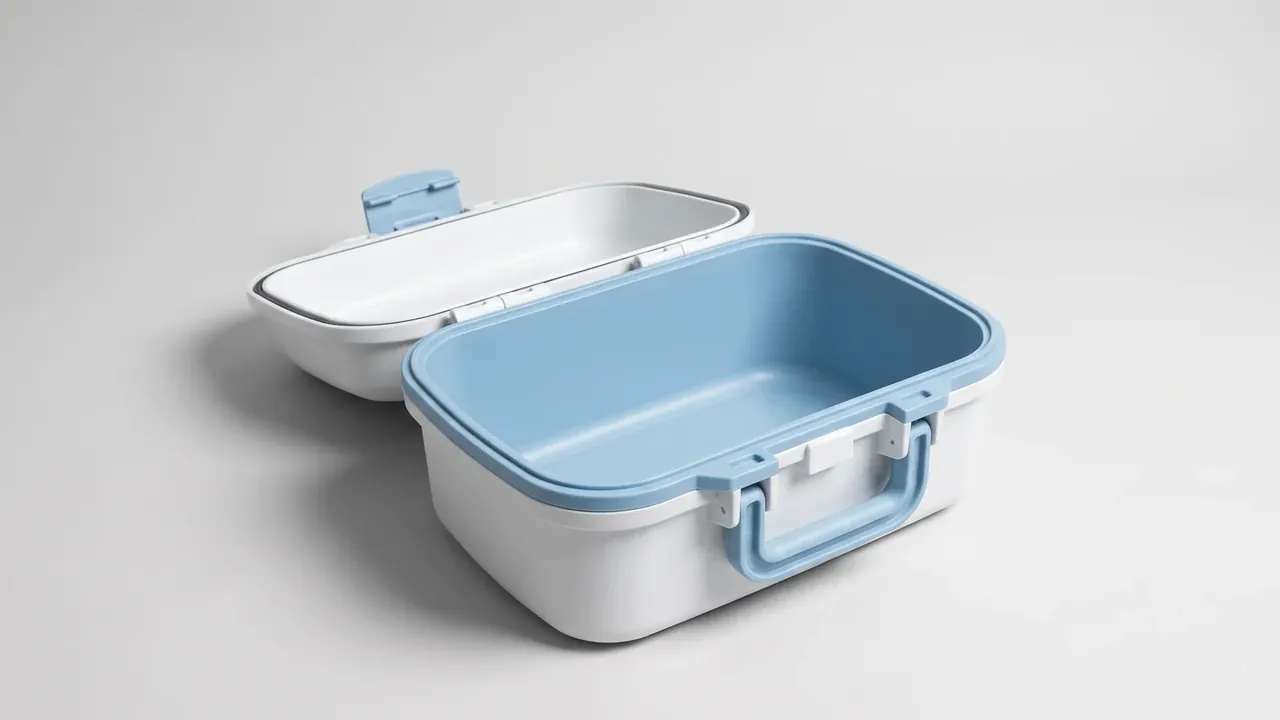
Quick answer: The choice between a dry bag and a waterproof case is not about IP numbers but about what follows a capsize — a case survives being crushed against a frame or a rock, a bag survives being light and buoyant, and neither does the other's job.
Table of contents
- How the two seals work
- IPX8 and IP67 test different things
- Pressure and puncture: 8 m against 1.5 m
- Buoyancy: bags float, cases sink
- Wet hands and cable routing
- FAQ
1. How the two seals work
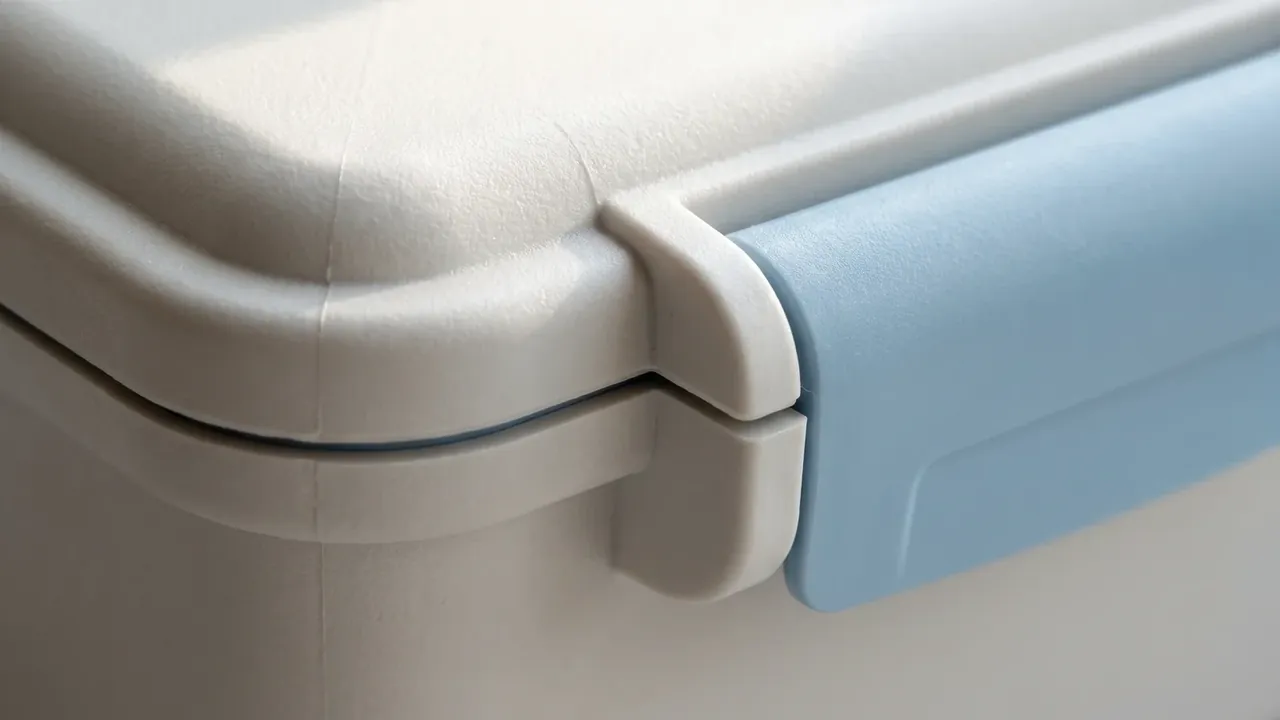
The two close by different physics. A bag uses a roll top: fold the mouth three times, clip both sides, and trapped air becomes a pillow that water must push through three creases. A waterproof case uses compression: a 4.0 mm twin-lip silicone gasket sits in the lid channel while two catches pull the lid onto the rim at about 30% compression.
They fail in different places. A roll top fails at the crease, where TPU lifts off the 500D fabric after about 200 folds. A compression seal fails at the gasket, where 55 Shore A silicone held at 60 °C for six months takes a 0.3 mm set and rebounds below 90%.
| Item | Dry bag | Waterproof case |
|---|---|---|
| Seal type | roll top, 3 folds, 2 clips | twin-lip gasket, 2 catches |
| Gasket section | none | 4.0 mm |
| Failure point | crease fraying | gasket set |
| Reseal cycles | over 200 | over 2,000 |
| Unit weight, 12 L | 1.1 kg | 2.8 kg |
The bag fears a crease, the case fears a set.
2. IPX8 and IP67 test different things
An IP code covers water and dust only, and says nothing about buoyancy, crush or puncture — the three things a rapid or a deck delivers. A bag usually claims IPX8: still water at 2 m for 30 minutes, the X meaning dust is not assessed. A waterproof case claims IP67: 1 m for 30 minutes plus level 6 dust, holding out 75 μm talc under negative pressure.
The figures look close; the conditions are not. The 2 m behind IPX8 is chosen by the maker, since digit 8 allows an agreed depth, while IP67 fixes 1 m and 30 minutes.
Dust matters more on a boat. Sand works into a bag's crease and grinds the coating against itself, leaving a white scar within 20 folds. A case keeps its seal in a 3.5 mm groove behind the gasket, where grit can be wiped off.
| Test | Dry bag | Waterproof case |
|---|---|---|
| Code | IPX8 | IP67 |
| Still water | 2 m, 30 min | 1 m, 30 min |
| Dust | not assessed | level 6, 75 μm |
| Depth negotiable | yes | no |
An IPX8 bag handles spray and short immersion, but buys no dust protection.
3. Pressure and puncture: 8 m against 1.5 m
Pressure is the round a case wins outright. A 500D TPU bag is rated at 8 m of water head, beyond which water creeps along the crease. A case holds to 1.5 m, then relies on catch preload and gasket hardness, with lid deflection visible from 2 m. Puncture is blunter. A 1 mm pin driven at 50 mm/min ruptures double-layer 500D at 85 N; a 2.8 mm PP wall needs 320 N. A fibreglass gunwale, a cut aluminium frame tube or a barnacled rock usually lands near 100 N.
Drops are judged at the corner. From 1.5 m, one bag in six pops a clip and opens 20 mm, while a case dents 0.8 mm and stays sealed. After 48 hours of salt spray the case's 304 pins show only a brown tide line; the bag's POM clips wear 0.2 mm and lose grip from 18 N to 12 N.
4. Buoyancy: bags float, cases sink
Buoyancy decides the first seconds after a capsize. A 12 L bag weighs 1.1 kg and, sealed, carries about 4 kg of positive buoyancy, so it drifts in plain sight. A waterproof case of the same volume weighs 2.8 kg and settles slowly: the pale shell stays visible to 1.5 m, below which only the lanyard shows.
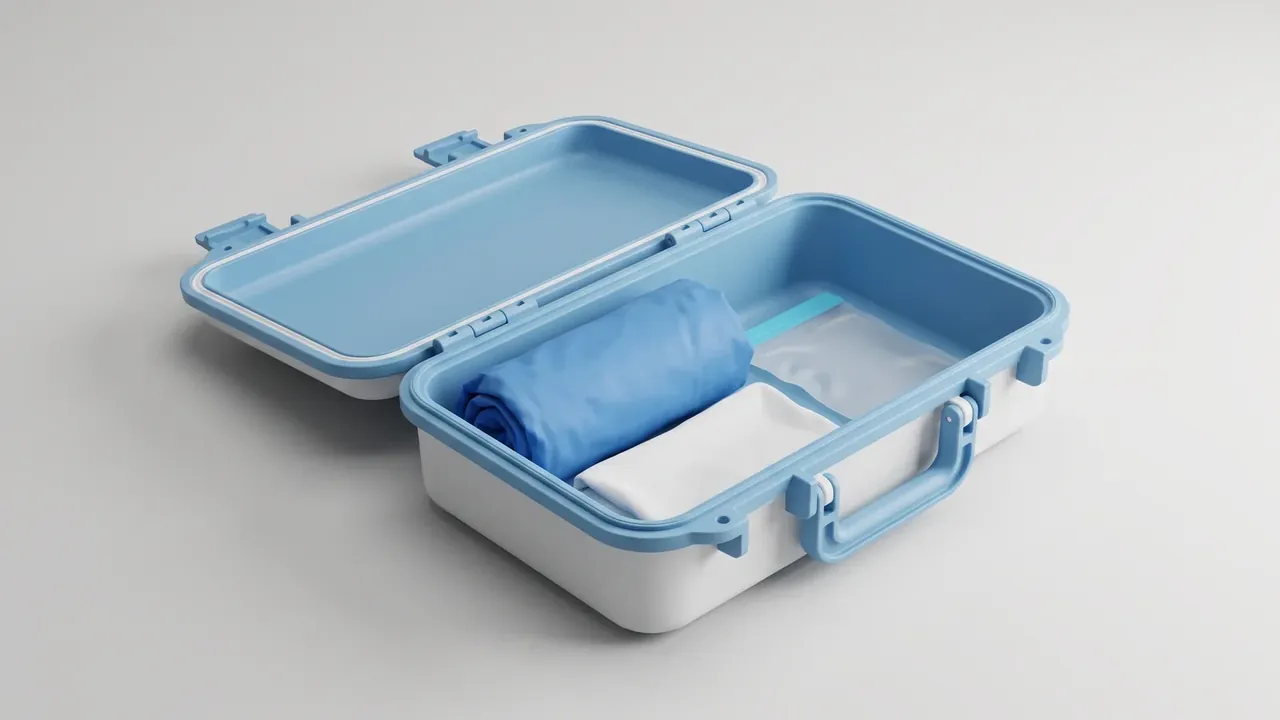
The tie-down point is therefore mandatory on a case: a 25 mm slot taking 20 mm webbing, chamfered R2 against chafing. A bag's D-ring is built to a 200 kg breaking load and keeps 85% wet.
A bag clipped to the gunwale floats at hand; a case on a thwart hangs at 1.5 m and needs 3 m of line.
5. Wet hands and cable routing
Opening speed matters on a boat. A roll top opens in 4 seconds and closes in 6; a waterproof case takes 12 and 15, including a second of valve bleed. In 3 mm neoprene gloves the bag clip needs 18 N pinched between two fingers, the case catch 40 N levered with a thumb — so wet gloves favour the case.
Cold widens the gap. At -20 °C TPU stiffens, a three-fold roll needs 30% more force; the silicone gasket loses only five points of compression, while the PA66 catch keeps 60% of its impact strength.
Only a case can route cable. The wall accepts an M12 gland with a 1.5 mm silicone washer at 2.5 N·m and still meets IP67; drilling a bag ends its roll seal and adds a junction box. Antennas have a second route — a 6 mm lid channel taking a 3 mm sealing strip, with the gasket still at 30% compression.
Conclusion
The line between a bag and a waterproof case is drawn in the seconds after a capsize: a bag drifts on 4 kg of buoyancy while a case settles to 1.5 m on a line. Three conditions settle it — anything that will be crushed by a frame, a rock or a gunwale needs the case, whose 2.8 mm wall and 320 N puncture resistance no bag matches; anything that must stay light under 3 kg goes in a bag, where a 1.1 kg shell saves effort on a long carry; and any deck job needing wiring or a fixed tie-down belongs to the case.
This article discusses only the container (case body) side of specifications and design intent, and does not cover any handling, loading or use of the contents.
Related Reading
- Waterproof case ratings and test conditions
- How IP67 is judged on a waterproof case
- Sealing and standards for hard waterproof cases
- Gasket material selection for case bodies
Related Products
- 8 Series — Gun Cases; Military Equipment Cases; Camera Equipment Cases; Drone Cases; Watch Cases; Knife Cases; First Aid Cases; Electronics Equipment Cases
- WL8-2812 PP Gun Case — model WL8-2812
- All protective cases and toolboxes: 7 series, 158 models