

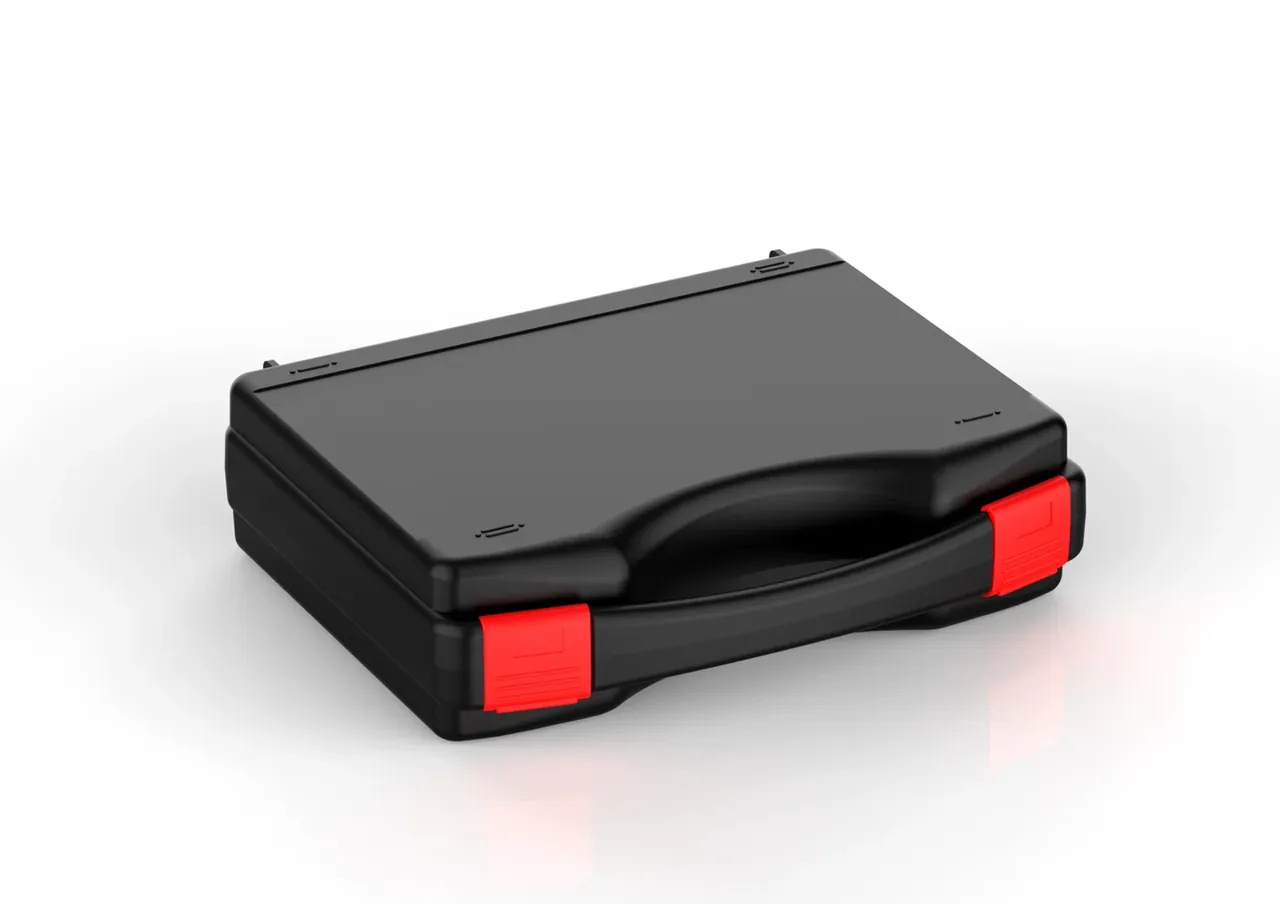
Quick answer: The 1 m for 30 minutes in an IP67 rating is a bench condition: the lowest point sits under a 1 m column of still water, the water is within 5 K of the case, and nothing moves. That is 9.8 kPa of pressure, less than a wave slaps on at a jetty. Pass or fail is judged on harmful ingress, not on water sitting on the outside.
Table of contents
- Where the 30 minutes comes from
- Four conditions on the rig
- Sealing is compression, not latch force
- Three things to do after immersion
- Where IP67 runs out
- Reading the test report
- FAQ
1. Where the 30 minutes comes from
IEC 60529 states IPX7 plainly: immerse the sample in still water 1 m deep for 30 minutes, with the weakest point below 1 m, the top of the case at least 0.15 m under the surface, and the water within 5 K of the sample. A 1 m column of water is 9.8 kPa, or about 0.1 kg per square centimetre.
Those numbers describe what a hand can lift and a breath can hold, not the structural limit. An IP67 case will often survive 40 minutes at 1.2 m; the same case at 5 m may leak past a latch within 30 minutes.
Thirty minutes is a window, not a service life. After 26 drops from 1.2 m, lid and rim shift by up to 0.5 mm, part of the gasket now sits over a distorted face, and the next 30 minutes are a different test.
2. Four conditions on the rig
A rig holds four variables: water temperature, depth, time and attitude. Move one and the result cannot be quoted.
| Condition | Standard value | What drift does |
|---|---|---|
| Water temperature | Within 5 K of the sample | A cold bath shrinks trapped air and pulls water in |
| Depth | 1 m at the lowest point | Measured to the handle, the base sits at 0.76 m |
| Time | 30 minutes | Lifting the sample out restarts the clock |
| Attitude | Lid up, no rotation | On its side the gasket is in shear, a harsher case |
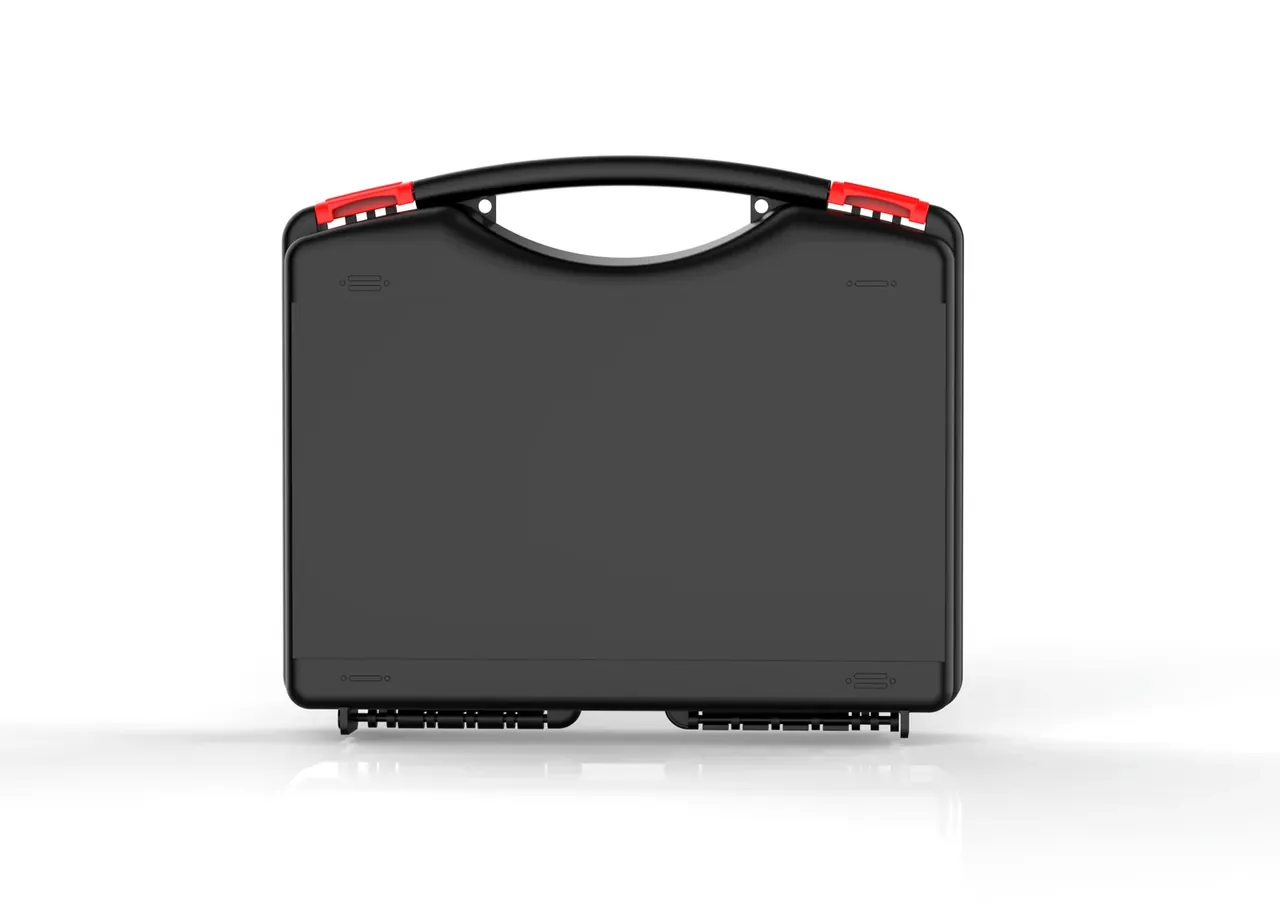
Depth is the usual error. A 200 mm case with a 40 mm handle, measured to the top of the handle, puts the base at 0.76 m, 24 percent less pressure than the rating implies.
Temperature is the quieter error. A case packed in a 35 °C workshop and lowered into 15 °C water cools its trapped air over half an hour, creating roughly 2 kPa of negative pressure that draws water towards the seal.
3. Sealing is compression, not latch force
The gasket is 55 Shore A silicone, 4 mm cord in a 3 mm groove, closing to 3 mm for 25 percent compression. Below 15 percent it does not seat; above 40 percent it takes a permanent set within three months and recovers only 70 percent.
A thicker cord is not a better seal. The same 3 mm groove leaves a 3 mm cord with no compression, and a 5 mm cord reaches 40 percent, sealing once before it stops springing back. Keep the groove-to-cord ratio between 0.7 and 0.8.
Latches press the lid down; they do not seal. Two latches at 100 N each hold a lid gap under 0.4 mm, and a four-point layout evens the gap enough to drop each point to 80 N.
| Item | Value | Acceptance |
|---|---|---|
| Gasket compression | 4 mm cord closed to 3 mm | 20 to 30 percent |
| Gasket hardness | 55 Shore A | Rises no more than 5 points with age |
| Latch closing force | 100 N per latch | 80 to 120 N |
| Lid gap | Once latched | 0.4 mm or less |
An air test is faster. Pressurise to 20 kPa, hold 60 seconds, accept a drop of 0.5 kPa or less. On a failure, check the three points opposite the latches first, then the hinge side; those two areas account for about 70 percent of leaks.
4. Three things to do after immersion
Dry the outside first, especially around the lid gap. Then read the water marks: a line stopping outside the gasket groove is splash, a line inside it is ingress.
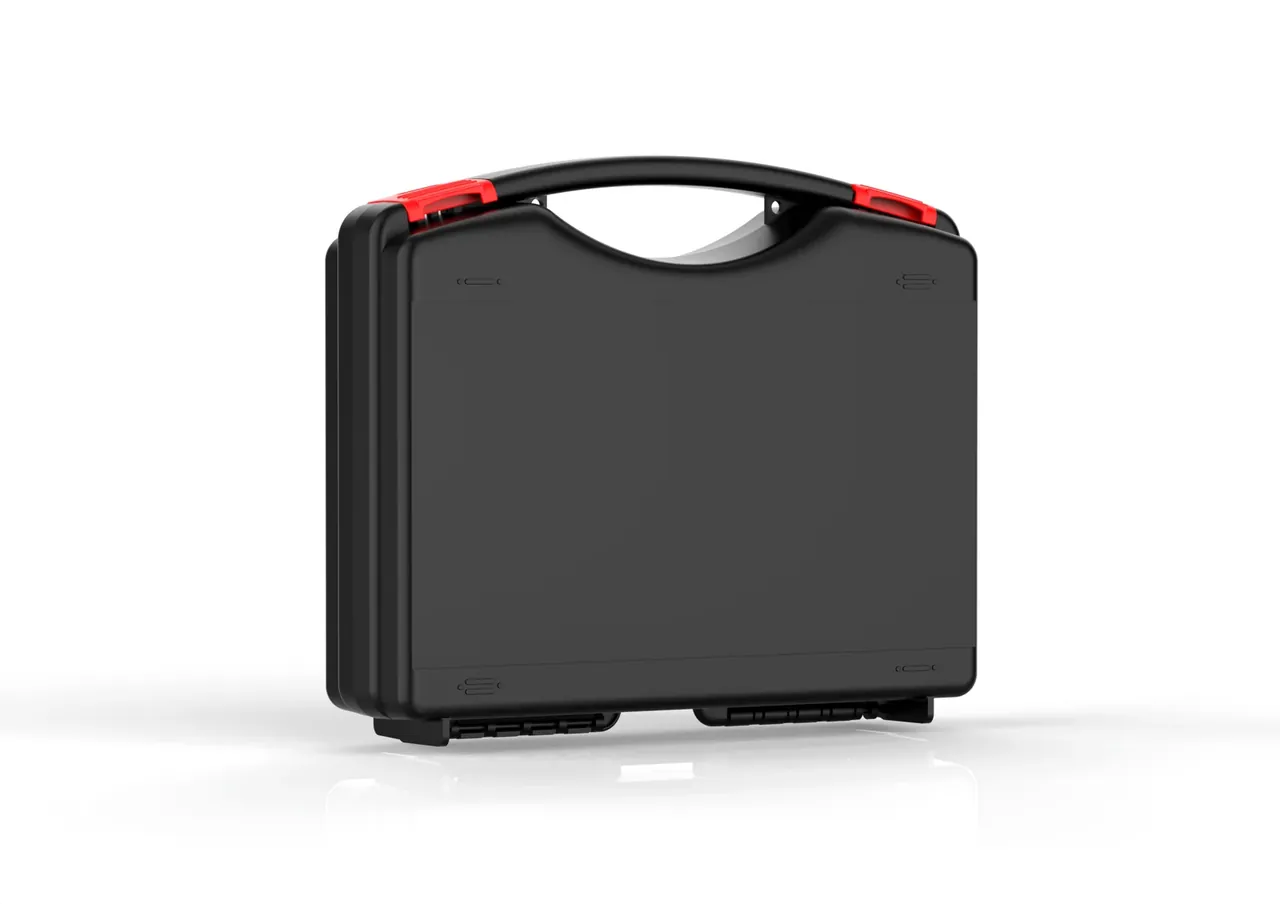
Second, repeat the air test within 24 hours. A drop above 1 kPa means a new gasket, not a note for the next trip. Third, rinse for 5 minutes to move salt out of the latch springs, then let the gaps dry.
Salt spray attacks hardware, not the rating. After 48 hours of salt fog, even a stainless pivot shows pitting, while the case keeps its class.
A 5 g desiccant sachet and a humidity indicator card cost under 3 yuan, and the card answers the question before the next opening.
5. Where IP67 runs out
- White-water immersion: entry pressure can reach 20 kPa, twice the 1 m static figure
- Pressure washing: a 12.5 L/min jet at 30 kPa needs IPX6
- Long soak: past 30 minutes the rating moves to IPX8, set by the maker, commonly 3 m for 60 minutes
| Rating | Condition | Fits |
|---|---|---|
| IPX6 | 12.5 L/min for 3 minutes | Washdown, deck work |
| IPX7 | 1 m for 30 minutes | Falling in, short soak |
| IPX8 | 3 m for 60 minutes, maker-defined | Long immersion, recovery |
One failure mode sits outside the scale: condensation. With a 20 °C day-night swing, the inner wall forms dew once a day and no ingress rating stops it.
6. Reading the test report
A usable report carries six fields: sample number, water temperature, depth, start and end times, verdict, and re-test result. Miss one and it is probably an in-house check.
| Field | Acceptable wording | Common gap |
|---|---|---|
| Depth | 1.00 m at the lowest point | 1 m with no reference point |
| Water temperature | 23 °C ± 2 °C | Temperature omitted |
| Time | 30 min, with start and end | 30 minutes only |
| Verdict | No harmful ingress | Written as no water enters |
Watch the verdict wording. The standard says no harmful ingress and allows traces of moisture; a report promising no water at all has raised the bar above the standard.
Test 3 units from a batch and judge the worst one. A lid face flat within 0.2 mm gives repeatable results; past 0.3 mm the gasket cannot be compressed evenly.
Conclusion
The water resistance of an IP67 case is a set of conditions, not an adjective: 1 m, 30 minutes, 5 K, still water. Hold 25 percent gasket compression, a 0.4 mm lid gap and a 0.5 kPa drop at 20 kPa, and the claim becomes repeatable. Treat it as a test procedure rather than three characters on a label.
This article discusses only the container (case body) side of specifications and design intent, and does not cover any handling, loading or use of the contents.
Related Reading
- Waterproof hard case grades and verdicts
- General standards for waterproof plastic boxes
- What a dust rating actually covers
- Storage and drying after water contact
Related Products
- 8 Series — Gun Cases; Military Equipment Cases; Camera Equipment Cases; Drone Cases; Watch Cases; Knife Cases; First Aid Cases; Electronics Equipment Cases
- WL8-2812 PP Gun Case — model WL8-2812
- All protective cases and toolboxes: 7 series, 158 models