

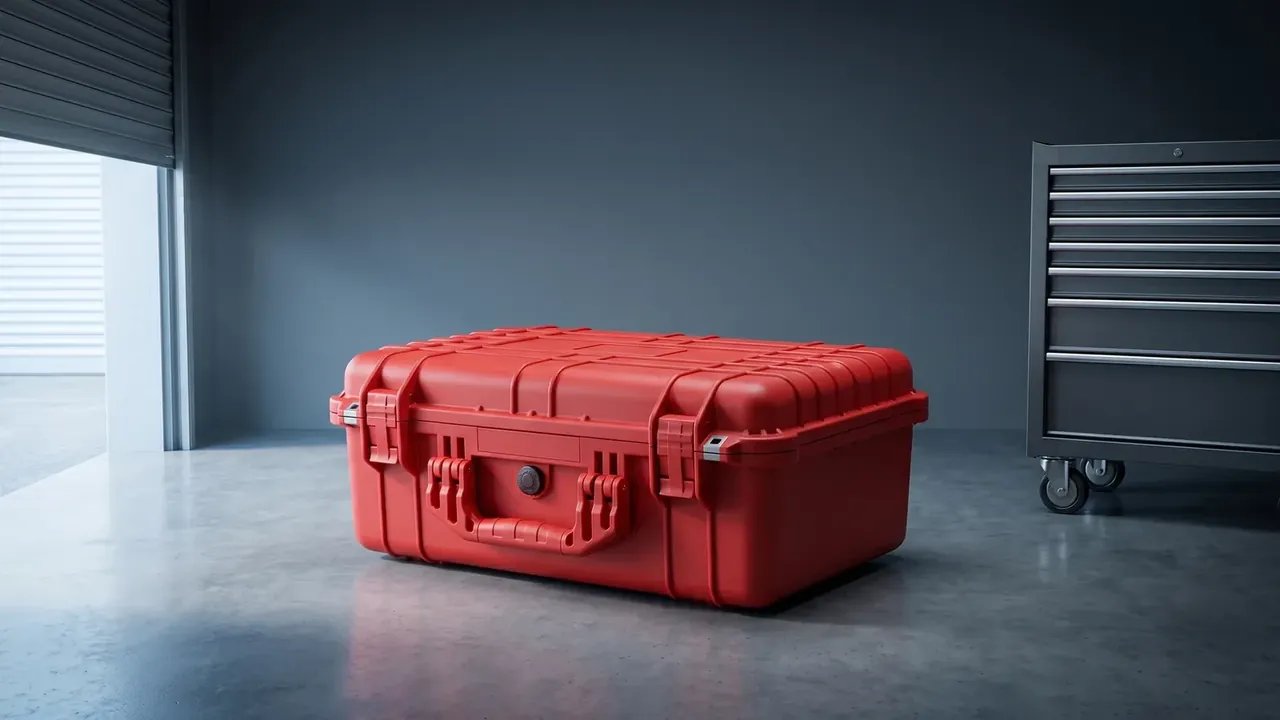
Quick answer:A Dustproof and Waterproof Medical Case Design splits dust from water: dust walks the gaps, water rides the pressure, and IP67 means 1 m of still water for 30 min while 75 μm talc runs for 8 h. Squeeze ratio and tongue depth decide whether either test is met.
Table of contents
- Dust paths and water paths part company
- Gasket profile and squeeze ratio
- Latch count and how clamp load spreads
- Tongue, groove and the drainage channel
- Should a pressure equalising valve go in
- FAQ
1. Dust paths and water paths part company
Dustproofing and waterproofing look like one job, yet they fail on different routes: dust walks the gaps, water rides the pressure.
The dust test puts a case into 75 μm talc under vacuum for 8 h, then looks for powder inside; a 0.1 mm step across the lid face already lets airflow carry powder in. Water grade 7 asks for 1 m of still water for 30 min, roughly 10 kPa at the outer face, so water is pushed, not seeping.
Thermal cycling joins the routes. Held above 40 ℃ by day and near 10 ℃ at night, a case breathes: the air inside contracts, the pressure difference reverses, and damp dust is drawn toward the lip. A Dustproof and Waterproof Medical Case Design cannot be drawn for immersion alone, since gasket squeeze must also cover thermal growth.
2. Gasket profile and squeeze ratio
Groove width is back-calculated from section height. Squeeze runs 25%–30%: below 25% the lip cannot follow the lid face, above 30% the rubber takes a set and the next closure leaves a gap. Shore 55–65 A is the working band.
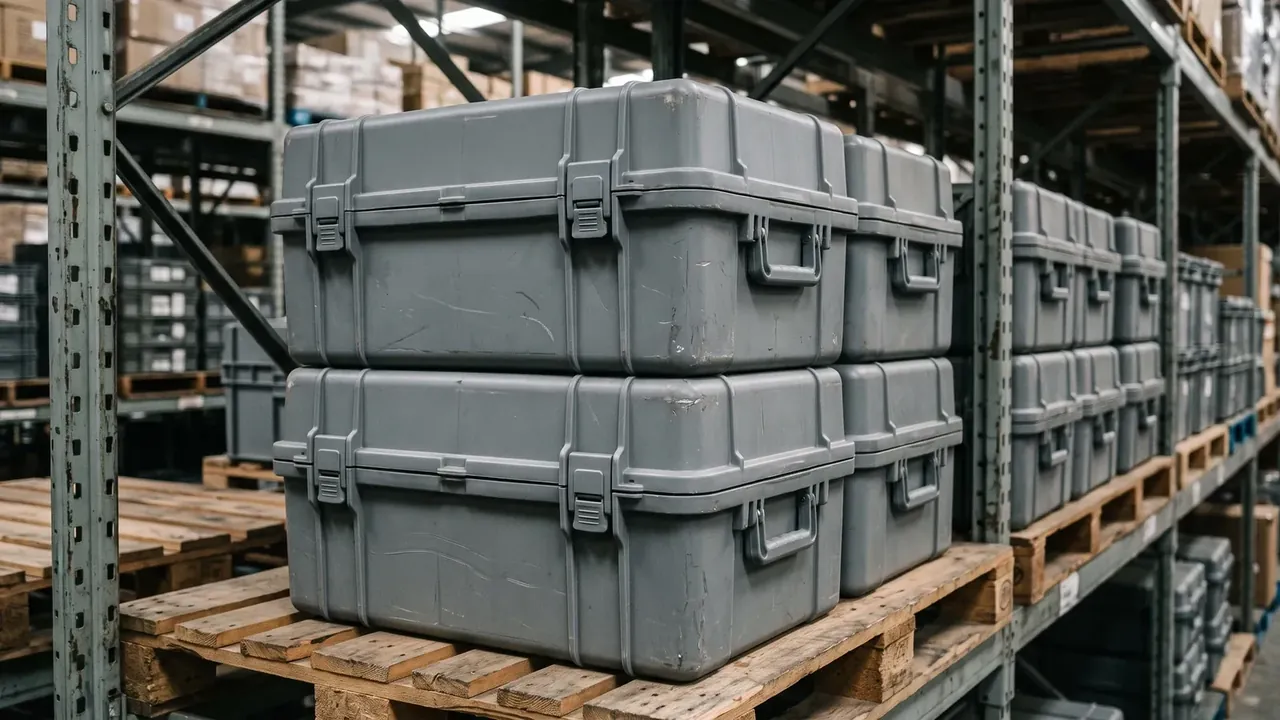
A round cord compresses evenly but needs an accurate groove; a lip profile keeps clamp load low and contact narrow; a co-extruded shape covers two directions at tooling cost. A Dustproof and Waterproof Medical Case Design picks the profile after lid stiffness is known, because a warped shell is not saved by softer rubber.
| Section | Squeeze band | Working hardness | Tolerance of lid flatness | Cost of a change |
|---|---|---|---|---|
| Round cord | 25%–30% | Shore 55–65 A | Medium | Low |
| Lip profile | 25%–30% | Shore 55–60 A | Low, warp leaks | Medium |
| Co-extruded shape | 25%–28% | Shore 60–65 A | High, two-way | High |
Silicone spans -40 ℃ to 200 ℃, so steam and cold transport leave it elastic; EPDM resists disinfectant over a narrower band. Under chlorinated wiping, silicone turns tacky and holds dust.
3. Latch count and how clamp load spreads
One latch is budgeted at 120 N, and that load decays quickly along a long perimeter: the hinge is the pivot, force travels from hinge to latch, and the middle lifts first. A Dustproof and Waterproof Medical Case Design steps the count by case length, adding one once spacing passes 300 mm.
| Case length | Latches | Total clamp load | Spread along the perimeter | What goes wrong |
|---|---|---|---|---|
| Under 400 mm | 2 | about 240 N | Ends loaded | Slight lift mid-span |
| 400–600 mm | 3 | about 360 N | Centre latch fills in | Centre tight, ends slack |
| Over 600 mm | 4 | about 480 N | Needs a lid rib | Long edge bows |
More force is not more sealing. Past the interference the gasket needs, every extra newton bends the lid, the long edge sags and the seal line opens mid-span. In a Dustproof and Waterproof Medical Case Design a low rib inside the lid keeps that bend between ribs.
4. Tongue, groove and the drainage channel
The tongue is the step where lid meets base. At 4 mm depth, water must climb a 4 mm wall before reaching the sealing face; outside it, a drainage channel with an outlet carries runoff instead of letting it pool on the seal line.
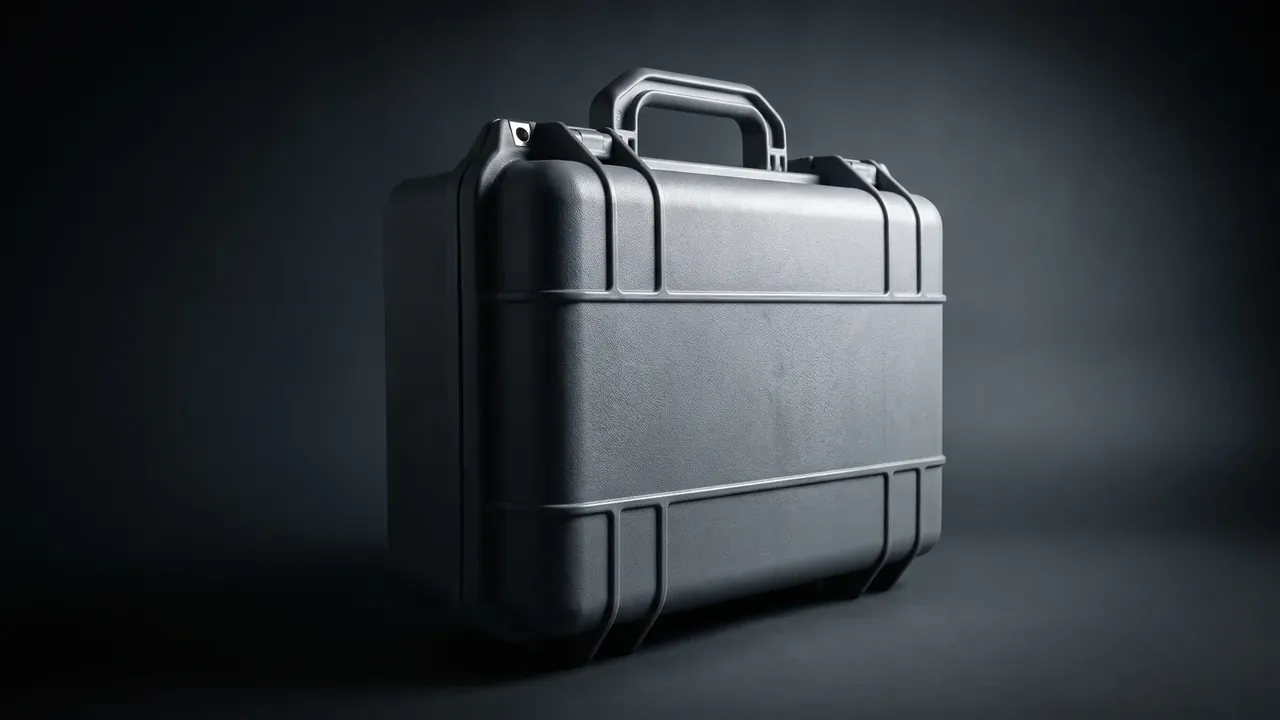
The channel handles volume, from washdown to storm rain; the tongue handles the residual film through wall height and clearance. A Dustproof and Waterproof Medical Case Design puts both on one rim, with the channel floor 2 mm below the tongue.
In a Dustproof and Waterproof Medical Case Design the hinge is the weak point: a square corner wears into a notch, and water follows it into the pin bore. Run water at the hinge for 5 min, then check the bore.
| Leak site | Symptom | Check first | Fix direction |
|---|---|---|---|
| Long edge mid-span | Fine beads inside | Lid bow, latches at ends | Centre latch or rib |
| Four corners | Damp insert | Rounded tongue corner | Radius the corner |
| Hinge side | Water near the pin bore | Notch in the sweep | Dam lip on hinge |
| Around the valve | Stain outside the seat | Seat flatness, torque | Washer, re-torque |
5. Should a pressure equalising valve go in
A valve answers the moment of opening. Cargo hold pressure, altitude gain and the cold of a refrigerated van all leave the inside under negative pressure, so the lid behaves as if glued shut. A venting membrane lets gas through and holds water back.
The valve is still a hole. Every opening added to a Dustproof and Waterproof Medical Case Design is another interface held by an O-ring and a torque figure, and a wet path around the seat is often masked by the shell's own sealing during immersion.
Three conditions decide it: air freight, a route crossing more than 1000 m of altitude, or a 20 ℃ swing. Two out of three and the valve earns its place; on flat domestic roads it adds risk. Where fitted, repeat the check at 1 m for 30 min.
Related Reading
- Five-step airtight diagnosis
- How disinfectants affect seals
- Plastic case versus wooden crate for moisture
- Medical case structure comparison
Conclusion
Sealing is set by the worst leg of the transport chain, not by the bench. A Dustproof and Waterproof Medical Case Design works in order: stiffen the lid so clamp load has somewhere to go, balance groove and gasket at 25%–30% squeeze, then refine latch and tongue detail.
This article covers the specification and design meaning on the case side only.
Related Products
- 8 Series — Gun Cases; Military Equipment Cases; Camera Equipment Cases; Drone Cases; Watch Cases; Knife Cases; First Aid Cases; Electronics Equipment Cases
- WL8-2812 PP Gun Case — model WL8-2812
- All protective cases and toolboxes: 7 series, 158 models