


Quick answer: Compare a dustproof protective case on five-year spend, not unit price. Add seals, maintenance hours and rework, and the cheapest quote usually ends up the most expensive.
Table of contents
- Five cost lines hidden in one unit price
- Matching class to the dust on site
- Seal life is set by opening count
- Turning maintenance intervals into money
- A three-minute check before you buy
- FAQ
1. Five cost lines hidden in one unit price
Buyers compare one number: the unit price. The rest arrives in year two, when seals are replaced, and year three, when work is redone. At fourteen openings a day over two hundred and fifty working days, a dustproof protective case opens three thousand five hundred times a year, seventeen thousand five hundred times in five years, beyond the life of most gaskets. Spread price, seals, maintenance hours, rework and downtime across those years and the ranking reverses.
| Cost line | Low-priced | Mid-range | High-end |
|---|---|---|---|
| Purchase price | 268 yuan | 345 yuan | 428 yuan |
| Seal life | 5,000 cycles | 8,000 cycles | 12,000 cycles |
| Seal changes in five years | 3 | 2 | 1 |
| Five-year seal spend | 255 yuan | 170 yuan | 85 yuan |
| Five-year maintenance hours | 720 yuan | 480 yuan | 240 yuan |
| Dust rework | Every two years | Once in five years | Effectively none |
| Five-year total | 2,443 yuan | 2,095 yuan | 1,753 yuan |
One rework event costs 1,200 yuan; two erase the price advantage.
2. Matching class to the dust on site
A higher class is not automatically better; measure the dust first. Particles below 10 micrometres, such as polishing mist and carbon black, travel with air into any seam that is not compressed. Debris of 10 to 75 micrometres settles under gravity. Chips above 75 micrometres mostly land on the lid.
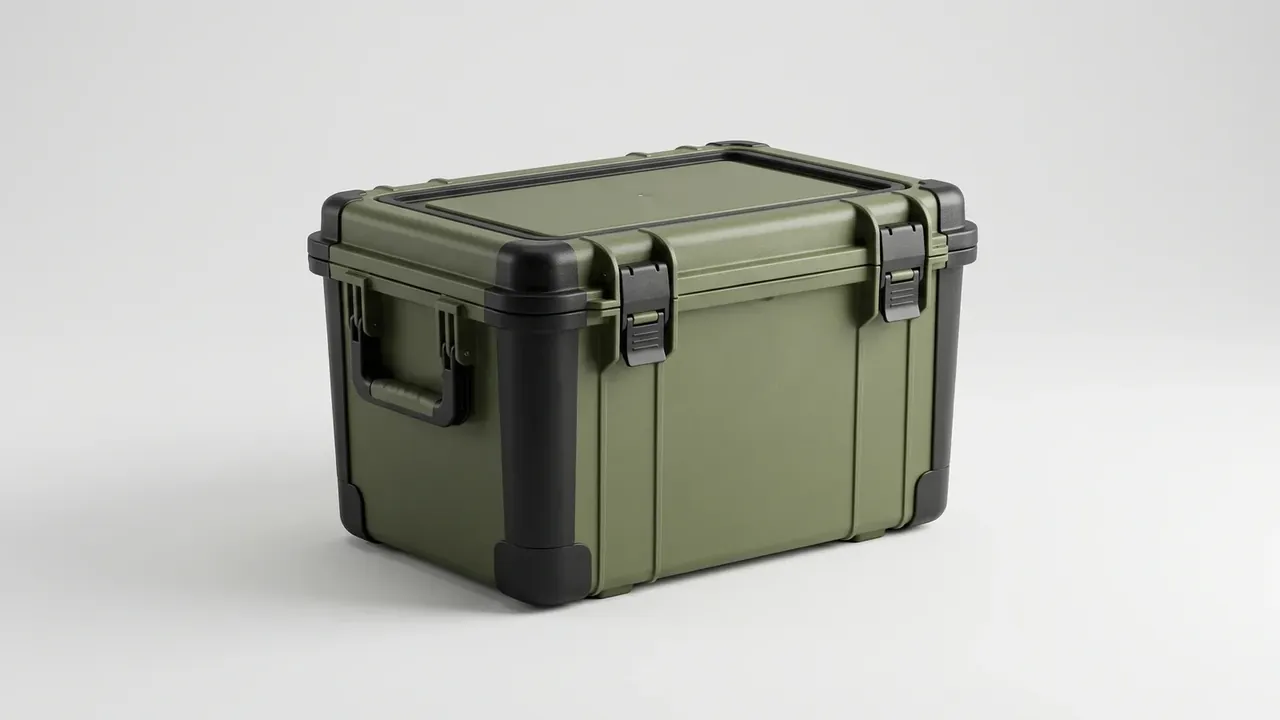
The second criterion for a dustproof protective case is flatness of the sealing face after assembly, not the class on the shell. A moulded rim springs back after demoulding, and once flatness passes 0.15 mm the latches close on a few points only. Latch the lid and run a torch along the seam from inside; wherever light passes, the face is not compressed.
| Environment | Dominant particle size | Suggested class | Seal design | Interval |
|---|---|---|---|---|
| Polishing and sanding shop | Under 10 micrometres | High, negative-pressure test | Double lip plus wiper | 30 days |
| Joinery and packing line | Above 75 micrometres | Medium | Flat gasket with dust lip | 90 days |
| Outdoor wind and sand | 10 to 75 micrometres | High | Lip seal plus breather membrane | 60 days |
| Cleanroom transfer | Under 10 micrometres | Medium | Flat gasket | 180 days |
3. Seal life is set by opening count
Seal life counts cycles, not years. Nitrile holds about five thousand closures at 22 to 28 percent compression, silicone reaches twelve thousand, and the gap is permanent set.
At three thousand five hundred openings a year, a five-thousand-cycle gasket lasts eighteen months and a twelve-thousand-cycle one three years and four months. A replacement costs 85 yuan and forty minutes of downtime, never seen on the quotation.
The gasket along the hinge of a dustproof protective case ages first, compressed all year and sheared on every closure.
4. Turning maintenance intervals into money
Price the interval simply: twelve minutes at sixty yuan an hour is twelve yuan. A shorter interval costs more but lowers the chance of ingress.
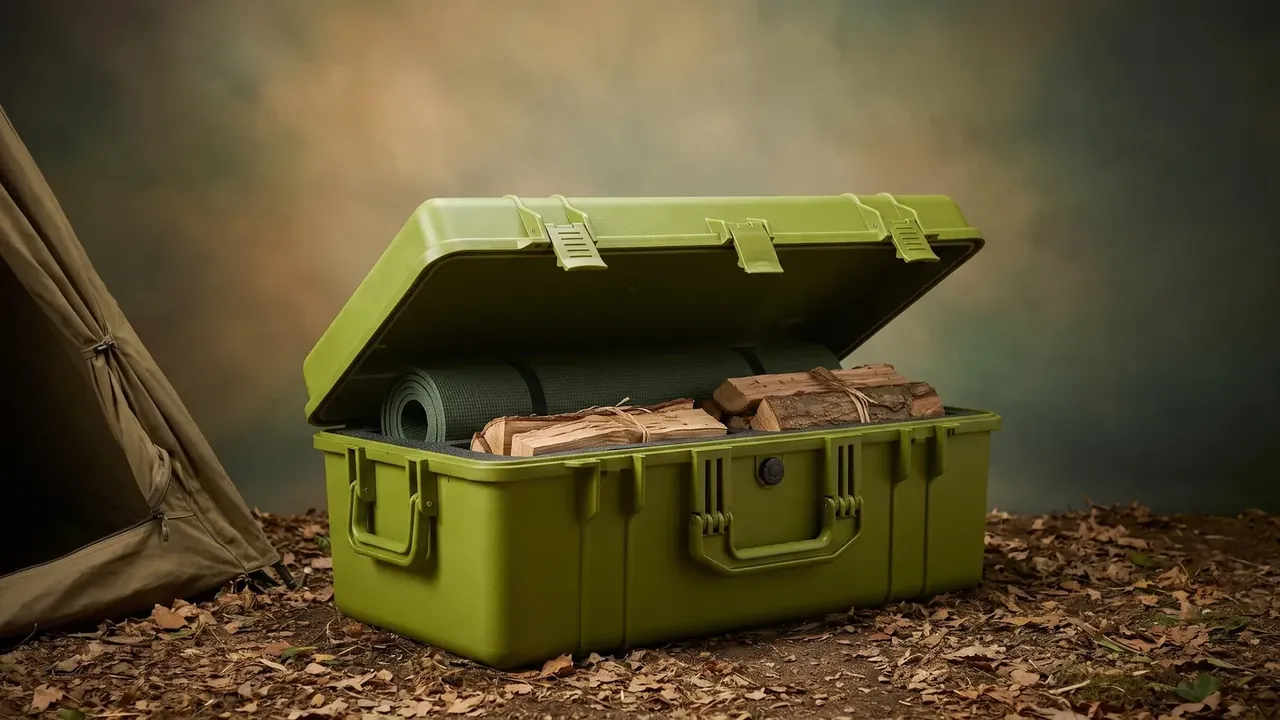
| Interval | Visits in five years | Labour cost | Supporting requirement |
|---|---|---|---|
| 30 days | 60 | 720 yuan | Double lip, replaceable gasket |
| 60 days | 30 | 360 yuan | Lip seal with breather membrane |
| 90 days | 20 | 240 yuan | Flat gasket, stiff lid |
| 180 days | 10 | 120 yuan | Low-dust cleanroom only |
Where the swing exceeds 18 kelvin, shorten the interval a step, because pressure difference pumps fine dust through the weakest section. The breather membrane is changed every six months.
Maintenance is not better when more frequent. It has to match the dust.
5. A three-minute check before you buy
You do not need a test report. Six checks on a dustproof protective case remove half the candidates.
- Feeler gauge: run a 0.04 mm blade around the seam and record where it enters.
- Paper strip: trap an A4 sheet under the lid and pull it along the edge; a spot that slides freely was never compressed.
- Side light: hold a torch along the joint from inside; light passing through means no contact.
- Pull test: load each latch to 80 N; the tongue moves no more than 1 mm.
- Weighing: two cases of one size differing by 300 g usually means one wall is thinner.
- Cycling: open and close ten times and listen for an uneven snap.
Conclusion
The choice of a dustproof protective case is settled on a five-year ledger, not a data sheet: price, seals, maintenance and rework, added together, often reverse the order of quotes. Class matches particle size, gasket life matches opening count, and the interval matches concentration. Work those three out and a dustproof protective case is neither overbought nor underbought.
This article discusses only the container (case body) side of specifications and design intent, and does not cover any handling, loading or use of the contents.
Related Reading
- How to compare OEM protective case programmes
- Sizing a case from the load it carries
- What to read in a supplier's quotation reply
- Load ratings and selection for wheeled cases
Related Products
- 8 Series — Gun Cases; Military Equipment Cases; Camera Equipment Cases; Drone Cases; Watch Cases; Knife Cases; First Aid Cases; Electronics Equipment Cases
- WL8-2812 PP Gun Case — model WL8-2812
- All protective cases and toolboxes: 7 series, 158 models