

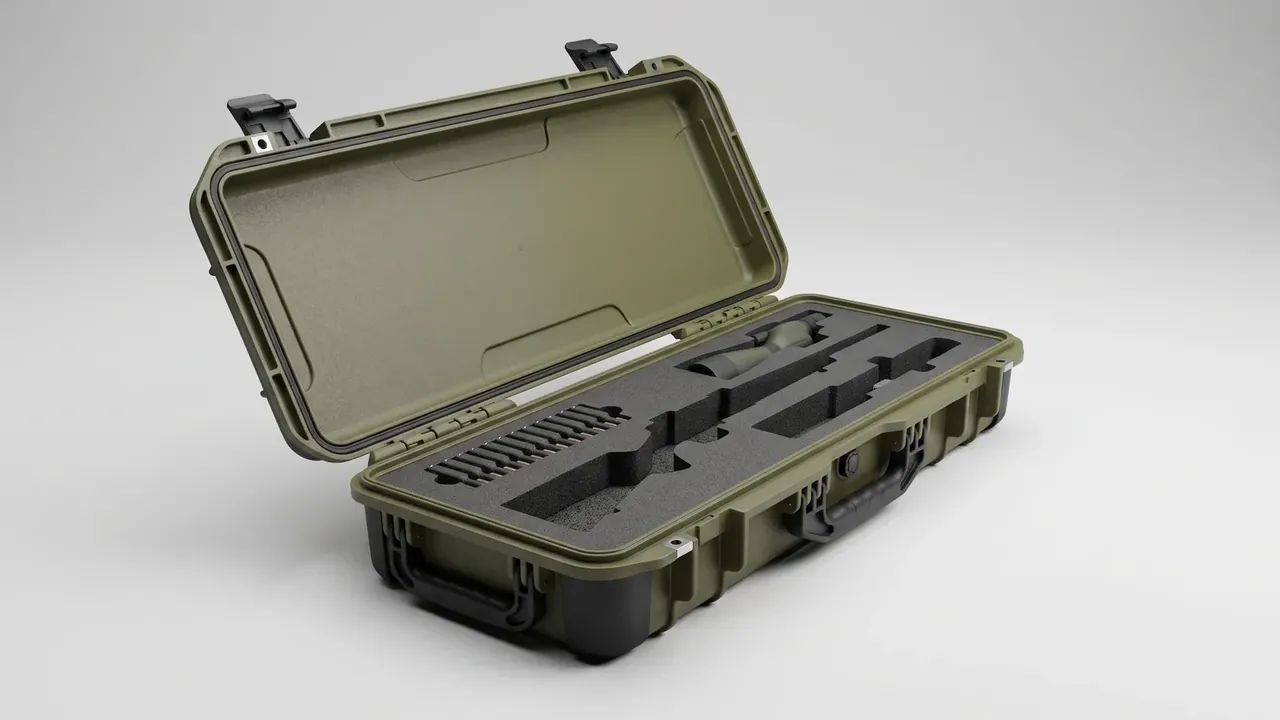
Quick answer: An Electronic Equipment Case runs on three cycles: a 15-minute look after every trip, a twelve-item check every 90 days, and a strip-down review yearly. Replace a seal at 20 per cent permanent set, a latch below 40 N, or foam gapping by 2 mm; adjusting only postpones the leak.
Table of contents
- A Twelve-Item Sheet on Three Cycles
- Bleed the Valve Before You Wash
- Foam That Gaps by 2 mm Has to Go
- Replacement Lines for Seals, Latches and Hinges
- Three Habits That Stretch Five Years to Eight
- FAQ
1. A Twelve-Item Sheet on Three Cycles
An A4 sheet taped inside the lid needs three columns: item, cycle, limit. Five of the twelve are checked after every trip, two every 90 days, two yearly, and three ride along with the quarterly pass. Paper beats memory, since missed checks cluster in the busiest week.
| Item | Cycle | Method | Limit |
|---|---|---|---|
| Cracks and distortion | Every trip | Look, press the wall | Crack over 10 mm or through-wall |
| Gasket impression | Every trip | Walk the rim by eye | Flattened, glossy spots |
| Latch closing | Every trip | Hand feel plus gauge | 60 to 90 N |
| Pressure valve | Every trip | Press and release | Returns within 3 s |
| Interior humidity | Every trip | Desiccant colour | Over 80 per cent spent |
| Foam fit | 90 days | Feeler gauge | No more than 2 mm |
| Hinge pin play | 90 days | Rock the lid, measure | No more than 0.2 mm |
| Gasket hardness | 12 months | Shore A durometer | No more than 70 |
| Fastener torque | 12 months | Torque wrench | 1.8 N·m |
The other three are labels, pressure equalisation and spare count. Record numbers, not adjectives.
2. Bleed the Valve Before You Wash
Press the relief valve before opening the latches. After a temperature swing or an air leg, a case can hold 30 kPa, and forcing a latch sucks the gasket into its groove.
Wash with water under 40 °C and neutral detergent at pH 6.5 to 7.5, jet under 3 bar and 30 cm from the groove.
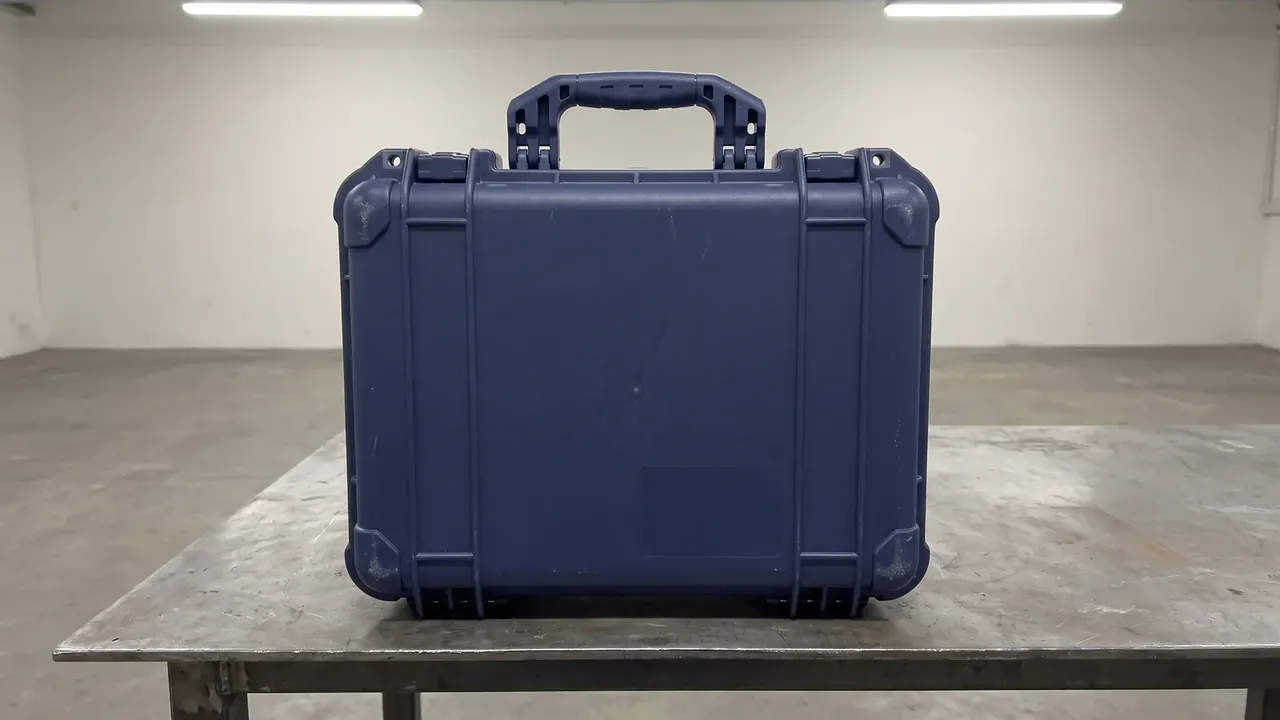
Lift the foam out whole. EVA dries in two hours; wet PE foam needs four hours below 40 °C, or the case fogs once shut.
Dry in three steps: invert for 30 minutes so water leaves the groove, wipe the channel with a cloth rather than cotton waste, and leave the lid open in moving air for four hours. Warm air below 40 °C works if time is short, held 30 cm from the shell. A heat gun does not. Polyethylene softens near 70 °C, and a distorted groove will not seal. Touch the inner wall with the back of a hand before closing. If it feels cool, give it another hour.
3. Foam That Gaps by 2 mm Has to Go
Foam ages by clearance, not calendar. A new cavity grips the equipment 1 mm tight; once a gauge slips 2 mm in, load shifts and impacts land on connectors.
Three signs confirm each other:
- More than 2 mm between foam and equipment
- A press that takes over 3 seconds to recover
- Dust on the surface, edges crumbling between fingers
When only the first applies, a 10 mm EVA shim restores the fit for under a tenth of a new insert; after two layers, replace the block, since shims slide and polish the housing.
4. Replacement Lines for Seals, Latches and Hinges
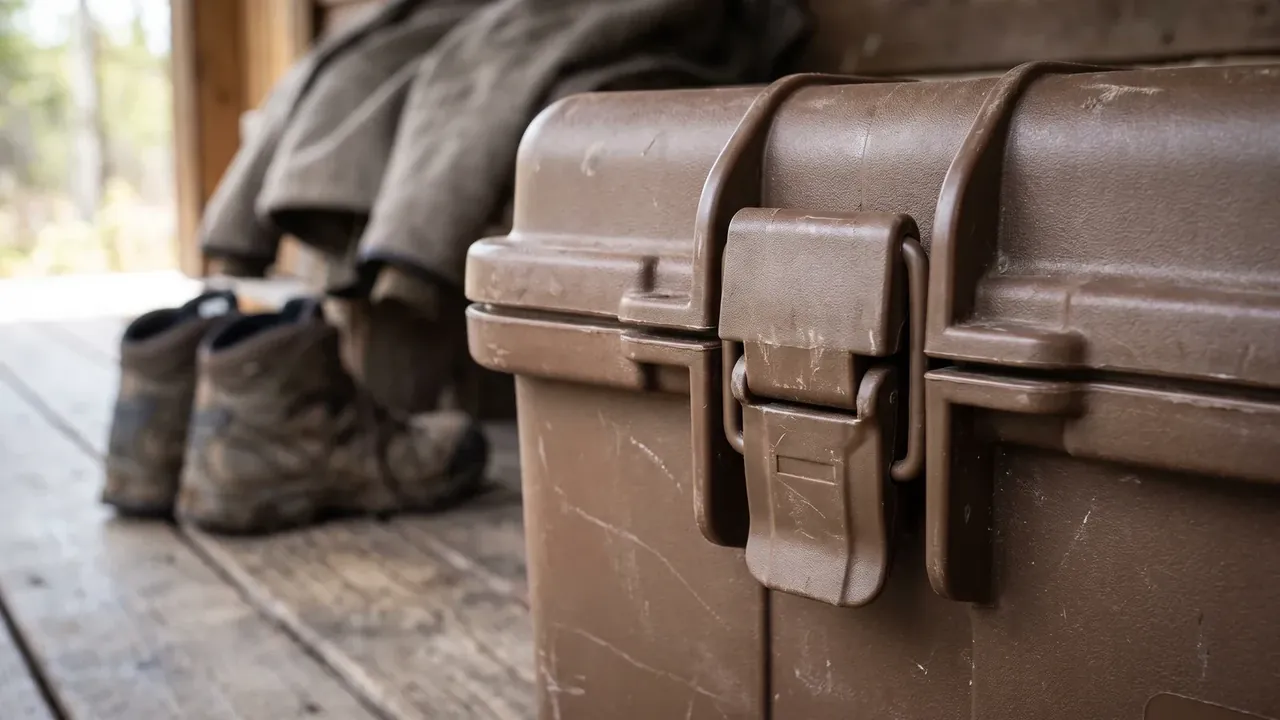
Seal life is compression set: a new gasket compresses 25 to 30 per cent and recovers past 95 per cent; at 80 per cent it is tired, and tightening latches only buys time.
Latch feel has numbers. Normal closing sits at 60 to 90 N; above 120 N the gasket is too thick or the groove holds grit, and below 40 N the latch has worn or the rim has deformed. Measure before forcing.
| Part | Normal | Replace at | Interval |
|---|---|---|---|
| Gasket | 25 to 30 per cent compression, 95 per cent recovery | Over 20 per cent set, hardness over 70 | 2 years |
| Latch | 60 to 90 N closing | Under 40 N, or over 120 N after adjustment | 3 years |
| Hinge pin | Play within 0.2 mm | Over 0.2 mm, or rattles | 4 years |
| Foam | Gap within 2 mm | Over 2 mm, or crumbling | 5 years |
| Pressure valve | Returns within 3 s | Slow return, seeping edge | 5 years |
The hinge pin is the forgotten part. It costs a few RMB, but replacement means driving out the hinge rod; wait until the bore wears oval and the block goes with it. Rock the lid every 90 days and swap while play is measurable.
On gasket changes, close the empty case for 24 hours so compression settles, then retighten the retainers to 1.8 N·m; rain-testing at once reads optimistic.
5. Three Habits That Stretch Five Years to Eight
Two identical cases leave service years apart, and the difference is rarely repair skill but how seldom they were hurt.
- Store at 15 to 25 °C and 45 to 60 per cent humidity, on a pallet 100 mm off the floor, out of afternoon sun.
- Stack empty cases no more than three high, with heavy items off the bottom layer; a loaded gasket remembers the shape.
- Change the gasket every two years rather than waiting for a leak; one gasket costs about 2 per cent of one repair.
Do these four and the shell rarely fails; the gasket and foam go first, and they are the cheapest parts to swap.
There is a stopping point: a through-wall crack, a torn-off keeper or a crushed groove is not worth repairing, since the damage returns at the same spot.
Conclusion
The life of an Electronic Equipment Case is set by three consumables: the gasket, the latches and the foam. Put inspection on a 15-minute, 90-day and 12-month rhythm, write the replacement lines in millimetres, newtons and set percentages, and five years becomes eight.
This article discusses only the container (case body) side of specifications and design intent, and does not cover any handling, loading or use of the contents.
Related Reading
- Shielding, grounding and heat paths in an electronic equipment case
- Preventing damage in case storage and handling
- What warehouse storage really does to a case
- Inspection and service intervals for ammunition storage containers
- Choosing gaskets, latches and handles as spares
Related Products
- 8 Series — Gun Cases; Military Equipment Cases; Camera Equipment Cases; Drone Cases; Watch Cases; Knife Cases; First Aid Cases; Electronics Equipment Cases
- WL8-2812 PP Gun Case — model WL8-2812
- All protective cases and toolboxes: 7 series, 158 models