

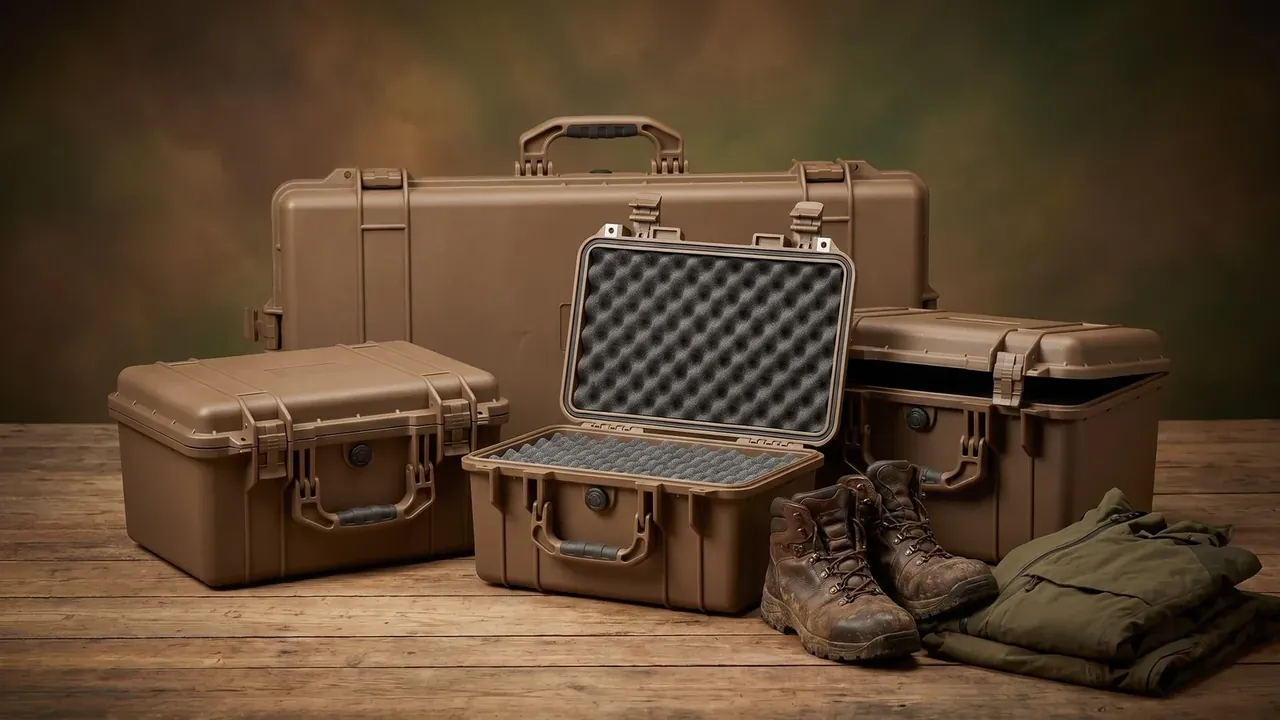
Quick answer: Inspecting an Electronic Equipment Case means measuring it against a pass line: cavity, wall, latch force, sealing, drop and stacking each carry a number, and one failed retest blocks sign-off.
Table of contents
- How an Electronic Equipment Case Inspection Starts
- Housing and Hardware Before the Latches
- Sealing: Put a Number on the Rating
- Drop and Stack: Where the Pass Line Sits
- Disposition: Concession, Rework, Rejection
- FAQ
1. How an Electronic Equipment Case Inspection Starts
Last winter a batch of 120 Electronic Equipment Case units arrived, cavity stated at 520 × 380 × 190 mm, wall at 6.5 mm. Eight were pulled; the first showed a mismatch along the parting line.
The first step is not opening the case but laying the drawing beside the part, so every callout has a gauge point. A callout with none is unmeasurable.
| Item | Measured on site | Pass line | On failure |
|---|---|---|---|
| Cavity | Tape on three axes | No side off by more than 3 mm | Re-measure the lot |
| Wall | Ultrasonic gauge, five points per face | Not below 90 percent of nominal | Test the same mould number |
| Latch force | Pull gauge along the opening direction | Not below 350 N | Hand-check every unit |
| Sealing | Immersed 1 m for 30 minutes | No water inside | New gasket, retest |
| Drop | Loaded, 1.2 m, one drop per face | Latches shut, no through-crack | Double the sample |
| Stacking | 400 kg on top for 24 hours | Deflection within 2 mm | Restack and retest |
The table is the whole basis. Arguments come from a pass line nobody wrote down: the buyer says sturdy, the supplier hears no parts falling out. Put that line in the contract annex, or a retest carries no weight.
2. Housing and Hardware Before the Latches
Order matters: parting line and ribs first, latches and hinges second, interior last. Reverse it and things slip: a neatly fitted latch can sit on a hollow rib.
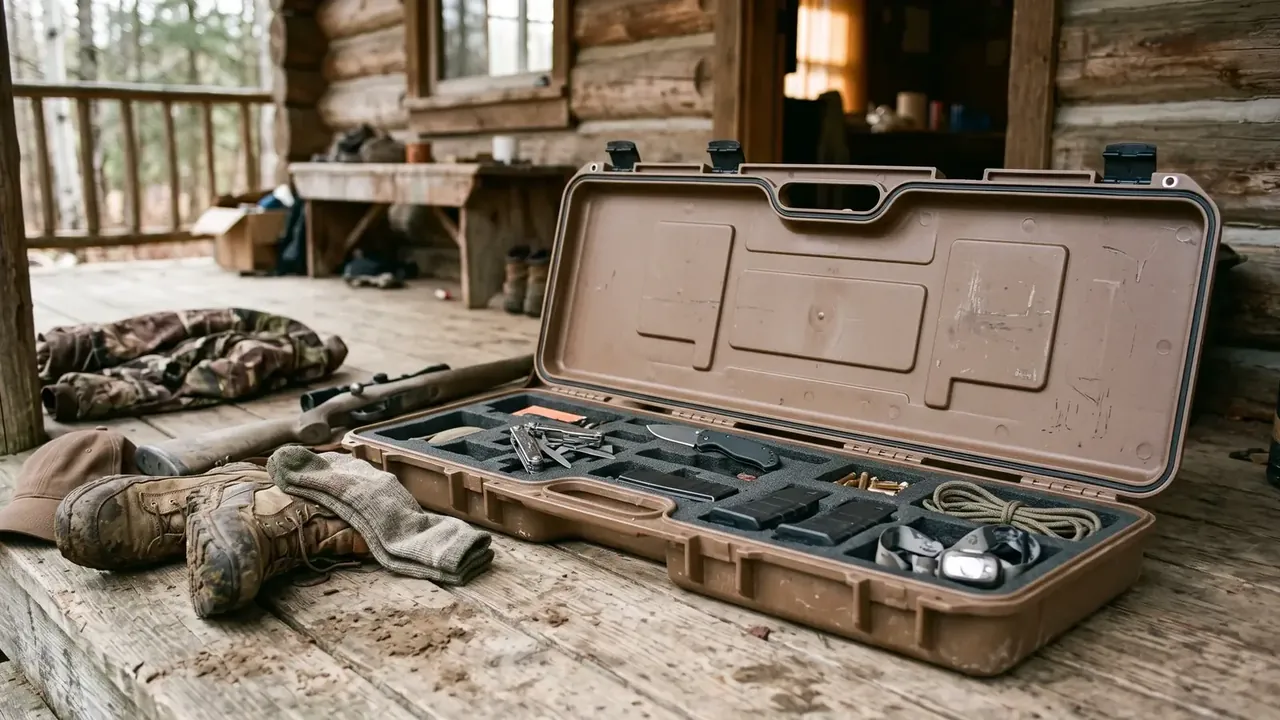
The mismatch measured 1.8 mm, trivial until you see it means worn locating pins. Cases from one mould number fail together, so sample by mould number, not lot size.
Count three things per latch: how many, of what material, and whether a secondary catch exists. One latch holding its force does not mean two will, since a falling case twists onto the first corner down.
The interior gets skipped because it is hidden. Ask for foam density: polyethylene under 25 kg per cubic metre collapses after two compressions. Measure cut depth, since too deep floats the load and too shallow blocks the lid. Check that adhesive covers the whole face, because corner dabs shift after one trip. Confirm the egg-crate fills the lid; a missing corner is a missing cushion layer. Then close the lid and shake it: any rattle is a gap.
3. Sealing: Put a Number on the Rating
Sealing is promised in writing and rarely defined. The promise sits in an email; the pass line stays missing.
An IP rating is a test result, not a label. Digit 7 means temporary immersion, usually 1 m for 30 minutes; digit 5 means water jets only, and the two are not interchangeable.
The test is easy: a dry paper towel inside, the case latched, sunk to the stated depth and time, dried outside, then opened. One damp patch and the lot goes back to the bench.
Gasket compression decides the outcome. A strip 8 mm thick squeezed to 5 mm is the window: less leaks, more takes a permanent set. Keep the splice away from the hinge side, the thinnest part of the loop.
4. Drop and Stack: Where the Pass Line Sits
A drop needs two pass lines. Structural means latches stay closed and no through-crack appears; functional means the case still passes immersion afterwards.
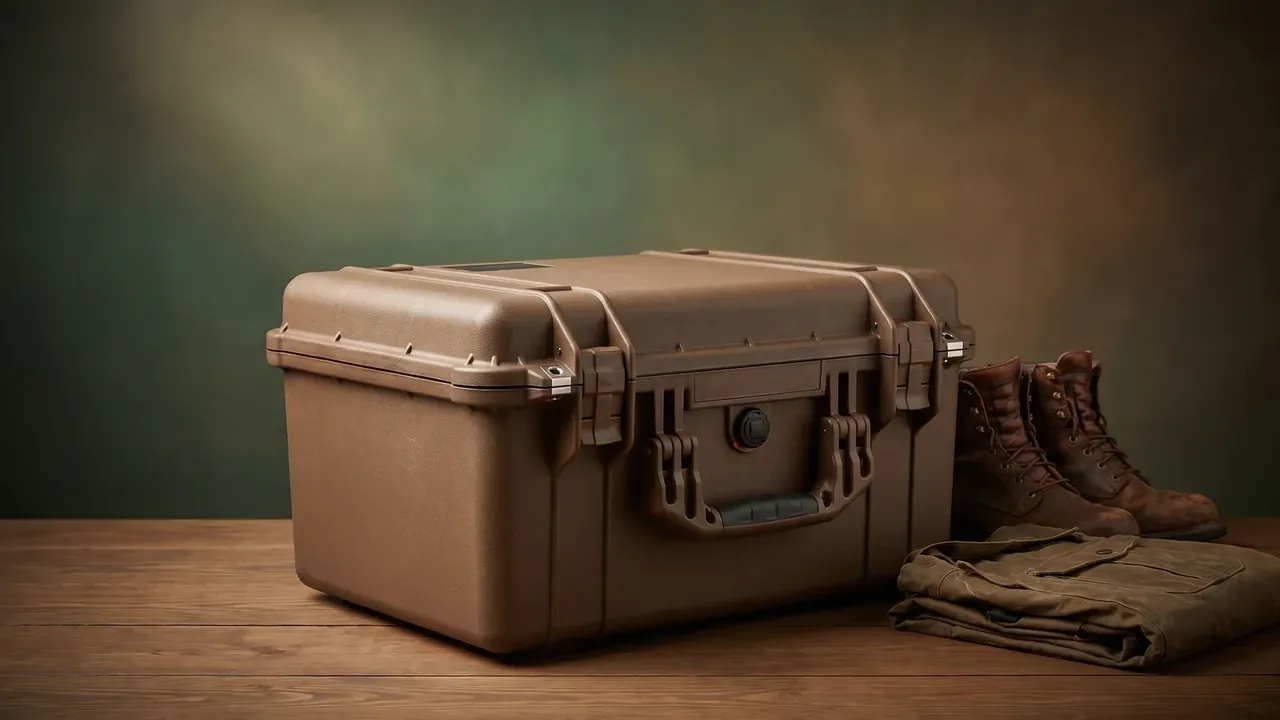
Write only the structural line and you get shells that survive the drop with a dead seal.
| Lot size | First sample | Failures | Action |
|---|---|---|---|
| Under 50 | 3 units | 1 | Double the retest |
| 51 to 200 | 8 units | 1 | Re-measure cavity |
| Over 201 | 13 units | 2 | Hold, trace mould number |
Stack by real transport height, not warehouse height. Load 400 kg for 24 hours, release, wait two, then measure. Anything past 2 mm jams by the fourth tier.
5. Disposition: Concession, Rework, Rejection
A failed Electronic Equipment Case takes one of three routes, after deciding whether the fault sits with a mould number or with the lot.
- Cavity out of tolerance but inside assembly allowance: concede and record the deviation
- Wall below 90 percent: test every unit of that mould number
- Latch force short: change the latches, then hand-check all units
- Immersion leak: new gasket, then retest three units
- Latch opens after a drop: reject the mould number, no rework
- Insert misaligned: rework the insert, keep the shell
Concession needs a ceiling. Past one unit in ten, the process was never capable, and buying it moves the problem to the user.
That is how the three retests came about: dimensions, then immersion after new gaskets, then a drop on another mould number. Nine days, barely faster than reordering, but traceable.
Conclusion
Inspecting an Electronic Equipment Case is translating sturdy into six numbers and drawing a line under each. With lines drawn, an argument becomes a reading; without them, every retest repeats it.
Of this batch, 112 Electronic Equipment Case units were accepted and eight went back.
This article discusses only the container (case body) side of specifications and design intent, and does not cover any handling, loading or use of the contents.
Related Reading
- How an Electronic Equipment Case Works: Shielding, Grounding, Heat
- Where an Electronic Equipment Case Gets Used in the Field
- Airdrop Case Inspection Items and Rejection Lines
- Mould and Warehouse Checks for Case Bodies
Related Products
- 8 Series — Gun Cases; Military Equipment Cases; Camera Equipment Cases; Drone Cases; Watch Cases; Knife Cases; First Aid Cases; Electronics Equipment Cases
- WL8-2812 PP Gun Case — model WL8-2812
- All protective cases and toolboxes: 7 series, 158 models