

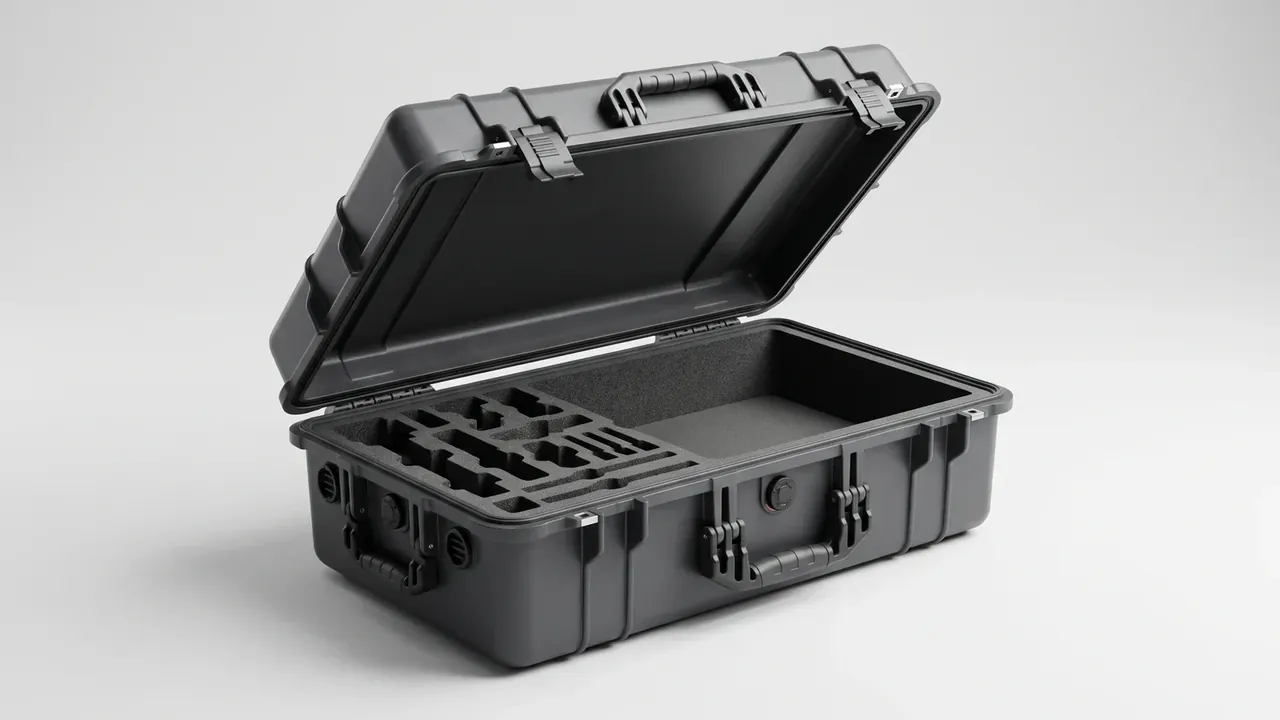
Quick answer: Maintenance of an EMI Shielding Case is trend logging along the shielding loop, not wiping dust. Every 90 days read surface resistance, gasket creep and one bond; replace the gasket run past 0.1 ohm per square, 3 mm of creep or 10 milliohms.
Table of contents
- Inspection Intervals: What 90, 180 and 365 Days Cover
- The Conductive Layer: Reading Surface Resistance
- Gasket and Latches: Creep Width and Replacement Lines
- Bonding and Feedthroughs: Three Points That Fail First
- Cleaning and Storage: Turning Five Years into Eight
- FAQ
1. Inspection Intervals: What 90, 180 and 365 Days Cover
Intervals should follow how fast each part degrades, not how convenient the schedule looks. Coating wears in months, gaskets age in years, fasteners loosen between the two. One annual overhaul leaves the EMI Shielding Case unwatched for ten months.
A 90-day round covers six checks: latches seated, five-point resistance, lid creep width, one bond, latch torque, feedthrough screws. One technician needs forty minutes. At 180 days add a whole-case attenuation retest; at 365 days replace the gasket run.
| Interval | Check | Tool | Pass criterion |
|---|---|---|---|
| Every 90 days | Resistance, five points | Four-point probe | Worst point at or below 0.1 ohm per square |
| Every 90 days | Lid creep width | Steel rule | Continuous, not under 3 mm |
| Every 180 days | Whole-case attenuation | Anechoic room | Within 6 dB of baseline |
| Every 365 days | Torque, new gasket | Torque wrench | 0.6 N·m, gasket replaced end to end |
One measurement with no baseline describes one afternoon.
2. The Conductive Layer: Reading Surface Resistance
Surface resistance is the one conductivity figure an owner can take on site. Press a four-point probe on a flat area, read five points, keep the worst: 0.05 to 0.1 ohm per square is normal for sprayed lining.
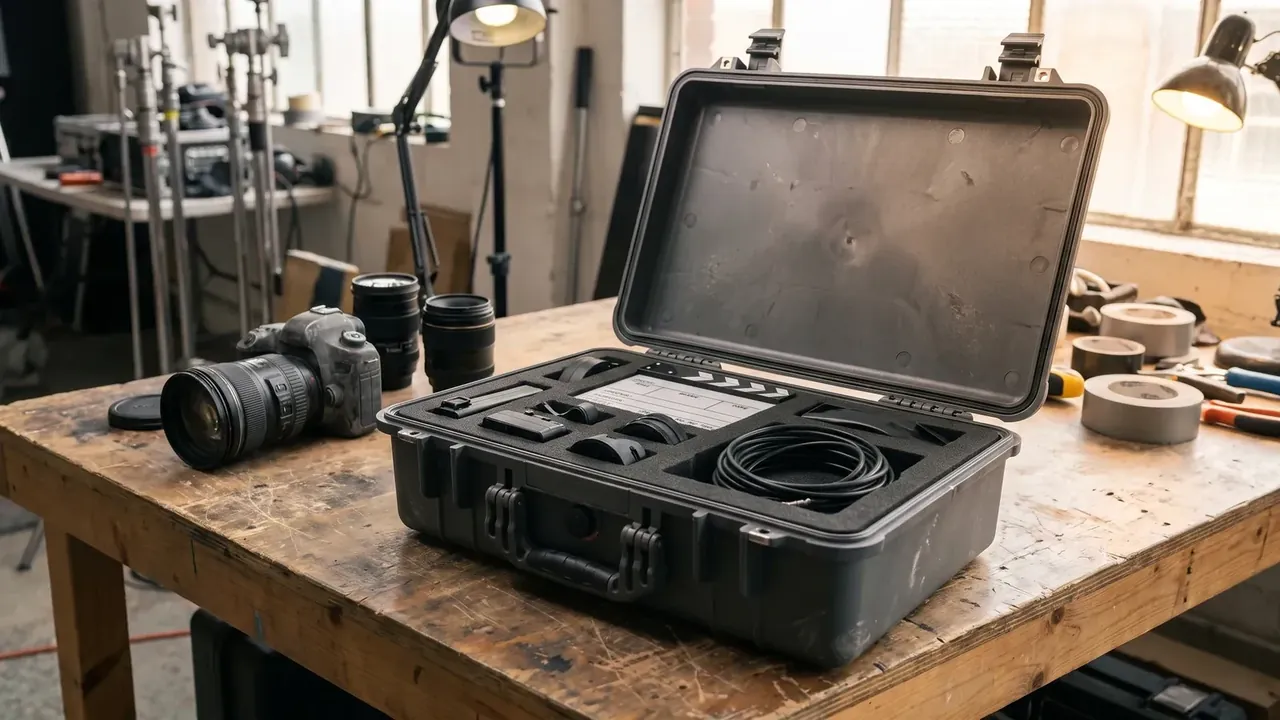
Wear collects where the spray pass is fast and the film runs thin: the root of each draw latch, both sides of the hinge pin, the inside of the handle, the rim of the feedthrough plate. Once substrate shows, the loss is not gradual; that stretch becomes an insulator and the whole case is judged by its longest insulating seam. Sand fifty millimetres beyond the damage until it has tooth, then prime and topcoat, keeping dry film between 60 and 100 micrometres. Wait 24 hours before measuring, because a curing coating reads high and gets scrapped by mistake. Silver, nickel and copper loaded paints never mix in one repair.
3. Gasket and Latches: Creep Width and Replacement Lines
The gasket is the only conductive path across the lid joint, so its condition decides whether that seam closes. Every closure leaves a creep mark; 3 to 6 mm of width means 25 to 40 percent compression. A narrowing mark means latch preload has fallen or the gasket has collapsed.
| Item | Normal | Replace at | Action |
|---|---|---|---|
| Creep width | 3 to 6 mm, continuous | Under 3 mm or broken | New gasket, re-set latches |
| Gasket hardness | Shore A 40 to 60 | Hard, cracked | Full run, no splice |
| Latch torque | 0.6 N·m | Below 0.4 N·m | New spring or latch |
| Gasket joint | 45-degree butt, gap under 0.5 mm | Gap over 2 mm | Re-cut and clamp |
Silicone stock stiffens at minus 20 °C and compression falls with it, so cases opened outdoors in winter need extra preload. Springs fatigue quietly: by the time the lid stops seating, attenuation has dropped a dozen decibels.
4. Bonding and Feedthroughs: Three Points That Fail First
Bonding resistance is the item most often skipped, because it needs a micro-ohmmeter while everything still looks fine.
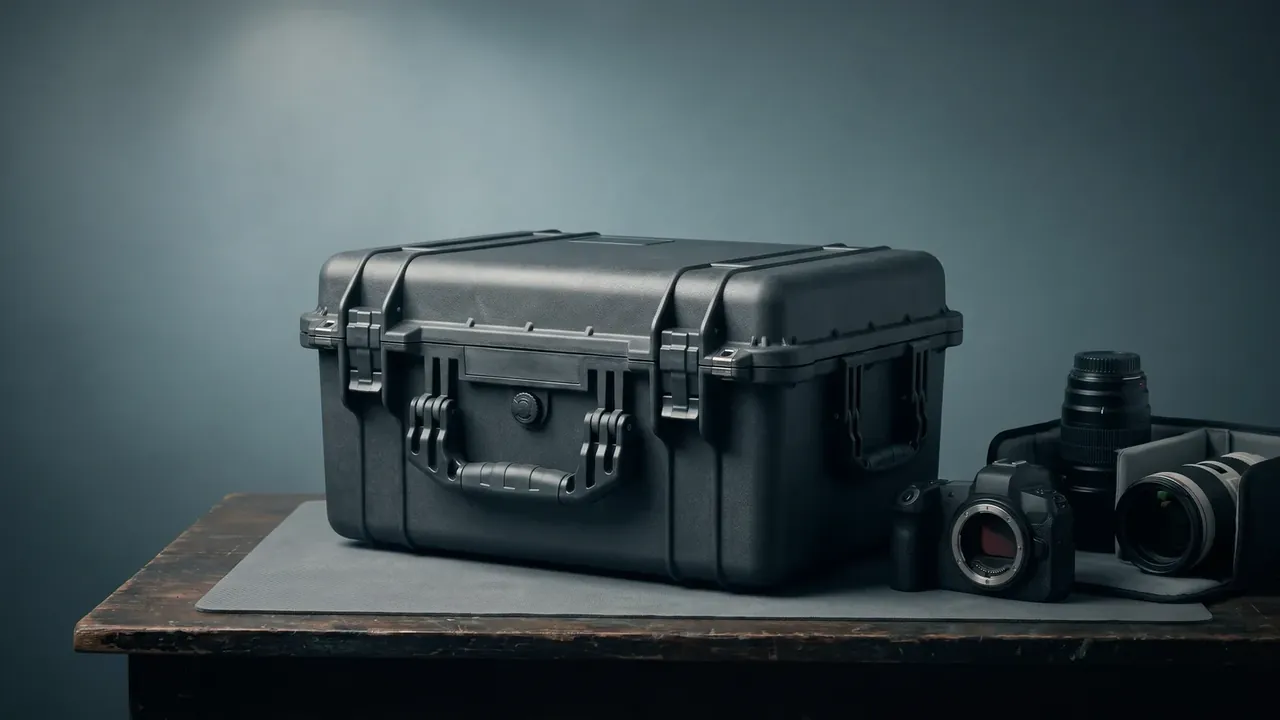
The star washer goes first: teeth blunt after two removals, and one spot climbs from 3 to over 20 milliohms. Second is the braid, flexing near the handle until strands break while the strap still looks whole. Third is the feedthrough plate screw, where stainless steel on aluminium couples in humid weather and torque bleeds away.
Measure the same terminal each quarter and plot the numbers.
A bond drifting upward, even inside the limit, gets replaced at the next service.
5. Cleaning and Storage: Turning Five Years into Eight
Bad cleaning damages an EMI Shielding Case faster than none: coating and gasket both dislike solvents, and both suffer when water enters the lid seam.
- Mix a neutral detergent at pH 6 to 8 and wring the cloth until it stops dripping
- Avoid acetone, thinner and strong alcohol, which swell the conductive film
- Never point a pressure washer at the lid seam; keep under 4 bar
- Leave the lid open 30 minutes so the gasket groove dries
- Hold store humidity below 60 percent to stop blistering under the coating
- Stack no more than 3 high and open the lid monthly in long storage
Keep spares on the shelf: gasket at 1.1 times the lid perimeter, four latch springs, twenty feedthrough screws of the original grade. A case rated five years usually reaches eight.
Conclusion
Three numbers carry the routine for an EMI Shielding Case: 0.1 ohm per square, 3 mm of creep, 10 milliohms per bond. Behind them sits one rule, that the shielding loop is only as good as its weakest stretch. Intervals remind, trends decide, so act on the second consecutive rise. Keep the log honest and an EMI Shielding Case serves years past its rating.
This article discusses only the container (case body) side of specifications and design intent, and does not cover any handling, loading or use of the contents.
Related Reading
- How shielding, bonding and sealing work together
- Attenuation and feedthrough specifications
- Sealed storage and periodic checks for reserve cases
- Corrosion and upkeep of metal ammunition boxes
Related Products
- 8 Series — Gun Cases; Military Equipment Cases; Camera Equipment Cases; Drone Cases; Watch Cases; Knife Cases; First Aid Cases; Electronics Equipment Cases
- WL8-2812 PP Gun Case — model WL8-2812
- All protective cases and toolboxes: 7 series, 158 models