

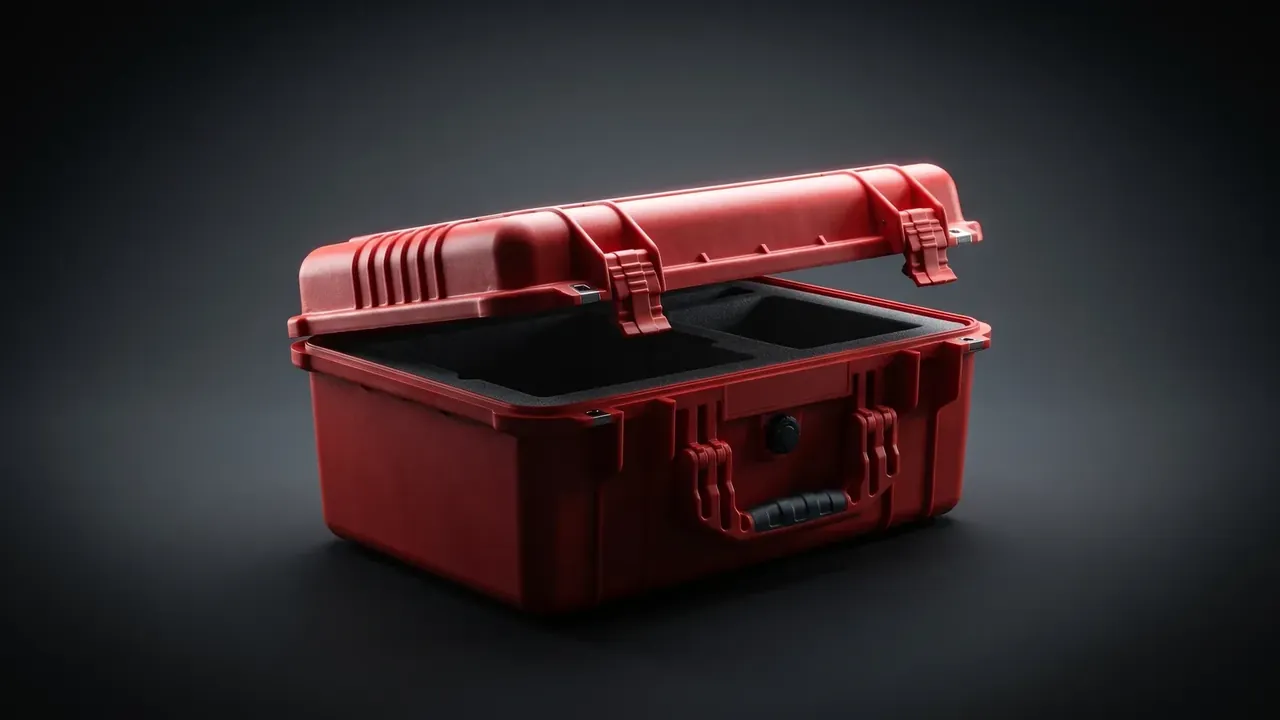
Quick answer: An Equipment After-Sales Service Tool Case carries 24 spare-part bays behind two security strips, with a 300 km service radius tied to a 4.4 mm wall.
Table of contents
- Spare-part bays in an Equipment After-Sales Service Tool Case
- Unsealing records for the two strips
- Shell strength for a 300 km service radius
- A labelling system for a 15 min count
- Spare-part setting for a service batch
- FAQ
1. Spare-part bays in an Equipment After-Sales Service Tool Case
A call-out starts by lifting the lid and counting what is missing, and how far it opens decides whether the engineer drives back for a part. The cavity measures 520 by 380 by 200 mm and holds 24 bays in six columns of four rows, each clearing 84 by 92 mm once five lengthwise and three cross dividers at 3 mm take 15 mm off the width and 9 mm off the depth.
More bays do not read as better. At 70 mm a seal ring still drops in, yet a gloved finger cannot pinch it out, so the bay is emptied on the floor. The 24 bays of an Equipment After-Sales Service Tool Case run in three bands by restock interval: consumables in front, wear parts in the middle, specials in the last six.
| Zone | Bays | Weight cap per item | Restock interval |
|---|---|---|---|
| Consumables | 8 | 0.5 kg | 7 days |
| Wear parts | 10 | 0.7 kg | 30 days |
| Specials | 6 | 0.8 kg | 90 days |
Filled to the cap, the bands reach 15.8 kg against a 16 kg line, leaving 0.2 kg for the part pulled on site. A removed part dropped into an empty bay shows up next count, so an Equipment After-Sales Service Tool Case logs empty bays separately.
2. Unsealing records for the two strips
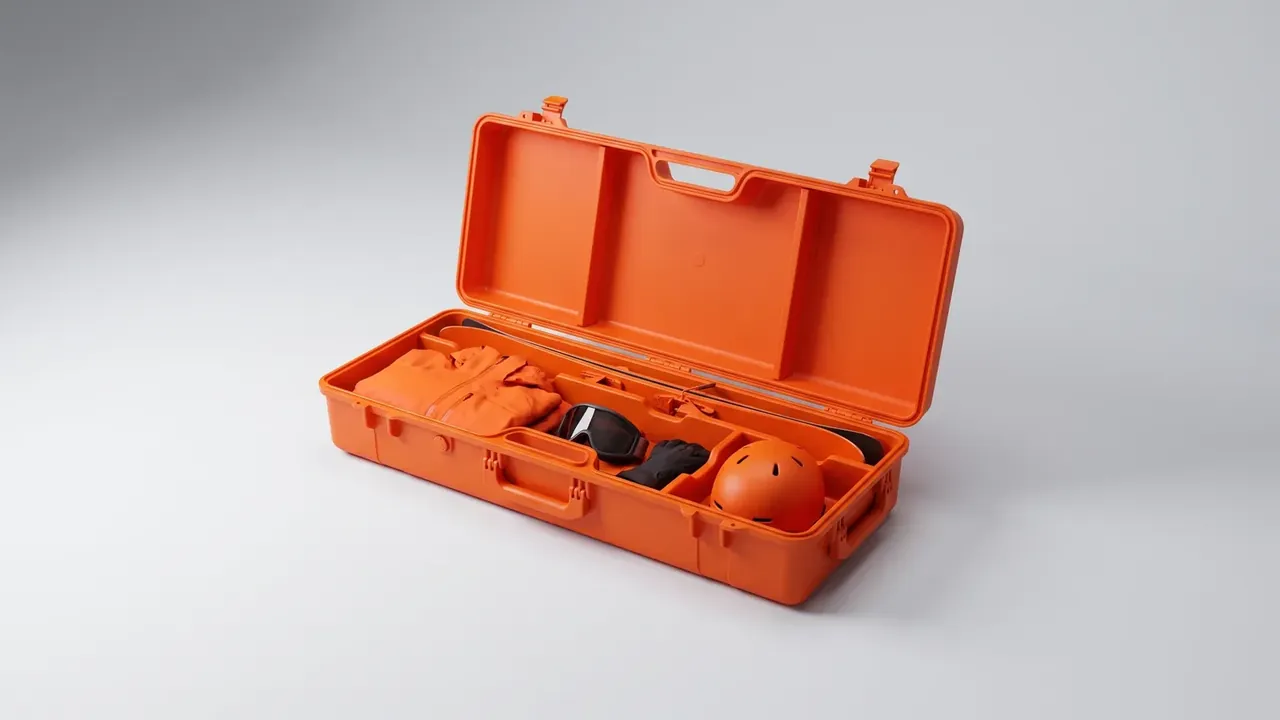
A strip on an Equipment After-Sales Service Tool Case shows whether the case was opened en route. Strip A crosses the two lid latches, strip B threads the handle and the side eye, and a cut leaves a mark hard to hide. Both are 12 mm wide and 0.6 mm thick, 180 N on A and 140 N on B, the lighter one on the busy handle side.
| Strip no. | Route | Breaking force | Opens per month |
|---|---|---|---|
| A-01 | Across both lid latches | 180 N | 18 |
| B-02 | Handle and side eye | 140 N | 33 |
| C-03 | Spare, not pre-fitted | 120 N | 0 |
A record carries four fields: number, unsealing time, engineer, resealing time; miss one and the case stays home. Resealing sits inside a 30 min window, with a note for anything longer. B opens 33 times a month, nearly twice A, and its eye wears faster: 7000 cycles take it from 6 mm to 6.8 mm, and a loose eye lets the strip slip on a rough road. An Equipment After-Sales Service Tool Case checks eye diameter monthly and swaps the seat past 0.5 mm of growth.
3. Shell strength for a 300 km service radius
The 300 km radius is a round trip: 300 km out, a 4 h arrival promise, at most one 600 km day. That duty pairs with a 4.4 mm wall, 580×440×250 mm outside and 520×380×200 mm inside. Strength grades on the 600 km day with six loading events.
The rig follows that day: 90 min of vibration, a 0.6 m drop on six faces, reinforcement at four corners and the handle root. At 450 km the day reaches 900 km, where a 4.4 mm wall distorts at the corners past the lid seal allowance; foam will not fix that, so the grade moves to 5 mm.
The handle root fails before the wall: lifting 16 kg in and out of a van puts two shocks through it per trip, four on a 600 km day. An Equipment After-Sales Service Tool Case adds a 3 mm doubler set 12 mm back from the wall to clear the weld line.
4. A labelling system for a 15 min count
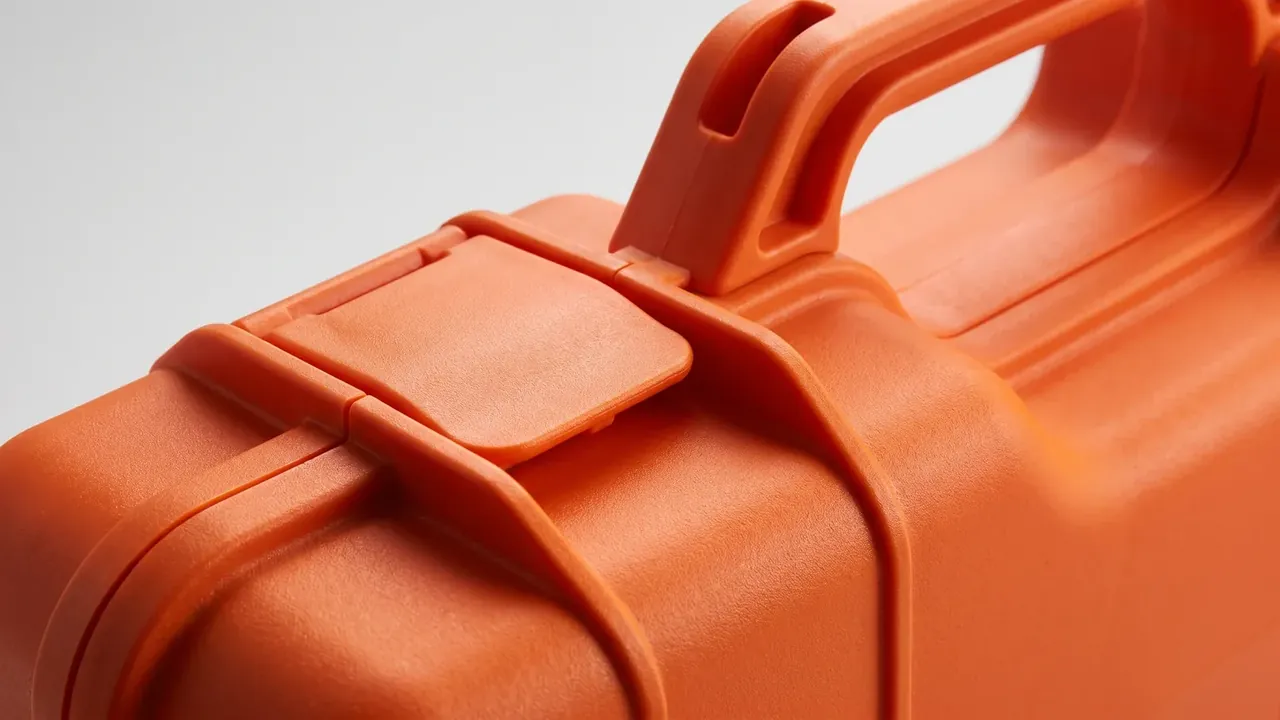
Three label types carry the count: 24 bay numbers on divider tops, one batch colour sticker in the lid, two strip numbers beside the latches. Numbers find parts, colour fixes the batch, strip numbers prove unsealing; mixed up, the count collapses.
The count runs in bands: strips and sticker 2 min, consumable bays 4 min, wear-part bays 6 min, specials 3 min, totalling 15 min. The wear band takes longest because four of its bays hold loose parts tallied singly.
The reject line sits at two pieces: one is corrected on the spot, two means a number or sticker has shifted and the next pick lands wrong. Position counts as much as quantity: a part from bay 12 sitting in bay 15 matches the total and still registers. An Equipment After-Sales Service Tool Case pairs each number with one part name and counts stickers rather than memory.
5. Spare-part setting for a service batch
Four settings line up before a case joins a fleet: bay count, load, cycles, count difference, all off one case; a unit missing an entry goes back for refitting.
| Setting item | Value | Reject line |
|---|---|---|
| Spare-part bays | 24 | under 22 |
| Load | 16 kg | 17 kg |
| Open-close cycles | 7000 | 1.0 mm handle-root play |
| Count difference | within 2 pieces | 2 pieces |
Empty weight 8.4 kg, the 16 kg load and a 600 km day go on a card that travels with the case, not the engineer. The card on an Equipment After-Sales Service Tool Case records shell figures only; service scope and claim terms stay off it.
Release runs case by case: count bays, weigh load, read the cycle log, record the difference; a reading on its line parks that case at the depot.
Conclusion
A fleet keeps an Equipment After-Sales Service Tool Case running for a year on three things: 24 bays counted clean, two strips resealed inside 30 min, a count done in 15 min. A 4.4 mm wall takes the 600 km day, the 16 kg load leaves 0.2 kg for pulled parts, and strip eyes stay under 0.5 mm of growth across 7000 cycles. Two pieces of difference, 1.0 mm of handle-root play or fewer than 22 bays parks that case at the depot. JUNZHIJIA keeps unsealing records by service batch, and drawing tolerances on the travel card are issued by Kexin New Materials (Guangdong) Co., Ltd.
Related Reading
- Aviation maintenance tool case guide: line tools and parts
- Automotive vehicle tool cases: on-board tools and tyre kits
- Assembly line tool case: fixed positions and shift handover
- Plastic case versus wooden crate: cost and service life
Related Products
- 8 Series — Gun Cases; Military Equipment Cases; Camera Equipment Cases; Drone Cases; Watch Cases; Knife Cases; First Aid Cases; Electronics Equipment Cases
- WL8-2812 PP Gun Case — model WL8-2812
- All protective cases and toolboxes: 7 series, 158 models