

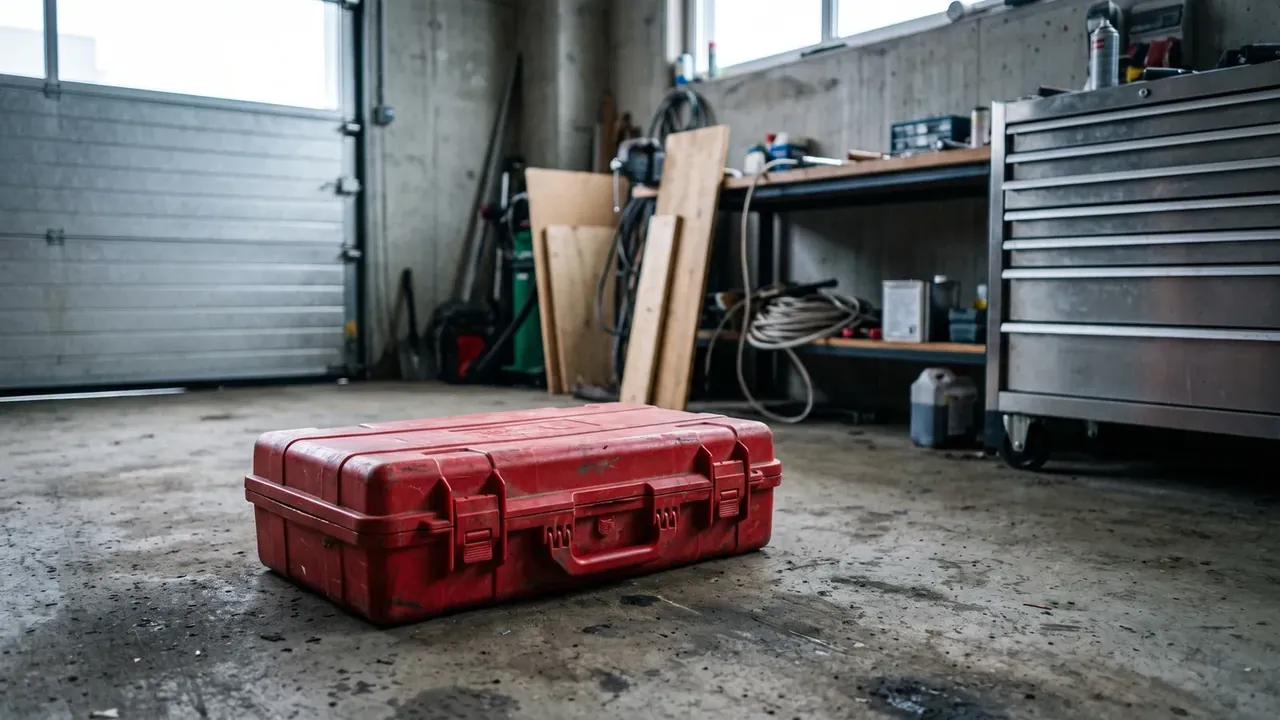
Quick answer: EV Charger Maintenance Tool Case design starts at 1000 V: live parts in one bay, bare metal in another, desiccant holding 45 percent RH.
Table of contents
- Why the Case Splits at 1000 V
- CAT III Tooling and a Six-Month Retest
- Gloves and Two Desiccant Boxes
- Five Minutes of Discharge, Three Checks
- Holding Storage Below 45 Percent RH
- FAQ
1. Why the Case Splits at 1000 V
An EV Charger Maintenance Tool Case is laid out around one constraint: 1000 V of live metal and a handful of bare spanners must never share a bay.
1000 V is not a marketing figure: DC fast chargers run the bus to 1000 V, and an 800 V vehicle under service still arcs across a 20 mm gap. The same box holds clips and a meter for the terminals, and a 13 mm spanner that must not go near them.
A short needs no long tool. Terminals sit 20 mm apart, a 150 mm spanner rolls 80 mm inside an open cavity, and the circuit closes itself. Divide the cavity and it never starts.
| Bay | Holds | Divider | Reason |
|---|---|---|---|
| Live side | Clips, tester, meter | 3 mm PP, 60 mm high | Touches terminals, travels alone |
| Insulated tools | Insulated spanner, pliers, glove bag | Separate lid, no shared cavity | Insulation hates scratches and oil |
| Hand tools | Spanner, hex keys, drivers | 8 mm air gap to the next bay | The only place bare metal lives |
The 3 mm wall stands 60 mm high, 90 mm below the longest spanner so nothing snags, and 20 mm above the insert face so a rolling tool stops against it. Each bay of the EV Charger Maintenance Tool Case opens on its own, and nothing slides across when one lid lifts.
2. CAT III Tooling and a Six-Month Retest
Inside an EV Charger Maintenance Tool Case, CAT III 1000 V describes a measurement location rather than the strength of a tool body. IEC 61010 sorts locations from CAT I to CAT IV, with CAT III covering distribution boards and fixed installations, where 1000 V is the highest working voltage. A meter marked CAT III 1000 V may be connected there; that says nothing about its shell surviving 1000 V.
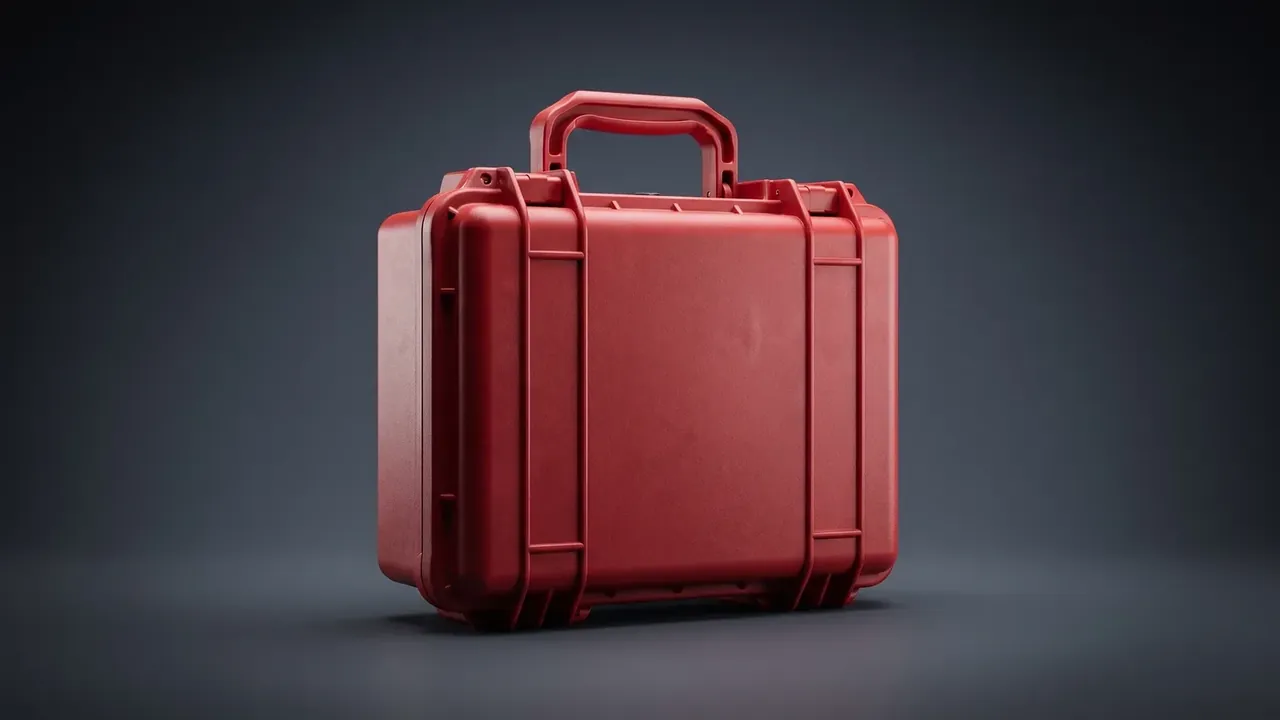
Insulated hand tools answer to a different document. IEC 60900 covers insulated, fully insulating and hybrid tools rated to 1000 V AC and 1500 V DC, and a compliant tool carries 1000 V plus its year of manufacture.
The six-month retest targets ageing, not dirt: rubber absorbs ozone, UV and repeated flexing for half a year, and breakdown falls while the surface still looks new.
| Item | Interval | Pass criteria | Record |
|---|---|---|---|
| Surface check | Before each use | No cut, crack, hole or embedded grit | Tick on the glove bag |
| Proof test | 6 months | No puncture, no flashover, no heating | Date card inside the case |
| Size and elasticity | 6 months | No hardening, no tackiness, no set crease | Logged with the proof test |
| Marking | 6 months | 1000 V and year still legible | Illegible means scrap |
An expired item should not wait inside an EV Charger Maintenance Tool Case. A glove past its date gets picked up on the next call-out, so the layout makes expiry awkward.
3. Gloves and Two Desiccant Boxes
Class 0 gloves suit 1000 V and are stored flat in an EV Charger Maintenance Tool Case. A crease is where leakage begins, and a folded cuff is the first part to fail a proof test. Keep them dark, away from ozone, in their own bag with the mouth up and nothing on top.
The 2 desiccant boxes have separate jobs: one in the glove bay corner, one at the meter bay base. Fifty grams of colour-indicating silica apiece, six 4 mm holes in the lid, and a 30 litre cavity drops from 60 to below 45 percent RH in about 8 hours.
Replace on colour change, never later than 3 months. Spent silica revives at 120 C for 2 hours, though after three cycles the uptake falls away and a fresh box costs less than a failed test.
Placement beats quantity in an EV Charger Maintenance Tool Case. A box under the insert dries only its own pocket, and a box resting on the tools leaves with whoever opens the lid first.
4. Five Minutes of Discharge, Three Checks
The order inside an EV Charger Maintenance Tool Case is fixed: isolate and lock, wait 5 minutes, prove dead in three steps, then bond the earth. A 120 kW charger holds enough bus capacitance that decay from 1000 V takes minutes, and most manuals quote 5.
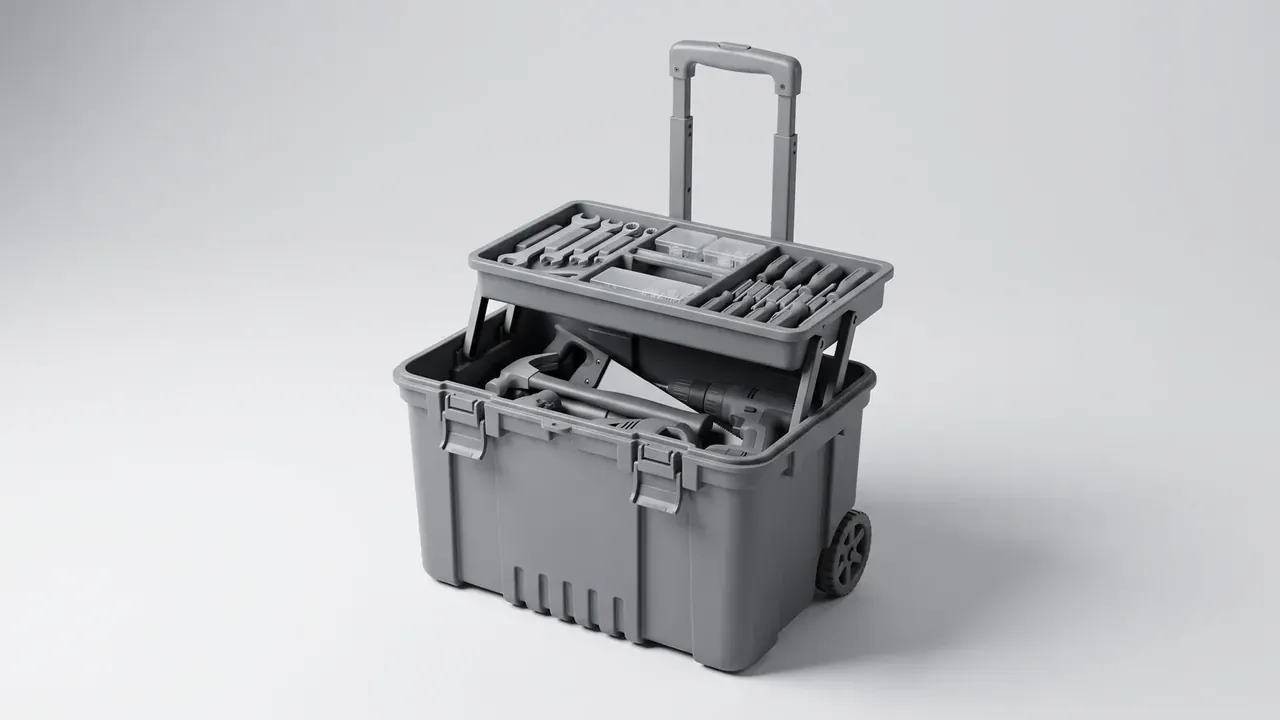
Three checks, three jobs. First, prove the tester against a known live source. Second, test pole by pole: positive to earth, negative to earth, positive to negative, each near zero. Third, prove the tester again, because a dead instrument makes the first two readings worthless.
| Step | Action | Time | Criterion |
|---|---|---|---|
| 1 | Isolate, tag, lock | Immediate | Breaker visibly open |
| 2 | Let the bus discharge | 5 minutes | Timer runs out |
| 3 | Prove the tester | 30 seconds | Audible and visual response |
| 4 | Test three pole pairs | 2 minutes | All three near zero |
| 5 | Re-prove, then bond earth | 1 minute | Response holds, bond sound |
Never reverse the order: bonding before proving puts the tester on a potential that is already pulled down, so the reading is safe and the bus is unknown. An EV Charger Maintenance Tool Case keeps tester and earth lead in one bay so the steps run in sequence.
5. Holding Storage Below 45 Percent RH
Insulation in an EV Charger Maintenance Tool Case takes up moisture without announcing it. Two weeks in an 80 percent RH store can cost a glove a decade of surface resistance while the proof test still passes, and the leakage shows up first as a reading that drifts.
Below 45 percent RH is the cheapest line to hold: a 20 C room, no hot air, a six-spot humidity card taped inside the lid, read weekly, and the desiccant swapped once the card passes 50 percent RH.
Three habits do the work: read the card, dry the tools, keep paper out. A checklist left inside can lift internal humidity 10 percentage points in a quarter.
Three figures hold an EV Charger Maintenance Tool Case together: a 60 mm divider, 2 desiccant boxes and 3 proving steps. With all three in place, one case carries three years of 1000 V work.
Related Reading
- ESD resistance and decay
- Gasket materials and weather
- Usable cavity and corner loss
- Handle load and two-person lift
JUNZHIJIA
Related Products
- 8 Series — Gun Cases; Military Equipment Cases; Camera Equipment Cases; Drone Cases; Watch Cases; Knife Cases; First Aid Cases; Electronics Equipment Cases
- WL8-2812 PP Gun Case — model WL8-2812
- All protective cases and toolboxes: 7 series, 158 models