

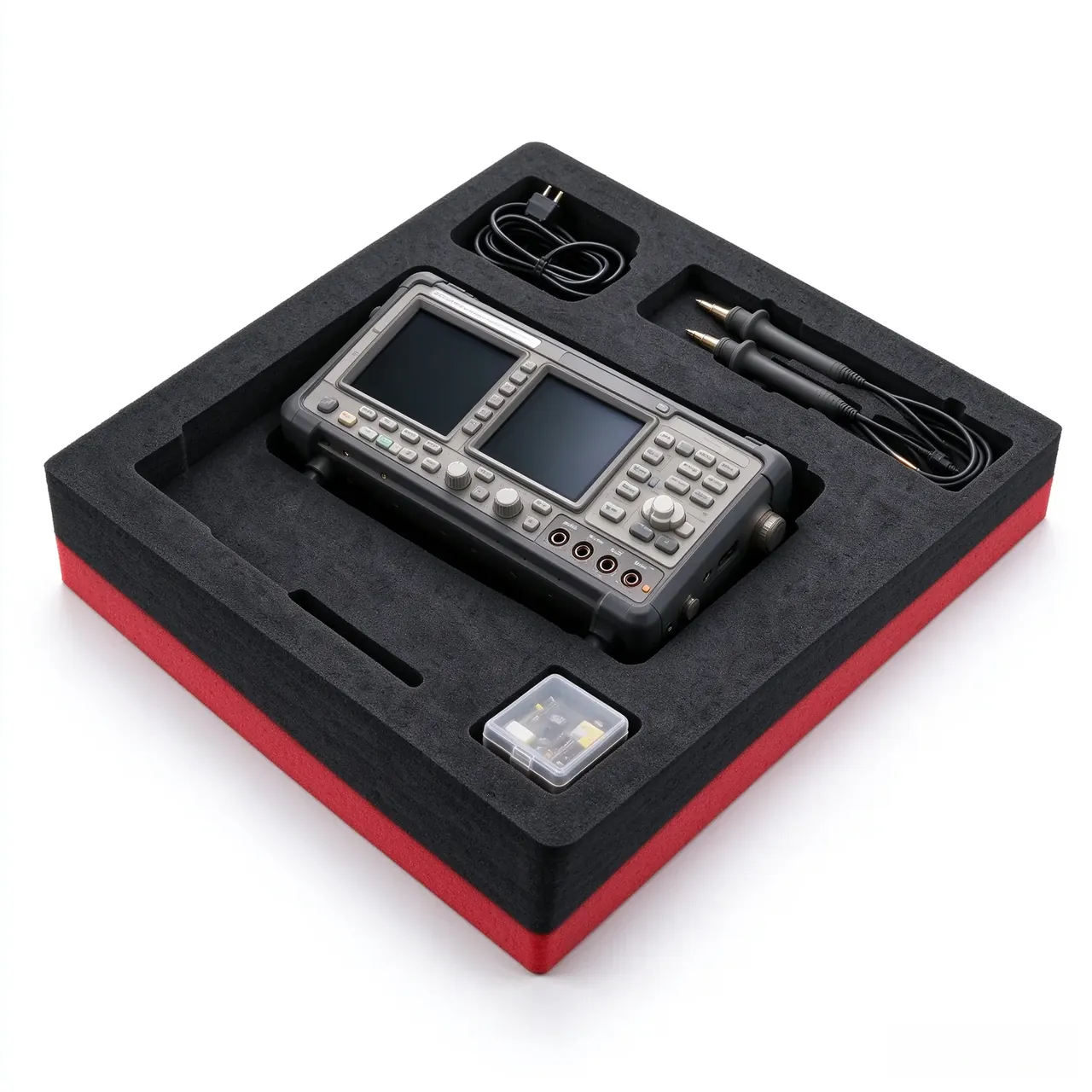
Quick answer:EVA Lining Design for Instrument Cases starts at cavity depth: 38 kg/m3 foam at 30-35 Shore A, 20/30/40 mm layers, a 0.5 mm kerf and 10%-15% compression.
Table of contents
- Layer Stack and Density
- Cavity Depth and Exposure Ratio
- Die Kerf and Cut Tolerances
- Top Wrap and Bottom Cradle
- Finger Pockets and Loading Order
- FAQ
1. Layer Stack and Density
A lining is either right or wrong, and one lift tells you which: shake the loaded case by its handle. Movement rarely comes from the latches but from the layer order, where the top sheet picks the slot and the bottom sheet decides how hard the instrument is pinned.
EVA Lining Design for Instrument Cases usually means two sheets bonded together. The top runs 30 mm and is cut to the outline; the bottom runs 20 mm and stays solid, so the mass sits over foam that will not collapse on a lift.
Density sits at 38 kg/m3. EVA comes between 25 and 45 kg/m3, and the middle-upper band is where cavity walls survive years of metal pushing at them. Below 30 the wall rounds over; at the top the sheet stiffens and thin edges chip. Hardness of 30-35 Shore A is the same material seen from the other side.
| Layer | Thickness | Density | Job |
|---|---|---|---|
| Top sheet | 30 mm | 38 kg/m3 | Cut to outline, holds the part laterally |
| Bottom sheet | 20 mm | 38 kg/m3 | Solid cradle, absorbs vertical load |
| Thin shim | 5-10-15 mm | 38 kg/m3 | Fills the gap under the lid |
EVA Lining Design for Instrument Cases begins with a batch test: clamp a sample at 25% for 24 h at 23 C and release it. Below 95% recovery, the batch will thin under a cradle.
2. Cavity Depth and Exposure Ratio
EVA Lining Design for Instrument Cases cuts the cavity to 60%-70% of instrument height. A 100 mm instrument gets a 60-70 mm pocket and shows 30-40 mm above the foam, and that band is what people touch: panel, connectors, handle, display.
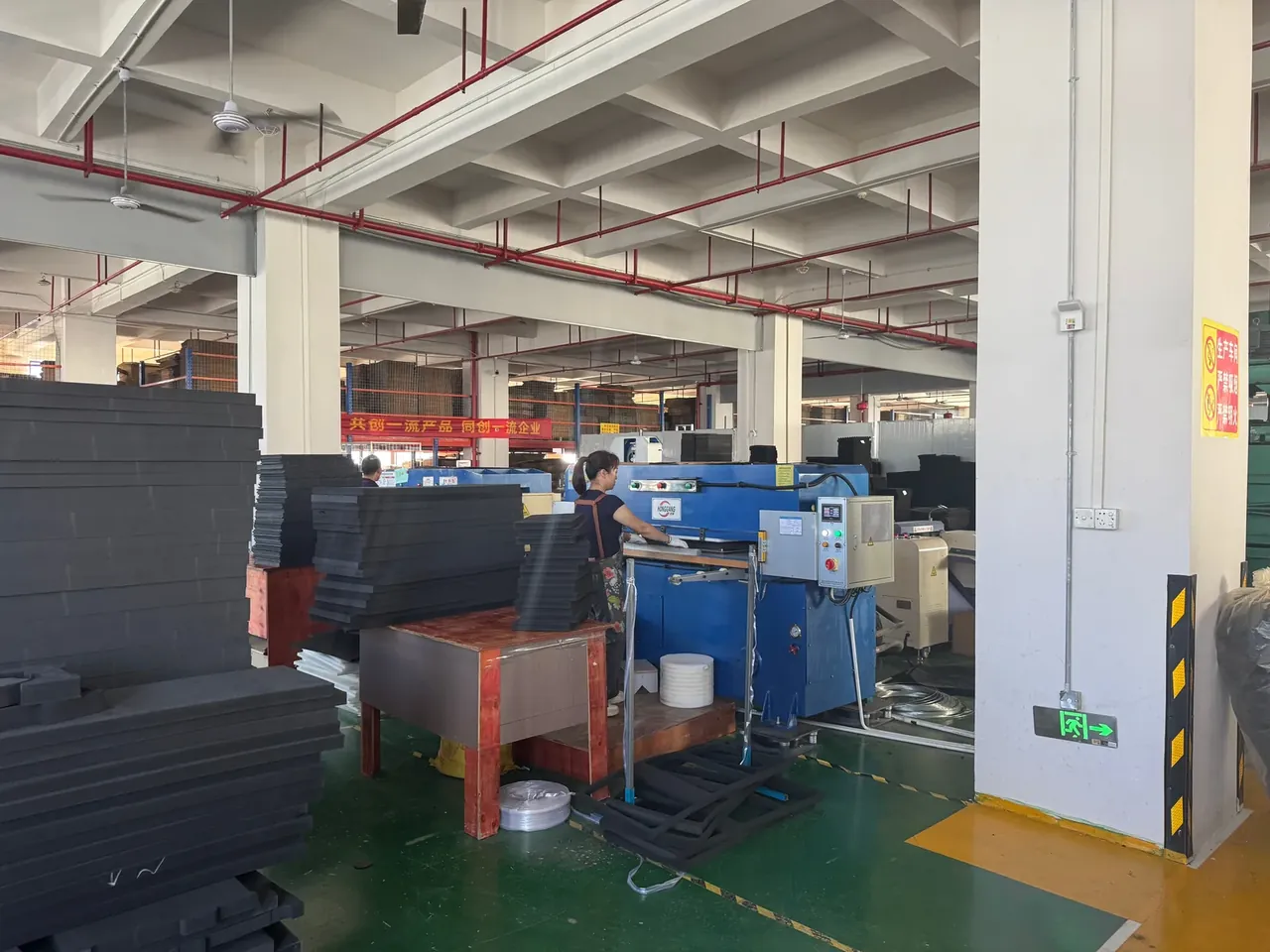
EVA Lining Design for Instrument Cases reads exposure ratio as lateral restraint. Toward 70% the wall wraps more of the instrument, which kills movement but turns extraction into a vertical pull against friction; toward 60% the upper half floats on lid foam and rocks once that foam softens.
A sloped front panel needs its own allowance. A wall cut vertically against a 5-10 degree slope leaves a wedge gap, and past 1.5 mm the instrument slides toward the slope. Relieve the wall along the angle so the whole edge touches at once.
| Cavity depth | Exposed height | Comes out | Best for |
|---|---|---|---|
| 60% | 40 mm | Fingers on the rim | Panels used daily |
| 65% | 35 mm | Pocket plus rim | General work |
| 70% | 30 mm | Pocket mandatory | Tall, top-heavy units |
EVA Lining Design for Instrument Cases also answers to inner height. Whatever is left after the cavity belongs to the lid foam; leave too little and vibration travels into the cavity floor, the first place to wear through.
3. Die Kerf and Cut Tolerances
The kerf is the width of material a die displaces, 0.5 mm for EVA at these thicknesses. Draw the cavity long by one kerf and the cut lands back on size, half a kerf per side; skip it and the instrument is forced in and the wall grinds.
In EVA Lining Design for Instrument Cases, cut tolerance of plus or minus 0.5 mm governs position rather than size. A cavity 0.5 mm off centre puts the mass 0.5 mm off the case centre, and the case hangs to one side on every carry.
Radius all four corners at 5 mm or more so the die does not pack material into a point. A sharp corner cracks first, and the crack climbs until it reaches the 5 mm scrap limit.
The reject rule reads: if the instrument rocks more than 1.5 mm side to side, or a pocket tears more than 5 mm, the lining goes back for a new die. Both are measured, with a feeler gauge and a steel rule.
| Item | Governs | Symptom | Fix |
|---|---|---|---|
| Kerf, 0.5 mm | Pocket size | Part forced in | New die or drawing |
| Cut tolerance 0.5 mm | Pocket position | Case hangs sideways | Recut the die |
| Cavity depth, 60%-70% | Restraint and exposure | Rocking, or no grip | Shim or re-cut |
4. Top Wrap and Bottom Cradle
EVA Lining Design for Instrument Cases relies on compression to join the sheets. With the instrument pressed into the top cavity, 10%-15% compression is left between its base and the 20 mm bottom sheet. Less than that and it floats; more and extraction takes two hands.
Bond with glue dots rather than a full coat, because a fully glued lining tears fibres off the bottom sheet and never bonds again. Dots around the perimeter with one at each corner keep the sheets registered. Layer shift, not cavity error, is most of the rework.
In EVA Lining Design for Instrument Cases the cradle must step around the ribs moulded into the floor. A rib raises a hard line, the foam above compresses locally, and a flat-based instrument wears a mark along it. Cut relief slots wider than the rib.
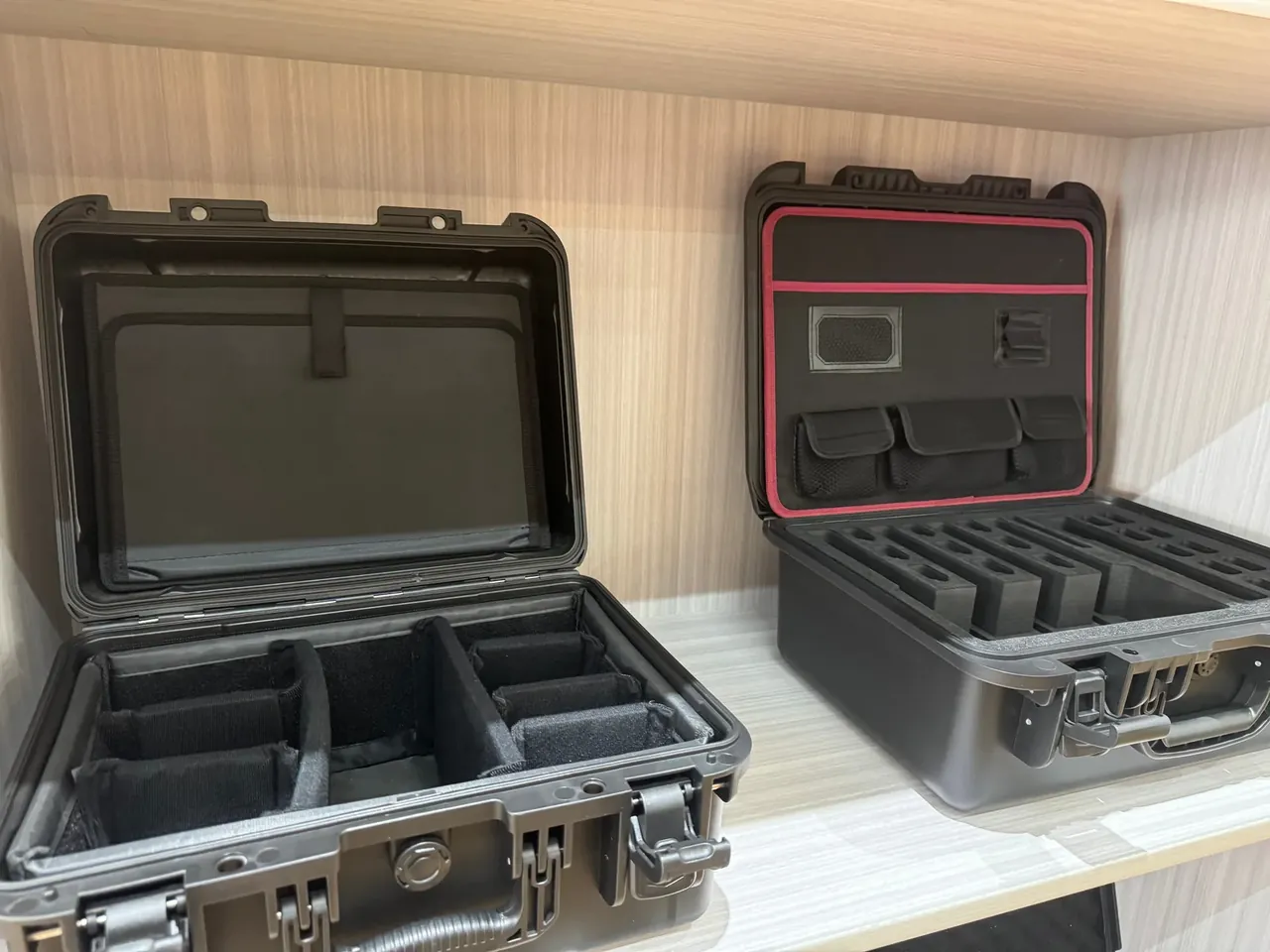
EVA Lining Design for Instrument Cases keeps the split flexible: tall heavy units take a 40 mm top, wide flat ones a thicker bottom. The total still has to match inner height.
5. Finger Pockets and Loading Order
EVA Lining Design for Instrument Cases cuts one pocket for the hand. Make it a half circle wide enough for two fingers and deep enough to reach the middle of the side wall, so the pads carry the pull instead of the tips.
Position beats size. A pocket at the middle of a short side keeps the wrist straight on a one-handed lift; at the ends of a long side it needs both hands. Smooth the inside wall, because a die burr starts a tear after a few dozen lifts.
Assembly follows a fixed order: lay the cradle and press the corners flat, seat the instrument from the pocket side, then bring the top down and press outward from the centre.
EVA Lining Design for Instrument Cases fails when that order is reversed: the top is already stuck in the lid, so the instrument goes in at an angle and opens the corner radius that tears first.
Related Reading
- Cavity specifications and drawing essentials for EVA inserts
- Where 5-10-15 mm shim foam belongs
- Foam and dividers sharing one case
- Usable volume: interior, corners and usable ratio
JUNZHIJIA
Related Products
- 8 Series — Gun Cases; Military Equipment Cases; Camera Equipment Cases; Drone Cases; Watch Cases; Knife Cases; First Aid Cases; Electronics Equipment Cases
- WL8-2812 PP Gun Case — model WL8-2812
- All protective cases and toolboxes: 7 series, 158 models