

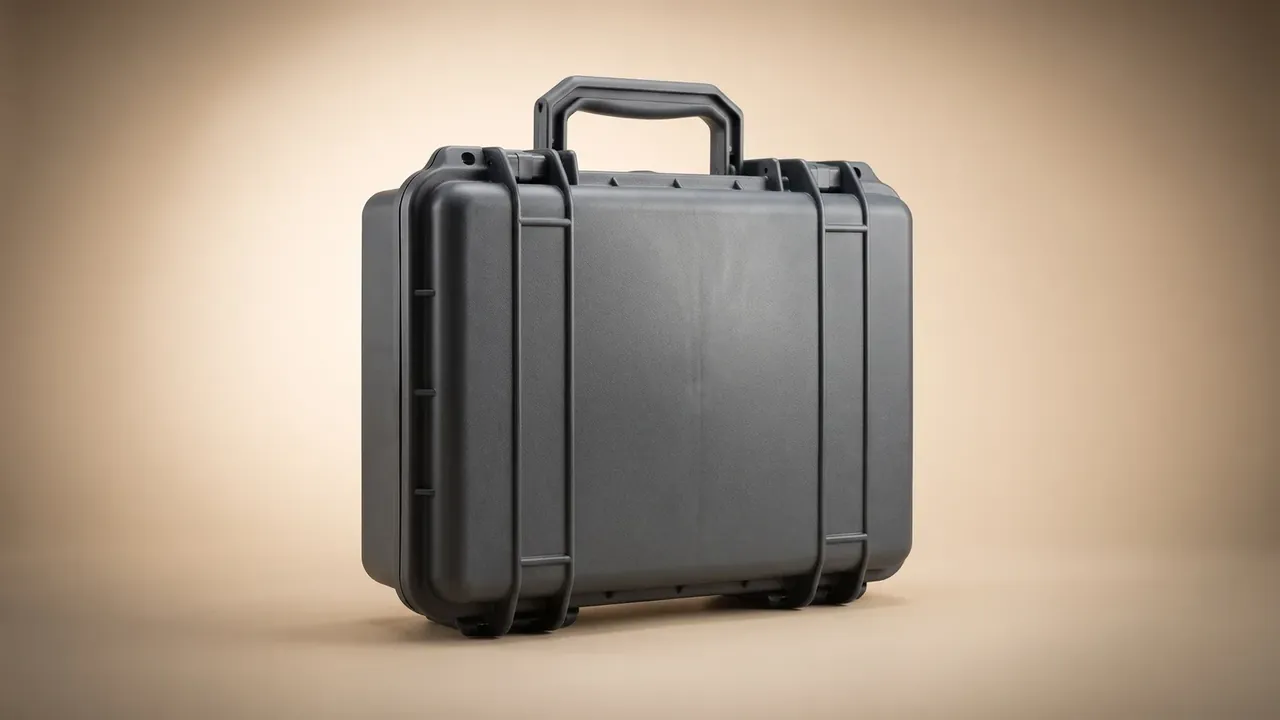
Quick answer: Where an explosion-proof case is mounted matters more than how thick its wall is. Side-standing on a mine truck, strapped off the floor at a depot, clamped to a bench, second-locked in a van: each position carries its own actions. A vent face aimed at people is the commonest error.
Table of contents
- The Inverted Position on a Mine Truck
- Fuel Depots: Standing Off the Floor, Strapping and Earthing
- Lab Benches: Bolting Down and Cable Exits
- Vehicles and Vessels: Vibration, Stacking and Second Locks
- Three Mistakes That Cross Every Site
- FAQ
1. The Inverted Position on a Mine Truck
A mine inspection truck cabin is 1.8 m wide. Lay a case flat and half the walkway is gone.
The crew stands the explosion-proof case on its side against the left panel, lid to the aisle, base up, so the vent face points at empty wall.
Turning a case means choosing which face stays clear, then holding that choice with hardware.
| Position | Fixing | What it buys | Field risk |
|---|---|---|---|
| Side standing on panel | Steel plate, 8 x M6 | Vent face clear, aisle regained | Two hands to open |
| Flat on floor | Corner straps | Fast access, easy loading | Lid buried by gear |
| Tailgate rack | Slot and pin | Off in one move | Pin wear makes it rock |
Eight M6 bolts clamp the case to a 4 mm steel plate welded to the cabin rib, base 450 mm off the floor so wash water and gravel pass underneath.
2. Fuel Depots: Standing Off the Floor, Strapping and Earthing
Most depot units never travel. They sit on a steel frame beside the unloading point, 100 mm off the ground, a metre of working space around.
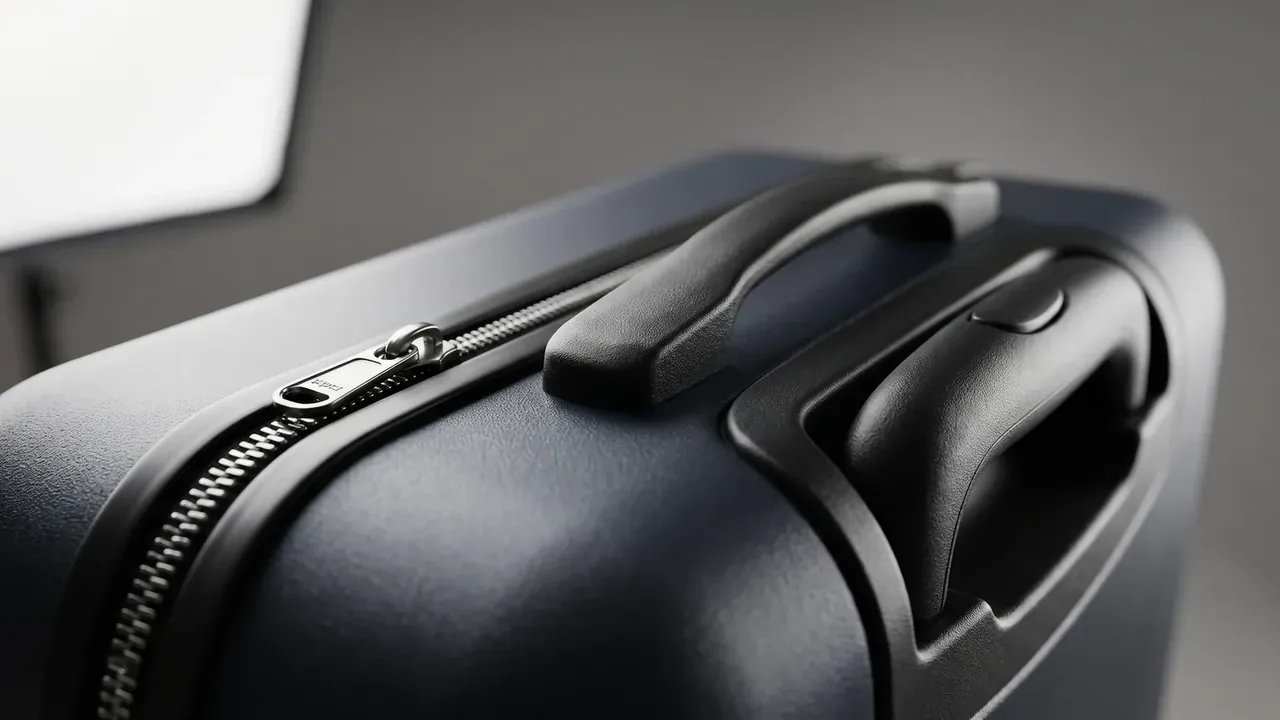
Raising the case is the step people skip. The floor carries oil and wash water; a rotomolded shell shrugs that off, hinges and bolts do not. Two 25 mm polyester straps run over the ribs, never across the lid seam, where a strap loads the gasket unevenly and lets water in at that patch. We tape the strap path onto the frame. Anyone re-strapping without the tape puts the band back over the seam. Audits make it the most repeated finding.
Earthing needs metal-to-metal contact. The shell is plastic, so the stud lands on a metal insert; a coating reads fine at commissioning and fails in three months. The lead is 4 mm², and the check takes two minutes: green oxide at the lug, a loose stud, then resistance.
The opening sequence is fixed: clip the earth, stand to the side, prop the lid at 100 degrees. At a depot the spark from a lid swinging shut is the real risk.
3. Lab Benches: Bolting Down and Cable Exits
On a bench an explosion-proof case usually holds one instrument, and the details stay small.
- Clamp with four corner brackets and M6 bolts into bench inserts. Do not drill the shell.
- Run cables out of a side gland, hole a tenth larger than the bundle, edges chamfered.
- Limit the hinge to 100 degrees so the lid clears the shelf above.
- Keep a loaded case under 25 kg; beyond that, split into two.
The third item gets lost. A shelf 300 mm above the bench is hit at 120 degrees, so the operator works with the lid half open and the gasket half compressed all day.
4. Vehicles and Vessels: Vibration, Stacking and Second Locks
Cabin temperature reaches 45 °C in summer; the shell softens, latch interference drops, and second locks exist for that reason.
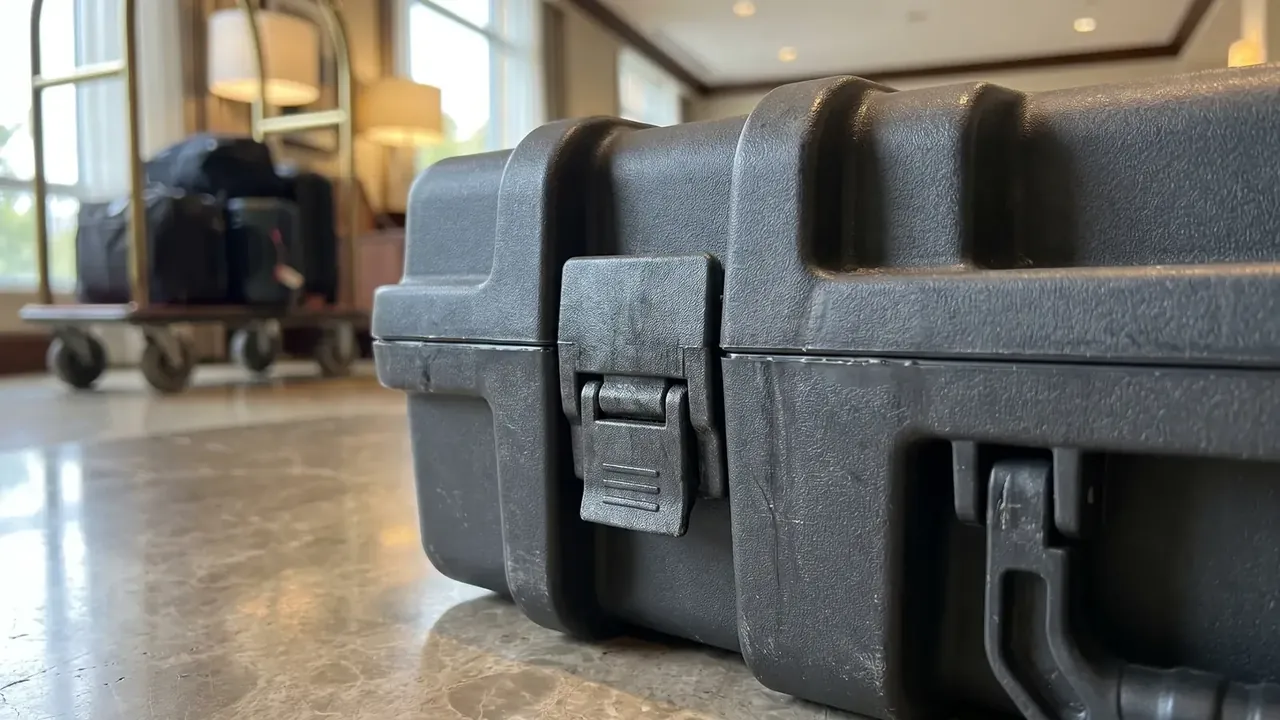
A second lock needs no engineering: a strap through the handle, a spring pin, or one small catch outboard of each latch. At sea, stainless springs and rivets — galvanised parts show white rust within three weeks.
Stacking depth follows the side wall. Four empty units is the ceiling, with a 12 mm plywood sheet between layers.
| Mode | Anchor points | Second lock | Recheck |
|---|---|---|---|
| Box van | Floor track and straps | Strap through handle | Before each trip |
| Open truck | Four-corner lashing and tarp | Spring pin | Daily |
| Vessel | Lashing plus wood wedges | Twin small catches | Each voyage |
5. Three Mistakes That Cross Every Site
Sort the return notes from all four sites and only three mistakes repeat. None needs a drawing change.
- Treating the handle as an anchor. It is a carry part; three months of strap tension turns the pin oval.
- Running a strap over the lid seam. Compression goes uneven, the gasket loses contact, water enters at that patch.
- Forgetting the opening envelope. Under 250 mm of headroom, the lid cannot reach a right angle, so people work with it half open.
All three are mounting decisions, fixable without a new mold.
Conclusion
Four sites, four mounting patterns, one question underneath: which face must stay clear, what presses on the lid, and where the person stands. Answer those and the position of an explosion-proof case is settled. A case mounted the wrong way cannot buy that clearance back.
This article discusses only the container (case body) side of specifications and design intent, and does not cover any handling, loading or use of the contents.
Related Reading
- What an explosion-proof case actually is
- Explosion-proof case versus a plain protective case
- How a dustproof case seals and breathes
- Desiccant and sealing logic in moisture-proof cases
Related Products
- 8 Series — Gun Cases; Military Equipment Cases; Camera Equipment Cases; Drone Cases; Watch Cases; Knife Cases; First Aid Cases; Electronics Equipment Cases
- WL8-2812 PP Gun Case — model WL8-2812
- All protective cases and toolboxes: 7 series, 158 models