

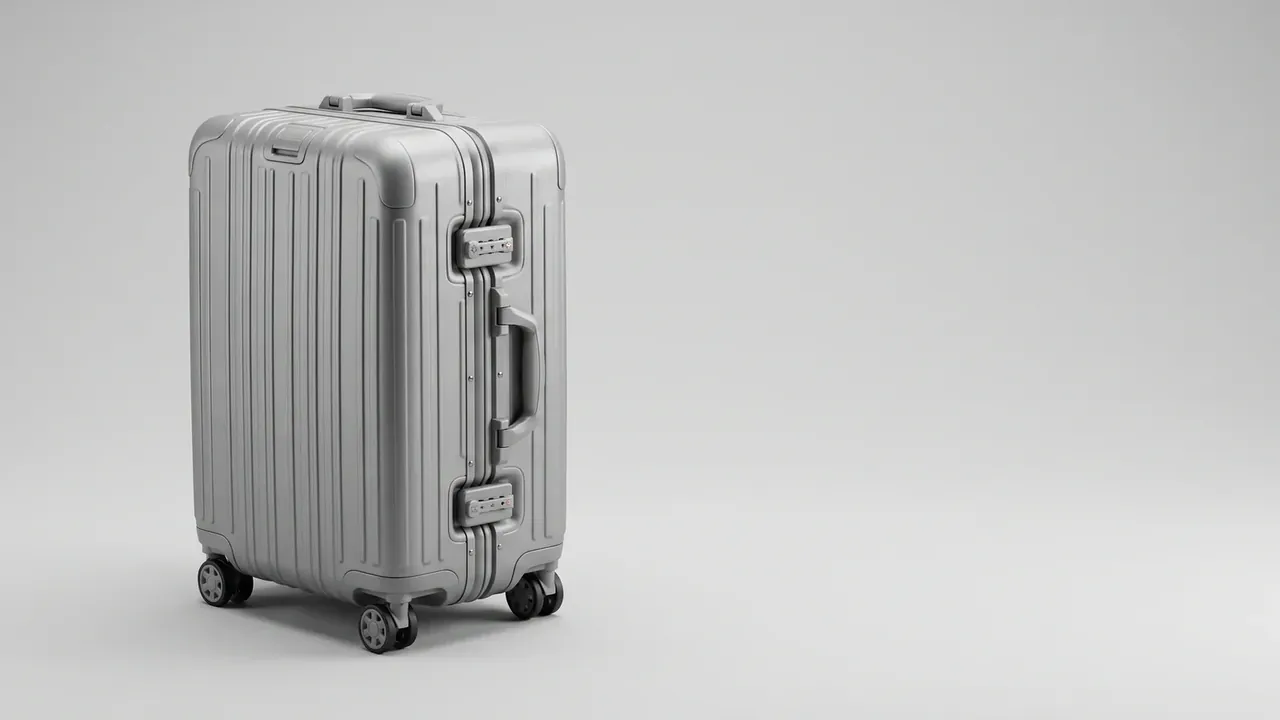
Quick answer: An explosion-proof case usually quotes at twice the price of a plain protective case, with the gap spread over an 8 mm double wall, one independent vent panel and six evenly spaced latches. Of six common duty cases, only two need that structure; the other four are cheaper and better served by different hardware.
Table of contents
- Where the 2x Price Sits
- Six Duty Cases, Only Two Need It
- The Four That Do Not: What to Buy Instead
- Wall Thickness and Vent Area: How Far the Saving Goes
- Three Costs Missing From the Quote
- Four Steps to Recover the Difference
- FAQ
1. Where the 2x Price Sits
A doubled quote means three items moved to dearer material, all measurable on a sample. A plain case carries a single 5 mm wall; an explosion-proof case uses a double 8 mm wall with 12 mm ribs. The vent panel is a separate 300 by 200 mm plate with a controlled opening value. Latches go from two plastic catches to six stainless ones at 240 mm, each marked 2.5 N·m.
| Cost source | Plain case | Explosion-proof case | Share |
|---|---|---|---|
| Wall, ribs | Single 5 mm, flat | Double 8 mm, 12 mm ribs | 40% |
| Vent panel | None | 300 by 200 mm, controlled | 35% |
| Latches, records | 2 plastic, sampled | 6 stainless, 240 mm, per unit | 25% |
Those rows carry nine tenths of the gap.
2. Six Duty Cases, Only Two Need It
Lay out the duty case first; the same box lands differently in different settings.
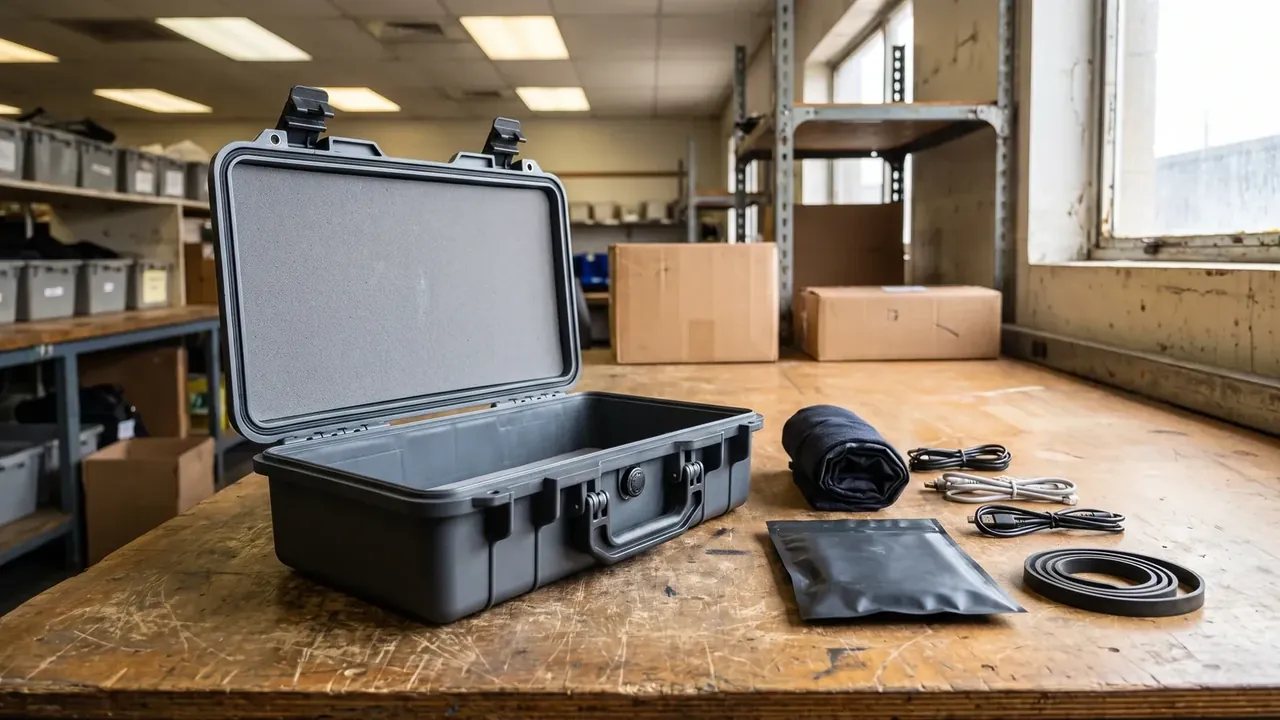
- A pressure source inside, vent direction shifting as the case moves: required, panel facing an empty side.
- Per-unit records and a permanent label: required, the paperwork is part of delivery.
- Above 120 litres: split into two 60 litre units.
- More than six openings a day: a hinged cabinet door outlasts a catch-and-lid design.
- Surface above 70 °C: a 1.5 mm stainless shell distorts less than plastic.
- Dust, water and impact only: a plain case is enough, and the panel adds a failure point.
The line sits in the first two rows. When either holds, no wall or gasket replaces that structure; when the last four hold, that margin is never used.
3. The Four That Do Not: What to Buy Instead
Each substitute moves the pressure duty off a single moulded shell.
| Duty case | Better structure | What changes | Saving |
|---|---|---|---|
| Above 120 litres | Two 60 litre cases | Ratio doubles, wall drops 1 mm | About 15% cheaper |
| Above six openings | Hinged door | Latches stop carrying load, 5000 cycles | Six catches drop out |
| Above 70 °C surface | 1.5 mm stainless | Salt spray 480 hours | Insert tooling drops out |
| Dust and water only | Plain case | Single 5 mm wall, 2 catches | Whole gap saved |
The first three still carry pressure, just somewhere better: two shells share the load, a door hands it to hinges and frame, metal relies on thermal stability. The fourth carries nothing and needs no exit.
4. Wall Thickness and Vent Area: How Far the Saving Goes
Eight millimetres matches the bulge a shell shows as pressure rises. With 12 mm ribs, section height does the work, since bending capacity climbs with its cube, so the wall can stop at 8 mm rather than 12 mm.
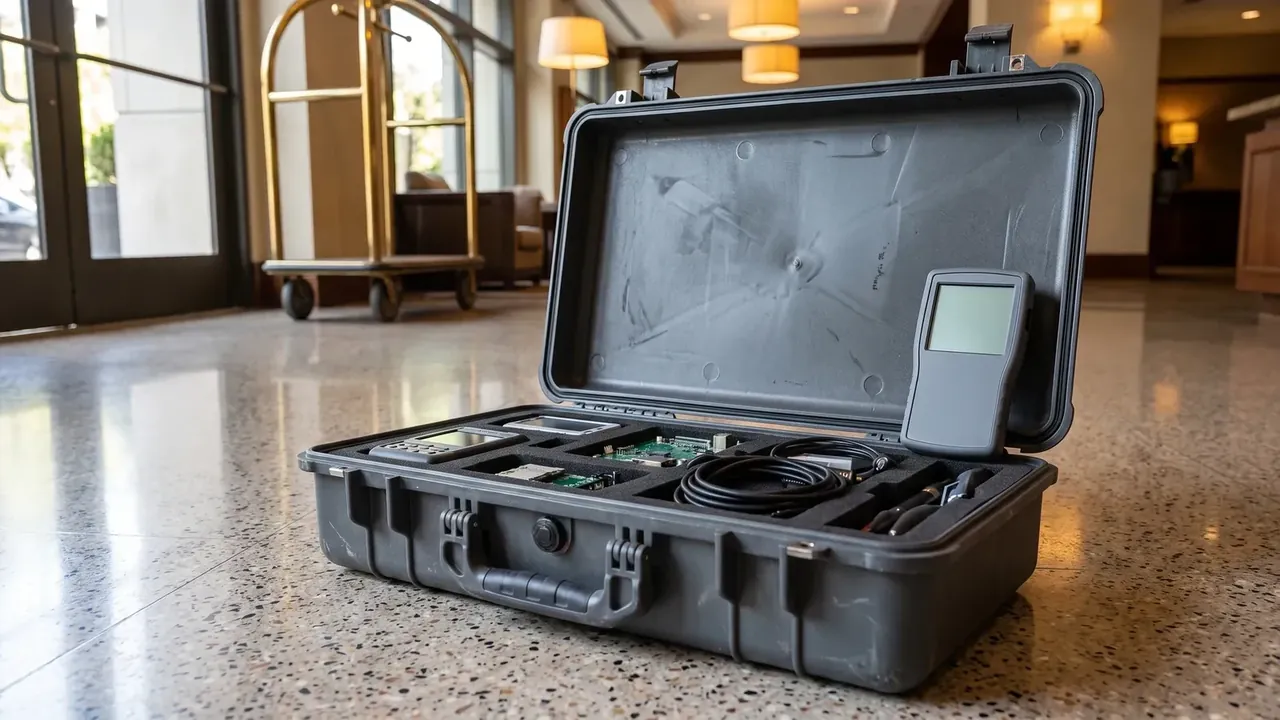
The panel chooses which face pressure leaves through. A 300 by 200 mm plate covers about a fifth of the side wall on a 1.2 m cavity, so the shell only survives the rise before the panel acts. Block it with a shelf and the panel stops existing. Six latches at 240 mm add four restraint points over two catches, and 2.5 N·m marked on each ends the guessing.
Saving exists only inside that set: three-high stacking under 120 kg allows a 7 mm wall, five high forces 16 mm ribs.
5. Three Costs Missing From the Quote
Tooling comes first: a vent plate needs its own insert, about 40% above a plain mould and near CNY 26,000, so below 200 units it outweighs the wall.
Inspection is second, at roughly 12 minutes a unit once wall, torque and panel gap are measured one by one. Lead time is third: 45 days against 20, and the 25 between them is stock capital. None shows in the unit price, yet all three decide what an explosion-proof case costs.
6. Four Steps to Recover the Difference
First, ask about the pressure source. If it can pressurise in normal use or in a fault, the cheap option stops being one.
Second, ask about the exit. Which face does the panel point at, and can that direction stay clear? If not, change structure.
Third, ask about records. Per-unit files push the requirement onto panel area, latch spacing and torque marks.
Fourth, ask about price. For the explosion-proof case, compare wall, panel area, latch count and lead time, four items and nothing else.
Conclusion
The price gap in an explosion-proof case sits in three visible places, and whether they earn their keep depends on the duty case, not the budget. Two of six situations need it; the rest are better served by smaller units, a hinged door, a stainless shell or a plain case. Settle pressure source, exit direction and record demand first, and the answer follows for any explosion-proof case.
This article discusses only the container (case body) side of specifications and design intent, and does not cover any handling, loading or use of the contents.
Related Reading
- Venting, flameproof shells and body strength
- How pressure relief differs from a plain protective case
- Material options and wall choice for cartridge boxes
- Industry requirements side by side
- Hard shell suitcase materials and rotomoulding
Related Products
- 8 Series — Gun Cases; Military Equipment Cases; Camera Equipment Cases; Drone Cases; Watch Cases; Knife Cases; First Aid Cases; Electronics Equipment Cases
- WL8-2812 PP Gun Case — model WL8-2812
- All protective cases and toolboxes: 7 series, 158 models