

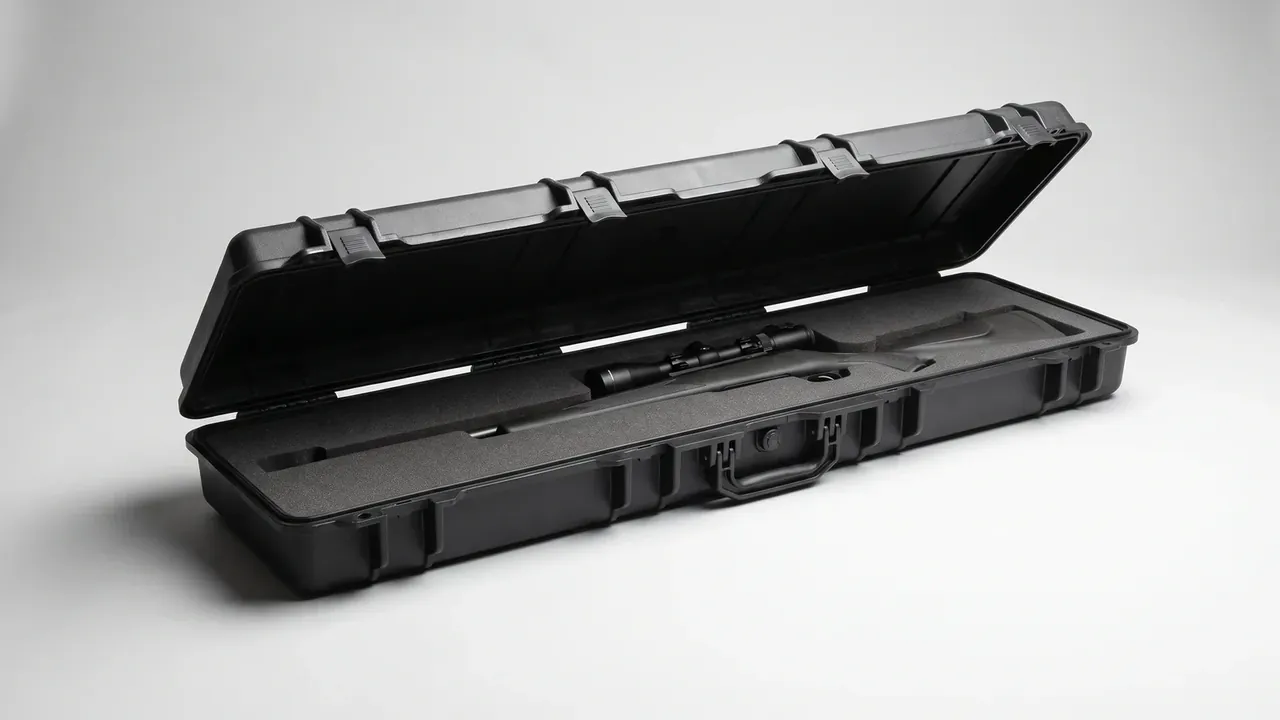
Quick answer: A specification is derived, not copied. Load inputs set the cavity, the cavity sets thickness, and thickness sets cost. The extra 280 per unit pays for 2.7 mm of deflection, not for the number 9.5.
Table of contents
- Where the Load Comes From: Three Inputs for an Explosive Container
- Cavity First, Wall Thickness Second
- Ribs and Lid: How the Wall Is Distributed
- From Derivation to Drawing and Quote
- FAQ
1. Where the Load Comes From: Three Inputs for an Explosive Container
The first line of an Explosive Container spec sheet is a load, not a dimension. Three inputs feed it: mass per item at 26 kg, 4 items per case, and a 4-high stack. Payload lands at 104 kg, and 22 kg of foam and dividers bring the full load to 126 kg.
Stacked 4 high, the bottom lid of an Explosive Container carries 378 kg from the three above, and a 1.5 dynamic factor lifts design load to 567 kg. That figure, not the words "holds 100 kg", is where wall calculation starts.
| Input | Value | Source | Lands on |
|---|---|---|---|
| Mass per item | 26 kg | 10 weighings | floor panel |
| Items per case | 4 | packing drawing | cavity length |
| Stack height | 4 high | 1.6 m shelf pitch | lid and walls |
| Dynamic factor | 1.5 | class 3 road | latches |
Drop one stack tier and the wall falls to 8 mm, saving 9% and buying a 4 mm sag in 6 months.
2. Cavity First, Wall Thickness Second
Cavity is back-calculated from the item envelope: 1240 mm by 470 mm by 355 mm, plus 15 mm of handling clearance each way. Floor area is 0.58 m², so 567 kg becomes 977 kg/m².
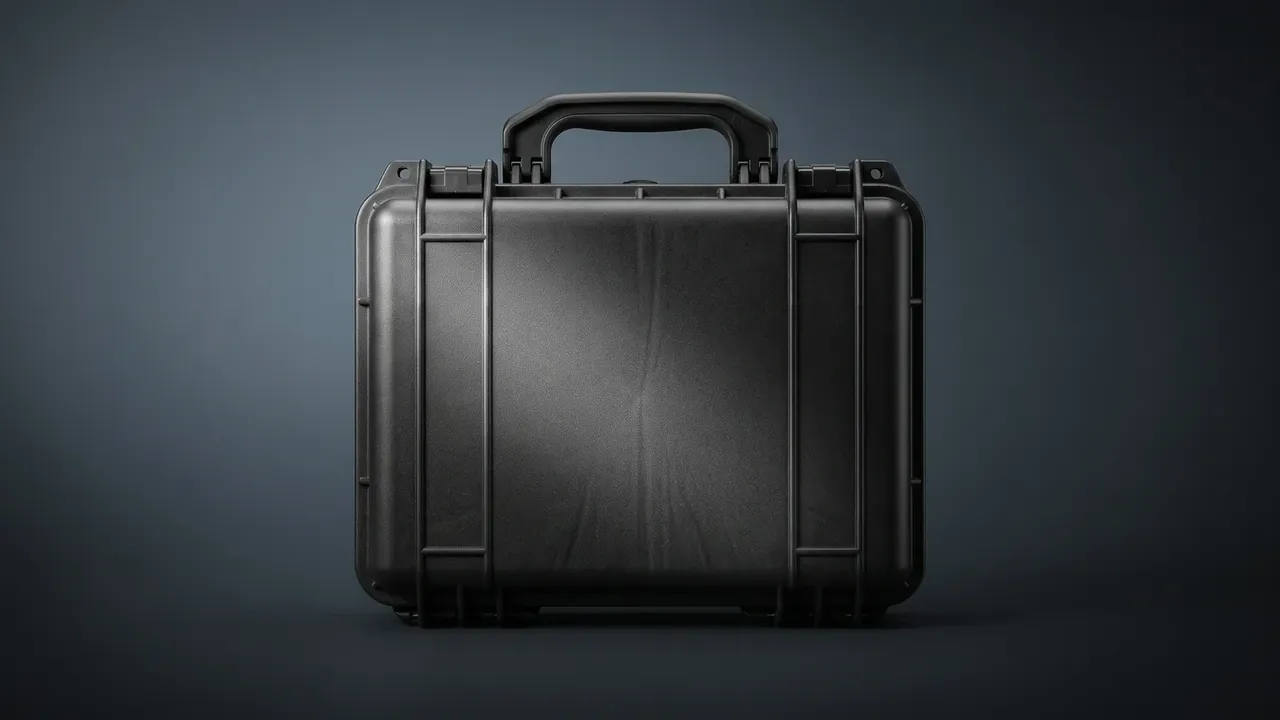
As a simply supported plate, an 8 mm wall at a 470 mm span deflects 4.6 mm, past the 3 mm limit; 9.5 mm returns it to 2.7 mm. Beyond 3 mm the gasket loses 0.6 mm of compression and water starts at that gap.
| Cavity length | Wall | Rib pitch | Empty mass | Unit cost |
|---|---|---|---|---|
| 900 mm | 7.5 mm | 150 mm | 38 kg | 1,180 |
| 1240 mm | 9.5 mm | 180 mm | 53 kg | 1,460 |
| 1500 mm | 11 mm | 200 mm | 68 kg | 1,890 |
| 1800 mm | 12.5 mm | 220 mm | 82 kg | 2,320 |
Another 180 mm of cavity needs 1 mm more wall: 9% more cost.
3. Ribs and Lid: How the Wall Is Distributed
Ribs beat thickness for stiffness: 12 mm tall at 180 mm pitch with a 3 mm root radius raises inertia 2.4× for 6% more mass.
The lid of an Explosive Container is figured alone. An 8 mm panel with 2 cross ribs and a 60 mm boss lifts crush resistance from 210 kg to 340 kg. In one build the floor runs 9.5 mm, the lid 8 mm and the walls 9 mm, so each is called out on the drawing; the lid is thinner because it sees stack load, not drop impact.
Three hinges carry 210 kg each, two latches hold 6 kN, and two 40 mm vents give 2,512 mm² of free area, 80 mm clear of the latch zone.
4. From Derivation to Drawing and Quote
The Explosive Container drawing runs 5 views with ±0.5 mm on critical dimensions and 1.5 mm per metre flatness. A twisted corner puts the 4-high stack onto one edge.
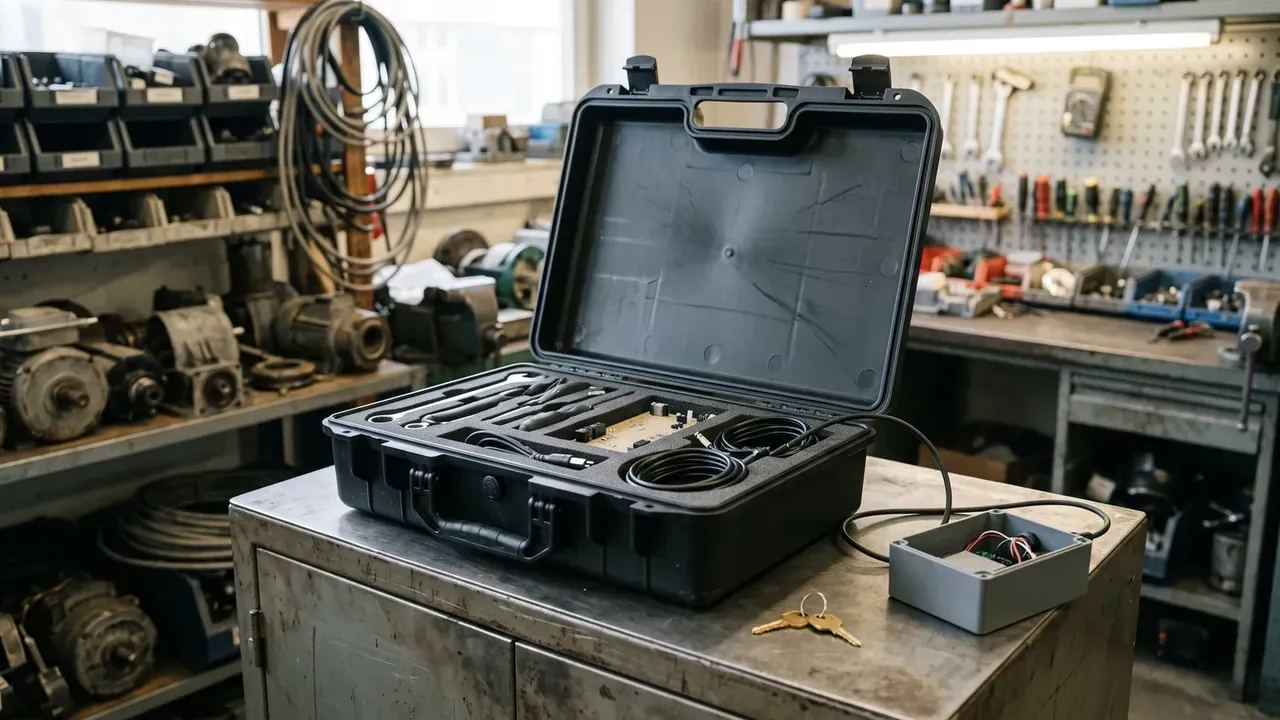
Cost splits into material 58%, tooling 12%, conversion 20% and finishing 10%. Minimum order is 200; tooling is 80,000 over 300,000 shots with ownership in the contract; lead time 35 days with 5 for first article.
Taking an Explosive Container wall from 7.5 mm to 9.5 mm adds 280 per unit, or 0.03 per use across 9,600 cycles in 8 years. Saving that 280 buys a full lot rework inside 6 months.
The output is a signable sentence: at 4-high stacking and 1.5× load, this Explosive Container deflects 2.7 mm at the lid and costs 1,460.
Conclusion
Load sets cavity, cavity sets thickness, thickness sets cost, and a guess at any link distorts everything downstream. Write 126 kg, 378 kg and 567 kg on the input side, 9.5 mm, 2.7 mm and 280 on the output side, and the specification holds. Price gaps between suppliers usually trace to one missing input line on an Explosive Container.
This article discusses only the container (case body) side of specifications and design intent, and does not cover any handling, loading or use of the contents.
Related Reading
- How wall thickness and deflection are measured at acceptance
- Load paths in stackable case specifications
- Cavity and wall pairing in ammunition case design
- Trading off transit duty against storage duty
Related Products
- 8 Series — Gun Cases; Military Equipment Cases; Camera Equipment Cases; Drone Cases; Watch Cases; Knife Cases; First Aid Cases; Electronics Equipment Cases
- WL8-2812 PP Gun Case — model WL8-2812
- All protective cases and toolboxes: 7 series, 158 models