

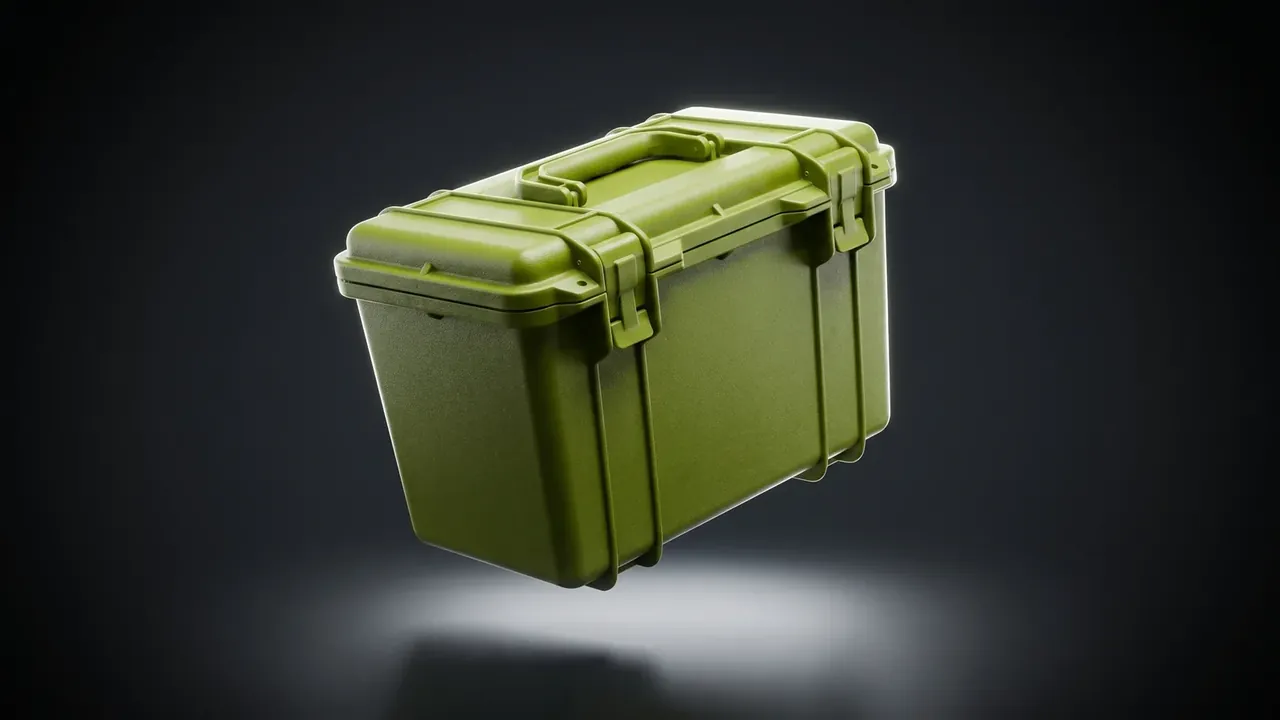
Quick answer: An explosive storage box appears in four places: the mine magazine, the tunnel or roadbed front, the temporary holding point, and the handover run. Four settings change between them: stacking height, floor and wall clearance, locks and seals, and ledger rhythm.
Table of contents
- What the Box Does Inside a Mine Magazine
- Tunnel and Roadbed Site Configuration
- How to Lay Out a Temporary Holding Point
- Handover and the Two-Lock Rule
- Configuration Across Five Scenes
- FAQ
1. What the Box Does Inside a Mine Magazine
A surface issue room sets the explosive storage box on a steel rack 100 mm off the floor, 200 mm from the wall. Underground, bodies stand in a single row, two high at most, 300 mm below the arch.
An 80 L body measures about 600 x 400 x 340 mm inside, which holds 24 kg of emulsion cartridges. It comes from approved stock divided by the box count, not from shell capacity; a 0.5 kg ledger gap means a recount.
| Magazine type | Load per box | Stacking | Clearance |
|---|---|---|---|
| Surface issue room | 24 kg max | 3 high max | 100 mm floor, 200 mm wall |
| Underground chamber | 18 kg max | 2 high max | 150 mm floor and wall |
The box keeps grades apart, one per lid, with a numbered seal across the latch and a desiccant pack weighed every two weeks.
2. Tunnel and Roadbed Site Configuration
A 3.5 m round on a tunnel face runs 60 to 90 kg in two draws. The explosive storage box sits 200 m back from the face, 50 m inside the portal, clear of vent ducts and cable trays, on 150 mm bearers levelled at all four corners.
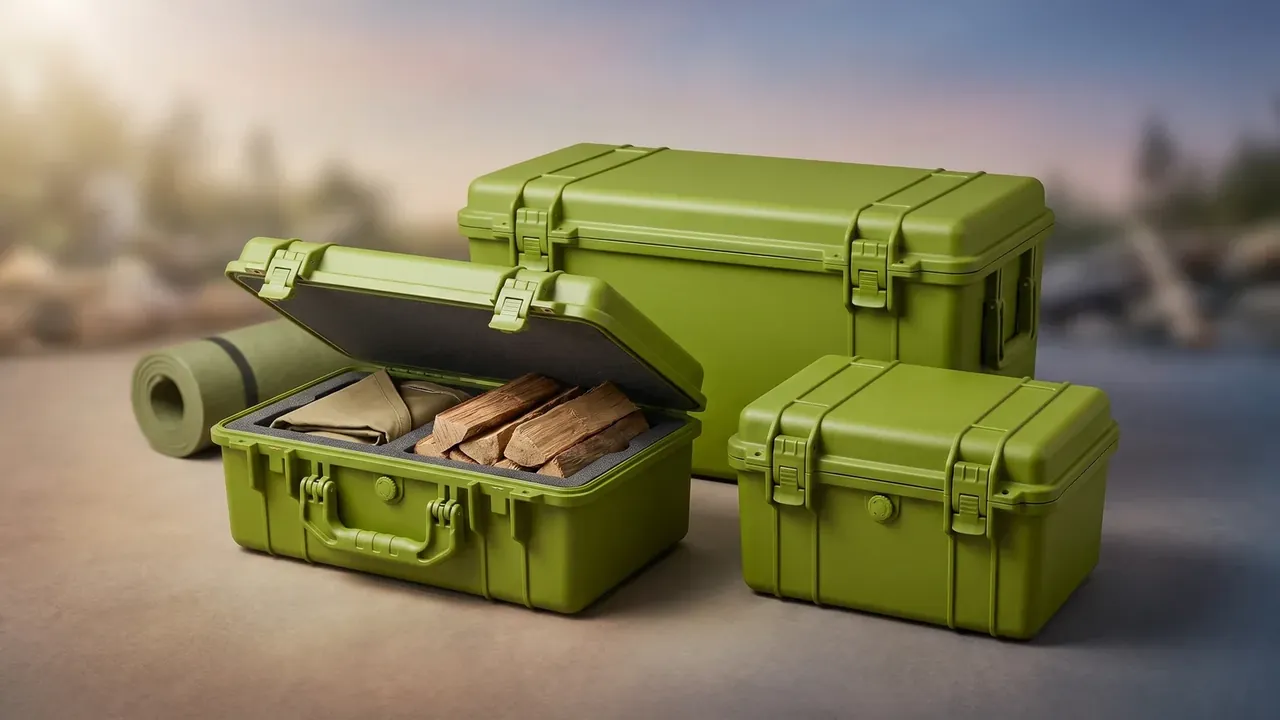
Roadbed sections keep two or three holding points and move the box on a trolley without opening the lid. Two 8 mm pins through the base holes anchor it on a slope; above 85 percent humidity the gasket is replaced below 60 percent of its compressed thickness.
3. How to Lay Out a Temporary Holding Point
A holding point is not a magazine. It is where the explosive storage box waits between draws, so dwell time and supervision decide it.
Keep it 50 m from the face, 30 m from open flame, 20 m from distribution boards, combustibles cleared within 3 m. The ground is paved or takes 100 mm of compacted gravel, the body 200 mm clear.
| Holding point | Maximum dwell | Distance to face | Supervision |
|---|---|---|---|
| Face point | one shift | 200 m min in tunnel | named watch, key carried |
| Roadbed point | one shift | 50 m min | watch or fenced lock |
4. Handover and the Two-Lock Rule
Handover is where the explosive storage box changes custody and where the chain usually breaks. Two independent padlocks pass through two 10 mm bores on the front face, one held by the escort, one by the store, so neither party can open it alone. Keep the bores 60 mm apart, or the second shackle rides on the first.
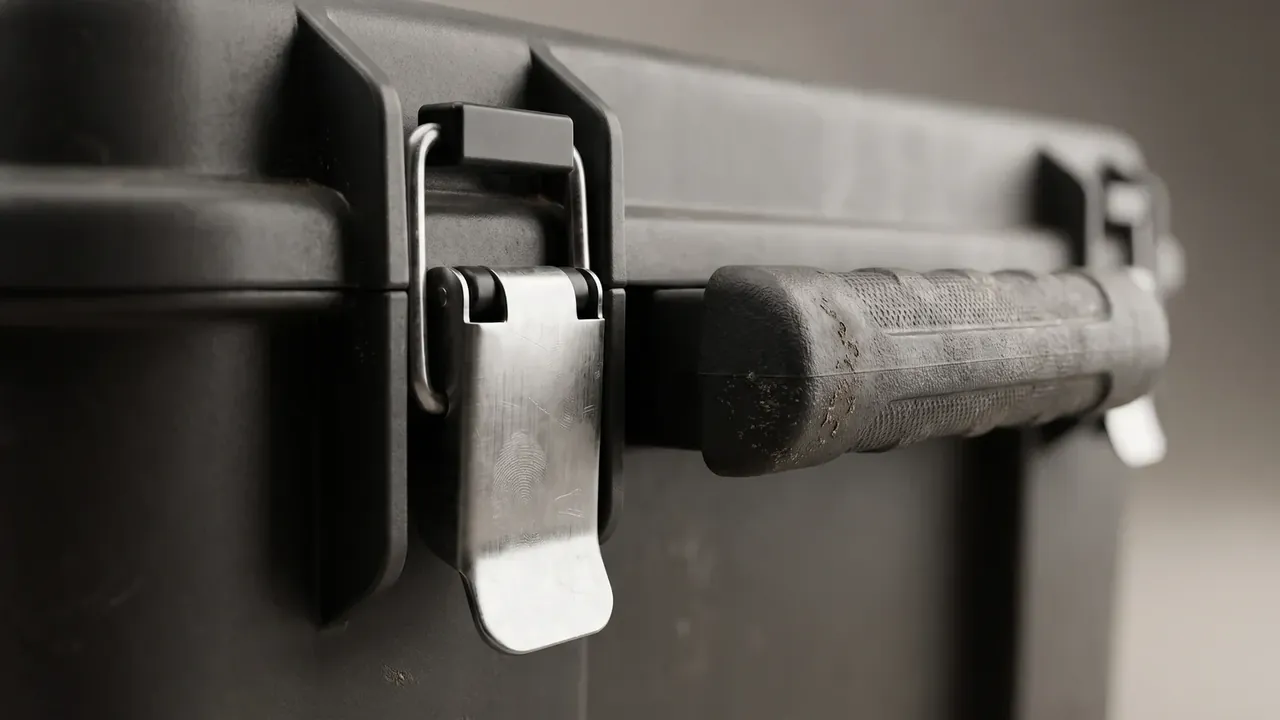
Count the boxes, match seals and ledger, sign, then swap locks, all inside 30 minutes, before the vehicle moves. Below -20 C the gasket hardens, so warm the lid rim rather than prising it up.
5. Configuration Across Five Scenes
The shell does not change from magazine to transfer run; how it is placed, earthed and counted does. A body with metal inserts takes a single-point earth under 4 ohm; a plastic explosive storage box relies on surface dissipation between 10^6 and 10^9 ohm.
| Scene | Locks and seal | Earthing | Ledger rhythm |
|---|---|---|---|
| Mine magazine | two locks plus seal | metal inserts earthed, 4 ohm max | daily count, weekly desiccant |
| Tunnel interior | two locks plus seal | earthed, quarterly surface test | signed at each shift |
| Roadbed point | two locks | quarterly surface test | logged per draw |
| Holding point | one lock plus fence | quarterly surface test | cleared same day |
Conclusion
Four settings decide the layout: stacking height, base clearance, how many people hold keys, and how often the count is signed. Fix those first, then check wall thickness, latch count and gasket section against them. Ask where the explosive storage box will stand and who watches it.
This article discusses only the container (case body) side of specifications and design intent, and does not cover any handling, loading or use of the contents.
Related Reading
- Above-ground and underground blasting magazine layouts
- Sizing an explosive storage box by load and site
- Daily checks on gaskets and latches
- Divided stowage for charges and initiators
Related Products
- 8 Series — Gun Cases; Military Equipment Cases; Camera Equipment Cases; Drone Cases; Watch Cases; Knife Cases; First Aid Cases; Electronics Equipment Cases
- WL8-2812 PP Gun Case — model WL8-2812
- All protective cases and toolboxes: 7 series, 158 models