

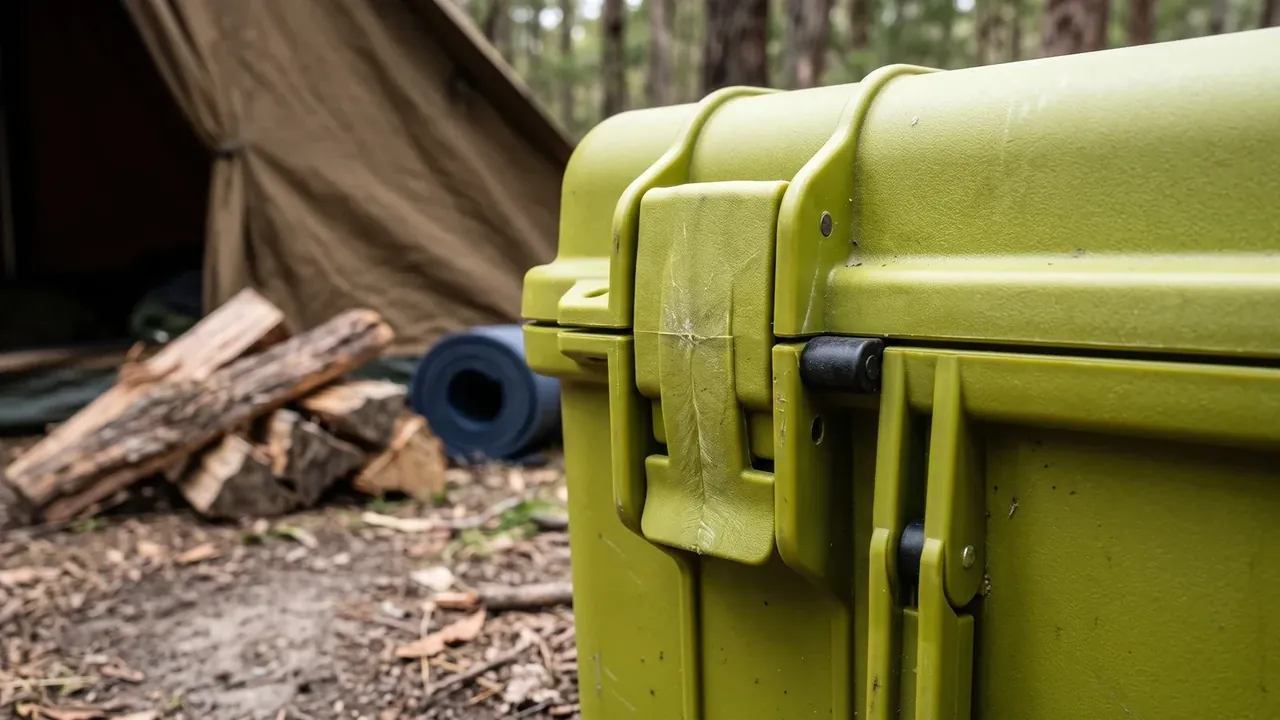
Quick answer: Put an explosive storage box beside a tool box, a metal safe, a concrete magazine and a timber charge box and the gap is not strength. It is whether flame retardance, static control, theft resistance and moisture blocking hold at once. Each alternative solves one and drops the rest.
Table of contents
- Five Options and Where They Split
- Flame Retardance and Static: Who Actually Passes
- Theft Resistance and Moisture: The Detail Gap
- Compliance and Cost: Where the Curves Cross
- Scoring the Five Options
- FAQ
1. Five Options and Where They Split
All five turn up on one purchase order, yet each answers a different question: a tool box answers reach, a safe answers locking, a concrete magazine answers volume, a timber box answers separation. The explosive storage box answers all four.
| Option | Body material | Wall | Capacity | Movable |
|---|---|---|---|---|
| Explosive storage box | Modified PP, moulded | 4–6 mm | 30–120 L | Yes, two people or a forklift |
| Tool box | Thin PP | 1.5–2.0 mm | 20–60 L | Yes, one hand |
| Metal safe | Cold rolled steel | 1.2–3.0 mm | 60–200 L | Hard, 45–120 kg empty |
| Concrete magazine | Brick or cast | 240 mm wall | Per room | No, a fixed structure |
| Timber charge box | Pine or plywood | 15–20 mm board | 25–80 L | Yes, two people |
Wall thickness is read first and is the worst column alone. The 4–6 mm is a ribbed curved wall, no thicker than a tool box without the ribs; the 240 mm concrete wall cannot follow a front.
2. Flame Retardance and Static: Who Actually Passes
Two numbers decide flame retardance: oxygen index and fire rating. Modified PP reaches an index above 28 percent, which lands at UL94 V-0; an ordinary tool box sits at 17 to 18 percent and keeps dripping.
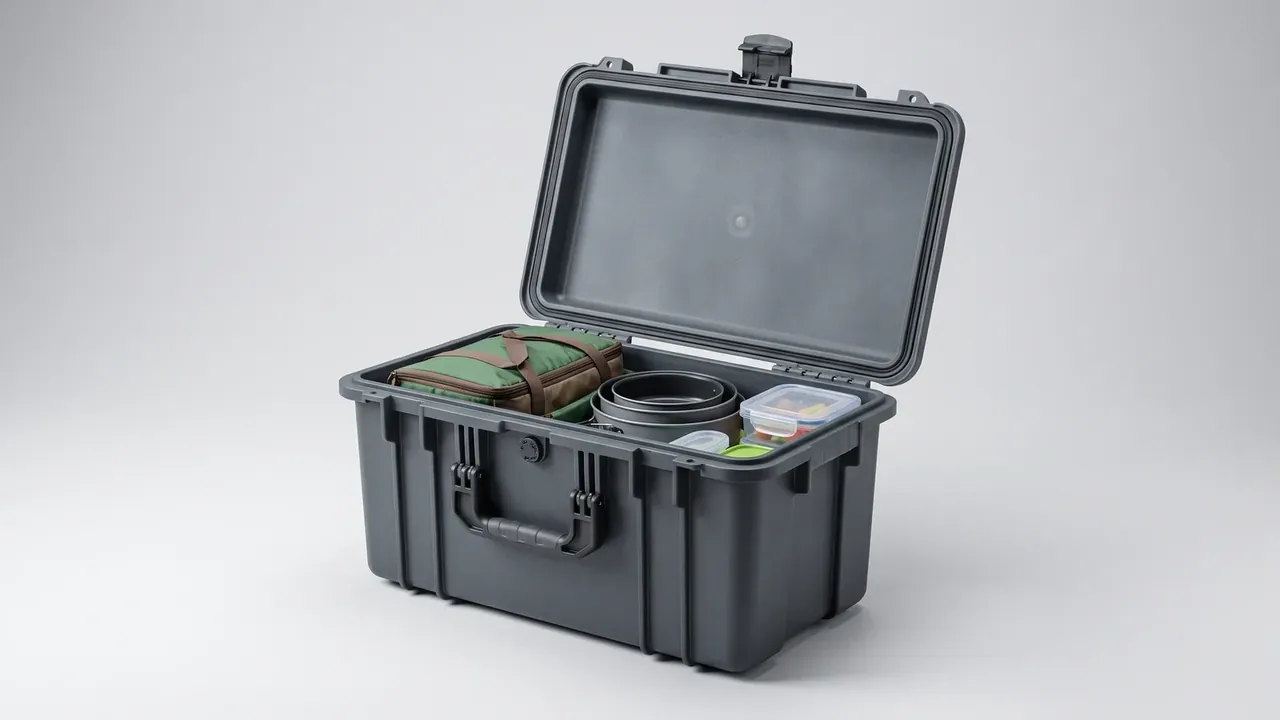
Static is separate: plastic insulates above 10^14 ohm, and conductive carbon black brings an explosive storage box down to 10^6 to 10^9. A safe bleeds off through one earth lead; timber passes 10^12 ohm when dry.
3. Theft Resistance and Moisture: The Detail Gap
Theft resistance is the time and noise a break-in costs. A tool box catch opens in ten seconds with a screwdriver; a pry bar in the seam of 1.2 mm steel opens a safe in two minutes.
The explosive storage box takes the middle path: cam latches do not stop a thief alone, but two separate lock bores plus an interlocking rim mean two points must fail together, and a cut seal shows in the ledger.
Moisture control lives in the seal: a moulded body closes on a double lip with a D-section gasket compressed 30 to 40 percent, while a safe door gasket fails at the bottom edge first.
4. Compliance and Cost: Where the Curves Cross
Compliance is what can be shown, not what was bought. A fixed concrete magazine clears approval with drawings; an explosive storage box must prove its flame and static figures in a third-party report.
Cost spreads over service life. A tool box is cheapest and, in a blasting store, not compliant storage at all. A safe needs anchoring and cannot follow the front, and a concrete magazine waits 90 to 180 days to approve and build.
5. Scoring the Five Options
Six criteria scored from 1 to 5 make the weak column obvious. The scores describe blasting stowage only.
| Option | Flame | Static | Theft | Moisture | Compliance | Cost |
|---|---|---|---|---|---|---|
| Explosive storage box | 5 | 5 | 4 | 5 | 4 | 3 |
| Tool box | 1 | 1 | 1 | 2 | 1 | 5 |
| Metal safe | 5 | 4 | 5 | 3 | 3 | 2 |
| Concrete magazine | 5 | 3 | 5 | 2 | 5 | 2 |
| Timber charge box | 2 | 1 | 2 | 2 | 2 | 4 |
Read the lowest score before the total. The explosive storage box is weakest on cost and compliance, both recoverable through volume purchase and a test report; the tool box has three floor scores and no fix.
Conclusion
The explosive storage box does not win every column. It wins by holding four criteria at once without giving up portability, while the safe trades moisture and the concrete room trades mobility. Check which option has no floor score, and the shortlist collapses to one: the explosive storage box.
This article discusses only the container (case body) side of specifications and design intent, and does not cover any handling, loading or use of the contents.
Related Reading
- How the box replaces other stowage methods
- Reading flame retardance and static clauses
- Comparing metal body materials on equal terms
- Lockable box options side by side
Related Products
- 8 Series — Gun Cases; Military Equipment Cases; Camera Equipment Cases; Drone Cases; Watch Cases; Knife Cases; First Aid Cases; Electronics Equipment Cases
- WL8-2812 PP Gun Case — model WL8-2812
- All protective cases and toolboxes: 7 series, 158 models