

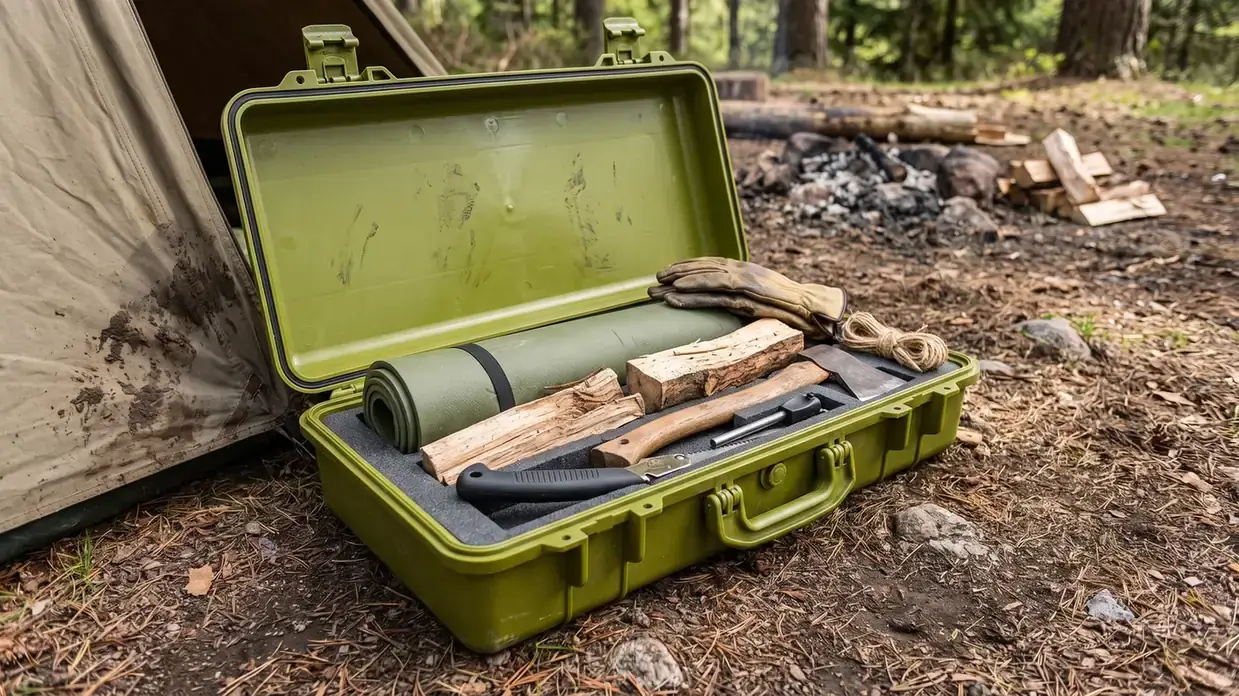
Quick answer: An explosive storage box stays serviceable through three inspection tiers, each with a stated replacement line, so that still usable becomes a measured number.
Table of contents
- How to Set the Inspection Cycle
- Earthing Continuity and Static Retest
- Seal and Moisture Failure Criteria
- Locks and Liner Checks
- Marking, Log and Retirement
- FAQ
1. How to Set the Inspection Cycle
Saving every check for the annual audit is the usual failure: a defect then travels with the case for eleven months. Three tiers keep the schedule honest.
| Tier | Interval | Items | Tools |
|---|---|---|---|
| Pre-shift | Before each use | Cracks, latches, seal lip | Torch |
| Monthly | 30 days | Earth continuity, latch effort | Milliohm meter, gauge |
| Annual | 12 months | Wall thickness, flame layer | Ultrasonic gauge, blade |
Environment sets the interval, not the calendar. An explosive storage box in a store above 60 percent relative humidity needs the seal interval halved; past a 40 degree annual swing the braid works the stud loose, so the monthly reading stays.
2. Earthing Continuity and Static Retest
Earthed is easy to write and hard to prove: lid to body continuity, then body to earth stake.
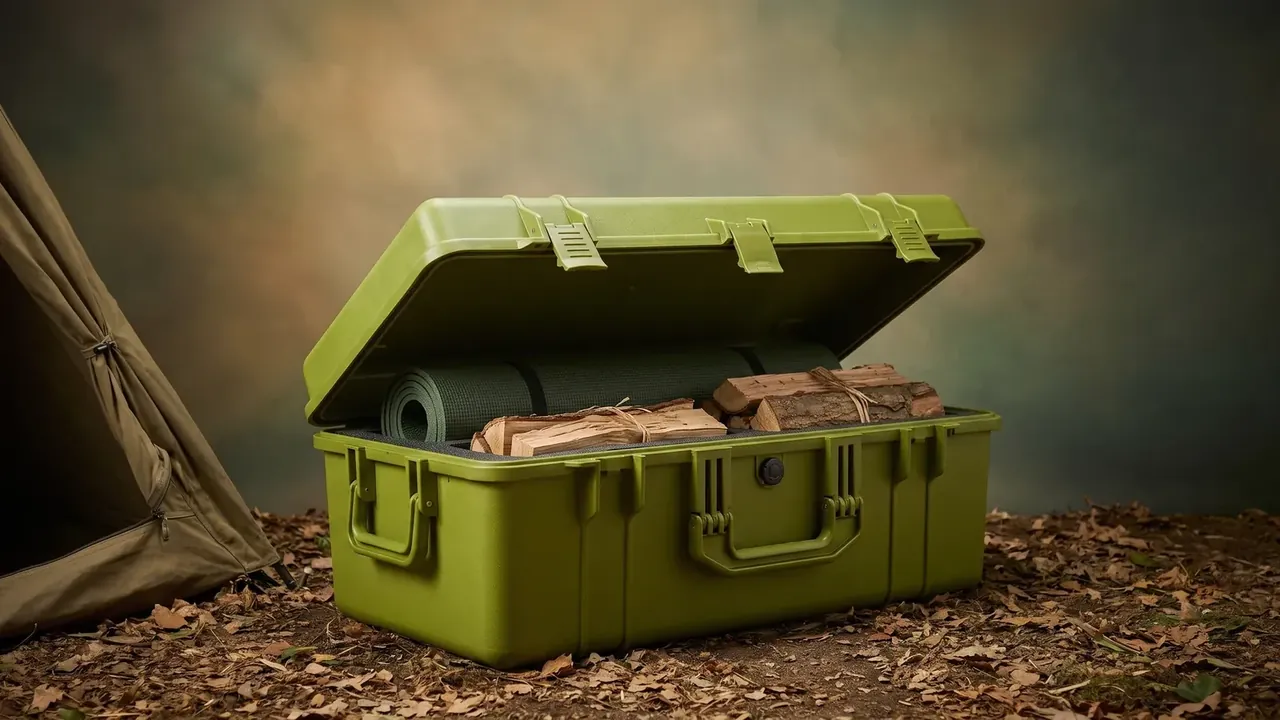
Read continuity with a milliohm meter, probes on bare lid metal and on the stud. Above 0.1 ohm points to an oxidised hinge pin or braid, so strip, grease and read again; forcing the bolt only flattens the contact faces.
Surface resistance is read across 100 millimetres and should sit between 10 to the 6 and 10 to the 9 ohm. One decade of drift, or a fall below 10 to the 5, means the dissipative layer has worn through. Log humidity beside the figure, since below 30 percent the reading runs high.
3. Seal and Moisture Failure Criteria
A seal does not have to split before it fails; compression set, contact gap and crazing decide the question.
| Item | Watch line | Replace line | Method |
|---|---|---|---|
| Compression set | 20 percent | 30 percent | Off the case, rest 24 hours |
| Contact gap | 0.3 mm | 0.8 mm | Feeler gauge every 200 mm |
| Desiccant pickup | 8 percent | 15 percent | Weigh against initial mass |
Set is measured with the seal off the case, rested 24 hours in free state; measured in place it only repeats the design figure. Past 30 percent the rubber will not come back.
Desiccant runs at 500 grams per 100 litres. Colour change is a hint, weight is the measurement: above 15 percent pickup, dry or replace it. Regeneration takes 120 degrees Celsius for four hours, and after five cycles fresh material costs less than another bake.
4. Locks and Liner Checks
On an explosive storage box, locks are checked at the shackle, the hasp root and the key log: two strength items and one control item.
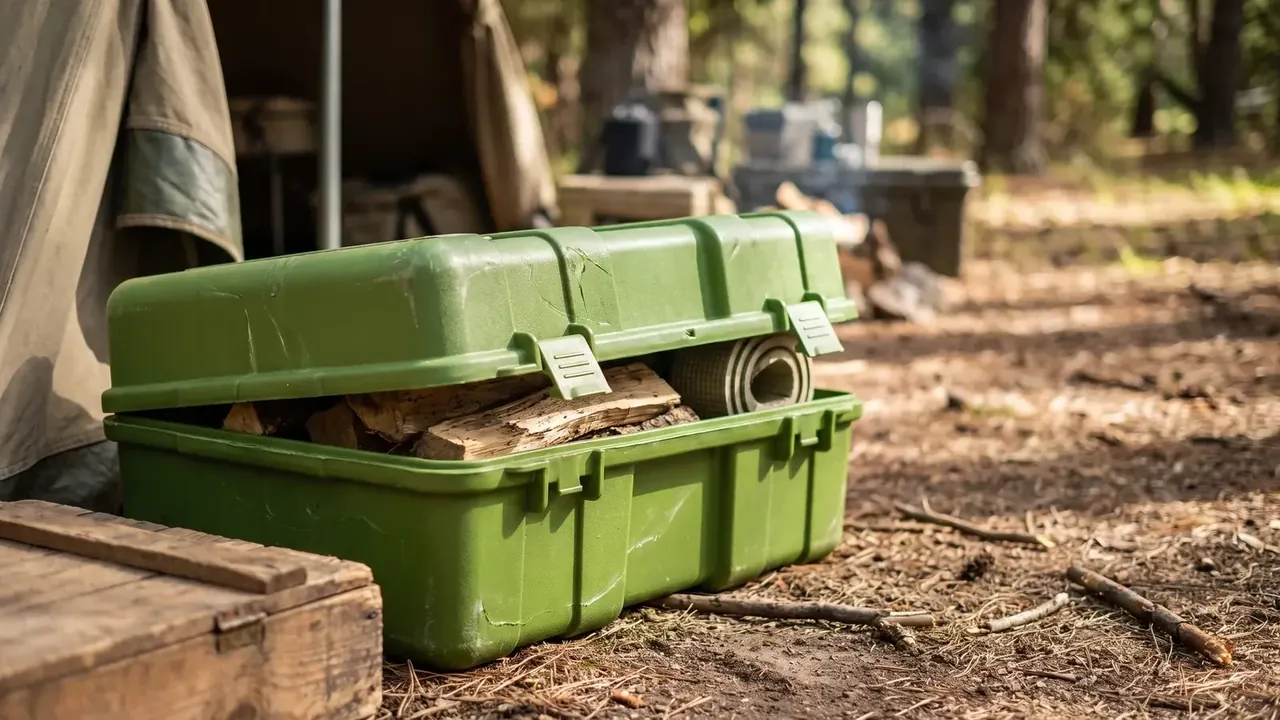
A shackle worn past 0.5 millimetre at its thinnest point is retired, measured with a caliper. At the hasp root, light the surface at 45 degrees and look for a hairline; past 5 millimetres the lid is replaced, never welded.
Compartment gaps over 3 millimetres mean foam has taken a set, and a recovery slower than five seconds after a ten second press confirms it. The liner must leave the stud and vent membrane uncovered, or neither is checked.
Latch effort runs 55 to 70 newtons. Fifteen newtons above baseline means the liner is propping the lid, so thin the liner rather than adjust the latch.
5. Marking, Log and Retirement
Three marks belong on the case: serial number, last inspection and next inspection. Stamp the number into a reinforced area, since a label lifts within three months in an oily store.
| Defect | Retire | Repair | Action |
|---|---|---|---|
| Wall loss | Over 10 percent | 5 to 10 percent | Downgrade to transfer |
| Through crack | Over 30 mm | Under 30 mm | No welding, retire |
| Leak after drop | Any | None | Replace case |
Count replacements per number each year: three seals in three years means a distorted sealing face, not bad seals. A sound body with a failed seal can be downgraded to dry transfer duty.
Conclusion
Maintenance comes down to four lines anyone can measure: 0.1 ohm of continuity, 30 percent seal set, 0.5 millimetre of shackle wear and 10 percent of wall loss. Inside the line the case keeps working, beyond it the table decides. Written into the check sheet, those lines turn care into a procedure, and a procedure is what keeps an explosive storage box under control.
This article discusses only the container (case body) side of specifications and design intent, and does not cover any handling, loading or use of the contents.
Related Reading
- How an explosive storage box is built
- Setting the specification of an explosive storage box
- Acceptance standards for explosive storage boxes
- Choosing and configuring an explosive storage box
Related Products
- 8 Series — Gun Cases; Military Equipment Cases; Camera Equipment Cases; Drone Cases; Watch Cases; Knife Cases; First Aid Cases; Electronics Equipment Cases
- WL8-2812 PP Gun Case — model WL8-2812
- All protective cases and toolboxes: 7 series, 158 models