

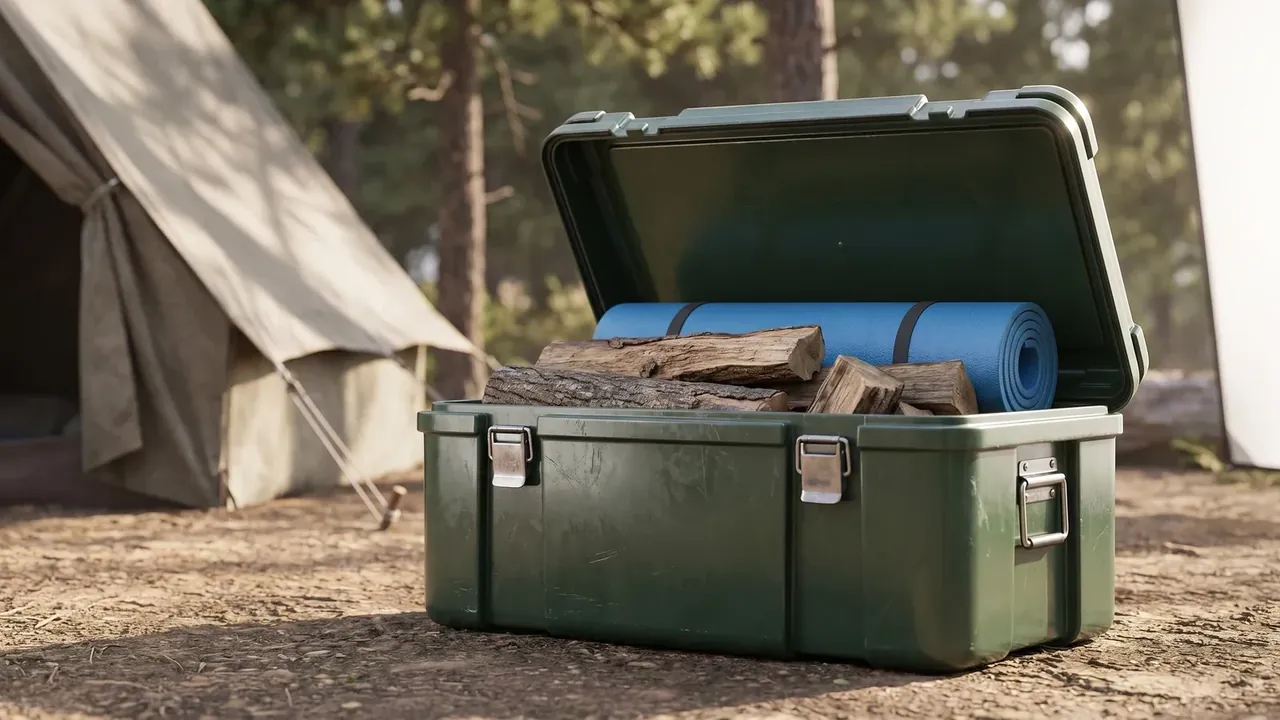
Quick answer: An explosive storage box is specified from the inside out: cavity from the load outline, wall from volume and stack height, then resistance, flame and vent.
Table of contents
- Sizing the Internal Cavity
- Wall Thickness and Load Ratings
- Static Resistance and Flame Rating
- Vent Area, Temperature and Humidity
- Writing the Specification Sheet
- FAQ
1. Sizing the Internal Cavity
Dimensions cannot be added later: a cavity a centimetre short rejects the load, and slack lets it move. Work back from the largest outline.
Start with 20 millimetres of clearance on length and width, 30 on height, since a hand goes in. Foam takes 25 per side, dividers 8; a 600 by 400 by 320 cavity leaves 550 by 350 by 265.
| Parameter | Value | Basis |
|---|---|---|
| Cavity length, width | Outline + 20 mm | Handling clearance |
| Cavity height | Outline + 30 mm | Hand access |
| Wall | 6.5 mm, plus or minus 0.5 | Volume and stack |
The shell is cavity plus wall plus flange; under 25 millimetres of flange the gasket squeezes out sideways at assembly. Tolerances are bilateral, with 2 to 3 percent shrinkage compensated at mid-value.
2. Wall Thickness and Load Ratings
Wall thickness on an explosive storage box follows volume and stack height: each extra millimetre adds about 8 percent weight, carried by the case underneath.
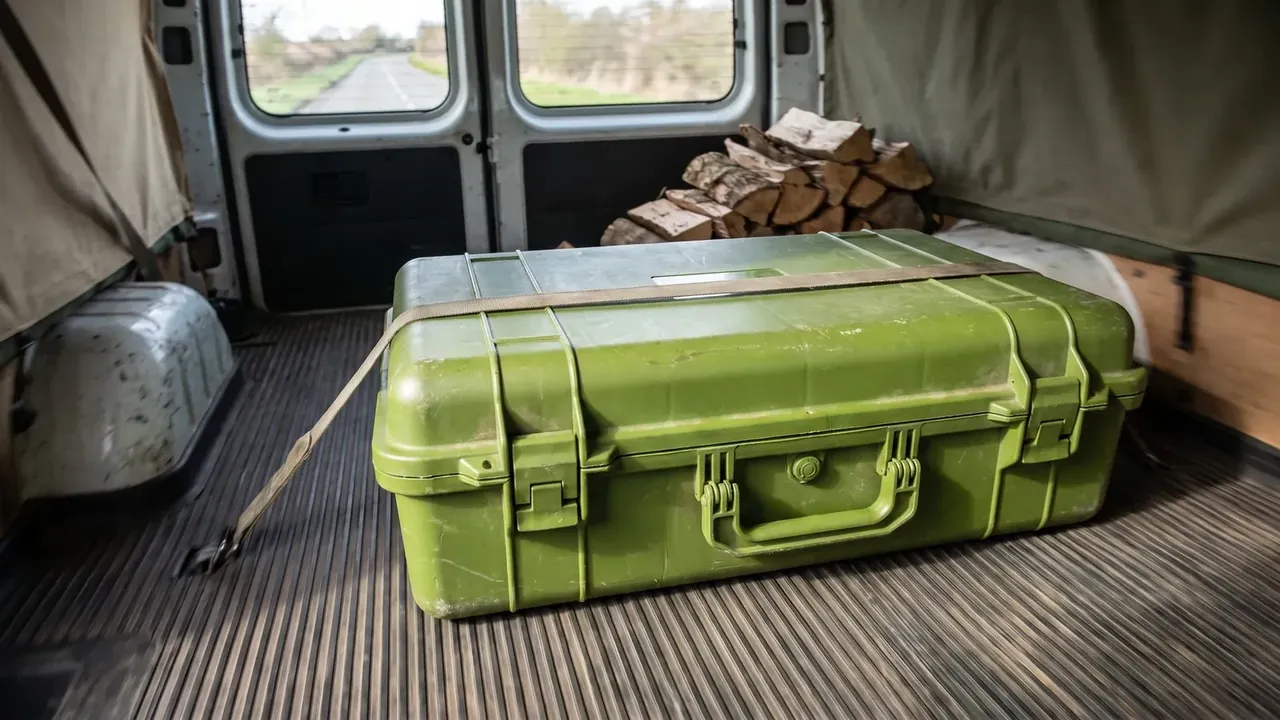
Below 50 litres, 5 to 6 millimetres works; 50 to 150 takes 6 to 7; above 150, 7 to 8. Past four tiers, a 12 millimetre cross rib costs less than a thicker wall.
| Cavity volume | Wall | Stack | Top load |
|---|---|---|---|
| 30 litres | 5.0 mm | 6 tiers | 300 kg |
| 80 litres | 6.0 mm | 5 tiers | 400 kg |
| 150 litres | 7.0 mm | 4 tiers | 500 kg |
| 300 litres | 8.0 mm | 3 tiers | 600 kg |
Two loads get confused. Top load is the static stack, tiers times weight times 1.5; base load is the pallet reaction, twice the distributed figure. A 24 hour hold leaves under 2 millimetres.
Measure eight fixed points: four wall centres and four corner radii. Rotomoulded parts run thick at corners and thin on flats, so record the minimum.
3. Static Resistance and Flame Rating
Static control is a band, not a switch: surface resistance should land between 10 to the 6 and 10 to the 9 ohm; below that it turns conductive.
Resistance alone is not enough: write decay time, 1000 volts down to 100 within 2 seconds. A compound that passes resistance but decays slowly releases nothing useful.
Flame rating follows the duty: fixed storage takes GB 8624 B1 with an oxygen index of at least 26 percent, and anything that travels adds UL94 V-0. Each step costs 2 to 3 points of retardant.
The two interfere: retardants raise surface resistance, carbon black lowers flame efficiency, so test both together.
4. Vent Area, Temperature and Humidity
Vent area follows volume and temperature swing: across 50 degrees an explosive storage box builds about 7 kilopascals per cubic metre, and the vent must open inside that.
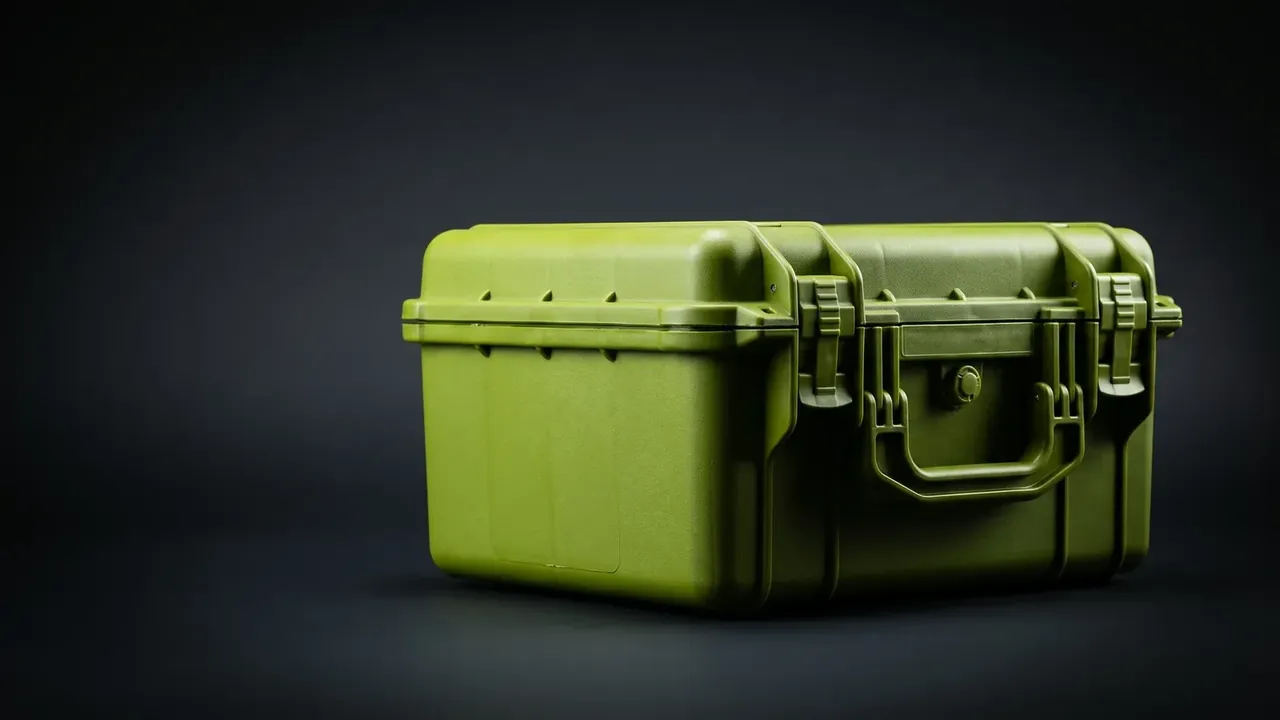
Allow 10 square centimetres per 0.05 cubic metre, so 100 litres needs 20 of free area; the membrane passes 30 percent of nominal, making nominal 65.
| Parameter | Band | If exceeded |
|---|---|---|
| Working temperature | -20 to 55 C | Corner cracks |
| Working humidity | Under 75 percent | Condensation |
| Surface resistance | 10 to the 6 up to 10 to the 9 ohm | Charge build up |
| Vent opening | 7 to 11 kPa | False opening |
Working temperature runs minus 20 to plus 55 Celsius and storage minus 40 to plus 70: below minus 20 polyethylene loses half its impact strength, above 55 the gasket sets.
5. Writing the Specification Sheet
A specification is finished when it can be inspected: every line needs a nominal value, a tolerance and a method. Six millimetres with no tolerance permits 5.2, and no method leaves two parties measuring two numbers.
Sampling runs by batch, one mould and one shift: three cases for the full list, one destroyed. Drop at 1.2 metres on corner, edge and face, then immerse 30 minutes, no water inside.
Keep a change clause: wall, compound or flame changes are re-sampled, since the same grade from a new supplier can differ by 20 percent in impact. Tiers, environment and travel set wall, flame and vent.
Conclusion
Four numbers decide whether the specification holds: cavity tolerance, wall against stack height, the resistance band, and vent area against opening pressure. Each has a basis and a method, and together they make an explosive storage box specification complete.
This article discusses only the container (case body) side of specifications and design intent, and does not cover any handling, loading or use of the contents.
Related Reading
- Maintenance checks and replacement lines
- Comparing explosive storage box specifications
- Choosing and configuring an explosive storage box
- Acceptance standards for explosive storage boxes
Related Products
- 8 Series — Gun Cases; Military Equipment Cases; Camera Equipment Cases; Drone Cases; Watch Cases; Knife Cases; First Aid Cases; Electronics Equipment Cases
- WL8-2812 PP Gun Case — model WL8-2812
- All protective cases and toolboxes: 7 series, 158 models