

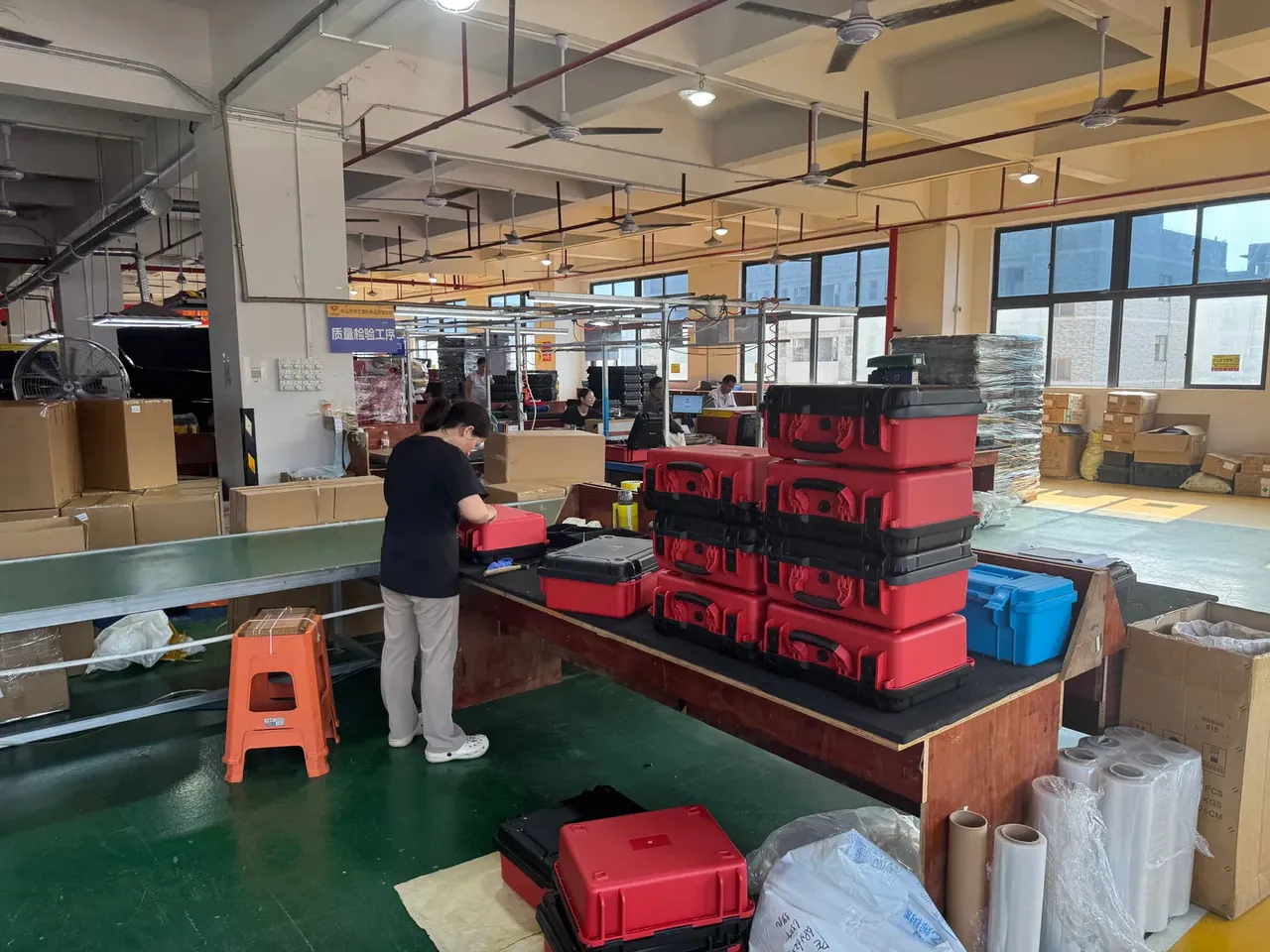
Quick answer: Fiber optic fusion splicer specialized hard protective case: three separate cells, 150 g desiccant, IP67 seal holds humidity under 40% RH, 1.2 m drop.
Table of contents
- How one cavity becomes three independent cells
- How companion shapes map onto three cells
- Desiccant and seal holding cavity humidity
- Latches, handle and the hard shell
- Drop, salt spray and cycle checks
- FAQ
1. How one cavity becomes three independent cells
A Fiber optic fusion splicer specialized hard protective case is not divided by part count but by what each companion item fears: the main unit fears pressure, the cleaver dust, and small consumables moisture. So the cavity is split into 3 separate cells, each with its own liner and its own boundary. The 480 x 360 x 240 mm outer size, 425 x 305 x 195 mm cavity and 3.8 mm wall set the total before the split is drawn.
Empty 4.4 kg plus payload 8.6 kg is not heavy; the hard shell matters not for load but for keeping the three cells from shifting into one another. A Fiber optic fusion splicer specialized hard protective case uses moulded partitions that reach the lid liner, so each cell closes into its own chamber and drop force travels through the shell, not the liner.
| Companion item | Sensitive to | Cell treatment |
|---|---|---|
| Main unit | pressure | full cell with damping liner |
| Cleaver | dust | shallow cell with a dust lip |
| Small consumables | moisture | sealed cell with 150 g desiccant |
2. How companion shapes map onto three cells
The first cell takes the main unit from the cleanest part of the cavity, lined on four walls with a recessed floor. The second takes the cleaver with a dust lip around the mouth, so the lip meets before dust reaches the guide face. The third takes small consumables with a sealed edge and 150 g desiccant in a mesh pocket under the floor.
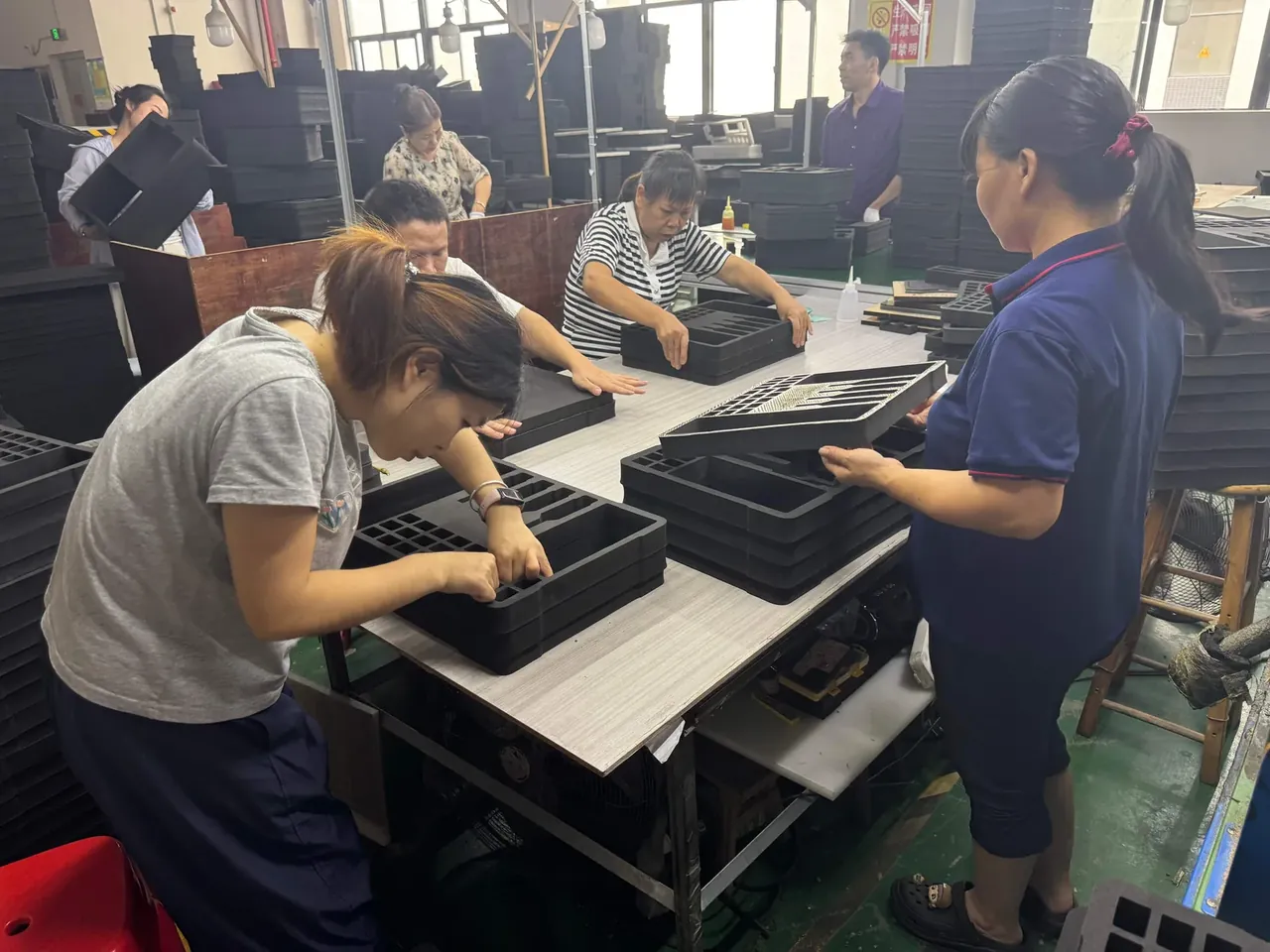
A Fiber optic fusion splicer specialized hard protective case makes the three cells unconnected on purpose, so moisture, dust and force each stop in their own cell. Partitions are 3.8 mm thick, moulded from the same resin as the shell, so two materials cannot expand differently between -20 C and 60 C and lift a seam. The lid liner presses on the partition tops in one sheet, sealing all three cells at once without separate small lids. Each cell mouth has a press edge that meets before the liner. Cell depths follow each companion outline rather than being forced level. Open-close life is aligned at 3000 cycles, so partitions stay tight and dust lips stay shaped.
| Size and form | Reading | Note |
|---|---|---|
| Outer size | 480 x 360 x 240 mm | one outline for three cells |
| Cavity | 425 x 305 x 195 mm | clear space before splitting |
| Wall | 3.8 mm | same as partitions |
| Empty / payload | 4.4 kg / 8.6 kg | hard shell is not for load |
3. Desiccant and seal holding cavity humidity
Moisture is handled on the shell side. A rim gasket is checked against IP67 by method, and 150 g desiccant hangs in the consumables cell; together they hold cavity humidity at or below 40% RH. A Fiber optic fusion splicer specialized hard protective case relies on a sealed rim and a measured charge, not on frequent opening, to keep the reading steady.
The 40% RH figure is read after the lid rests closed, not at the moment of opening. The gasket presses on a continuous ledge, 2 latches at 380 N each clamp the lid evenly, and the 340 N handle only carries, it does not seal.
4. Latches, handle and the hard shell
Latches and handle are the two load points once closed. A Fiber optic fusion splicer specialized hard protective case places 2 latches at 380 N each along the long edges and a 340 N handle at centre, with a continuous ledge between lid and body and no step to shift the gasket. A 1.2 m drop sends impact to the corner guards first, then the shell, so cell liners take no direct hit.
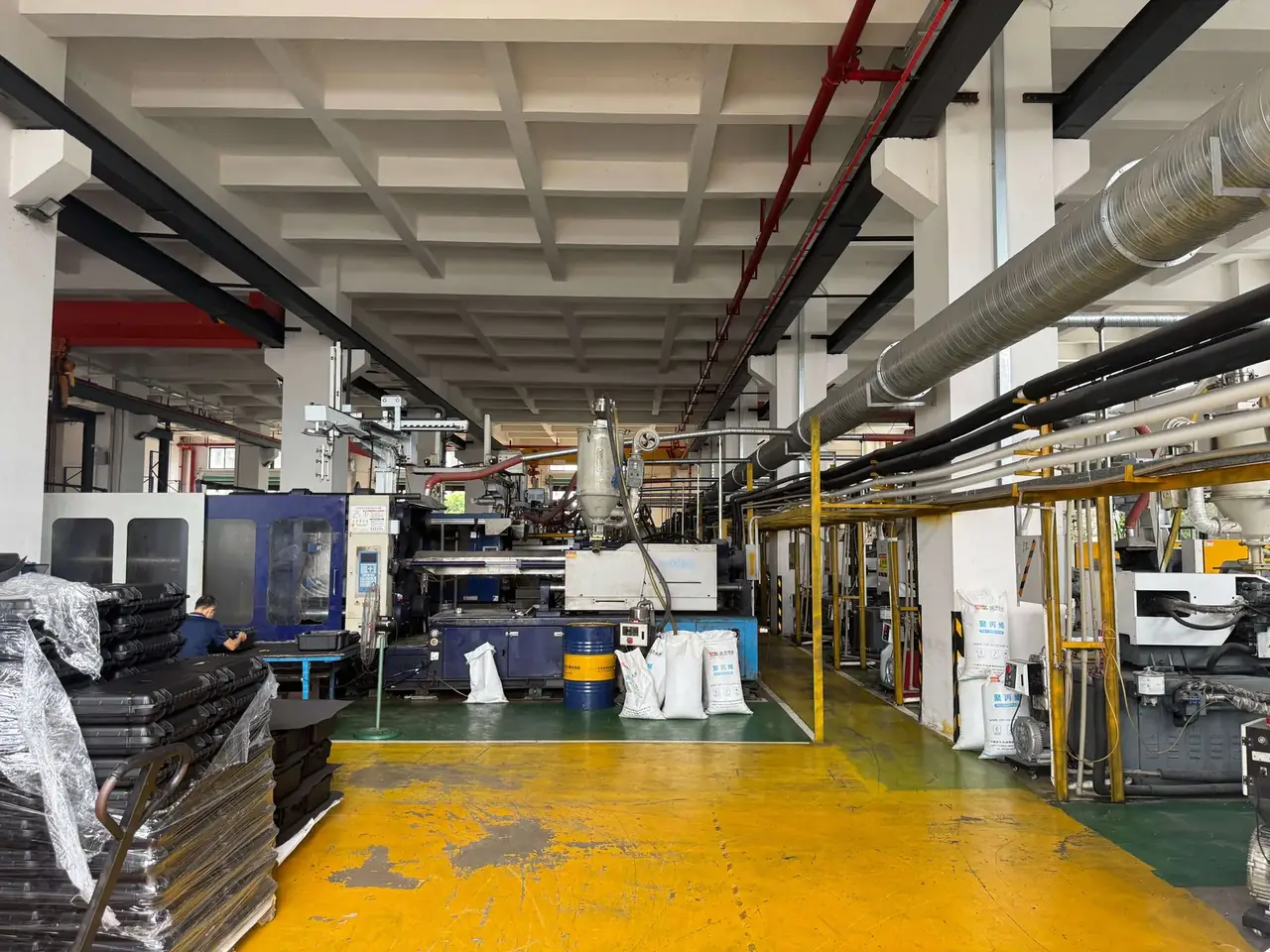
The 3.8 mm wall matches the partitions so all faces deform together and no single cell dishes first. Salt spray is aligned at 48 h and judges only hardware: latches, handle, hinge, not the shell body. Working temperature is aligned by method at -20 C to 60 C: low end for a stiff gasket and brittle cell lids, high end for a warped partition or unflat ledge. A Fiber optic fusion splicer specialized hard protective case marks these parts separately so each is checked on its own.
5. Drop, salt spray and cycle checks
A Fiber optic fusion splicer specialized hard protective case is verified by a 1.2 m drop, then the cleaver cell mouth is inspected for scoring on the guide face, partitions for loosening and the rim ledge for flatness. Salt spray at 48 h judges hardware, open-close life at 3000 cycles checks hinge and dust lips, and cavity humidity at or below 40% RH is rechecked after drop and temperature.
| Cell value | Linked part | Check by method |
|---|---|---|
| 3 separate cells | cavity split | partition dimensions |
| 150 g desiccant | consumables cell | humidity at or below 40% RH |
| 2 latches, 380 N | lid clamping | pull, each unit |
| 340 N handle | carrying | static method |
| 1.2 m drop | shell and guards | guide-face cell mouth |
| 48 h salt spray | hardware | salt spray method |
| 3000 cycles | hinge and dust lips | cycling method |
Seven readings, each with its own method.
Conclusion
A Fiber optic fusion splicer specialized hard protective case splits pressure, dust and moisture into three jobs: 3 separate cells with their own liners, 150 g desiccant with an IP67 seal holding humidity at or below 40% RH, and the cleaver cell mouth checked first after a 1.2 m drop. Write what each companion fears on the first line of the cell drawing and latches, handle and checks share one source.
Related Reading
- Sizing a splicer plastic case
- Shell requirements of a fiber laser source case
- General sizing for specialised shipping cases
- Cell layout of a fiber equipment case
Related Products
- 8 Series — Gun Cases; Military Equipment Cases; Camera Equipment Cases; Drone Cases; Watch Cases; Knife Cases; First Aid Cases; Electronics Equipment Cases
- WL8-2812 PP Gun Case — model WL8-2812
- All protective cases and toolboxes: 7 series, 158 models