

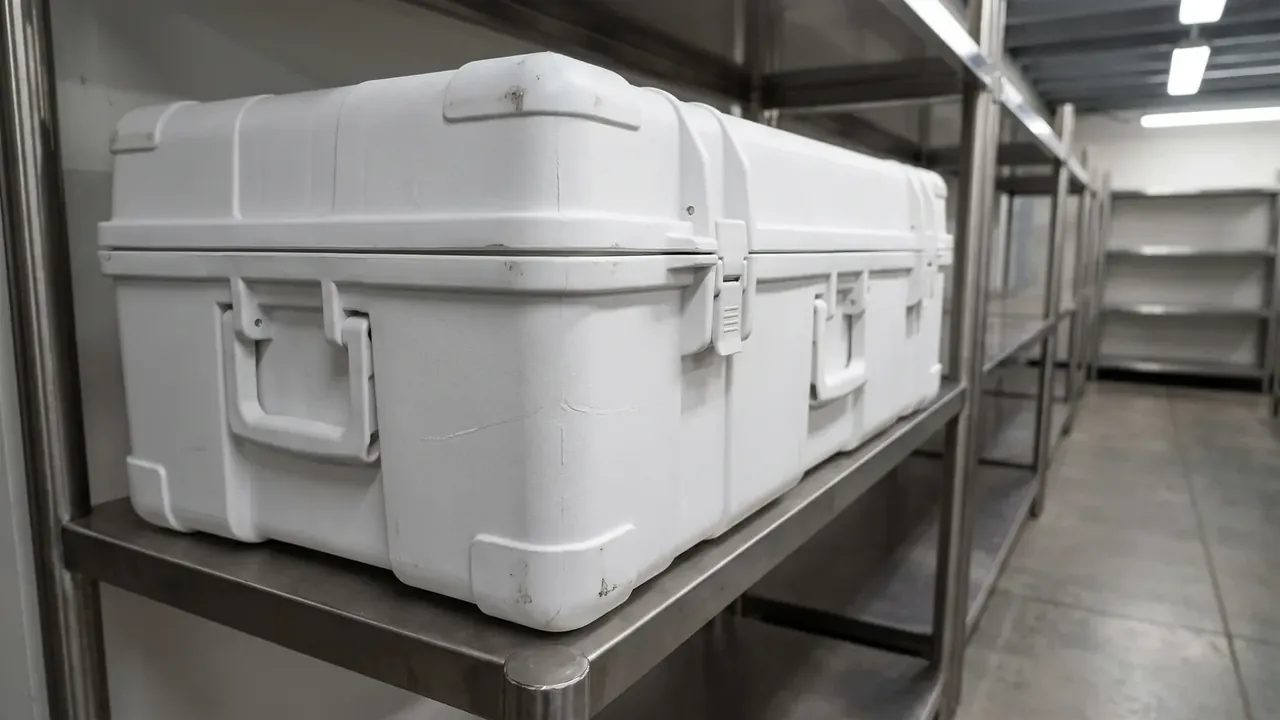
Quick answer: The Film props damage-proof safety box pairs a 22 mm lid foam peak with 8 mm cell walls, so 20 transfers still keep cell shift inside the acceptance band.
Table of contents
- Lid peak height of the Film props damage-proof safety box
- Wall thickness of the base cells
- Cell shift readings by transfer sequence
- Foam rebound after stacking recheck
- Peak height grading for prop batches
- FAQ
1. Lid peak height of the Film props damage-proof safety box
Cell shift is cumulative: the first transfer shows almost nothing, and small peak-to-wall mismatches grow with each run. JUNZHIJIA sets this Film props damage-proof safety box at 590×420×250 mm outside, 520×355×180 mm inside and a 4.4 mm wall. The lid foam peaks at 22 mm; the base cells use 8 mm walls. A low peak fails to hold the cell mouth and a jolt walks it sideways; a high peak raises closing moment and packs the foam early, so rebound fails.
Peak height grades are compared at 18 mm, 22 mm and 26 mm, each with 8 mm walls and the lid closed. Over 20 transfers, lateral drift against a floor datum is read each run. The 18 mm grade passes 0.6 mm by the 12th, the 22 mm grade holds the 20th reading inside 0.6 mm, and the 26 mm grade gains little while loading the lid across 4100 cycles. The Film props damage-proof safety box therefore writes 22 mm into the liner drawing.
2. Wall thickness of the base cells
Cell wall thickness is the second reading. The Film props damage-proof safety box divides the base with 8 mm walls that take the lid peak from above and resist bulging at a 13 kg load; a thin wall lets the cell mouth splay and shift climbs. The press retests 6 mm, 8 mm and 10 mm walls, each paired with the 22 mm peak and 13 kg as the case upper bound.
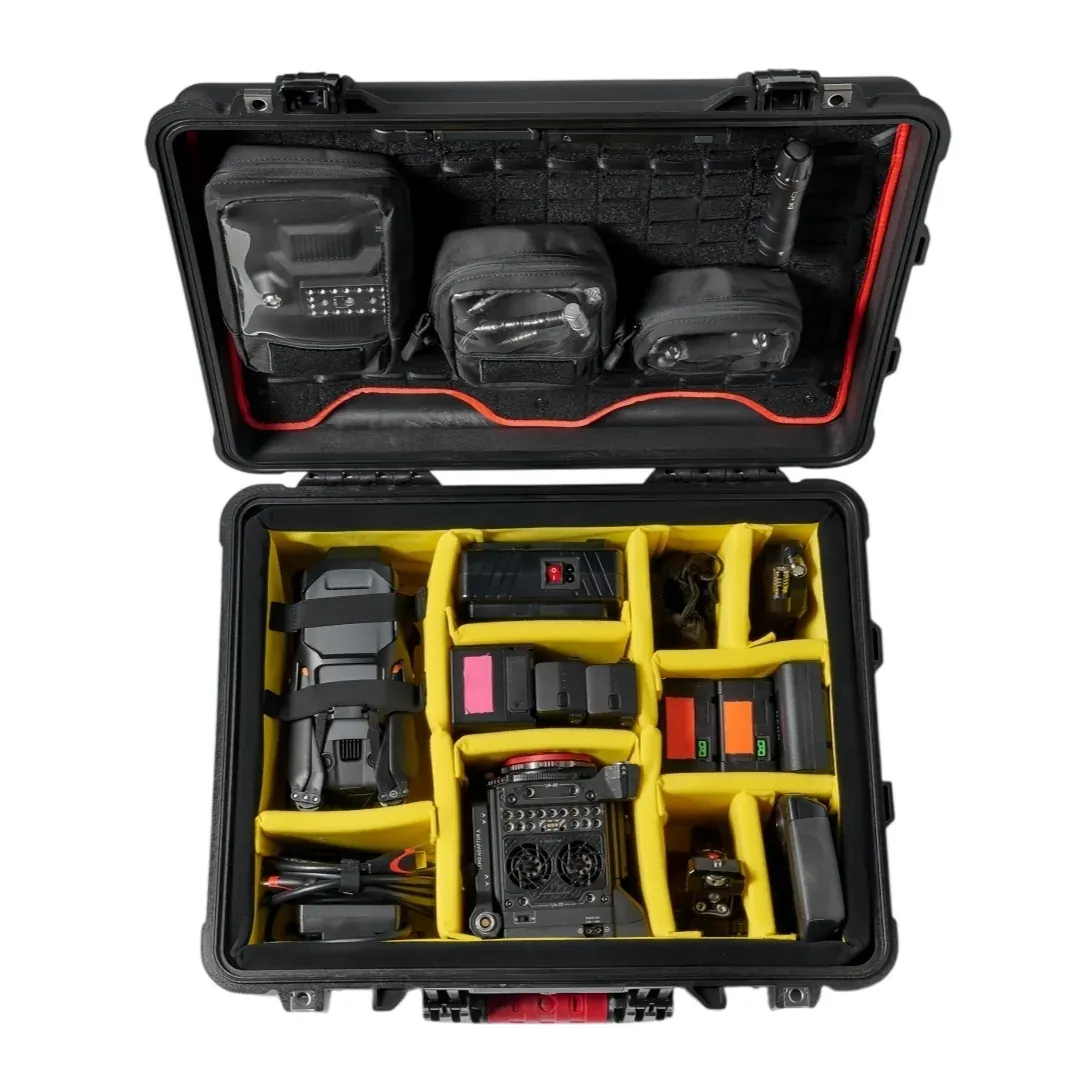
Peak and wall do not act independently. With a 22 mm peak on 8 mm walls, the foam valley lands on the wall top and lid load passes to the base; at 6 mm the valley misses the top and a few transfers tip the cell mouth. JUNZHIJIA files the two as a pair and releases neither alone. Across empty 6.1 kg to loaded 13 kg, the wall carries itself without lining strips.
3. Cell shift readings by transfer sequence
Shift is logged by transfer sequence on the rig: after each run a datum pin reads lateral drift against the wall, and the acceptance line sits at 0.6 mm or less. The Film props damage-proof safety box takes the 20th reading, not the first.
Each peak height grade reruns 20 transfers, so three grades give 60 readings, and only 22 mm and 26 mm hold 0.6 mm at the 20th. The 18 mm grade reaches 0.7 mm by the 12th and climbs; the 26 mm grade ends only 0.05 mm below 22 mm yet raises closing moment. The Film props damage-proof safety box skips that grade. Which run starts the climb says more than a specification table.
| Peak height grade | Cell wall | Shift at 20th transfer | Verdict |
|---|---|---|---|
| 18 mm peak | 8 mm | 0.9 mm | Over the line |
| 22 mm peak | 8 mm | 0.5 mm | Holds |
| 26 mm peak | 8 mm | 0.45 mm | Holds but tight |
4. Foam rebound after stacking recheck
A passing shift reading does not guarantee the foam survives stacking. The Film props damage-proof safety box runs a 4-layer / 12 h stacking recheck, measuring lid foam rebound at once against a 90% or higher line; the 18 mm peak packs down by layer four and falls under 90%, while the 22 mm peak still recovers after 12 h.
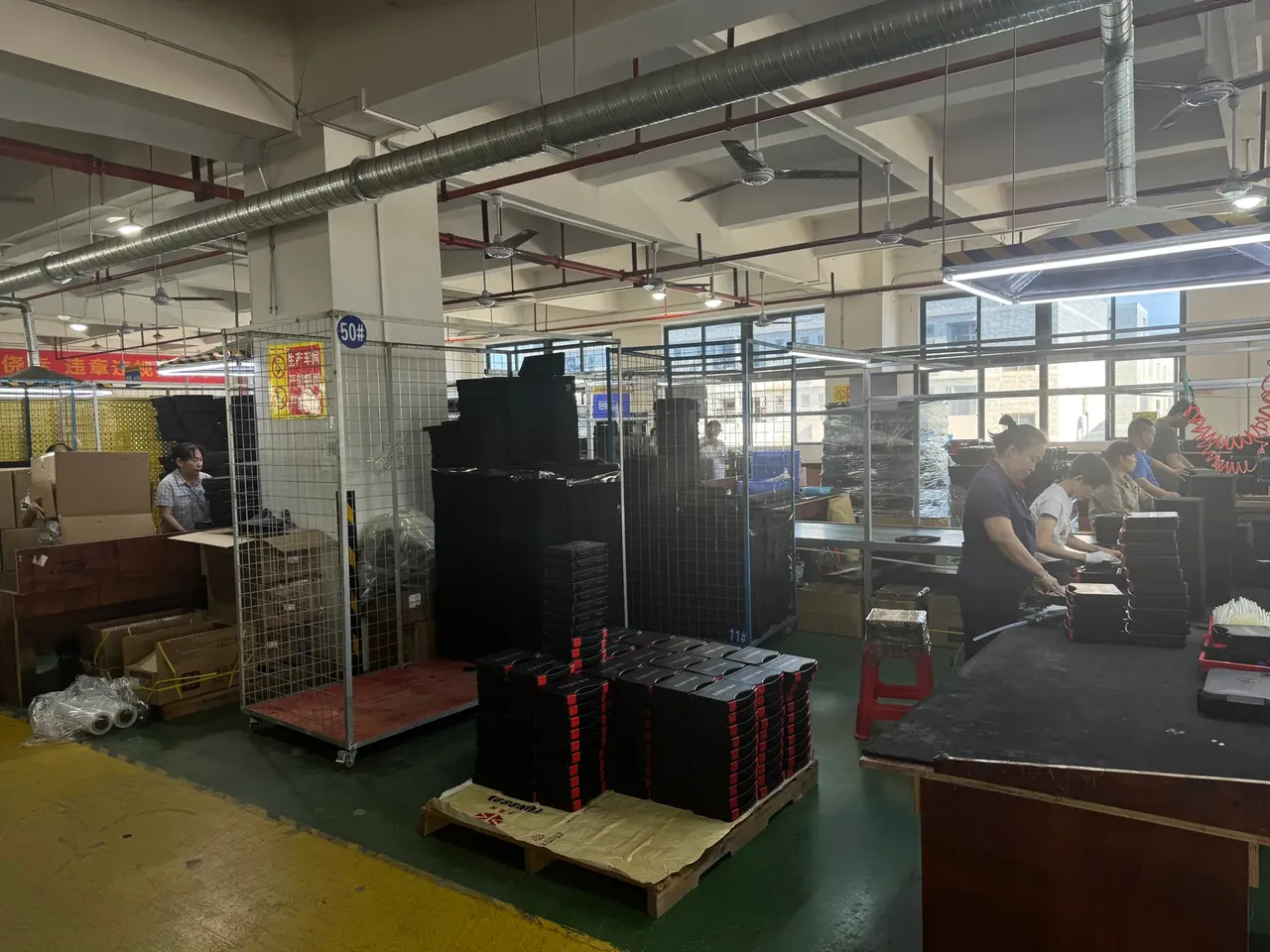
Sequence is checked here too. The same case is stacked after the 1st, 10th and 20th transfers, logging shift, rebound and any wall whitening. The 4-layer / 12 h stack is a recheck, not a transfer, so the two readings are filed apart. Rebound drifts down with sequence, but no round of the 22 mm peak drops below 90%.
| Transfer sequence | Stack condition | Cell shift | Foam rebound |
|---|---|---|---|
| 1st | 4 layers / 12 h | 0.2 mm | 96% |
| 10th | 4 layers / 12 h | 0.4 mm | 93% |
| 20th | 4 layers / 12 h | 0.5 mm | 91% |
5. Peak height grading for prop batches
Batch release rests on a peak height grade, not one sample's best transfer. The Film props damage-proof safety box files the shift values of all three grades side by side, 2 gaskets at 21% compression checked against the IP66 method, the mouth kept in one clamped state. The peak height grade locks at the grade before the first shift above 0.6 mm; later transfers are checked, not regraded.
| Cell shift value | Matching peak grade | Batch action |
|---|---|---|
| ≤0.6 mm | 22 mm / 26 mm | Into the grading table |
| 0.6–0.9 mm | 18 mm | Flagged for retest |
| >0.9 mm | Lower grades | Whole grade rejected |
Before delivery JUNZHIJIA copies these onto a batch card of three groups. The first is 22 mm peak height paired with 8 mm walls. The second is the shift value after the 20th transfer. The third is foam rebound after the 4-layer / 12 h stack. The 590×420×250 mm shell, 520×355×180 mm cavity and 4.4 mm wall are fixed tooling. 2 gaskets at 21% compression, checked against IP66, are verified on three cases per batch. 4 latches at 415 N and 4100 cycles share the page.
Conclusion
The grading verdict for the Film props damage-proof safety box rests on 22 mm peak height paired with 8 mm walls: shift holds at 0.6 mm after 20 transfers and foam rebound stays at 90% after the 4-layer / 12 h stack. JUNZHIJIA files peak height grade, transfer sequence and cell shift value, not recall. Sealing checked against IP66 and the 415 N latches support but do not replace the grade. The Film props damage-proof safety box is about case-side liner and wall stiffness; writing the valley-to-mouth fit into the drawing beats picking samples later.
Related Reading
- Film crew location work: weather sealing and handling
- Camera equipment hard case: body and lens cell layout
- Pick and pluck foam: steps and trade-offs
- Protective case divider spacing: largest or most-used
Related Products
- 8 Series — Gun Cases; Military Equipment Cases; Camera Equipment Cases; Drone Cases; Watch Cases; Knife Cases; First Aid Cases; Electronics Equipment Cases
- WL8-2812 PP Gun Case — model WL8-2812
- All protective cases and toolboxes: 7 series, 158 models