

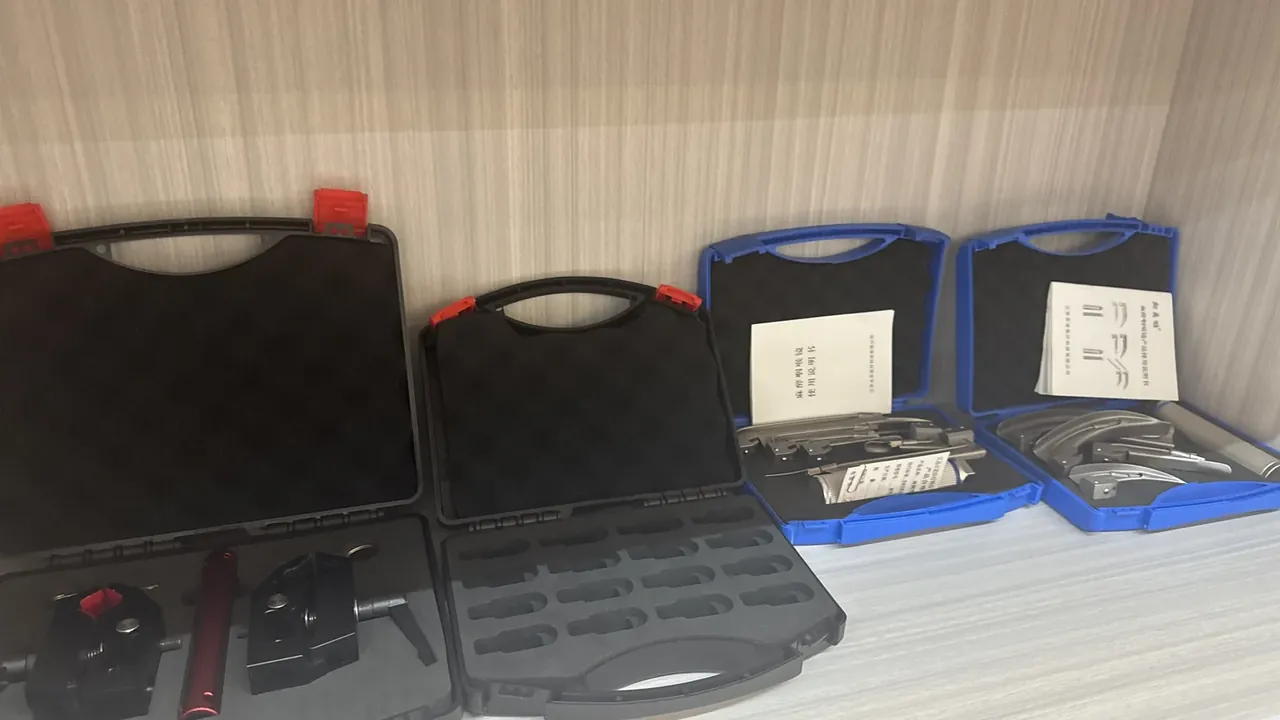
Quick answer: No single firearm protective case configuration fits five scenes. Range trips punish corners, store rooms load the side walls, duty issue wears hinges, freight adds temperature swing, and coastal air attacks metal with salt. Count hours away and lid cycles first, then specify latches, insert, desiccant and restraints.
Table of contents
- Three Inputs That Separate One Scene from Another
- Range Trips and Duty Issue: Frequent Opening
- Store Rooms: Stacking Load and Humidity
- Air and Road Freight: Restraint and Temperature
- Coastal Sites: Salt Fog and Desiccant
- FAQ
1. Three Inputs That Separate One Scene from Another
One shell rarely suits a range bag and a store room at once. Three inputs separate the scenes: hours away per trip, lid cycles a year, and the environment.
Lid cycles are the input buyers miss. Latches are tested to 20,000 cycles, yet duty issue at six openings a day over 200 working days reaches 1,200 a year. A store room opening a firearm protective case 12 times a year fails latches through stack load, not fatigue.
| Scene | Hours away | Cycles a year | Main stress | Configuration |
|---|---|---|---|---|
| Range trips | 3 | About 200 | Vibration | Snap latches, tight insert |
| Store room | Long term | 12 | Stack load, humidity | Ribbed walls, desiccant hatch |
| Duty issue | 8 per shift | About 1,500 | Opening wear, cabin heat | Pins, heat-rated gasket |
| Air and road | Over 8 | 2 | Temperature, handling | Corner pads, pallet restraint |
Find the harshest scene a batch will meet, set it there, and let gentler scenes inherit.
2. Range Trips and Duty Issue: Frequent Opening
Range trips are frequent and rough. Twice a week at 45 minutes each way is 104 loadings a year, and the firearm protective case slides across a vehicle floor until base corners and latch rims wear. Snap latches open in three seconds with gloves on.
Duty issue is harder. A firearm protective case rides in a vehicle for an eight-hour shift, and a closed boot reaches 58 degrees Celsius, softening the gasket; once compression set passes 20 percent, it does not come back.
Both want a replaceable hinge. A 316 pin swaps without scrapping the shell, and hinge seats belong on the body, so impact skips the cover.
3. Store Rooms: Stacking Load and Humidity
Storage is about standing still. Under a stack a firearm protective case creeps rather than cracks: shelving at 450 mm pitch, four tiers high, puts three loaded cases on the bottom unit, and the mid-wall bulges until the insert loosens.
Desiccant works only in a closed volume, so sealing matters more than venting. A 50 g pack covers 20 litres and nears saturation in 90 days at 85 percent humidity; a hatch lets it be changed without opening the lid.
Marking follows the stack: with four tiers only the bottom row faces out, so the pallet label carries the batch.
4. Air and Road Freight: Restraint and Temperature
For a firearm protective case, air and road freight combine temperature swing with restraint. Holds run from minus 30 to 60 degrees Celsius, where ABS moves about 0.5 percent, so an insert cut for room temperature goes loose in summer.
Restraint decides whether a firearm protective case carries load in its shell: six cases on a 1.1 m by 0.9 m pallet, three wraps of film and two straps, with 5 mm corner pads. Without pads, strap tension splits the corner along the parting line.
| Mode | Restraint | Temperature | Check |
|---|---|---|---|
| Air | Pads and straps | Minus 30 to 60 Celsius | Latches closed |
| Road | Pallet and film | Minus 20 to 55 Celsius | Pads at each transfer |
| Sea | Crate and desiccant | 0 to 50 Celsius | Condensation every 30 days |
Road adds one detail: an uneven floor under four small feet concentrates load and cracks them; a flat base spreads it.
5. Coastal Sites: Salt Fog and Desiccant
Coastal sites fight salt fog and condensation. After 96 hours of salt spray, carbon steel pins show red rust, 304 stainless pits and 316 stays clean, so hinge pins, rivets and latch springs are where 316 belongs.
Inside a firearm protective case, condensation follows the daily swing: 35 degrees by day and 22 at night leaves water on the inner wall, and damp foam loses rebound. A humidity card answers the question without opening the lid.
Rinsing matters too. Fresh water removes salt, but latch and hinge crevices must then be dried, since salt in a gap corrodes faster than rain outside.
Conclusion
Each scene loads a different part: range trips wear corners and latches, store rooms press the side walls, duty issue wears hinges, freight tests restraint and temperature, coastal air attacks metal. Write those differences into the configuration list, and the firearm protective case will hold where it is used.
This article discusses only the container (case body) side of specifications and design intent, and does not cover any handling, loading or use of the contents.
Related Reading
- Where firearm storage cases are used
- Acceptance requirements for firearm transport cases
- How military firearm storage boxes are built
- Configuring a weapon storage cabinet
Related Products
- 8 Series — Gun Cases; Military Equipment Cases; Camera Equipment Cases; Drone Cases; Watch Cases; Knife Cases; First Aid Cases; Electronics Equipment Cases
- WL8-2812 PP Gun Case — model WL8-2812
- All protective cases and toolboxes: 7 series, 158 models