

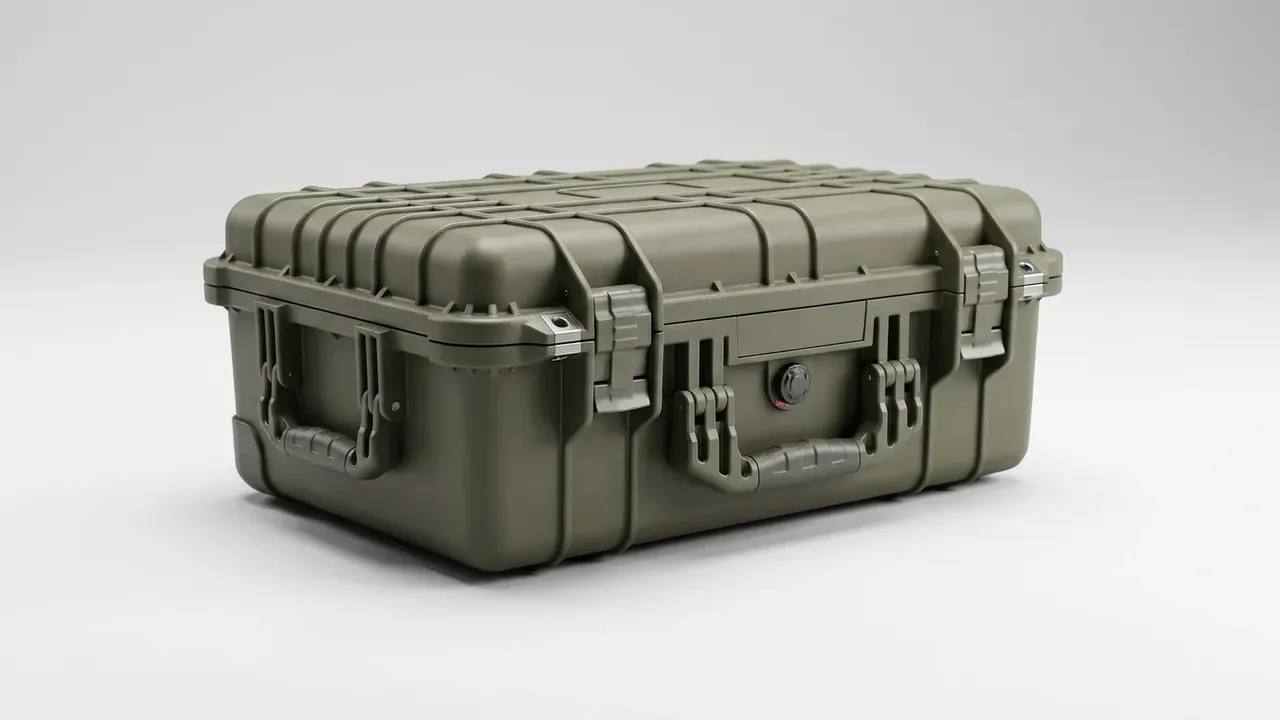
Quick answer: A firearm storage case is not maintained by wiping it down. It needs checks at 90, 180 and 360 days, each with readings: gasket compression below 25 percent, rebound under 85 percent, latch retention under 190 N or a liner 5 percent heavier all put a part at the end of its life.
Table of contents
- Which Parts of a Firearm Storage Case Need Watching
- Two Check Intervals: 90 Days and 180 Days
- Measuring Gasket Compression and Rebound
- Liner Moisture and Latch Retention Loss
- Replacement Limits and Cleaner Bans
- FAQ
1. Which Parts of a Firearm Storage Case Need Watching
Five parts carry almost every failure: gasket, latches, hinge, liner and the moulded edges. The shell rarely breaks, and everything that wears can be replaced.
| Part | Typical failure | Check | Replaceable |
|---|---|---|---|
| Gasket | Flattened, cracked, mouldy | Caliper, section height | Yes |
| Latches | Falling retention, worn cam | Pull gauge, peak | Yes |
| Hinge | Pin clearance, noise | Feeler gauge | Yes |
| Liner | Damp, collapsed, lifting | Scale and caliper | Yes |
| Body | Cracks, distorted rim | Visual, straight edge | No |
The logbook needs three columns: date, compression, latch retention. Two years of entries show the decay slope.
2. Two Check Intervals: 90 Days and 180 Days
The 90 day A check on a firearm storage case takes ten minutes and no tools: latches engaged, grit in the groove, fresh edge cracks. The 180 day B check takes forty minutes with a caliper, pull gauge and scale. The 360 day C check pulls the pins, renews desiccant and repeats a leak test at 20 kPa for 60 seconds.
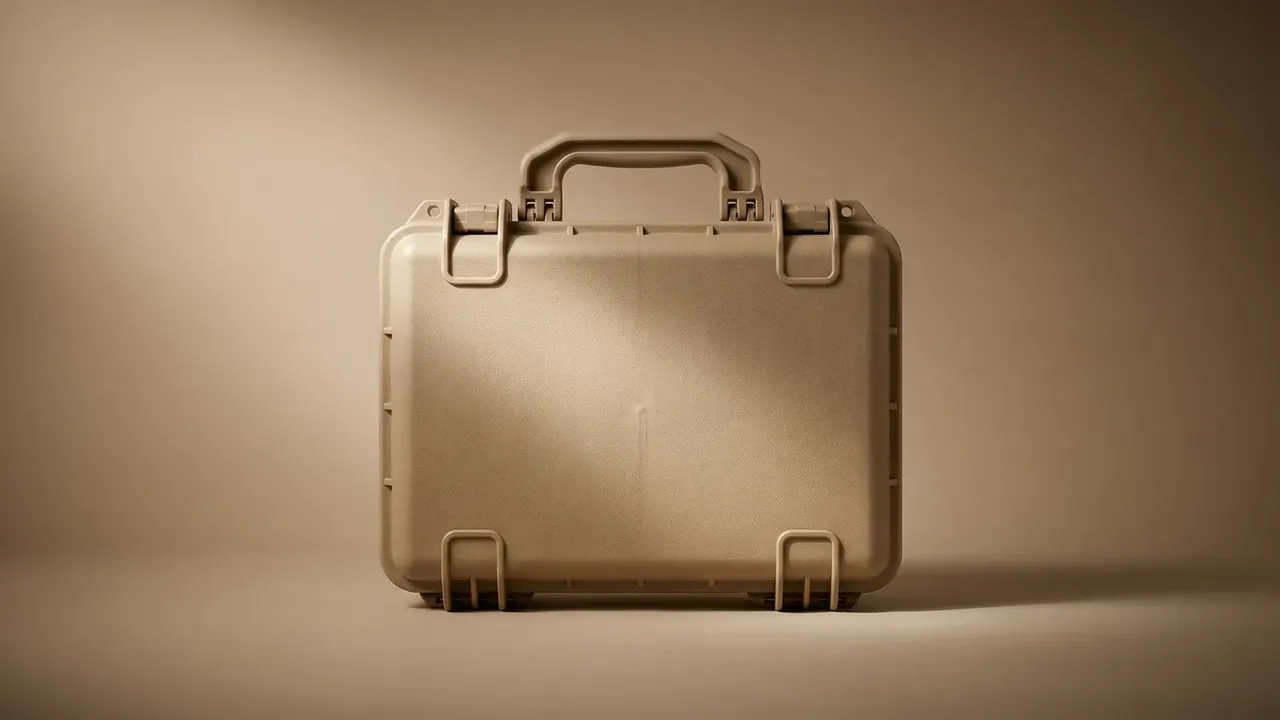
Shorter is not better: every opening is a compression cycle, so inspection wears the gasket. Under sixty openings a year, follow the calendar; a busy unit moves the B check to 120 openings. In winter, check inside the heating period, when humidity drops under 35 percent and the gasket hardens.
3. Measuring Gasket Compression and Rebound
Compression is calculated, not felt. A 9.5 mm gasket in a 6.0 mm groove leaves 3.5 mm of squeeze, 37 percent. The window is 30 to 45 percent: under 25 the seal never loads, over 45 the rubber flattens.
Rebound: compress a 20 mm sample 50 percent for 24 hours, release for 30 minutes, then measure. Above 92 percent passes, 85 to 92 is watched, below 85 is replaced. Four hours at minus 25 C plus a 180 degree bend must leave no crack. Replace the whole gasket, since a joint leaves 30 mm either side under-loaded.
4. Liner Moisture and Latch Retention Loss
The liner fails through water. Closed cell foam of 38 mm absorbs about 0.8 percent; at a 2.5 percent gain, four hours at 55 C dries it. If 2.5 percent returns within 48 hours, the cells have opened. A cavity floor under 35 mm has collapsed.
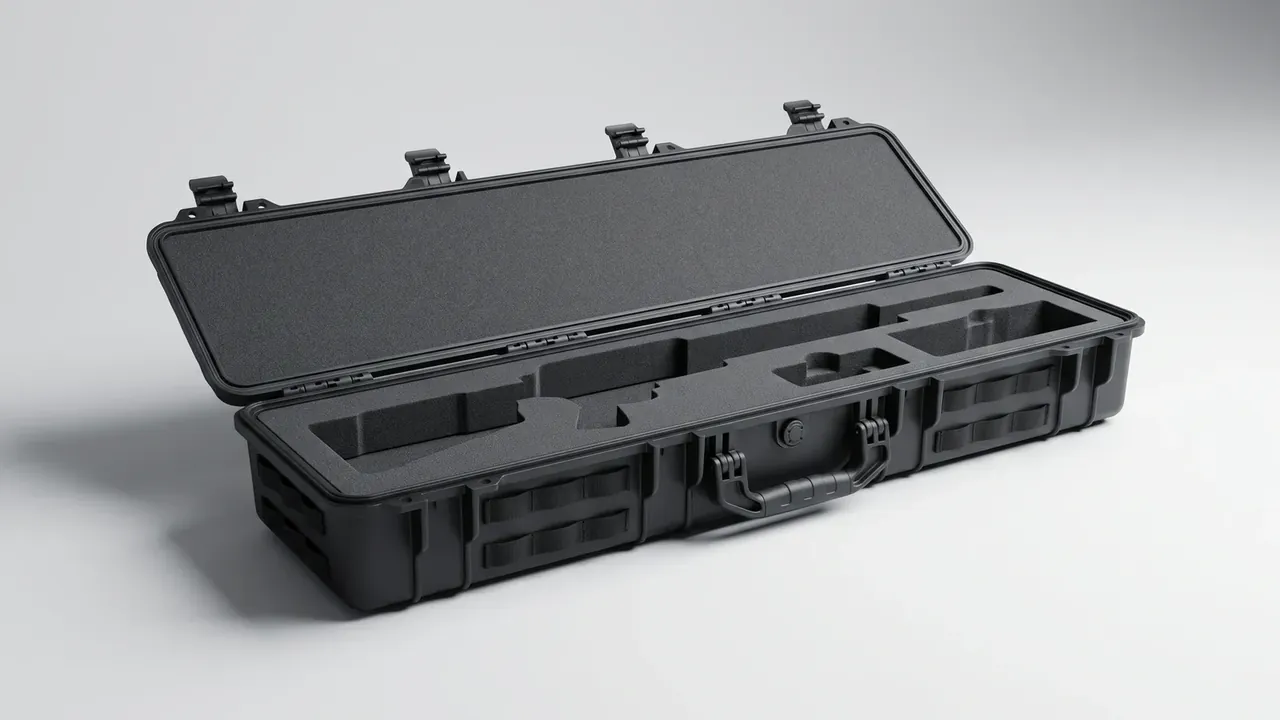
Latch retention falls about 12 percent a year from 340 N, measured every 180 days at 50 mm per minute. At 240 N, repositioning the keeper recovers about 280 N; below 190 N, fit a new latch, because the cam is rounded. Past 0.8 mm of pin clearance the lid shears the gasket, so renew both hinge sides.
5. Replacement Limits and Cleaner Bans
Limits belong on a sheet on the store room wall.
| Part | Measurement | Limit | Action |
|---|---|---|---|
| Gasket | Compression ratio | Under 25% | Replace the gasket |
| Latch | Peak pull force | Under 190 N | Replace the latch |
| Hinge pin | Radial clearance | Over 0.8 mm | Renew pin and seat |
| Liner | Weight, thickness | Over 5% gain, under 35 mm | Replace the liner |
| Body | Crack length | Over 25 mm, through wall | Scrap the case |
| Seal groove | Straight edge on rim | Distortion over 1.0 mm | Scrap the case |
The wrong cleaner damages more than dirt. Neutral soap at pH 6 to 8 is safe; isopropyl below 50 percent is allowed if wiped dry within thirty seconds. Ethanol at 75 percent cracks polypropylene, acetone dissolves the surface, bleach hardens the gasket, and cleaners above pH 10 attack the springs. Wash dry, then wet, and never pressure-wash the groove at 0.5 MPa.
Conclusion
Good maintenance is a table, not an effort: five parts, three intervals, six limits. Compression falling from 37 to 25 percent, retention from 340 to 190 N, liner gain from 2.5 to 5 percent all warn earlier than a visual pass. Replace by the sheet, and the firearm storage case will reach its design life.
This article discusses only the container (case body) side of specifications and design intent, and does not cover any handling, loading or use of the contents.
Related Reading
- How a firearm storage case is built
- Firearm storage case layouts for ranges and agencies
- Routine care for rotomoulded cases
- Moisture control for metal ammunition boxes
Related Products
- 8 Series — Gun Cases; Military Equipment Cases; Camera Equipment Cases; Drone Cases; Watch Cases; Knife Cases; First Aid Cases; Electronics Equipment Cases
- WL8-2812 PP Gun Case — model WL8-2812
- All protective cases and toolboxes: 7 series, 158 models