

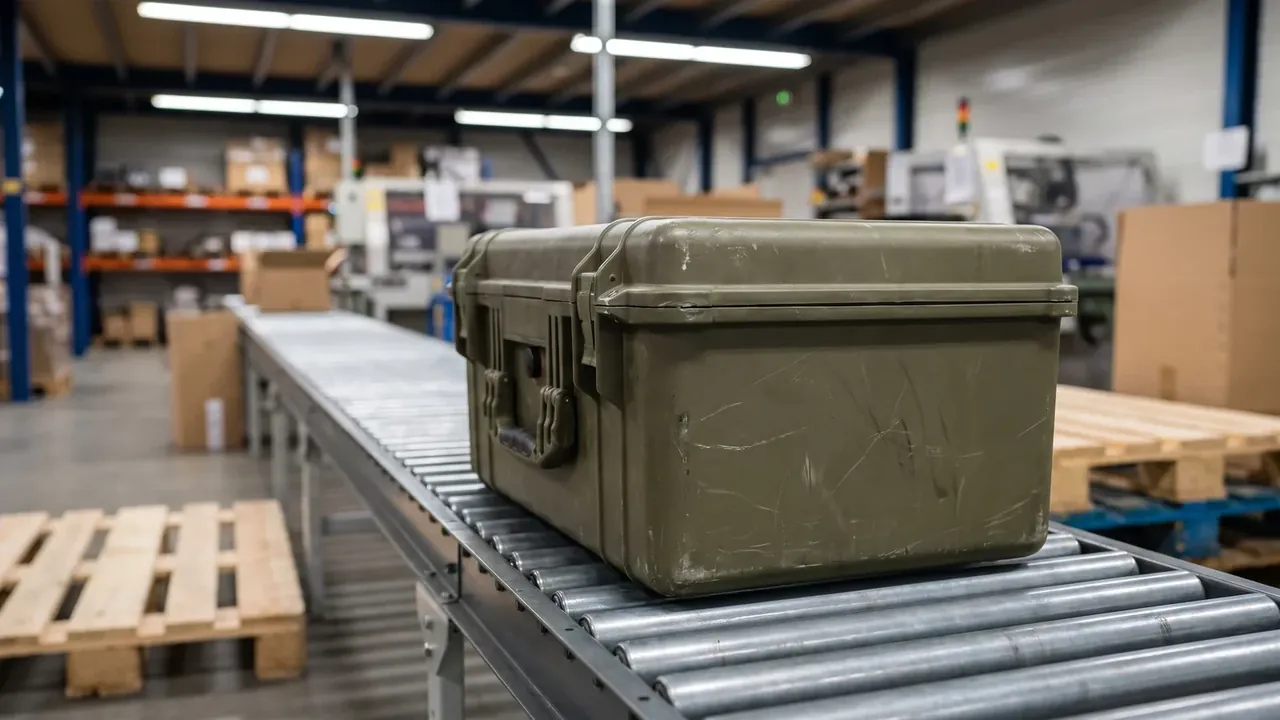
Quick answer: Choosing a firearm storage case comes down to five tests: duty cycle, closed interior height, stack and drop data, sealing matched to transport, batch consistency.
Table of contents
- Start With the Duty Cycle, Not the Spec Sheet
- Test Two: Work the Interior Back From Closed Height
- Test Three: Judge Strength by Stack and Drop Data
- Test Four: Match Sealing to the Transport Mode
- Test Five: Batch Consistency and Service Cost
- FAQ
1. Start With the Duty Cycle, Not the Spec Sheet
Most buyers open the spec sheet first. The useful start is the duty cycle: store room, short road trips, long transit and air freight ask different things. The route sets the exposure, exposure sets the protection floor, and only then does the sheet mean anything.
Write it as one sentence: how often the firearm storage case leaves the store, how long, by which mode. Once a season by road needs no compensation; twice a month with an air leg does.
| Duty cycle | Main exposure | First criterion | Misjudgement |
|---|---|---|---|
| Store room | Stack load, slow humidity drift | Deformation under stack | Bought to transport spec, pays 30% more |
| Road trips | Vibration, frequent opening | Latch retention, hinge life | Wall thickness only |
| Air freight | Pressure, low temperature | Relief valve, cold drop | Thicker walls only |
2. Test Two: Work the Interior Back From Closed Height
Never measure the interior with the lid open. Foam compresses about 25 percent on closure, so usable height drops 4 to 6 mm. When an accessory stands proud, those millimetres decide whether the case shuts.
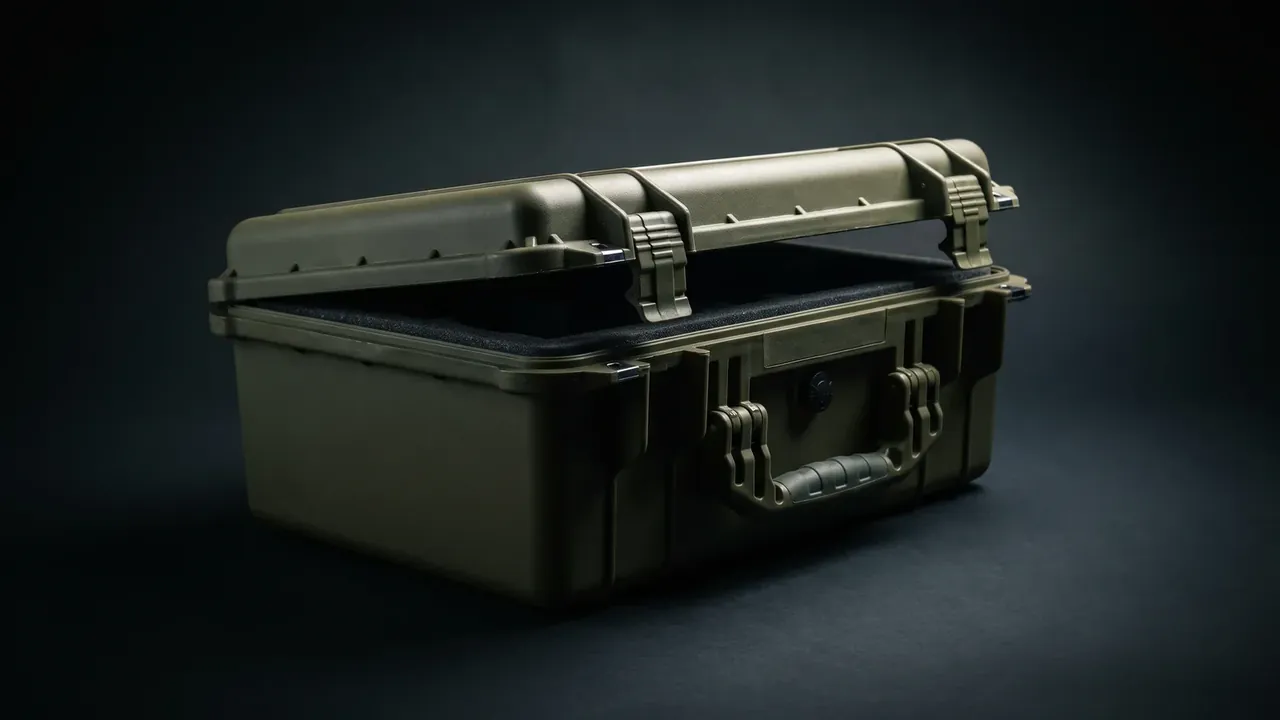
The order is fixed: measure the largest outline including the tallest point, add cushioning (10 mm per side for flat foam, 20 mm or more for pockets), then recheck closed height. Hold the interior to plus or minus 1.0 mm, or every pocket ends up loose or tight. Pocket walls below 15 mm collapse within a year, and EVA at 35 kg/m³ resists that better than 25 kg/m³, at a cost in weight.
3. Test Three: Judge Strength by Stack and Drop Data
A nominal wall thickness says little. Two cases at 3.5 mm can differ almost twofold in compression strength once rib spacing shifts by 20 mm, so strength needs data rather than a number on a drawing.
Stack testing runs five high at 12 kg for 72 hours, then reads deformation 24 hours after unloading; the limit is 1.5 mm. Drop testing runs six faces from 1.2 m after six hours at minus 25 degrees Celsius. A corner crack usually means the wall section changes too abruptly, while a case that survives warm drops and splits cold has a material problem.
| Criterion | Method | Reference value |
|---|---|---|
| Stack deformation | Five high, 72 hours, read after 24 | 1.5 mm maximum |
| Cold drop | Minus 25 degrees 6 hours, 1.2 m, six faces | No crack, latch intact |
| Interior tolerance | Six points per axis | Plus or minus 1.0 mm |
4. Test Four: Match Sealing to the Transport Mode
Tighter sealing is not automatically better; the mode decides. Road transport shifts humidity slowly, so one gasket compressed 25 to 30 percent is enough. Air freight and high-altitude routes need a relief valve opening near 0.3 bar, or the differential makes the lid hard to lift.
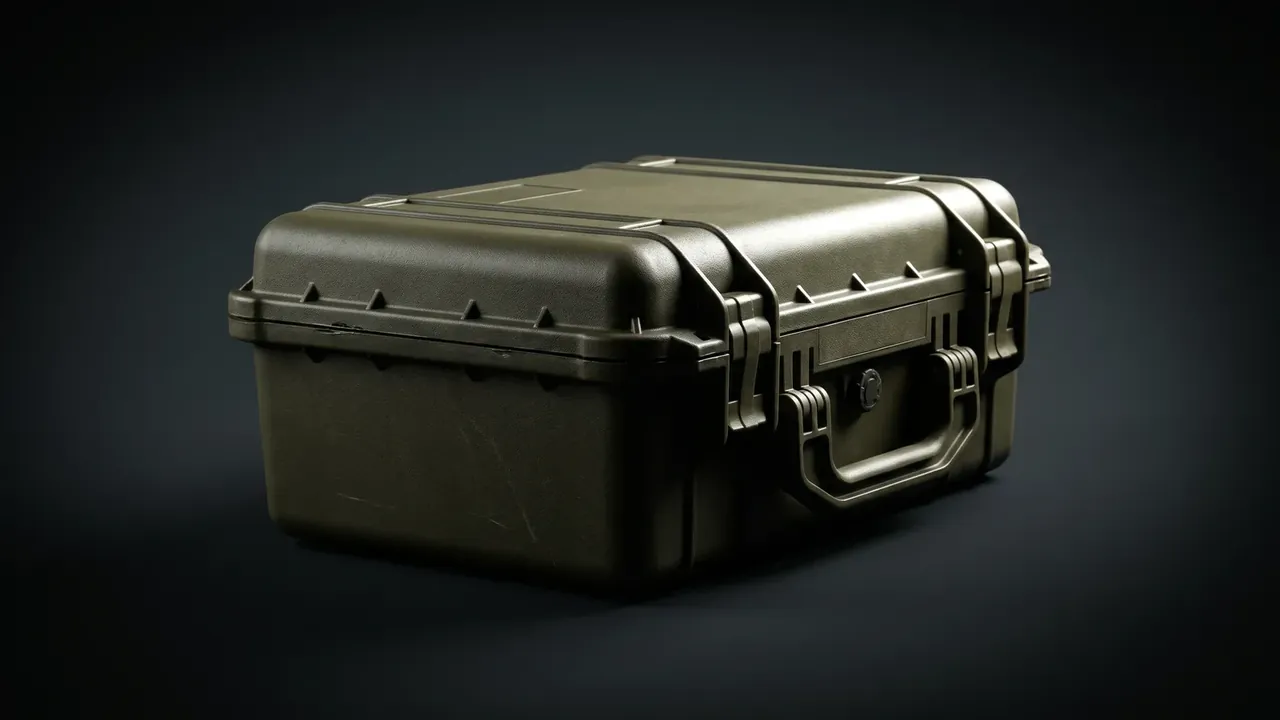
Gasket section matters more than compound. A hollow profile compresses easily and recovers slowly; a solid one needs more latch force and, where retention is weak, never seats, so water enters at the corners. Hardware is checked at 48 hours of salt spray, and the case runs cycling from minus 25 to 60 degrees Celsius, watching lid warp beyond 2 mm.
5. Test Five: Batch Consistency and Service Cost
The first four tests decide whether one case works; the fifth decides whether a hundred are the same. Consistency shows in cavity number, colour and tolerance band.
A multi-cavity mould varies 0.3 to 0.5 mm between cavities, so delivery should be stacked by cavity and faults traced from there. Colour stays within 1.5 delta E on one instrument. Service cost counts too: a separately sold gasket, standard hinge pins and replaceable foam cost less over five years than replacing whole cases.
Conclusion
Choosing a firearm storage case is five questions in sequence: the route sets the floor, closed height the size, data the strength, transport the sealing, batch discipline the long-run cost. Answer all five and the sheet becomes a checklist. Put the answers into the enquiry, and the firearm storage case is chosen on fit rather than numbers.
This article discusses only the container (case body) side of specifications and design intent, and does not cover any handling, loading or use of the contents.
Related Reading
- How a firearm storage case is built
- Specifying a firearm storage case
- Where firearm storage cases are used
- Checks and service life
Related Products
- 8 Series — Gun Cases; Military Equipment Cases; Camera Equipment Cases; Drone Cases; Watch Cases; Knife Cases; First Aid Cases; Electronics Equipment Cases
- WL8-2812 PP Gun Case — model WL8-2812
- All protective cases and toolboxes: 7 series, 158 models