

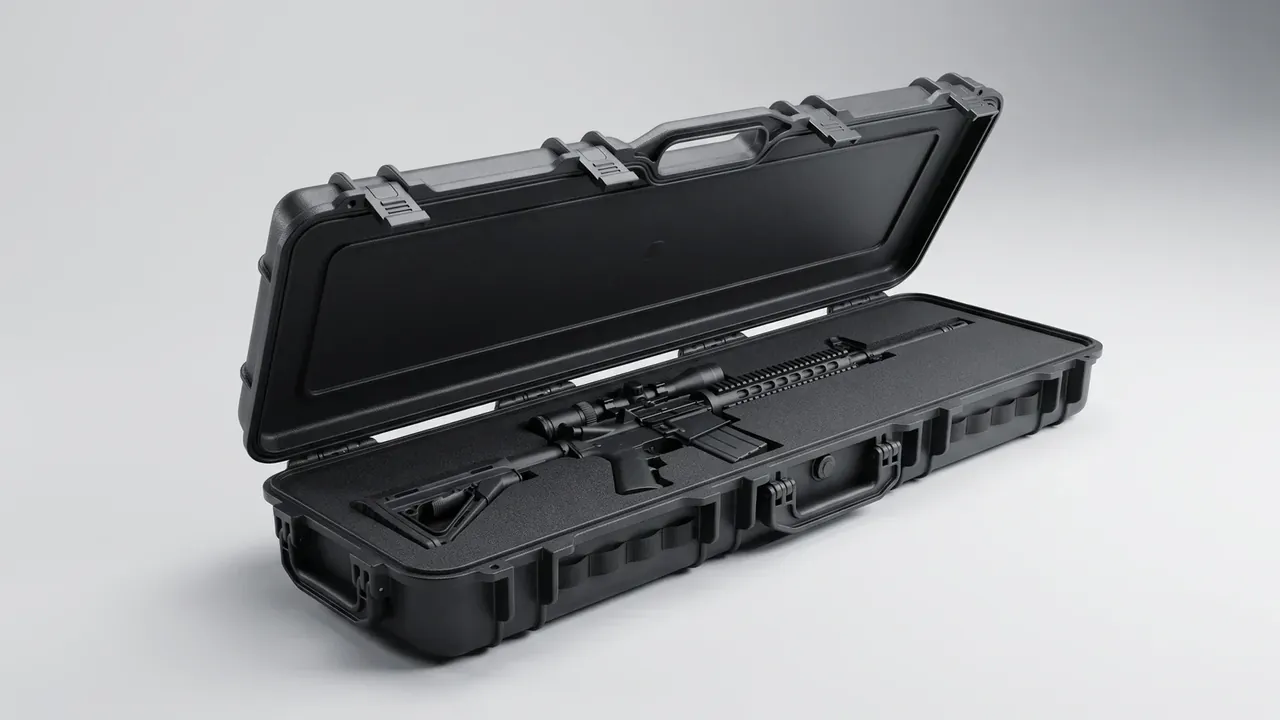
Quick answer: A firearm storage case acceptance standard turns each line into a reading someone can sign: fixed items and gauges, a sampling plan with AQL, defect classes with named sign-off rights, then pressure-hold and destructive conditions, retention years and re-inspection steps.
Table of contents
- What a Firearm Storage Case Acceptance Standard Must Measure
- Sampling Plan and AQL
- Defect Classes and Sign-off Rights
- Pressure Hold and Destructive Tests
- Retention Years and Re-inspection
- FAQ
1. What a Firearm Storage Case Acceptance Standard Must Measure
Acceptance starts when adjectives become readings. “Seals well” lets two inspectors reach two verdicts; “20 kPa for 5 minutes, drop within 0.8 kPa” leaves one. That rewrite is the job of a firearm storage case acceptance standard.
Inspection groups into appearance, dimensions, wall, latch, sealing, stack, drop and marking, each with a gauge and record.
| Item | Criterion | Gauge | Record |
|---|---|---|---|
| Appearance | No flash at 800 mm, D65 | Visual | Appearance sheet |
| Wall | Six points, minimum 2.8 mm | Ultrasonic | Thickness log |
| Latch | 350 N held 60 s | Tensile gauge | Force curve |
| Sealing | 20 kPa, 5 min, within 0.8 kPa | Pressure bench | Decay curve |
| Stack | 6 tiers, 48 h, set within 2.5 mm | Static frame | Deflection log |
Assembly is the item most often skipped: foam against case and latch against keeper, judged with the unit closed, since parts that pass alone still jam.
2. Sampling Plan and AQL
Sample by batch. A firearm storage case batch is one mould, one resin grade and one shift; pallets mixed across shifts are split before sampling.
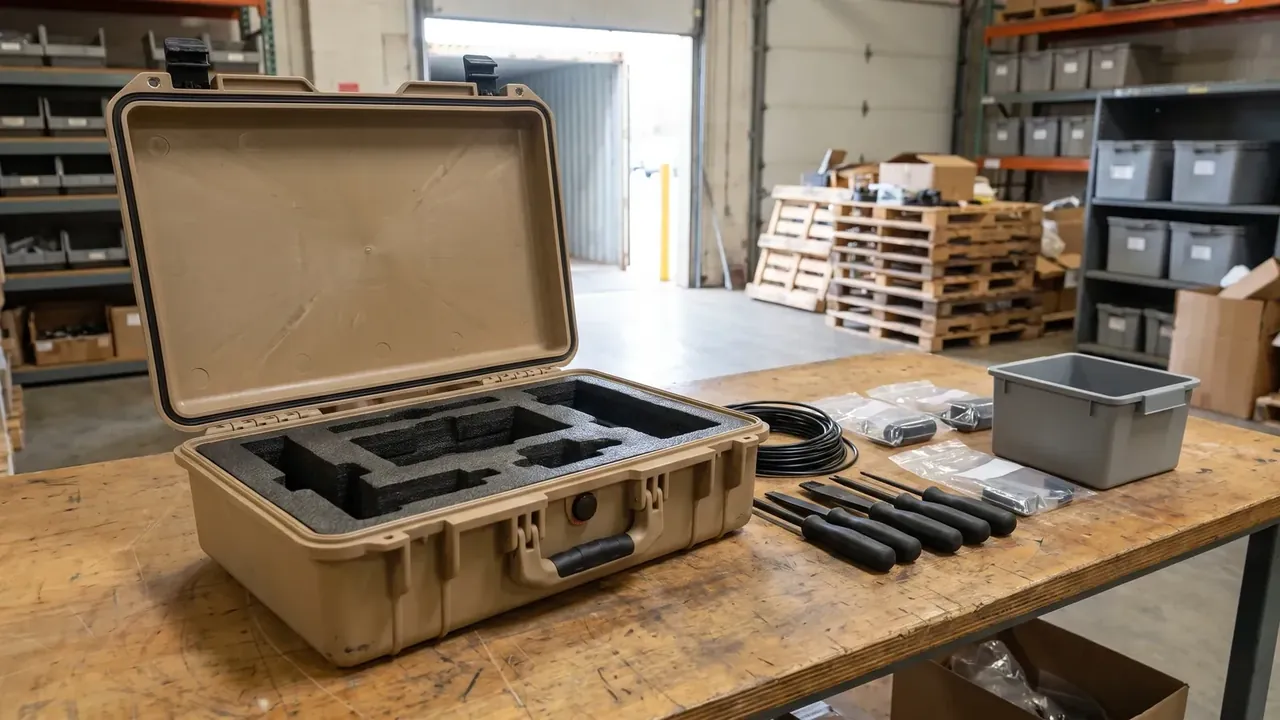
Level II applies once the batch is defined: AQL 1.0 for appearance and 0.4 for function, with critical defects outside the count plan. Destructive items come four for the drop and five for the pressure hold, one per cavity so a single cavity cannot hide behind an average.
| Batch | Sample | Appearance | Function |
|---|---|---|---|
| 91 to 150 | 20 | 1 accept, 2 reject | 0 accept, 1 reject |
| 151 to 280 | 32 | 1 accept, 2 reject | 1 accept, 2 reject |
| 281 to 500 | 50 | 2 accept, 3 reject | 1 accept, 2 reject |
Records carry sampler, pallet and cavity from three stack levels. The buyer names the sampler, never the producer.
3. Defect Classes and Sign-off Rights
Classify first, then attach a signature, or the verdict goes to the loudest voice. Critical means sealing failure, weak latch retention or a thin wall; major means overshoot that still assembles; minor means colour, flow marks and marking.
| Class | Typical case | Verdict | Signature |
|---|---|---|---|
| Critical | Drop past 1.5 kPa, retention under 250 N | Reject | Quality head |
| Major | Dimension within 0.6 mm, set 2.5 to 4 mm | Rework or concession | Quality manager |
| Minor | Colour, marking off by 2 mm | Count only | Inspector |
A concession caps quantity, states 15 days and a permitted use; two in a row escalate. Rejection needs raw readings, with objection inside three working days.
4. Pressure Hold and Destructive Tests
Write the pressure hold as 20 kPa, 5 minutes and 23 plus or minus 2 Celsius, drop under 0.8 kPa, after three open-close cycles so the gasket seats.
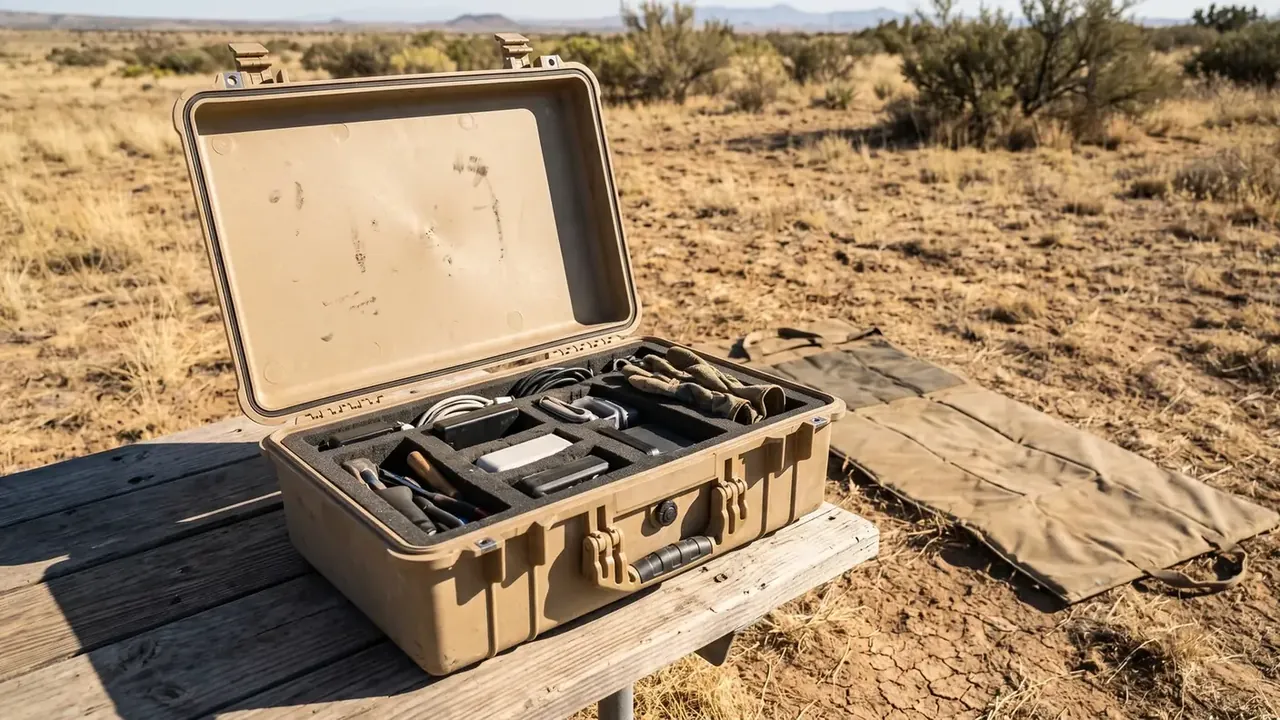
Drop runs 1.5 m onto corner, edge and face after 6 hours at minus 20; stack runs 6 tiers for 48 hours with set under 2.5 mm; salt spray runs 96 hours. Destroyed units are not returned; the cost belongs in the acceptance budget.
Order matters: dimensions, then pressure, then destructive items, or a drop crack reads as a sealing fault.
5. Retention Years and Re-inspection
Retention is six years for routine batches and twelve for projects, one paper and one electronic set, with gauge numbers and calibration dates beside the readings.
Every firearm storage case batch follows one path: a failed lot is quarantined and red-tagged, the sample doubles, only the failed item and what it affects are retested, and the verdict lands within 72 hours. Three failures in a row bring a supplier review, cause analysis in seven working days and a tighter verification batch.
Track pass rate, concession rate and re-inspection rate monthly, and the standard pushes quality back up the line.
Conclusion
An acceptance standard is worth what a third person can reproduce. Fix the item and its gauge, the batch and its sample size, the defect class and the signature, then the test condition and retention. Held to that, a firearm storage case acceptance standard decides batches instead of describing them.
This article discusses only the container (case body) side of specifications and design intent, and does not cover any handling, loading or use of the contents.
Related Reading
- How a firearm storage case is built
- Acceptance clauses for firearm transport cases
- Auditing a gun case production line
- Incoming inspection for military supply cases
Related Products
- 8 Series — Gun Cases; Military Equipment Cases; Camera Equipment Cases; Drone Cases; Watch Cases; Knife Cases; First Aid Cases; Electronics Equipment Cases
- WL8-2812 PP Gun Case — model WL8-2812
- All protective cases and toolboxes: 7 series, 158 models