

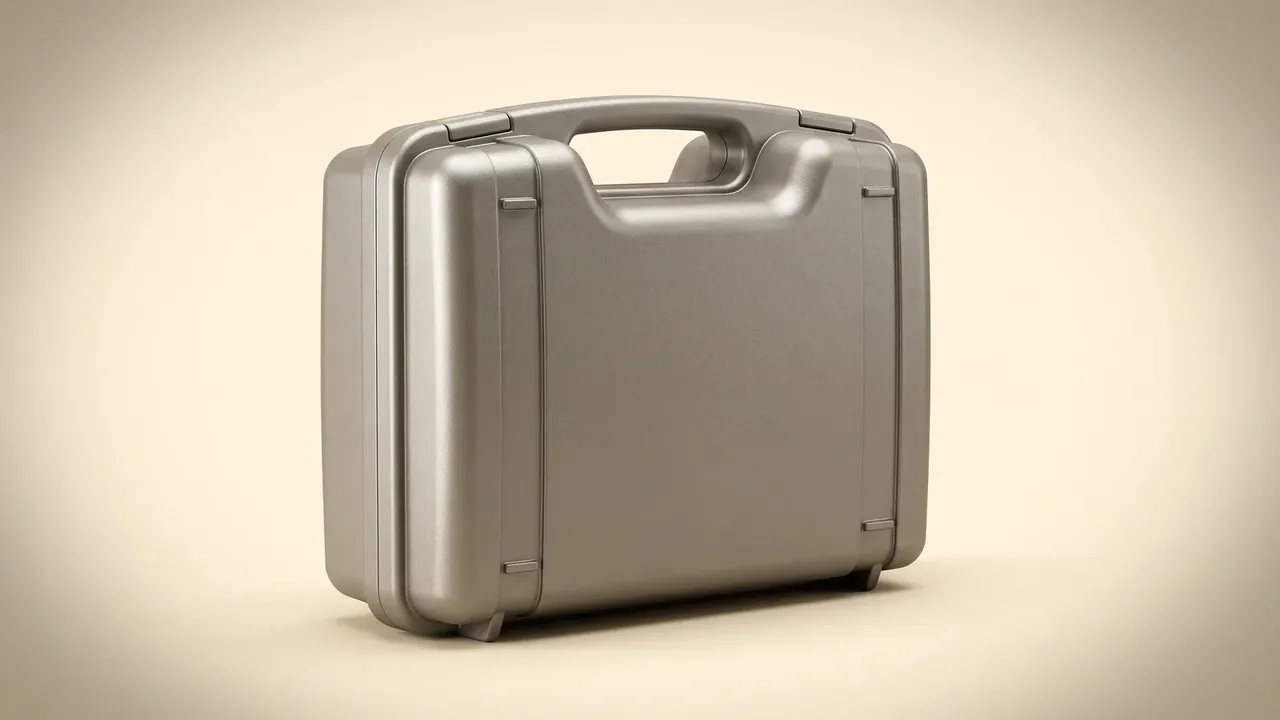
Quick answer: A first aid kit case is cleared by six tests anyone can repeat on site: wall thickness, handle load, air tightness, drop, temperature cycling and marking. This article gives the procedure and the fail line for each, plus three ways to route a failure.
Table of contents
- Six check items for a first aid kit case
- Four tests you can run on site
- Which clause backs each verdict
- Three ways to handle a failure
- Sampling and records
- FAQ
1. Six check items for a first aid kit case
Acceptance sheets drift into one line: appearance good, function normal. In a dispute that line is worthless, since neither side holds an action the other can repeat.
Six items replace it, each with a procedure, a fail line and a reading.
| Item | How | Fail line |
|---|---|---|
| Wall thickness | gauge, base and four walls | any point below 3.2 mm |
| Handle load | 30 kg, 10 minutes | set above 2 mm, whitening at the root |
| Air tightness | minus 20 kPa, held 60 seconds | drop above 0.5 kPa |
| Drop | 1.0 kg ball, 1 m, three points | crack, or a latch that springs open |
| Thermal cycling | 4 hours at minus 20, then 4 at plus 60 | distortion, edge misalignment |
| Marking | three faces, 15 mm characters | readable at 3 m |
2. Four tests you can run on site
None of the four needs a laboratory, only a room with a socket and one gauge.
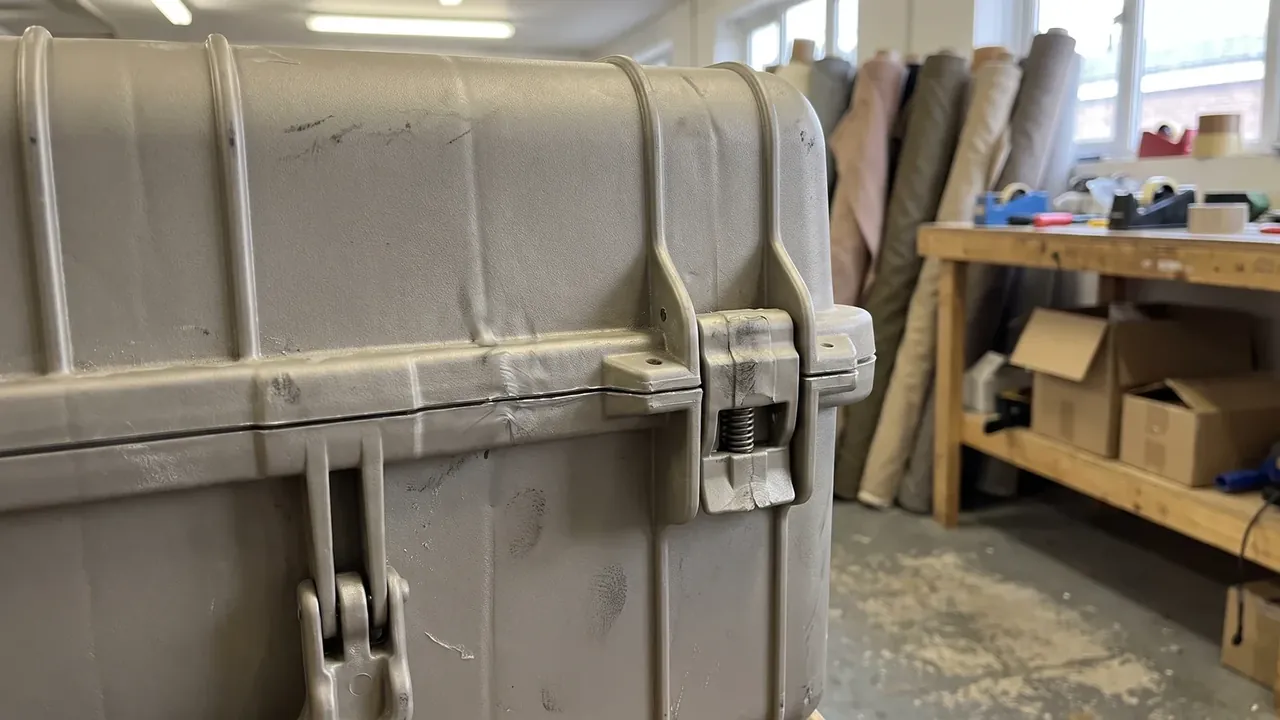
The drop test hunts the thinnest point on the lid: a 1.0 kg ball falls 1 m onto the centre, between the ribs and onto a corner. The pass line is not survival but whether the latches still close; one that springs means a soft lid and the batch goes back.
Tightness runs off a hand pump. Draw to minus 20 kPa, close the valve, and a drop above 0.5 kPa in 60 seconds is a leak. The leak rarely sits in the gasket but at the rim corner, where the parting line can step 0.1 mm.
Handle load gets skipped because it looks unable to fail. Hang 30 kg of sand on an empty case for 10 minutes, then measure set at the handle centre; above 2 mm means thin ribs in the boss.
Thermal cycling needs a chamber, which most suppliers own. One round: 4 hours at minus 20, then 4 at plus 60, then room temperature to check edge alignment.
3. Which clause backs each verdict
Five clauses sit behind this factory's sheet:
- Technical annex: material, minimum thickness, latch type
- Drop method for transport packages: height and repetitions
- Water spray method: 30 minutes for units used outdoors
- Salt spray: 48 hours neutral, grade 9 or better
- Sealed sample: colour, texture, print position
The sealed sample carries the most weight: pale grey covers three greys, but a sealed unit does not, and under one lamp the argument ends.
Salt spray gets dropped most often: the shell is plastic and looks rust-proof. Springs, rivets and the handle pin are not: red rust after 48 hours fails the batch, and it only surfaces six months after assembly.
4. Three ways to handle a failure
A failure is not one verdict but three, routed differently.
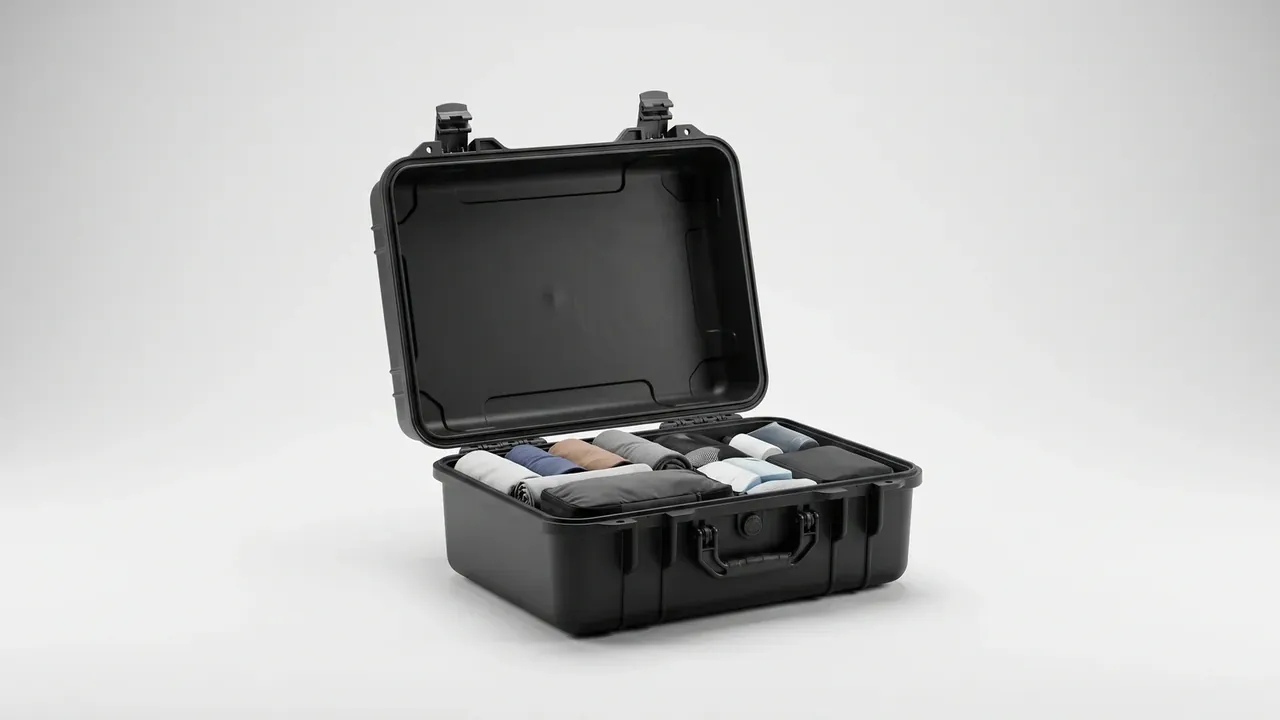
| Type | Typical item | Action | Batch usable |
|---|---|---|---|
| Critical | thin wall, tightness | reject, screen all | no |
| Major | handle set, latch springs | double sample, mark each | unit by unit |
| Minor | marking off position, flow marks | accept with a price reduction | yes |
Critical items leave no room for concession: they map to failure in use, not appearance. Major items allow a doubled sample, since the cause may be local, such as one run with short packing at the boss. A minor concession needs the discount and the responsible party on the sheet, or the rework has no owner. Draw those borders in the contract; left vague, every acceptance becomes a negotiation.
5. Sampling and records
Sample size follows batch size, not mood.
| Batch | Sample | Accept | Reject |
|---|---|---|---|
| under 50 | 5 | 0 | 1 |
| 51 to 200 | 8 | 0 | 1 |
| 201 to 500 | 13 | 1 | 2 |
| above 500 | 20 | 1 | 2 |
The logic: the larger the batch, the higher the risk of one bad unit, so the sample grows while the acceptance number stays at one. Under 200 units, a single failure sends the batch back.
Keep three records: gauge readings at five points with locations, the vacuum value at start and after 60 seconds, and a photo after the drop. They fit on one page and still explain, later, why the batch passed.
Conclusion
Acceptance of a first aid kit case means six checks written as repeatable actions, and three kinds of failure routed along three paths. With criteria in the contract, procedures on the sheet and readings in the file, a first aid kit case verdict becomes a record, not a promise.
This article discusses only the container (case body) side of specifications and design intent, and does not cover any handling, loading or use of the contents.
Related Reading
- First aid kit case specifications: layers, sealing, marking
- First aid kit case versus alternative case types
- Acceptance items for airdrop cases
- Standards for mould storage cases
Related Products
- 8 Series — Gun Cases; Military Equipment Cases; Camera Equipment Cases; Drone Cases; Watch Cases; Knife Cases; First Aid Cases; Electronics Equipment Cases
- WL8-2812 PP Gun Case — model WL8-2812
- All protective cases and toolboxes: 7 series, 158 models