

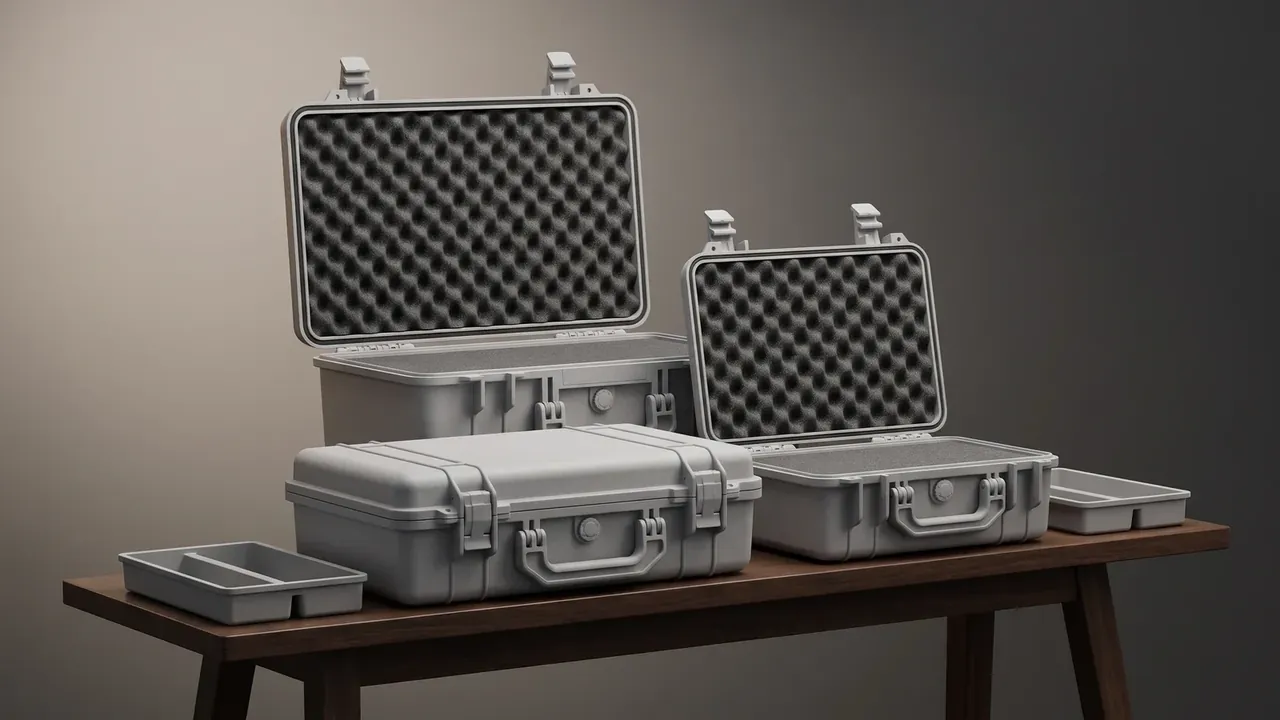
Quick answer: A first aid kit plastic case costs more on day one and less every year after. Divide the unit price by uses, add inserts, gaskets and restocking losses, and a three-year view puts cost per use near one yuan.
Table of contents
- Putting disposable and reusable on one ledger
- Insert compartments from eight to sixteen
- Alcohol wiping, sealing and damp
- The gap between 500 units and a sample
- Annual cost of expiry and restocking
- FAQ
1. Putting disposable and reusable on one ledger
The usual mistake is comparing unit prices side by side. A carton costs 6.8 yuan, a first aid kit plastic case 41 yuan, which reads as six times. But a carton lasts a quarter and a case three years.
That is where the arithmetic goes wrong.
Split the annual cost into three parts: body amortisation, wear parts and restocking losses. Amortisation is price over service life, wear parts are insert and gasket, the losses are spares kept because nobody trusts the count.
| Compartments | Cell size (mm) | Price at 500 | Three-year amortisation |
|---|---|---|---|
| 8 | 120×90×50 | 34 yuan | 11.3 yuan |
| 12 | 90×70×45 | 41 yuan | 13.7 yuan |
| 16 | 75×60×40 | 49 yuan | 16.3 yuan |
Finer compartments raise price and amortisation together. The extra money buys less hunting at restock time, not better plastic.
2. Insert compartments from eight to sixteen
The compartment count on a first aid kit plastic case matches how restocking is done, not how tidy the layout looks. Eight restock by category, fewer movements but every cell opened; sixteen by item, only the empty cell touched, at the cost of cells too small for bulky items.
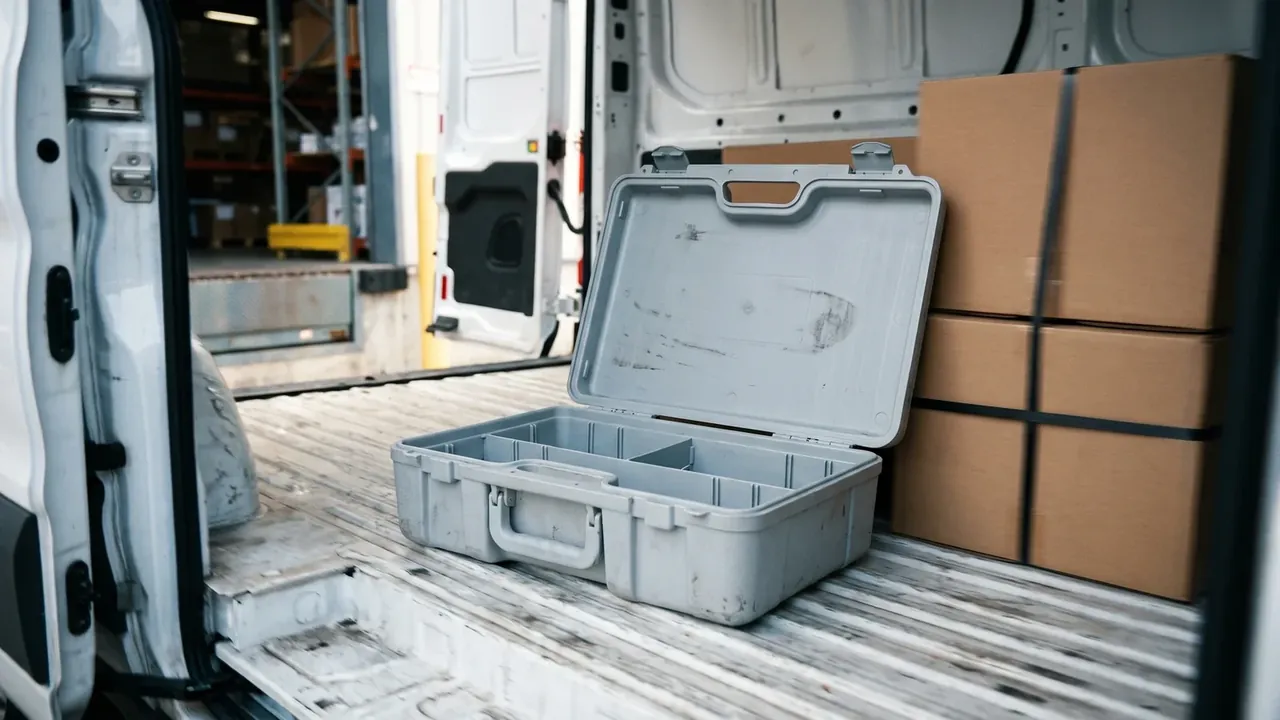
A cell of 90 by 70 by 45 mm is the compromise: a rolled bandage lies flat, two tubes stand upright, and the count lands near twelve.
Restock speed diverges from the second refill. The first fill is quick whoever does it; after that gaps arrive in ones and twos, and an eight-cell insert opens whole while a twelve-cell one needs a glance.
Sixteen cells fail on judgement, not cost. Small cells invite under-filling, empty space reads as full, and the monthly count finds the shortfall.
3. Alcohol wiping, sealing and damp
A first aid kit plastic case must survive repeated wiping, which matters more than wall thickness. Five items, each failure costing a year:
- Wipe resistance: 75% alcohol daily for 30 days with no whitening, no fibre lift and no tackiness.
- Sealing: a twin-lip gasket closing to a gap under 0.5 mm that keeps poured water out.
- Damp: 24 hours at 40 ℃ and 90% relative humidity leaves no droplets inside.
- Temperature: storage from -10 ℃ to 55 ℃ without brittle latches or a sagging body.
- Hinge life: 5000 open-close cycles with under 1 mm of lid droop.
Poor alcohol resistance usually traces to regrind. The surface hazes after two months of wiping, then chalks; the first aid kit plastic case is sound yet unfit to hand over.
4. The gap between 500 units and a sample
A single sample costs 62 yuan and a 500-unit run costs 41 yuan. That 21 yuan is tooling and setup spread across the run, and it tells you how large a trial should be.
At 50 units the price stays near 55 yuan, at 300 near 44, and only at 500 does it reach 41.
Size a trial to one quarter of demand instead of squeezing the price.
The real trap is a tooling change: alter the layout once, the insert is rebuilt, the 500-unit amortisation is gone. Rebuilding an insert at 8 yuan a set costs 4000 yuan across 500 sets, the margin on 100 cases spent in advance. A new insert also takes two weeks, during which restocking runs on the old layout and the empty cells stay empty. List the contents to individual items before fixing a layout; if the list will not resolve, start at eight compartments, which forgives the most error.
5. Annual cost of expiry and restocking
| Item | Per event | Per year |
|---|---|---|
| Body amortisation | 41 yuan each | 13.7 yuan |
| Insert replacement | 12 yuan a set | 4 yuan |
| Gasket replacement | 8 yuan each | 2.7 yuan |
| Disposable carton | 6.8 yuan each | 27.2 yuan |
At twelve compartments, twelve openings a year and a 36-month life, the first aid kit plastic case lands at 1.14 yuan per use; a carton replaced quarterly at 1.7. Thin per use, but across 100 units the gap is 670 yuan a year.
Expiry is the other line. The body does not fail; insert and gasket do, slumping at two years and hardening at three, and replacing them costs far less than scrapping cases.
Conclusion
Cost for a first aid kit plastic case belongs on an annual view, not a unit price. Put amortisation, wear parts and restocking losses on one sheet and both the 8-versus-16 and 500-versus-sample gaps become numbers you can argue with. Count the openings first, then decide how many first aid kit plastic case units to buy.
This article discusses only the container (case body) side of specifications and design intent, and does not cover any handling, loading or use of the contents.
Related Reading
- Specifying a first aid case body
- First aid case versus alternatives
- Consolidated tool kit selection
- Tool chest structure and tiers
Related Products
- 8 Series — Gun Cases; Military Equipment Cases; Camera Equipment Cases; Drone Cases; Watch Cases; Knife Cases; First Aid Cases; Electronics Equipment Cases
- WL8-2812 PP Gun Case — model WL8-2812
- All protective cases and toolboxes: 7 series, 158 models