

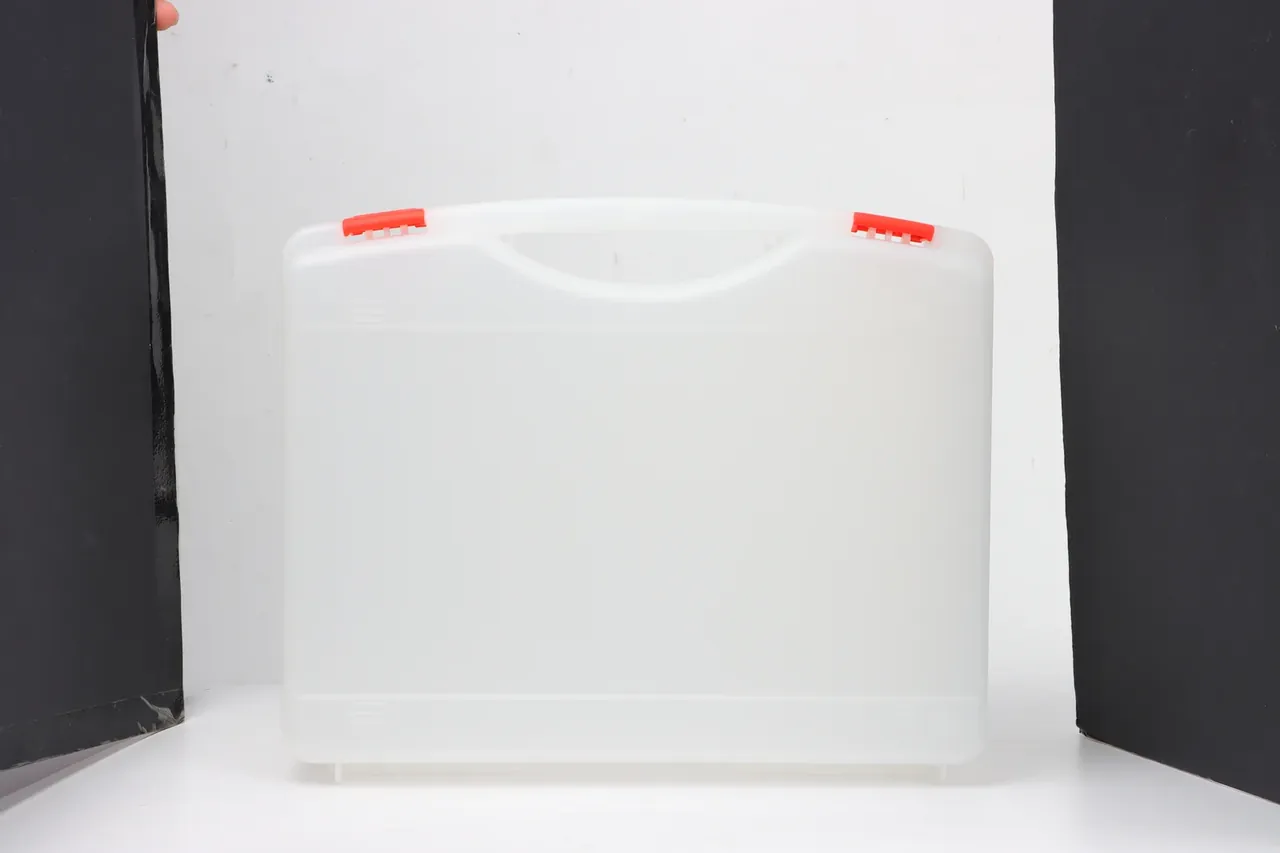
Quick answer: A flame retardant case needs 5VA only when the shell is the last barrier: V-0 proves self-extinction at 50 W, 5VA proves no burn-through at 500 W.
Table of contents
- Two Rulings, Not One Scale
- Specimen Thickness: Why 1.5 mm and 3.0 mm Disagree
- Halogen-Free Systems: Phosphorus, Nitrogen, Intumescent
- What 5% to 15% Loading Costs
- Matching the Rating to the Site
- FAQ
1. Two Rulings, Not One Scale
The two ratings sit on different scales. V-0 holds a 20 mm blue flame of about 50 W under a 125 mm by 13 mm bar twice, 10 s each pass; 5VA applies a 500 W flame 125 mm long to a 150 mm plaque five times, 5 s each.
| Item | V-0 | 5VA |
|---|---|---|
| Flame energy | about 50 W | 500 W |
| Flame height | 20 mm | 125 mm |
| Passes | 2, 10 s each | 5, 5 s each |
| Specimen | 125 mm by 13 mm bar | bar plus 150 mm plaque |
| Afterflame | 10 s single, 50 s total | 60 s after the fifth pass |
| Dripping | must not light cotton | plaque must not burn through |
V-0 also carries a budget buyers forget: five bars must sum to 50 s of afterflame. The 5VA rule is blunter, since a hole reads 5VB. Neither test covers the other, so a flame retardant case order always pairs the grade with a thickness.
2. Specimen Thickness: Why 1.5 mm and 3.0 mm Disagree
Change the wall and the verdict flips. UL94 binds the rating to a thickness, so a card reads V-0 at 1.5 mm, never V-0 alone.
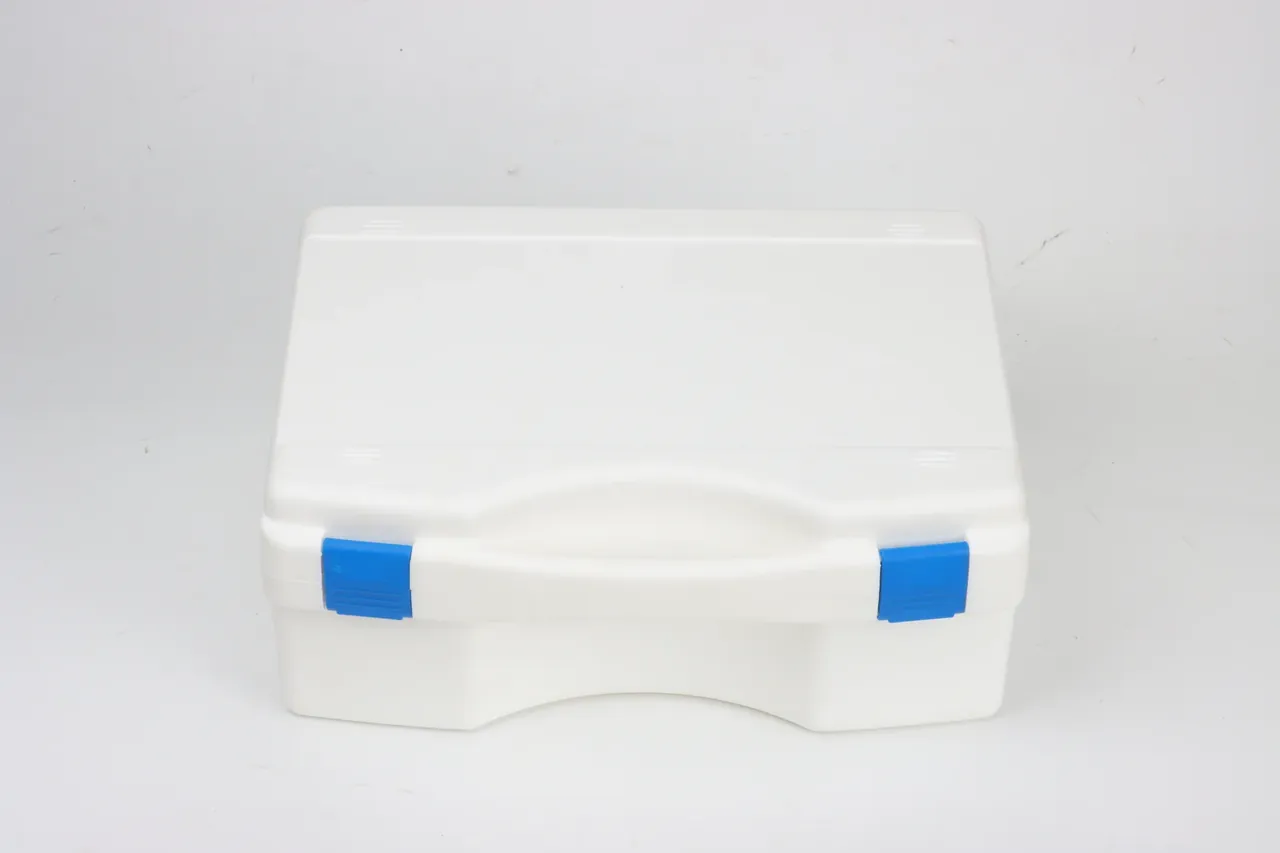
Thin walls fail on dripping. A 1.5 mm bar loses viscosity fast, drops light the cotton 300 mm below, and V-0 becomes V-2; the same compound at 2.0 mm dripped once and held 5 s. Thick walls spread heat sideways, so 3.0 mm settles at 3 s to 5 s of afterflame and an oxygen index 1 to 2 points higher, at the cost of 1.2 mm penetration.
Conditioning decides the rest: 48 h at 23 °C and 50% RH, then 168 h at 70 °C, both of which must pass, or the lost grade returns within two years outdoors.
The process sets the window. Rotomoulded walls run 3.0 mm to 6.0 mm with no weld line. Injection-moulded flame retardant case walls land at 1.5 mm to 2.5 mm, where the weld line opposite the gate is the weak path, so specimens are cut there.
3. Halogen-Free Systems: Phosphorus, Nitrogen, Intumescent
Halogen-free does not mean low loading, and the wrong system doubles the dose without reaching V-0.
| System | Loading | Mechanism | Wall | Main cost |
|---|---|---|---|---|
| Phosphorus | 12–18% | gas phase plus char | 2.0–4.0 mm | hydrolyses, blooms |
| Nitrogen | 8–12% | dilution, char promotion | 1.5–3.0 mm | amide resins only |
| Intumescent | 20–28% | acid chars and foams | above 3.0 mm | brittle char, moisture |
| Bromine plus antimony | 18–22% | radical scavenging | from 1.5 mm | smoke, acid gas |
Phosphorus is the most efficient: 15% phosphinate with 3% char promoter gave 2 s of afterflame and no drip at 3.0 mm, yet 7 days at 60 °C and 90% RH pulled the extract pH from 6.8 to 5.4. Nitrogen at 10% reaches V-0 in PA and stalls in PP, which lacks the amide backbone. Intumescent at 20% to 28% foams to 5 mm to 8 mm, then cracks on a 1.2 m drop and lifts Ra from 0.8 to 3.2. Bromine at 18% with 5% antimony still reaches V-0 at 1.5 mm for 30% less material cost, though smoke density of 300 to 500 fails many indoor approvals.
4. What 5% to 15% Loading Costs
A flame retardant is a filler, and the invoice arrives in impact and finish. Each extra 5% takes 12% to 18% off Charpy impact: 25 kJ/m² unfilled, 16 kJ/m² at 10%, 12 kJ/m² at 15%. Haze climbs from 8% to 22%, colour shift reaches ΔE 1.5 to 3, and a pale flame retardant case shows both while a black one hides them.
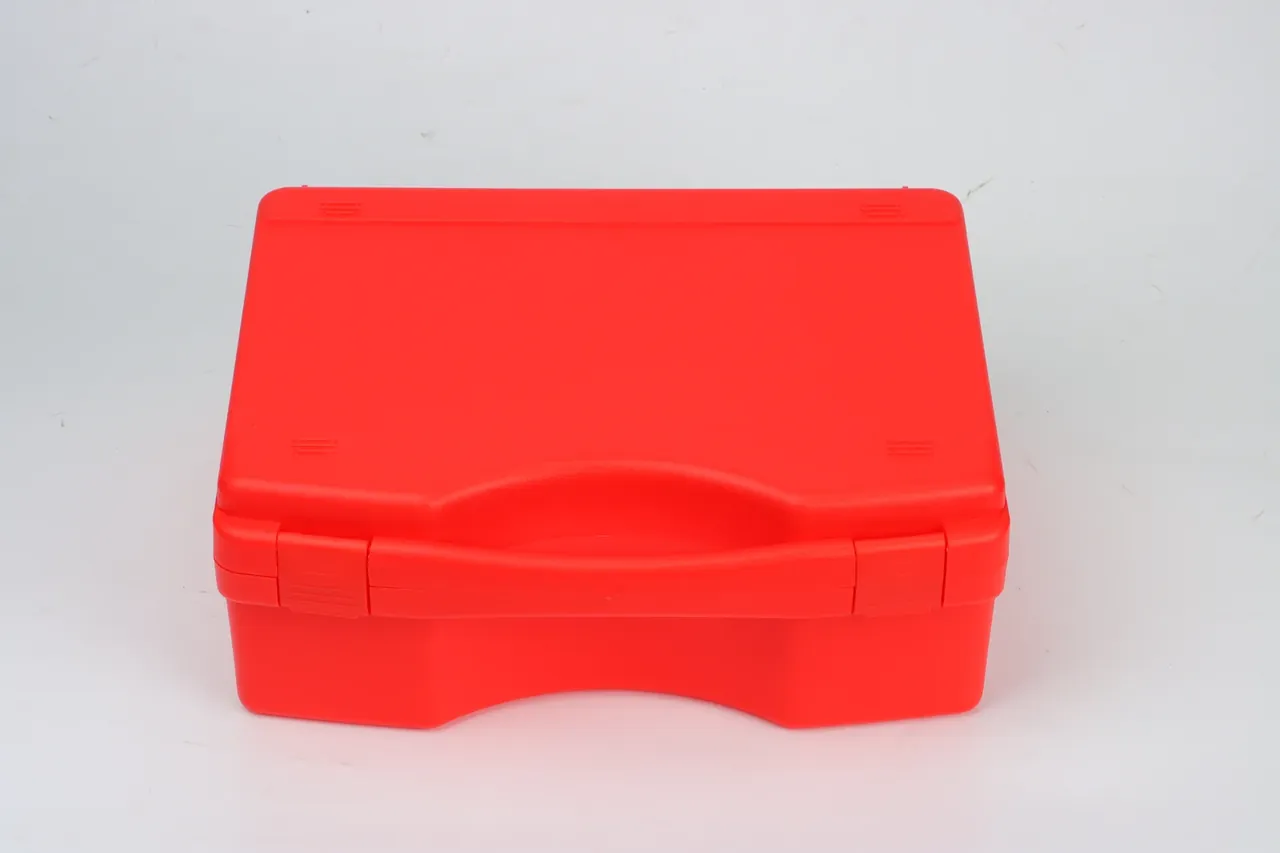
Shrinkage falls with the load, from 1.6% to 1.1%, so a mould cut to the old figure gives a 400 mm case 2 mm short. Three fixes work together: POE at 5% to 8% restores 18 kJ/m², a Ra 3.2 grain hides bloom, and a mould near 40 °C limits skin orientation. All three add 8% to 12%, still less than a thicker wall.
5. Matching the Rating to the Site
| Site | Rating | Wall | Why |
|---|---|---|---|
| Charging pillar metering bay | 5VA plus V-0 | 3.0 mm | parts inside can ignite |
| Storage PACK top cover | 5VA plus V-0 | 3.0 mm | cell runaway, shell is last |
| Server room battery tray | V-0 | 2.0 mm | sprinklers cover the room |
| Forecourt box | V-0 plus static dissipative | 2.0 mm | vapour cloud outside |
| Vehicle tool case | V-2 | 1.5 mm | no fixed ignition nearby |
A flame retardant case earns 5VA only where fire can start inside and the shell is the last barrier. A charging pillar bay and a storage PACK lid both qualify at 3.0 mm, since a component can fail and the wall must survive five passes at 500 W. Where a steel cabinet or a sprinkler already stands in front, V-0 at 2.0 mm carries the job, and a vehicle tool case clears at V-2.
A forecourt box within 3 m of a loading point is the exception, needing V-0 plus static dissipation because the vapour cloud sits outside rather than inside. That clause outranks the yellow card.
Conclusion
A flame retardant case comes down to three numbers: 10 s of single afterflame and 50 s across five bars for V-0, five passes at 500 W with no hole for 5VA, and the grade drop between 1.5 mm and 3.0 mm. Where fire starts inside and the shell is the last barrier, quote 5VA. Where a cabinet or a sprinkler stands in front, V-0 at 2.0 mm carries the job, and 18% halogen-free loading is the price of matching bromine on a thin wall.
This article discusses only the container (case body) side of specifications and design intent, and does not cover any handling, loading or use of the contents.
Related Reading
- Waterproof ratings and how the tests are run
- Rotomoulded case bodies: wall thickness and tooling
- PP versus ABS for protective cases
- Custom foam inserts: specifications and cavity tolerance
Related Products
- 8 Series — Gun Cases; Military Equipment Cases; Camera Equipment Cases; Drone Cases; Watch Cases; Knife Cases; First Aid Cases; Electronics Equipment Cases
- WL8-2812 PP Gun Case — model WL8-2812
- All protective cases and toolboxes: 7 series, 158 models