

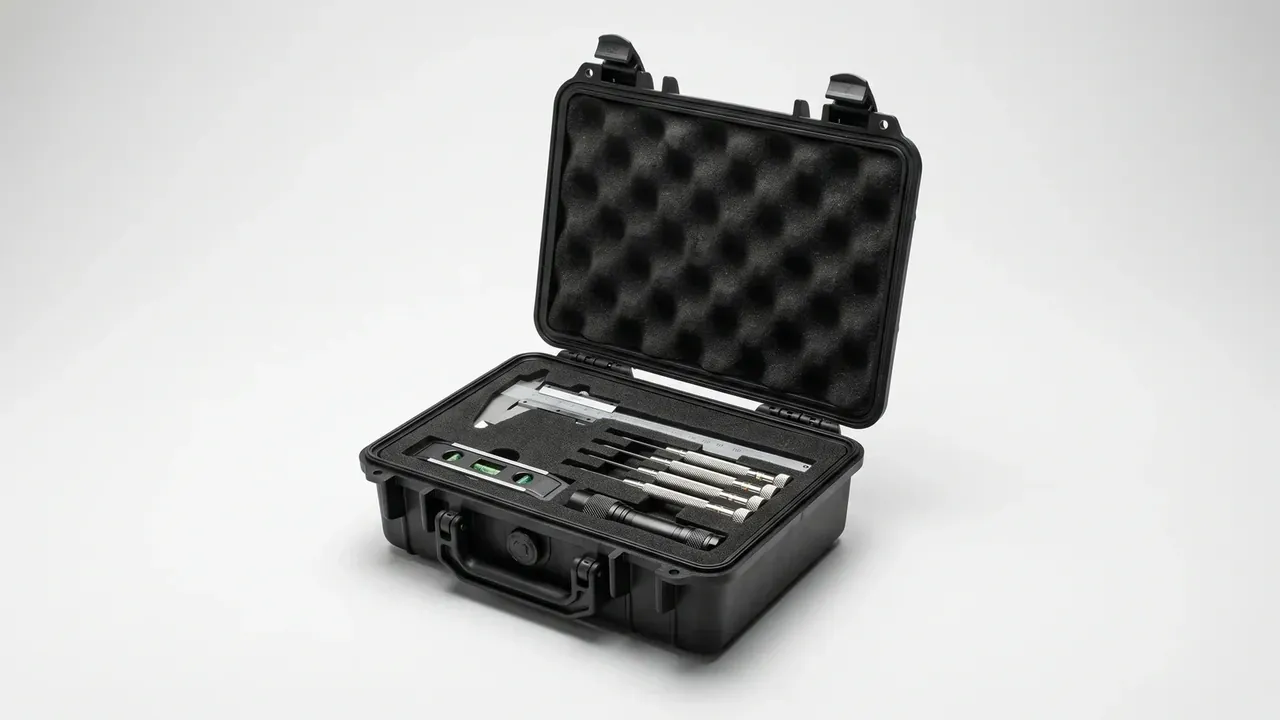
Quick answer: Foam Cutting holds its accuracy through five linked points: layout fixes the yield, density decides the cut face, layering sets the depth, the tolerance stack settles fit, and batch checks hold consistency.
Table of contents
- Five Key Points in Foam Cutting
- Toolpath and Layout: Yield Before Cutter
- Density and Compression Stress: What the Blade Can Enter
- Layering and Adhesive: Accuracy Traded for Depth
- Tolerance Stack and Batch Consistency
- FAQ
1. Five Key Points in Foam Cutting
Foam Cutting is a chain of five decisions: layout, density, layer build, tolerance stack and inspection. A mistake in any one is paid for downstream: by assembly the dimension cannot be recovered. Tolerance comes from toolpath offset, recovery and adhesive thickness; machine repeatability is usually the smallest item left.
| Key point | What it controls | Typical value | What fails first |
|---|---|---|---|
| Layout | Spacing, edge trim | 3 mm, 82% yield | Collapsed edges |
| Density | Compression stress | 60 to 120 kg/m³ | Rough face, creep |
| Layering | Layers, adhesive | 40 mm maximum | Stack at ±1.2 mm |
| Tolerance stack | Four error sources | ±0.35 mm combined | Loose or tight fit |
| Inspection | Sampling rate | 1 part in 50 | Batch drifts |
2. Toolpath and Layout: Yield Before Cutter
Layout starts from the sheet. On a 1220 by 2440 mm board, 300 by 200 mm inserts at 3 mm spacing and 8 mm trim yield 40 pieces, 82 percent utilisation; at 1.5 mm spacing three more fit, but the outer 0.5 mm collapses and the insert no longer presses flat.
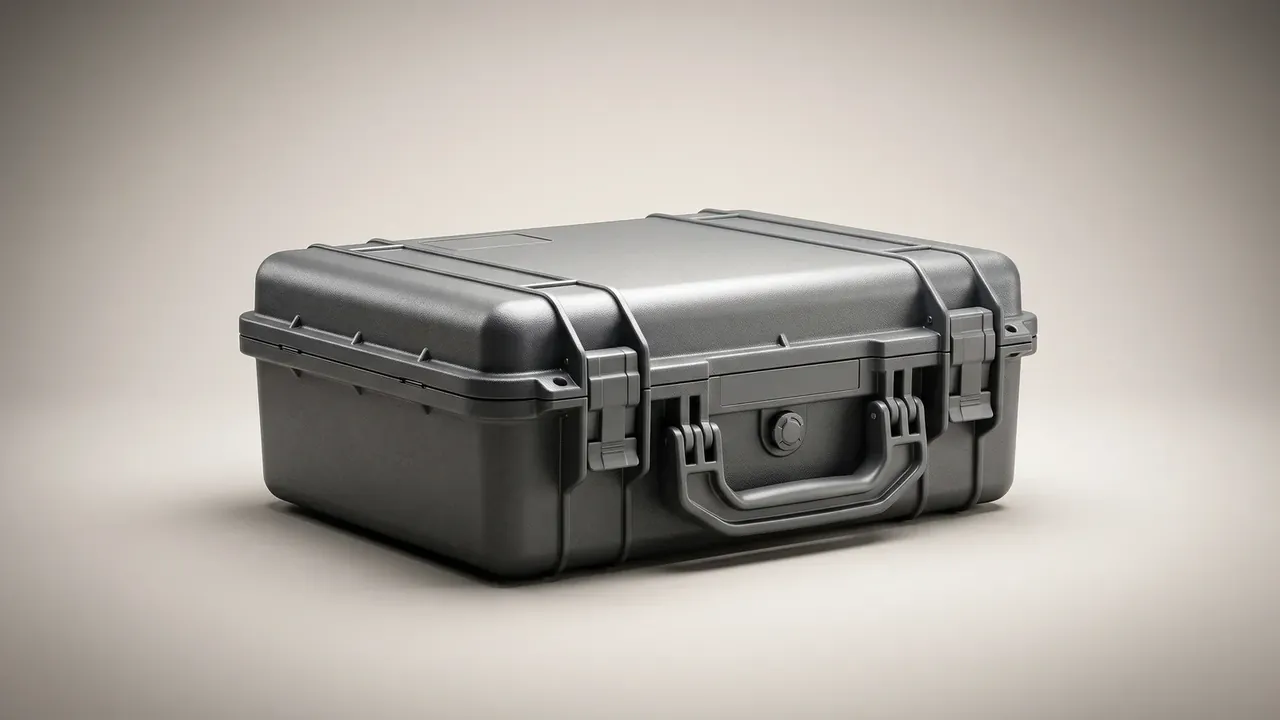
Toolpath offset follows cutter diameter: 1.5 mm inward for a pocket, outward on an outside profile. Skip it and a 50 mm pocket comes out at 48.5 mm. Small parts keep one or two 0.8 mm tabs, snapped by hand after cutting.
3. Density and Compression Stress: What the Blade Can Enter
Density decides whether the blade enters cleanly. Below 45 kg/m³ in EPE, material yields ahead of the edge and the face crumbles by 0.3 mm, which becomes a visible step once two layers are stacked; EVA at 60 to 120 kg/m³ cuts flat within 0.5 mm.
Compression stress says more about support: 30 to 60 kPa at 25 percent compression carries 5 to 15 kg, while below 20 kPa an 8 kg load dents permanently in three months.
Recovery is the third delay: dimensions grow 0.2 to 0.5 mm over 24 hours, so parts measured at the machine read smaller than those at the line.
4. Layering and Adhesive: Accuracy Traded for Depth
Pockets deeper than 40 mm are layered. Two layers stack to about ±0.6 mm and three to ±1.2 mm, because every layer adds an adhesive film and a chance to shift.
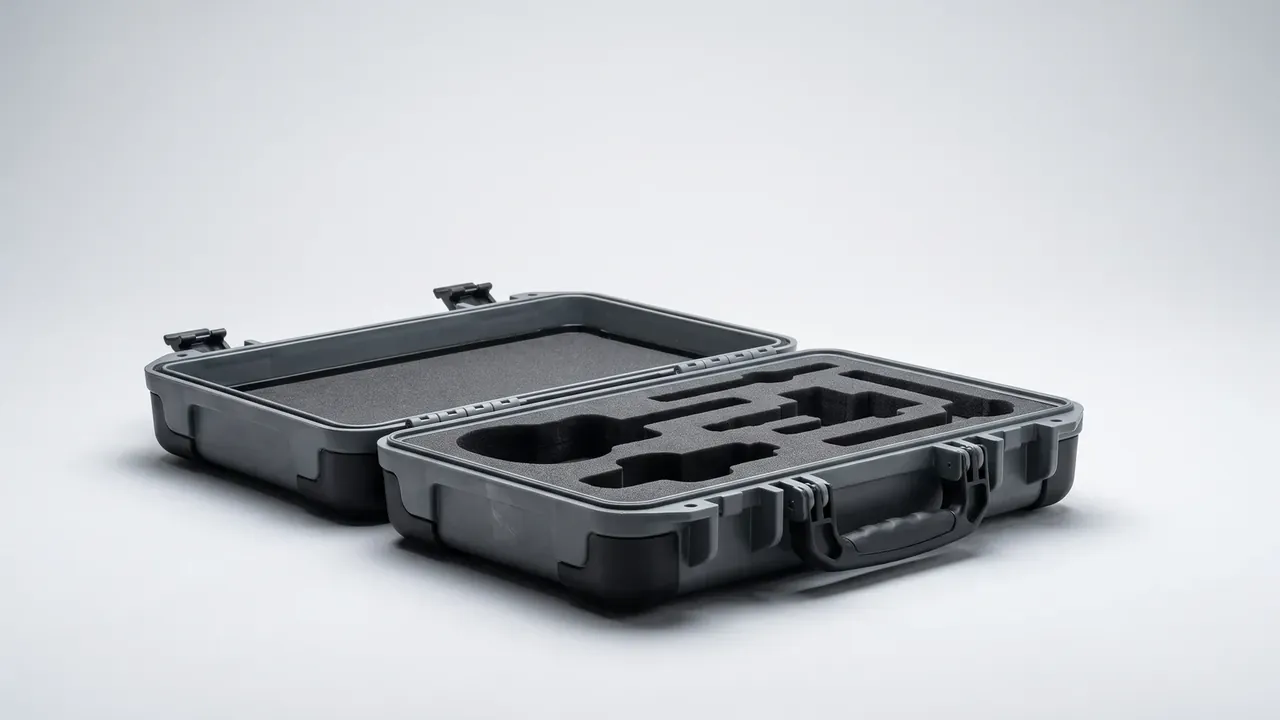
Adhesive runs 0.08 to 0.12 mm, sprayed not brushed; a brushed film passes 0.3 mm and leaves the pocket floor uneven. Two 6 mm locating holes in the waste area hold shift under 0.3 mm, where eye alignment leaves 1 mm steps across three layers.
5. Tolerance Stack and Batch Consistency
A Foam Cutting tolerance stack is listed item by item: toolpath ±0.1 mm, recovery ±0.3 mm, adhesive ±0.1 mm, repeatability ±0.05 mm, giving ±0.35 mm by root sum square. Writing ±0.2 mm asks the shop to gamble.
Sampling sets consistency: three first-off parts in full, one in fifty afterwards, density every 500 parts. A spread beyond 5 percent forces the parameters with it.
| Check | Frequency | Tool | Pass line |
|---|---|---|---|
| Pocket size | 3 first-off parts | Vernier caliper | Within ±0.5 mm |
| Pocket depth | 1 part in 50 | Depth gauge | Within ±0.3 mm |
| Squareness | First part per batch | Square | 0.5 mm or less |
| Density | Every 500 parts | Scale and gauge | Spread 5% or less |
| Bond | First part per batch | Hand peel | Foam tears, not the bond |
Records carry board number, density and toolpath revision, so the drawing reproduces the insert months later.
Conclusion
Foam Cutting holds its accuracy as the output of a chain, not a spec sheet for one machine. Layout sets the boundary, density the face, layering the depth, parameters the detail, inspection the batch; relax one and the error returns at assembly as a loose or an over-tight fit. Written into the process card, Foam Cutting becomes a repeatable operation.
This article discusses only the container (case body) side of specifications and design intent, and does not cover any handling, loading or use of the contents.
Related Reading
- Comparing three toolpaths for foam cutting
- Layered structure design for foam inserts
- Installing and bonding foam inserts
- Storing foam stock before cutting
Related Products
- 8 Series — Gun Cases; Military Equipment Cases; Camera Equipment Cases; Drone Cases; Watch Cases; Knife Cases; First Aid Cases; Electronics Equipment Cases
- WL8-2812 PP Gun Case — model WL8-2812
- All protective cases and toolboxes: 7 series, 158 models