

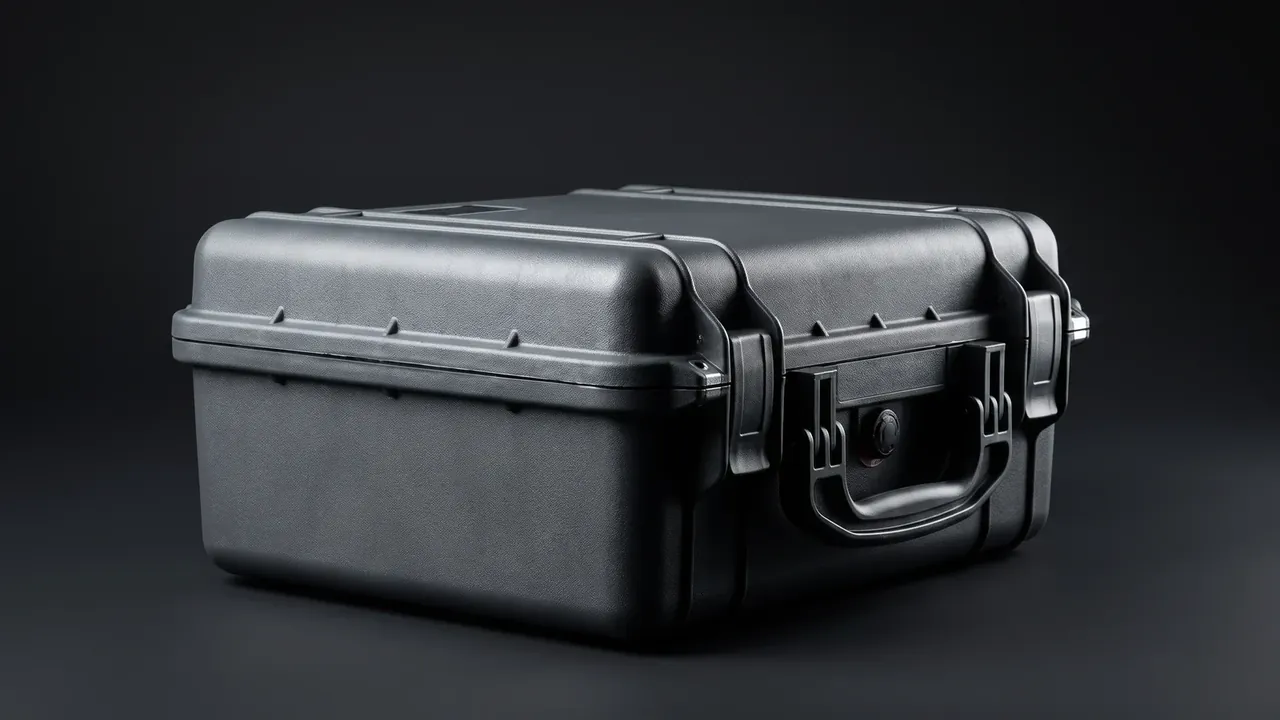
Quick answer: Three lines decide a Foam Cutting spec: outer size, wall thickness and load per point. Outer size is subtracted from the case interior, wall thickness keeps cavities apart, load sets density and base thickness.
Table of contents
- The Three Numbers That Set a Foam Cutting Spec
- Sizing: Outer Dimensions and Clearance
- Wall Thickness: Base, Ribs and Lid Gap
- Load Rating: Stacking and Drop
- From Spec Sheet to Machine Settings
- FAQ
1. The Three Numbers That Set a Foam Cutting Spec
An enquiry for Foam Cutting usually arrives complete: EVA, 38 kg/m³, black, 35 Shore 00, 30 mm. Five lines, none missing, and the part still will not seat. Those lines describe material, never size or load.
The three lines move together: raise the load and density, base thickness and cavity depth follow.
| Spec line | Typical value | What fails when omitted |
|---|---|---|
| Outer size | 538×338×193 mm | Will not enter, or slides |
| Wall thickness | 12 mm rib, 20 mm base | Corners crush |
| Load per point | 8 kg | Base punches through |
2. Sizing: Outer Dimensions and Clearance
Outer size is subtracted, not measured. A 600×400×230 mm case with a 540×340×195 mm interior takes a 538×338×193 mm block: 1 mm per side, 2 mm at the bottom for the ribs.
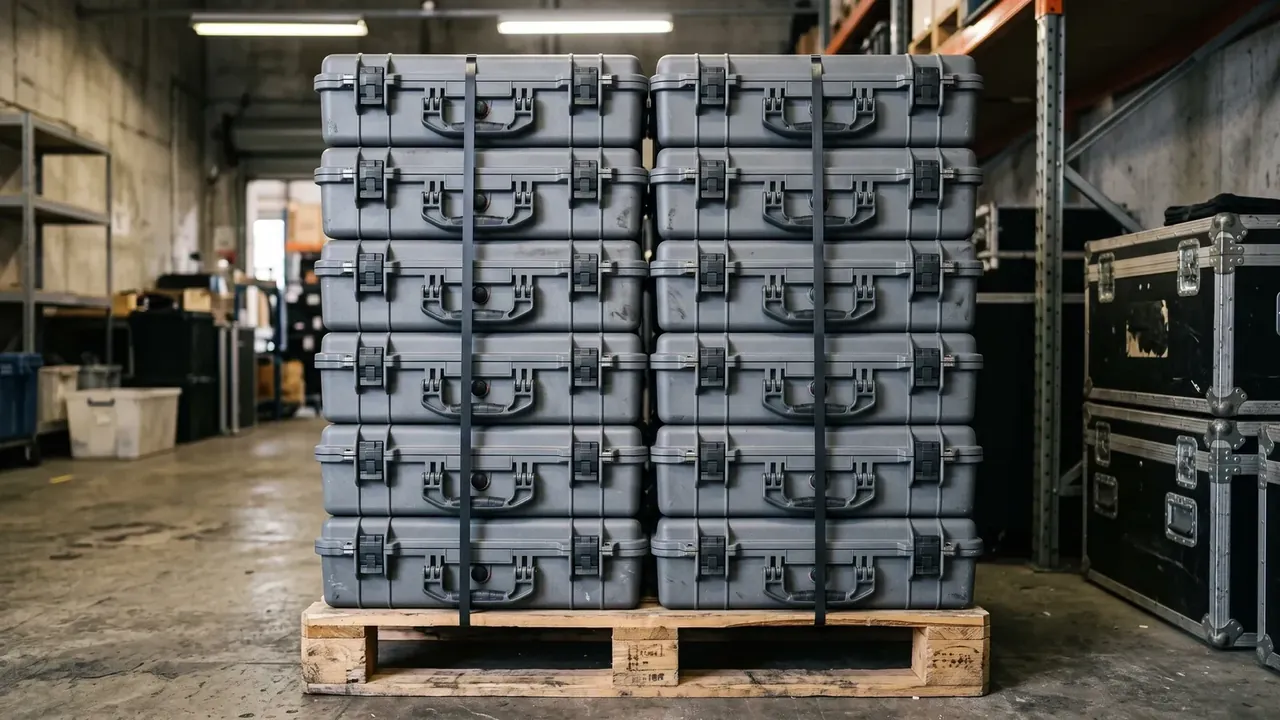
Cavities are built by addition: 1.5 mm around the item outline, then depth by subtracting compression, so a 210 mm item in a 195 mm cavity leaves 15 mm for the lid pad.
The tolerance chain breaks plans: interior ±1.5 mm, cutting ±0.8 mm and springback 0.5 mm come to roughly 2.8 mm, more than any single allowance.
3. Wall Thickness: Base, Ribs and Lid Gap
Wall thickness is the material between cavity and cavity, and between cavity and case wall. At 38 kg/m³, a rib under 10 mm over a 300 mm span sags visibly and the wall bows inward.
| Wall location | Value | What it does |
|---|---|---|
| Base | 20 mm | Impact travel |
| Side wall | 15 mm | Resists wall pressure |
| Rib | 12 mm | Braces cavities |
| Lid gap | 1.5 mm | Limits vertical play |
The base is where projects save: cut from 20 mm to 12 mm for one more layer and corner travel halves. For a case rated to 1.2 m on six faces, 15 mm is the floor.
The lid gap belongs in the spec: under 1 mm the foam shears at the rim, over 3 mm the item polishes the cavity floor.
4. Load Rating: Stacking and Drop
Load runs two ways: stacking up and impact down. A 12 kg case stacked five high puts 60 kg on the bottom unit, 15 kg per corner, and a formulation creeping past 3 mm in 24 hours tilts by the third tier.
Density is the lever: 30 and 45 kg/m³ of one formulation differ twofold in compression set. An 8 kg rating means 38 kg/m³ with a 20 mm base; 15 kg needs 45 kg/m³ and a 25 mm base.
Temperature rewrites it: 72 hours at 60 °C must stay inside 0.5% size change, and a 1.2 m drop at -20 °C stiffens the foam until a 1.5 mm gap stops closing.
5. From Spec Sheet to Machine Settings
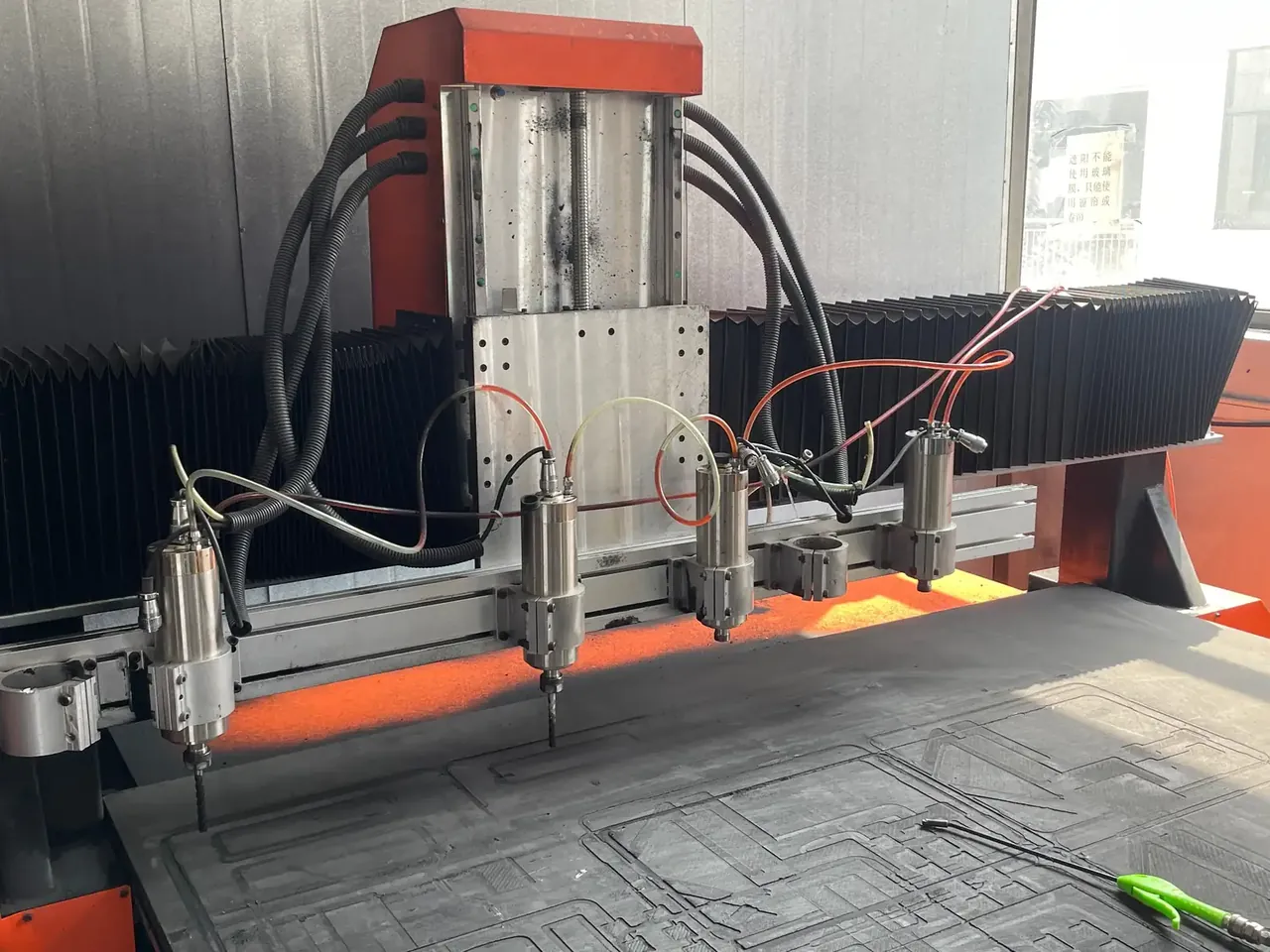
A spec only counts if it reaches the machine. The 538×338×193 mm block needs kerf compensation first: a 1.2 mm tool cuts a 1.4 mm slot, so every outline is offset 0.6 mm per side.
| Spec item | Parameter | Value |
|---|---|---|
| Outer size | Nesting pitch | 6 parts per 2500×1300 mm bed |
| Block height | Layers | 193 mm in 4 passes |
| Cavity outline | Kerf offset | 0.6 mm per side |
| Thin walls | Feed rate | 8 m/min down to 5 |
Layered cutting hides a cost: four layers bonded back with more than 0.3 mm misalignment leave a step you can feel, so write that tolerance beside the layer limit.
Nesting belongs in the spec stage as well: six parts on a 2500×1300 mm bed leave 12% waste, while 520×320 mm lets the same bed take seven. In Foam Cutting, placement often beats the cut.
Conclusion
A Foam Cutting spec is not a longer list; it is three lines checked against one another. Size comes from the case interior, thickness from span and density, load from stack and drop height. When they agree, the quote holds and every unit matches.
This article discusses only the container (case body) side of specifications and design intent, and does not cover any handling, loading or use of the contents.
Related Reading
- Custom foam insert specs: thickness, compression and tolerance
- Choosing a foam cutting method: blade, die and CNC
- How the foam cutting process runs, step by step
- Installing a foam insert: from location to press-fit
Related Products
- 8 Series — Gun Cases; Military Equipment Cases; Camera Equipment Cases; Drone Cases; Watch Cases; Knife Cases; First Aid Cases; Electronics Equipment Cases
- WL8-2812 PP Gun Case — model WL8-2812
- All protective cases and toolboxes: 7 series, 158 models